

Table of Contents
- Why Evaluating Antique Kilim Condition Matters
- Assessing Fiber Quality and Weave Integrity
- Identifying Visible Damage: Holes, Tears, and Worn Areas
- Creating an Antique Kilim Condition Checklist
- Understanding Antique Kilim Repairs and Damage
- Questions to Ask When Buying an Antique Kilim
- Inspecting Remote and Online Purchases
- How Condition Affects Antique Kilim Value and Appraisal
- Frequently Asked Questions
Last Updated: October 4, 2026
Why Evaluating Antique Kilim Condition Matters
Condition is everything when buying an antique kilim. Poor condition can cost thousands in repairs, and some damage can't be fixed at all. At ABC Rugs Kilims & Jewelry, we help collectors and designers understand how to evaluate antique kilim condition.
Condition directly affects value and longevity. A kilim with structural integrity will last decades; one with hidden damage may fail within years. This guide provides a systematic approach to assessing kilim condition.
Assessing Fiber Quality and Weave Integrity
Fiber quality and weave tightness determine durability and how well a kilim withstands foot traffic, sunlight, and time.
Checking wool and natural dyes
Run your fingers across the surface. High-quality wool feels smooth and springy; degraded wool feels brittle or papery. Natural dyes age beautifully, while synthetic dyes (introduced in the late 1800s) fade unevenly or bleed when wet.
The back reveals true fiber color and dye aging. If the back is significantly brighter than the front, the kilim has faded from light exposure, normal aging that affects value.
Uneven fading or color shifts suggest storage in sunlight or moisture exposure in one area. Ask the seller about the kilim's history if you notice this pattern.
Evaluating knot density and hand-spun fiber
Kilims are flatweaves, and weave density matters enormously. Tightly packed threads hold shape and resist wear better than loose weaves.
A heavy kilim usually indicates denser weave and better fiber quality. Hand-spun fiber shows visible irregularities and thickness variations; machine-spun fiber looks uniform and perfect, signaling a reproduction.
Under strong light, genuine antique kilims show slight irregularities in pattern repetition and color variation. Perfect uniformity suggests industrial production.
Identifying Visible Damage: Holes, Tears, and Worn Areas
Most buyers start here but miss critical damage. Damage falls into two categories: cosmetic (visible but not structural) and functional (threatening integrity).
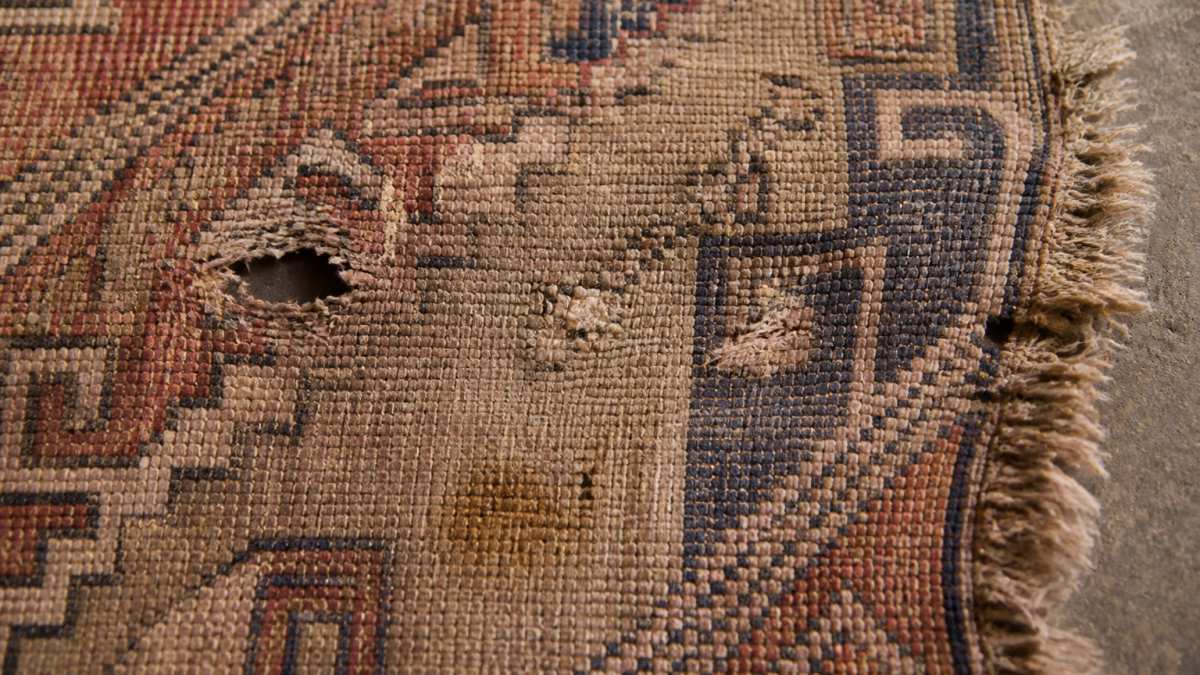
Spotting loose threads and fraying edges
Kilims should have finished edges with overcast stitching or binding. Fraying edges mean the binding is failing and requires repair.
Run your fingers along all four edges. Loose threads catch on your skin; tight edges feel smooth. Loose threads indicate failing structural integrity.
Selvedges (narrow finished edges on long sides) take the most stress during use. Damaged selvedges can unravel if not repaired soon, one of the most common repairs needed.
Check the ends for decorative fringe. Damaged fringe can be re-knotted but is labor-intensive. Missing fringe is cosmetic but affects value.
Detecting stains, fading, and discoloration
Hold the kilim to natural light. Water stains appear as irregular rings or blotches and suggest moisture exposure, which can cause mold, fiber rot, and permanent damage.
Oil stains are often permanent. Wine or food stains may be cleanable depending on age and fiber type; old set-in stains are nearly impossible to remove.
Uneven fading indicates the kilim hung in a sunny window or was partially covered for years. This is cosmetic but reduces value.
Brown or yellow spots suggest mold, mildew, or fiber breakdown. These are warning signs, as mold can spread and damage more fibers over time.
Creating an Antique Kilim Condition Checklist
A systematic inspection catches problems you might otherwise miss. Use this checklist every time you evaluate an antique kilim, whether you're buying in person or online.
Room-by-room inspection steps
Start in natural daylight. Lay the kilim flat on a clean surface and work through each section methodically.
Step 1: Visual scan (5 minutes)
- Walk around the kilim without touching it
- Look for obvious holes, stains, or worn areas
- Note the overall color and any fading patterns
Step 2: Edge and end inspection (5 minutes)
- Examine all four edges for fraying, loose threads, or binding damage
- Check the fringe or end treatment
- Feel along edges for loose fibers
Step 3: Fiber quality test (3 minutes)
- Rub a small section between your fingers
- Check for brittleness, stiffness, or springiness
- Look at the back to assess dye aging
Step 4: Weave integrity check (5 minutes)
- Look for areas where threads are loose or missing
- Check for pattern irregularities that suggest hand-weaving
- Feel for thin spots where fibers may be wearing through
Step 5: Damage documentation (5 minutes)
- Mark or photograph every hole, tear, or stain
- Estimate the size of damage (pinhead, dime-sized, larger)
- Note the location on the kilim
| Inspection Area | What to Check | Red Flags |
|---|---|---|
| Edges | Binding condition, loose threads | Fraying, missing overcast stitch |
| Ends | Fringe integrity, knot security | Missing fringe, loose knots |
| Surface | Holes, tears, thin spots | Any opening in the weave |
| Fibers | Texture, brittleness, color | Papery feel, uniform machine appearance |
| Stains | Age, size, type (water, oil, food) | Large wet stains, mold spots |
| Fading | Pattern, evenness, severity | Uneven fading, color loss |
Back, edges, and end inspection
Most buyers ignore the back, but it reveals how the kilim was constructed and how it has aged.
The back should look clean and intact. Dirt, debris, or staining suggests storage on a dirty floor or moisture exposure from below, which accelerates fiber degradation.
Check the back for holes that don't show on the front. Some damage penetrates completely and is visible from behind.
Back selvedges should be intact and secure. Loose selvedges mean the kilim could unravel during cleaning or use.
Examine the ends from behind to see the original weaving technique. Machine-finished ends look too perfect; hand-finished ends show variation.
Understanding Antique Kilim Repairs and Damage
Not all damage is equal. Some repairs are straightforward and affordable. Others are expensive or impossible. Knowing the difference helps you decide whether a kilim is worth buying.
Age-related wear versus active damage
Age-related wear is normal on antique kilims. Slight fading, minor fiber thinning in high-traffic areas, and gentle color shifts add character and value.
Active damage, enlarging holes, unraveling threads, wet or spreading stains, needs immediate attention and will worsen with use or cleaning.
Ask the seller: Is the damage stable or progressing? A small, stable hole is less risky than a new, still-tearing hole.
Moisture damage is most serious. A recently wet kilim may harbor mold spores that develop over weeks and months, even if it looks fine now.
Restoration cost estimates and repair risks
Minor repairs like re-finishing edges or reattaching fringe typically cost $200-$500.
Patching holes costs $300-$800 depending on size and location. Back patches cost less than front patches because they're less visible.
Rewoven repairs (the gold standard) cost $1,000-$3,000 or more depending on size and complexity. The result is nearly invisible but expensive.
Professional cleaning and conditioning can help uneven fading but won't restore lost color. Expect $300-$600 for professional cleaning.
Before you buy a kilim needing major repair, get a restoration estimate. Add that cost to the purchase price. If the total exceeds what the kilim is worth to you, walk away.
Questions to Ask When Buying an Antique Kilim
The seller's answers tell you a lot about the kilim's history and condition. Ask these questions before committing to a purchase.
Ask how old the kilim is and what evidence supports that age. Be skeptical of sellers who can't explain their dating.
A kilim with clear provenance and documented ownership history is more valuable and trustworthy than one with unknown origin.
Ask what cleaning or restoration was done. Professional cleaning is fine; heavy restoration might hide underlying damage.
Ask about storage conditions. Moisture exposure is the biggest threat to antique textiles. Damp storage increases risk of hidden mold or fiber damage.
Are there any structural issues I should know about? A honest seller will disclose known problems.
Can I have the kilim inspected by a professional before purchase? Reputable sellers allow this. If a seller refuses inspection, that's a red flag.
Inspecting Remote and Online Purchases
Buying an antique kilim online without seeing it in person is risky, but it's possible if you take precautions.
Ask for high-resolution photos of the entire kilim, both front and back. Request close-ups of any visible damage.
Ask for measurements. Verify the dimensions match what you expect. A smaller kilim might hide damage in photos.
Request a video walkthrough if possible. Seeing the kilim in motion, with the camera moving across the surface, gives you a better sense of texture and condition than still photos alone.
Ask about the return policy. A seller who allows returns within 7-14 days is confident in their description. Use that window to inspect the kilim in person before finalizing the purchase.
If possible, arrange for the kilim to be inspected by a local professional before you commit. The inspection cost (usually $50-$150) is worth the peace of mind.
How Condition Affects Antique Kilim Value and Appraisal
Condition is one of the primary factors in kilim valuation, alongside age, rarity, and origin.
Professional appraisers use a condition grading scale. Excellent condition means minimal wear, no significant damage, and original fibers intact. Very good condition allows for minor wear and small repairs.
Damage that affects value most severely includes large holes, extensive staining, severe fading, and structural damage to the weave.
If you're buying a kilim as an investment, prioritize condition. A kilim in excellent or very good condition will hold or appreciate in value.
When you're ready to buy, work with a trusted source. The team at ABC Rugs Kilims & Jewelry curates each piece and provides detailed condition assessments.
Evaluating antique kilim condition takes practice, but the fundamentals are straightforward. You're looking for fiber quality, structural integrity, and damage that affects longevity.
Frequently Asked Questions
How can you tell if an antique kilim is in good condition?
Good condition means the weave is tight and intact, colors remain vibrant without excessive fading, and there are no holes or significant tears. Check that loose threads are minimal, the back shows even tension, and edges are bound securely. Age-related wear is normal, but active damage, fresh tears, moth holes, or stains, signals poor condition. Run your hand across the surface; it should feel sturdy, not thin or papery. Compare pattern repetition across sections; irregularities in a handwoven kilim are authentic, but severe distortion indicates structural problems.
What kinds of damage should you look for when evaluating an antique kilim?
Look for holes, tears, and worn areas that expose the foundation. Check for loose threads, fraying along edges and ends, and signs of moth damage (small holes clustered together). Examine stains, fading, and discoloration that may be permanent or indicate past water damage. Inspect the back for uneven tension, broken warps, or repairs. Also assess whether damage is age-related (expected in antique textiles) or active (spreading, fresh, or indicating ongoing deterioration). Restoration costs rise sharply with structural damage, so prioritize integrity of the weave and fiber quality over cosmetic imperfections.
What should you ask a seller before buying an antique kilim?
Ask about the kilim's origin, age, and regional style, this affects authenticity and value. Request details on materials: fiber type, whether natural dyes were used, and hand-spun construction. Ask for documentation of any repairs or restoration work done, and request honest disclosure of all damage. Inquire about the kilim's provenance and previous ownership if available. For remote purchases, ask for high-resolution photos of the front, back, edges, and any problem areas, plus measurements. Request information on cleaning history and care recommendations. Finally, ask about return policies and guarantees of authenticity, reputable sellers stand behind their pieces.
How much wear is acceptable in an antique kilim?
Antique kilims naturally show age; some wear is expected and adds character. Light surface wear, minor color fading consistent with age, and small loose threads are acceptable. The weave should remain structurally sound, no large holes or areas where the foundation is exposed. Edges may show minor fraying if the bind is intact. What matters most is that wear is age-appropriate and not actively spreading. If a kilim is 50+ years old, pristine condition is actually suspicious. However, extensive damage requiring significant restoration, widespread moth damage, or severe structural issues reduces value and usability. Evaluate whether the kilim's condition matches its asking price and your intended use.


