

Table of Contents
- Why Antique Rug Maintenance Matters for Long-Term Value
- Understanding What Damages Antique Rugs and How to Prevent It
- Antique Rug Cleaning: Safe Methods and When to Call Professionals
- Antique Rug Storage: Protecting Your Investment Off Display
- Antique Rug Repair and Restoration: Balancing Intervention with Authenticity
- Antique Rug Maintenance Checklist: A Seasonal and Year-Round Guide
- How Maintenance Choices Affect Appraisal, Resale, and Heirloom Status
- Frequently Asked Questions
Last Updated: October 19, 2026
Why Antique Rug Maintenance Matters for Long-Term Value
Preserving antique rug value through maintenance isn't optional if you want your investment to appreciate or hold its worth. Owners who prioritize regular care dramatically outpace those who don't.
The difference between a well-maintained heirloom rug and a neglected one isn't subtle. One appreciates in value, attracts serious collectors, and passes down with pride.
Maintaining your antique rug properly means understanding what damages it, taking preventive action, and knowing when to call professionals. Below, we'll walk you through the exact steps that keep your rug investment intact.
Understanding What Damages Antique Rugs and How to Prevent It
Antique rugs fail for predictable reasons. Sunlight fades dyes. Humidity warps foundations. Pests eat fibers. Dirt grinds into the pile. Each threat is preventable if you know what to watch for.
Environmental Threats: Sunlight, Humidity, and Temperature
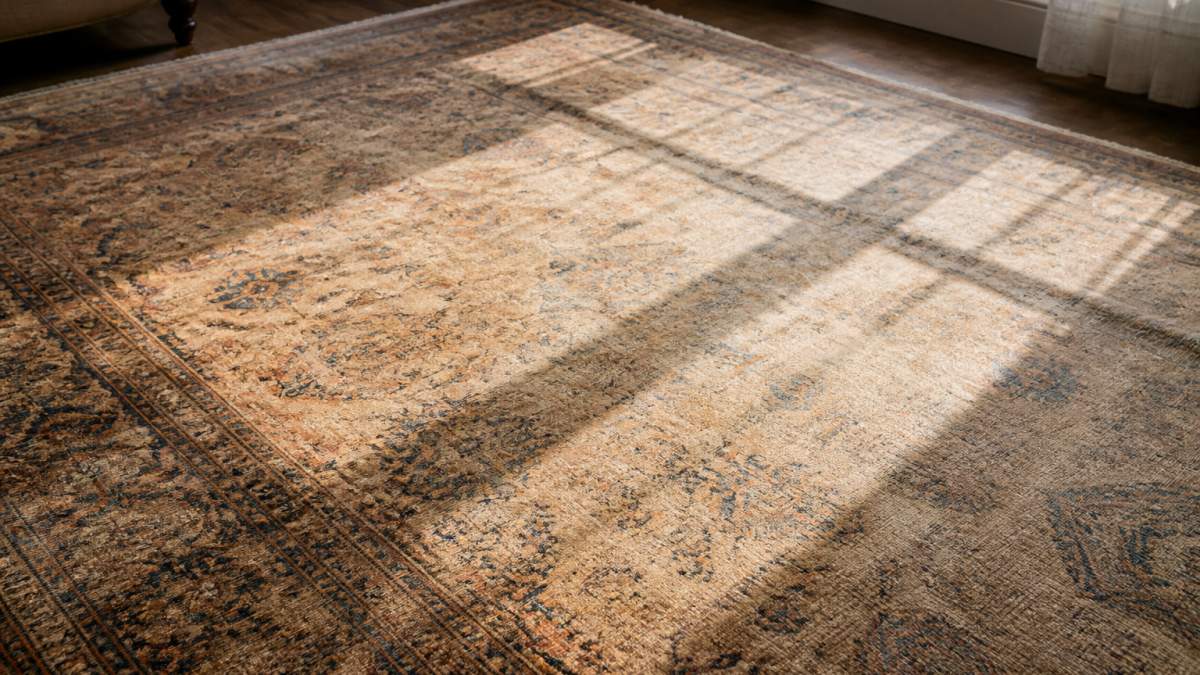
Direct sunlight is your antique rug's worst enemy. UV rays attack natural dyes, causing irreversible color shifts. Reds fade to orange. Blues turn gray. Golds become pale.
Humidity and temperature swings damage the foundation. Wool and silk expand when moisture rises, then shrink when it drops. This constant movement stresses the knots and can cause the rug to warp or buckle. Extreme temperature changes accelerate this wear.
Prevent environmental damage with these steps:
- Block direct sunlight with UV-filtering curtains or shades
- Keep indoor humidity between 35-55%
- Maintain steady room temperature, ideally 65-75°F
- Rotate rugs quarterly to distribute light exposure evenly
- Never place rugs in basements, attics, or unheated spaces
Pests, Dirt, and Organic Matter
Moths and carpet beetles don't just damage rugs, they destroy them. A single infestation can eat through fibers in weeks. Dirt acts like sandpaper, grinding into the pile and cutting fibers each time you walk on the rug. Food crumbs, pet hair, and dust attract pests and feed mold growth.
Prevent pest and dirt damage:
- Vacuum gently once weekly using a low-suction setting
- Never use a beater bar, which damages antique fibers
- Check the underside monthly for pest droppings or webbing
- Keep food and drinks away from display rugs
- Store rugs in sealed, clean containers if not in use
Antique Rug Cleaning: Safe Methods and When to Call Professionals
Cleaning is where most owners make costly mistakes. Harsh chemicals, excessive water, and aggressive scrubbing destroy antique rugs. The goal isn't perfection, it's preservation. A light clean that maintains the rug beats a deep clean that damages it.
At-Home Cleaning Steps You Can Safely Perform
Light, regular cleaning prevents dirt buildup and extends the time between professional washes. Start with the gentlest approach. Only escalate if needed.
Safe at-home cleaning process:
-
Vacuum the top surface using the lowest suction setting and no beater bar. Work in the direction of the pile. Spend 5-10 minutes on a medium-sized rug.
-
Flip and vacuum the underside to remove dirt trapped in the foundation. This prevents pests from nesting underneath.
-
Spot-clean spills immediately by blotting (never rubbing) with a clean white cloth. Use cool water only. Avoid commercial carpet cleaners, which contain chemicals that damage natural dyes.
-
For stubborn spots, mix one part white vinegar with three parts water. Test on a hidden corner first. Blot gently. Rinse with plain water and blot dry.
-
Air dry completely before walking on the rug. Damp rugs develop mold and mildew.
What most people skip: checking for color bleeding before cleaning. Test your rug by dampening a white cloth and pressing it on an inconspicuous area. If color transfers, the dyes aren't colorfast. Stop. Professional cleaning only.
Professional Cleaning and Its Impact on Value
Professional rug cleaning removes embedded dirt and restores appearance without damaging fibers or dyes. A proper wash takes 4-6 weeks because the rug must dry completely between steps. Fast turnarounds mean shortcuts, and shortcuts damage antique rugs.
When you invest in preserving antique rug value through maintenance, professional cleaning every 3-5 years is part of that equation.
Choose a cleaner who specializes in antique and oriental rugs. General carpet cleaners use industrial equipment that's too harsh. Ask about their process: hand washing, pH-neutral soap, and air drying are the standards.
Antique Rug Storage: Protecting Your Investment Off Display
If you're storing an antique rug, whether seasonally or long-term, storage mistakes erase years of careful maintenance. A poorly stored rug develops mold, attracts pests, and shows permanent creases.
Proper storage process:
- Clean the rug thoroughly before storing. Dirt left in fibers attracts pests.
- Roll the rug lengthwise around an acid-free tube, pile-side out. Never fold it; creases become permanent.
- Wrap in acid-free paper or unbleached muslin. Never use plastic, which traps moisture and causes mold.
- Store in a cool, dry space. Basements and attics fluctuate too much. A climate-controlled closet is ideal.
- Check every 3-6 months for pest activity or moisture.
- Never store in a sealed plastic bag without ventilation.
Improper storage can damage a rug worse than years of use. The investment in acid-free materials and proper rolling pays for itself by avoiding restoration costs later.
Antique Rug Repair and Restoration: Balancing Intervention with Authenticity
This is where preserving antique rug value through maintenance gets tricky. Restoration can fix visible damage, but aggressive restoration erodes authenticity and actually lowers value for serious collectors. The goal is stabilization, not perfection.
Stabilizing Worn and Damaged Areas
Worn areas happen. High-traffic zones thin. Pile flattens. The question is whether to restore or stabilize. Stabilization is the conservative approach: it stops further damage without altering the rug's original character.
One Of The Kind Hand Knotted Persian Rug 10'10" x 8'0" →
When to stabilize instead of restore:
- The rug is historically significant or rare
- You plan to keep the rug as a family heirloom
- The damage is minor and doesn't affect function
- Restoration would require replacing original materials
A professional can reinforce the foundation under thin areas, preventing holes from developing. This costs far less than full restoration and preserves the rug's authenticity.
Fringe and Edge Repair
Fringes and edges take the most abuse. They catch feet, get vacuumed over, and fray first. Repairing them early prevents unraveling that spreads into the main rug.
Fringe and edge repair involves:
- Securing loose warp threads before they unravel further
- Hand-stitching the edge to prevent the pile from separating
- Replacing damaged fringe with historically appropriate materials
- Reinforcing the foundation where it's exposed
This is not a DIY job. Improper edge repair causes the rug to unravel faster. A professional spends 2-8 hours on edge work, depending on damage severity. The cost is worth it, a repaired edge stops deterioration and maintains value.
When Restoration Affects Appraisal and Resale Value
Here's what collectors won't tell you: heavy restoration lowers appraisal value. A rug with visible repairs is worth less than one with minor wear. A rug with replaced areas is worth even less.
Collectors pay premiums for rugs that show age authentically. Worn areas, faded colors, and original repairs tell a story. They prove the rug is genuinely old. Heavy restoration erases that provenance and raises suspicion.
Before restoring, ask yourself:
- Am I keeping this rug forever or selling eventually?
- Is the damage functional (threatening the rug's integrity) or cosmetic?
- Would a buyer prefer original character or a like-new appearance?
If you're preserving the rug for your family, stabilization is usually the right call. If you plan to sell, minimal intervention protects value.
Antique Rug Maintenance Checklist: A Seasonal and Year-Round Guide
Consistent maintenance prevents crises. A simple schedule keeps your rug in top condition without overwhelming effort.
| Task | Frequency | Time | Impact |
|---|---|---|---|
| Vacuum gently (low suction, no beater) | Weekly | 10 minutes | Prevents dirt buildup and pest attraction |
| Rotate rug | Quarterly | 5 minutes | Distributes light and wear evenly |
| Check underside for pests | Monthly | 5 minutes | Early detection prevents infestations |
| Spot-clean spills | As needed | 5-10 minutes | Prevents staining and dye bleeding |
| Professional assessment | Annually | 1-2 hours | Catches damage early, extends life |
| Professional cleaning | Every 3-5 years | 4-6 weeks | Removes embedded dirt, restores appearance |
Monthly and Seasonal Tasks
Every month: Check the underside for pest droppings, webbing, or discoloration. Look for any new stains or damage on the top surface.
Spring and fall: Rotate the rug 180 degrees to distribute light and foot traffic evenly. This prevents one side from fading or wearing faster.
Summer: If your rug gets direct sun, use UV-blocking curtains or move it temporarily to a shaded area. Heat and UV combine to accelerate fading.
Winter: Monitor humidity if you use heating systems. Indoor heating drops humidity below 35%, which stresses fibers. A humidifier helps.
Annual Professional Assessment
Once yearly, have a professional inspect your rug. They'll catch early signs of pest activity, foundation stress, or dye instability before they become expensive problems.
During the assessment, ask about:
- Any new wear patterns or damage
- Whether professional cleaning is needed
- Environmental factors affecting the rug
- Estimated remaining lifespan with current care
How Maintenance Choices Affect Appraisal, Resale, and Heirloom Status
Your maintenance decisions directly impact what your rug is worth. An appraiser evaluates condition first.
Condition grades and their value impact:
- Excellent (minimal wear, vibrant colors, tight foundation)
- Very good (light wear, slight fading, stable foundation)
- Good (moderate wear, noticeable fading, minor repairs)
- Fair (heavy wear, significant fading, multiple repairs)
- Poor (severe damage, major restoration, questionable integrity)
Maintenance prevents the slide from excellent to fair. Regular vacuuming, environmental controls, and timely professional cleaning keep rugs in the top categories. Neglect accelerates the decline.
For families passing down rugs as heirlooms, condition matters less than authenticity. A well-documented rug with original wear tells a story. Heavy restoration erases that story.
If you're a collector or interior designer sourcing high-end pieces, ABC Rugs Kilims & Jewelry specializes in curated antique and Persian rugs with documented provenance. Our hand-knotted collection includes pieces like the One Of The Kind Hand Knotted Persian Rug 10'10" x 8'0" at $3,524.00, each selected for quality and investment potential.

Preserving antique rug value through maintenance is an investment that pays dividends. The rug you care for today becomes the heirloom, or the resale asset, that rewards your effort.
Frequently Asked Questions
How often should an antique rug be professionally cleaned?
Professional antique rug cleaning frequency depends on use and environment. High-traffic rugs benefit from professional cleaning every 3-5 years, while display-only pieces may need it every 5-7 years. Light-use rugs in controlled environments can go longer between cleanings. Always consult a professional conservator before your first cleaning to assess the rug's condition, dyes, and fibers. Frequent professional cleaning can actually preserve value by removing damaging dirt and preventing pest infestations, but aggressive cleaning methods can harm delicate fibers, so choose specialists experienced with antique textiles.
Can cleaning an antique rug reduce its value?
Improper cleaning can reduce value, but appropriate maintenance typically preserves or enhances it. The risk comes from harsh chemicals, excessive water, high heat, or aggressive scrubbing that damages fibers, fades natural dyes, or removes patina collectors value. Professional restoration specialists use gentle, fiber-appropriate methods that remove dirt without harming the rug's historical character. Conversely, allowing dirt, dust mites, and pest damage to accumulate causes far greater value loss. The key is working with conservators who understand antique rug construction and prioritize minimal intervention alongside cleanliness.
How should you store an antique rug to prevent damage?
Store antique rugs in a cool, dry environment (50-70°F, 30-50% humidity) away from direct sunlight, heat sources, and damp areas. Roll the rug loosely around an acid-free tube rather than folding it, which can crease fibers permanently. Wrap it in unbleached muslin or acid-free paper, never plastic, which traps moisture and promotes mold. Store in a closet, climate-controlled storage unit, or interior room, not basements, attics, or garages where temperature and humidity fluctuate. Inspect every 6 months for pests or moisture. Avoid mothballs; use cedar blocks or lavender sachets instead, and keep the storage area clean and pest-free.
What should you do if an antique rug has frayed edges or loose threads?
Frayed edges and loose threads require professional stabilization to prevent further unraveling and value loss. Do not attempt to glue, sew, or trim edges yourself, as improper repair can damage the rug's foundation and reduce authenticity. A conservator can reweave fringe, bind edges with matching materials, or stabilize loose areas using reversible techniques that respect the rug's original construction. The cost of professional fringe repair prevents exponentially costlier foundation damage. Address fraying promptly, loose threads can unravel quickly, especially in high-traffic areas.


