

Last Updated: November 6, 2026
Quick Summary
To learn how to care for vintage kilim collections, assess each piece before cleaning: unroll it flat, check for loose fringe and broken warps, and press a damp white towel on each color block for 30 seconds to test for dye bleed. Vacuum both sides weekly with low suction and no rotating brush, spot-clean spills immediately by blotting, and store pieces rolled rather than folded in breathable cotton.
- Press a damp white towel on each color block for 30 seconds to test for dye bleed.
- Vacuum both sides weekly with low suction and no rotating brush to remove abrasive grit.
- Roll kilims face-in around a padded tube for storage instead of folding them.
- Inspect stored pieces every few months for creases, frass, and casings, re-rolling on a different axis.
- Call a conservator for dye bleeding, dry-rotted foundations, active moth damage, or old repairs and adhesives.
Table of Contents
- Assessing Your Vintage Kilim Collection Before You Clean
- Routine Dust and Debris Removal for Flatweave Kilims
- How to Clean a Kilim Rug at Home Without Damaging It
- Spot-Cleaning Spills and Stains on Wool and Cotton Kilims
- Vintage Rug Storage Best Practices for Long-Term Preservation
- Preventing Moth Damage in Wool Rugs and Kilim Collections
- When to Call a Professional for Vintage Kilim Care
- Building a Care Routine for Your Kilim Collection
- Frequently Asked Questions
Assessing Your Vintage Kilim Collection Before You Clean
Learning how to care for vintage kilim collections starts with one rule: look before you touch. A kilim is a flatweave rug, meaning it has no pile, only interlocking wool or cotton warps and wefts, so every fiber is exposed to whatever you apply to it.
Most cleaning damage happens in the first five minutes, before anyone notices. A dry, brittle foundation can crack the moment it gets wet. A red dye that has never bled can transfer onto cream wool the second it soaks through. Before you clean a single piece, work through this assessment:
- Unroll the kilim flat and photograph both sides in daylight
- Check for loose fringe, broken warp threads, and open slits
- Press a damp white towel on each color block for 30 seconds
- Note any prior repairs, patches, or glued areas
- Look for moth casings, sand, or grit trapped in the weave
- Record fiber type: wool face, cotton foundation, or mixed
That color test matters most. Natural dyes in older pieces can stay fixed for decades, then release suddenly when they meet water or an alkaline cleaner. If any color lifts onto the towel, that section is spot-clean only.
If you are also wondering whether a piece is genuinely old or a modern reproduction, our guide on how to spot fake antique rugs walks through the weave, dye, and wear patterns collectors check first.
Routine Dust and Debris Removal for Flatweave Kilims
Dust is the quiet enemy of any woven rug. Grit works its way between the warps and wefts and saws at the fibers every time someone walks across the kilim.
Vacuum both sides on a schedule, not just the top. Flip the kilim over a padded surface, then vacuum the back with low suction and no rotating brush. The beater bar on an upright vacuum can pull wefts out of a flatweave in seconds.
For weekly maintenance:
- Shake the kilim outdoors in short, controlled snaps, never a hard whip that stresses the fringe
- Vacuum the face with a handheld tool and the brush attachment removed
- Vacuum the reverse side the same way
- Use a soft brush along the fringe to lift embedded debris
Watch out: never beat a kilim against a wall or railing. Old wool loses elasticity, and impact damage shows up as split warps that no cleaning will fix.
How to Clean a Kilim Rug at Home Without Damaging It
The safest home method for how to clean a kilim rug at home is surface washing with a pH-neutral cleaner, cool water, and minimal agitation. Full immersion is a job for professionals unless the piece is small, sturdy, and colorfast.
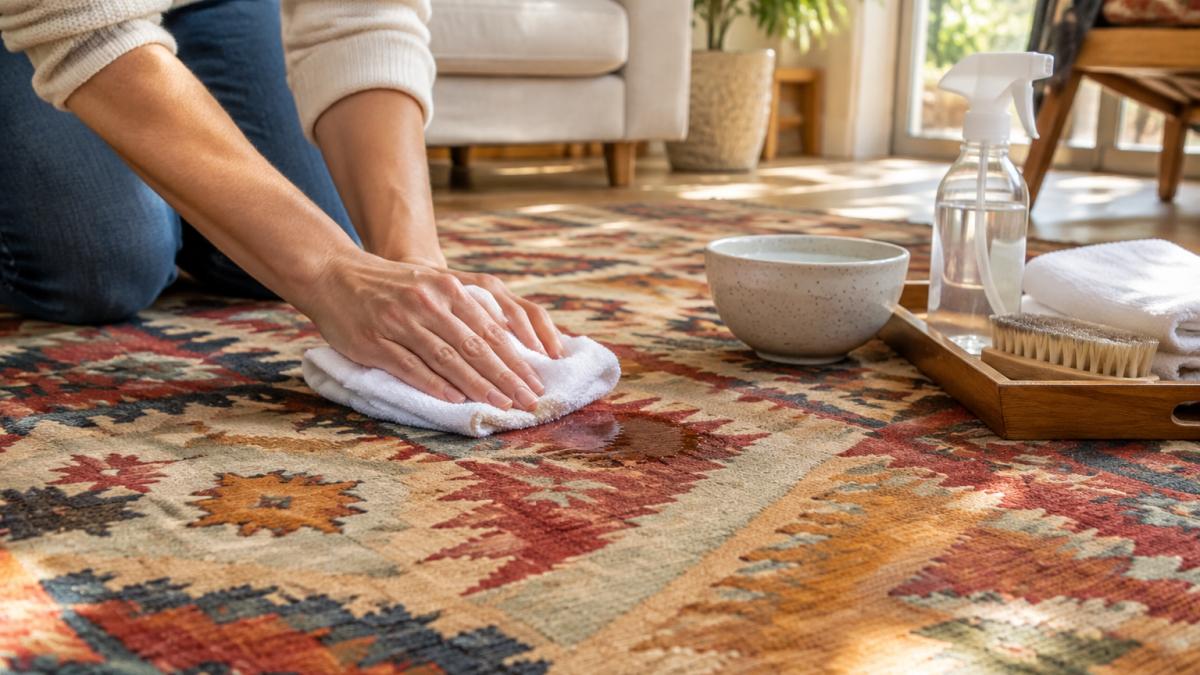
Here is the process we recommend for a sturdy wool kilim:
- Vacuum both sides and shake out loose dust outdoors
- Lay the kilim flat on a clean tarp or sheet in a shaded area
- Mix a mild soap or pH-neutral wool cleaner in cool water
- Apply with a sponge, working in the direction of the weave
- Rinse by pressing clean water through with towels, not by soaking
- Blot away excess moisture and air-dry flat, never hanging
Keep the kilim out of direct sunlight while it dries. Wool that dries too fast under strong sun can stiffen and fade unevenly. If cleaning uncovers a tear or worn patch, our article on how to repair damaged hand knotted rugs at home covers the next step.
Spot-Cleaning Spills and Stains on Wool and Cotton Kilims
Act fast, blot, and never rub. Most spills on a wool or cotton kilim come out with plain cool water and a clean white towel if you get to them within minutes.
For specific stains:
- Liquid spills: blot from the outside in with a white towel, then repeat with a barely damp cloth
- Grease: sprinkle baking soda to absorb, wait, then brush off gently
- Pet accidents: dilute white vinegar with water, blot, then rinse with clean water
- Mud: let it dry fully, then brush off before applying any moisture
Watch out: never scrub a stain in circles. Agitation pushes dye deeper into the fibers and can abrade the wool surface, leaving a permanent dull patch. Always test any solution on a hidden corner first, and keep the whole piece as dry as possible.
Vintage Rug Storage Best Practices for Long-Term Preservation
Storage is where vintage kilims quietly age, and most of the damage happens because the piece is compressed, sealed, or left in the wrong microclimate.
Start with handling. Two people should carry a large kilim, one at each end, supporting the body of the weave rather than lifting by the fringe.
Roll, never fold, for anything that will sit longer than a few weeks.
Wrap the finished roll in breathable cotton or a clean sheet.
Store flat and elevated, never on a concrete floor or against an exterior wall. Concrete wicks moisture and stays cold, and exterior walls swing in humidity with the weather.
Moth deterrents belong near the piece, not on it. Cedar blocks and lavender sachets help, but place them in the storage area rather than pressed against the wool, and refresh them periodically.
Unroll and inspect every few months. Look for new creases that do not relax, sandy frass or silk-like casings along the fringe, and any shift in color where a fold has been sitting.
Watch out: never store a kilim in a plastic garment bag or a sealed storage tote, even for a short season.
Preventing Moth Damage in Wool Rugs and Kilim Collections
Moths target wool, especially in dark, undisturbed corners. Preventing moth damage in wool rugs comes down to cleanliness, airflow, and regular inspection, because moths are drawn to fibers soiled with dust, sweat, or food residue.
Clean kilims go into storage, and dirty ones never do. Before a piece goes away for the season, vacuum both sides and let it air out fully. Then check it monthly for the telltale signs: small holes, sandy frass, or silk-like casings along the fringe.
Cedar, lavender, and sealed storage all help, but none of them replace inspection. A moth infestation caught early is a spot treatment. Caught late, it means rewoven sections and a piece that never quite looks the same.
When to Call a Professional for Vintage Kilim Care
Home care has a ceiling, and the skill is recognizing when a piece has crossed it. The distinction that matters most is between a specialist rug cleaner and a textile conservator. A specialist cleaner handles routine washing, dye stabilization, and stain treatment on sturdy pieces.
Call a professional before you touch the piece if any of the following is true:
- Dye bleeding or crocking: color lifts onto a damp white towel, or dye transfers between color blocks when the piece is handled dry
- Fragile or dry-rotted foundation: warps snap when the kilim is flexed, or the weave feels brittle and papery
- Active moth damage: live larvae, fresh frass, or casings along the fringe, because treatment needs to address the infestation and not just the visible holes
- Old repairs or adhesives: glued patches, iron-on tape, or unknown prior treatments that may react to water or cleaning solutions
- Significant age or value: an antique, a signed piece, or anything with sentimental or market value that would be diminished by a failed home wash
- Large or heavily soiled pieces: full immersion of a large kilim is a professional job because controlled rinsing and drying rooms prevent the bleeding and shrinkage that home washing invites
Before you hand a piece over, document it. Photograph both sides in daylight, note the dimensions, record any existing damage or repairs, and write down what you have already tried at home. A cleaner who knows the piece was spot-treated with vinegar, for example, can avoid a solution that reacts with it.
The American Institute for Conservation maintains a directory of trained textile conservators who can advise on fragile pieces, and it is a reasonable starting point when you are unsure which type of professional a piece needs.
Watch out: do not hand a fragile kilim to the first cleaner who offers a low price for a full wash. Immersion cleaning of an unstable piece can set a bleed permanently, and the damage often shows up only after the piece dries.
Building a Care Routine for Your Kilim Collection
A care routine is the difference between a collection that lasts generations and one that quietly deteriorates. Here is a simple schedule to work from:
| Task | Frequency | Why It Matters |
|---|---|---|
| Vacuum both sides | Weekly | Removes grit that abrades fibers |
| Shake and air out | Monthly | Clears dust and refreshes wool |
| Rotate display pieces | Seasonally | Prevents uneven sun fading |
| Full inspection | Every 3 months | Catches moths and wear early |
| Spot-clean spills | Immediately | Stops stains from setting |
| Professional assessment | Every 1-2 years | Protects high-value pieces |
At ABC Rugs Kilims & Jewelry, we see how much longer a well-tended kilim lasts, and it is why we curate pieces worth the effort. If you want to understand why these flatweaves deserve the care, read our piece on why kilim rugs are sustainable home decor. For display ideas once your pieces are clean and ready, our guide to styling kilim rugs in living rooms shows how to place them without inviting unnecessary wear, and 7 tips for colorful kilim rugs in small spaces helps you work bold pieces into tighter rooms.
Your kilims have survived decades of weaving, travel, and use. A consistent care routine keeps them that way. If you are ready to add a piece worth protecting, explore our curated collection of handmade kilims and Persian antique rugs at ABC Rugs Kilims & Jewelry, where every piece is reviewed and trusted, and browse both retail and wholesale options to find the right fit for your home or your clients.
Frequently Asked Questions
Can I use a vacuum cleaner on a vintage kilim rug?
Yes, but only with the beater bar disengaged and suction set to low. Vintage kilims are flatweave, so a rotating brush can snag fringe, loosen warp and weft threads, and pull at fragile areas. Use a handheld attachment or upholstery tool, vacuum both sides, and work in the direction of the weave. Stop immediately if you see loose fibers or fringe catching.
How often should vintage kilims be professionally cleaned?
Most vintage kilim collections benefit from professional cleaning every three to five years, depending on foot traffic and display conditions. Pieces in high-traffic areas or near kitchens may need attention sooner. Between professional cleanings, vacuum regularly and spot-clean spills promptly. If you notice color bleeding, musty odors, or widespread staining, schedule an assessment rather than attempting a deep wash at home.
What are the signs that a vintage kilim needs professional restoration?
Watch for frayed fringe, split seams, exposed warp threads, dry rot, or areas where the weave has opened up. Color bleeding and dye transfer during cleaning also signal the need for a conservator. If the kilim has structural damage, do not wash it at home. A professional can stabilize the piece, test dye stability, and recommend conservation versus routine cleaning.
How do I prevent moth damage in my kilim collection?
Moths target wool in dark, undisturbed storage. Clean kilims before storing, roll them rather than folding, and keep storage areas dry and ventilated. Use cedar blocks or lavender sachets, inspect pieces every few months, and avoid plastic bags that trap moisture. If you spot webbing or larvae, isolate the piece and consult a professional for treatment before returning it to the collection.


