

Last Updated: November 2, 2026
Quick Summary
Choose a gemstone pendant for everyday wear by prioritizing durability first: pick a stone with a Mohs hardness of 7 or above, such as sapphire, ruby, diamond, or quartz, and set it in a protective bezel with a closed back and a properly sized bail. Then match the stone to how you actually wear it, get the chain length right, and follow a simple care routine.
- Stones below roughly 7 on the Mohs scale scratch more easily in daily contact with keys and countertops.
- A bezel setting wraps metal around the stone's edge and is the safer bet for most-days wear.
- Most people find 18 inches the most versatile chain length for daily wear.
- Put the pendant on last, after perfume, lotion, and hairspray have dried.
- A piece around 30 to 45 mm long sits comfortably at the collarbone for most people.
Table of Contents
- Why Most Gemstone Pendants Fail at Daily Wear
- Mistake 1: Ignoring Mohs Hardness and Scratch Resistance
- Mistake 2: Skipping the Setting That Protects the Stone
- Best Gemstones for Everyday Wear (and the Ones to Think Twice About)
- Mistake 3: Choosing Durable Gemstones for Jewelry by Color Alone
- Mistake 4: Getting the Everyday Necklace Length Wrong
- Mistake 5: Buying Without a Gemstone Pendant Care Plan
- Mistake 6: Overlooking Symbolism, Birthstones, and Budget
- Frequently Asked Questions
Why Most Gemstone Pendants Fail at Daily Wear
Choosing the best gemstone pendant for everyday wear comes down to one hard truth: most pendants are bought for how they look in a display case, not for how they survive a Tuesday. A stone that photographs beautifully can chip on a car door, snag on a sweater, or lose its shine within months.
The fix is to buy with durability, setting protection, and comfort in mind before color. Below are the seven mistakes that shorten a pendant's life, and how to avoid each one.
Mistake 1: Ignoring Mohs Hardness and Scratch Resistance
The first mistake is treating every gemstone as equally tough. Mohs hardness is a 1-to-10 scale that measures how well a stone resists scratching (Natural Gemstones). Diamond sits at the top. Talc sits at the bottom. A stone below roughly 7 on the scale scratches more easily in daily contact with keys, zippers, and countertops.
Hardness matters most for a pendant because the stone hangs at chest height, exactly where hands, seatbelts, and bag straps pass, so a softer stone shows fine scratches that dull its surface.
Hardness Is Only Half the Story: Toughness and Cleavage
Hardness does not tell you whether a stone will break. Toughness describes how well a gem resists chipping and cracking from impact. Cleavage describes how cleanly a stone splits along internal planes. A stone can be hard and still brittle.
For a pendant, check all three. A stone with strong cleavage can fracture from a single bump against a table edge. If you want a broader primer on which stones are worth knowing before you buy, our guide to jewelry gemstones worth knowing covers the trade-offs in more depth.
Mistake 2: Skipping the Setting That Protects the Stone
A beautiful stone in a weak setting is a repair waiting to happen. The setting absorbs impact and decides how the piece hangs, yet most buying guides stop at the stone and never explain the hardware.
Here is how the common settings compare for daily wear:
| Setting | Stone Protection | Best For | Watch Out For |
|---|---|---|---|
| Bezel | Highest, metal rim covers the edge | Active wear, soft or chippy stones | Hides part of the stone |
| Prong | Moderate, exposes more stone | Maximum sparkle and light | Prongs snag and loosen |
| Halo | Moderate, small stones around center | Adding visual size | Tiny stones can fall out |
| Open back | Varies by construction | Light through the stone | Less edge protection |
A bezel setting wraps a rim of metal around the stone's edge, shielding it from knocks and keeping the girdle, the thin outer edge of the stone, from taking direct hits. Prong settings show more of the gem but leave edges exposed and can catch on knitwear. When judging metal quality alongside the setting, our guide on how to identify quality sterling silver jewelry explains what hallmarks and finishes to check.
Pendant-Specific Construction: Bail, Gallery, and Chain
The setting is only half of a pendant; the other half is the hardware that connects it to your neck.
- Bail type. The bail is the loop the chain passes through. A fixed bail keeps the pendant from sliding but can hang off-center; a hinged or oversized bail lets it slide and self-center, reducing flipping. A bail too small for the chain causes friction and wear on both pieces.
- Gallery height. The gallery is the open space between the stone's back and your skin. A higher gallery lets light through and looks brighter, but gives the pendant a longer lever arm, so a bump transfers more force to the setting. A lower, closed-back gallery sits flatter and takes knocks better.
- Chain attachment. A pendant threaded directly onto the chain (no separate bail) cannot flip independently, the most secure arrangement for an active wearer. A jump ring or split ring adds a failure point that can open under load.
- Backing plate. A solid back plate adds rigidity and keeps the stone from being pushed through the setting from behind, a common cause of loss on open-back pendants.
Watch out: a pendant that spins constantly is usually telling you the bail is too small for the chain or the stone is too heavy for the mounting, and both conditions accelerate wear on the chain and the setting.
When you compare pendants side by side, turn each one over. A well-built daily-wear piece has a smooth, closed back, a bail sized to its chain, and no sharp edges where the metal meets the stone.
Best Gemstones for Everyday Wear (and the Ones to Think Twice About)
The best gemstones for everyday wear balance hardness, toughness, and low maintenance. Sapphire, ruby, and diamond lead the list. They resist scratches, handle knocks well, and keep their polish for years.
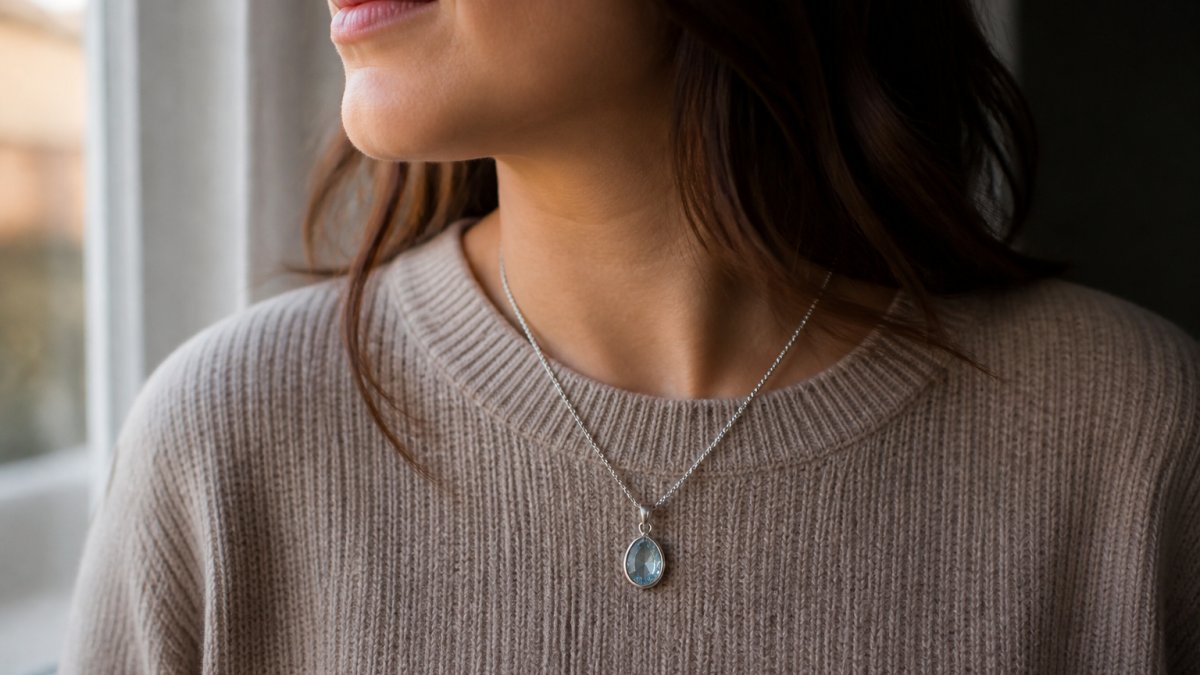
Quartz-family stones, including amethyst, citrine, and smoky quartz, work well for occasional daily wear if the setting protects the edges. Turquoise and black onyx hold up in a protected bezel.
For a concrete everyday option, our sterling silver turquoise polished oval pendant pairs a turquoise stone with a polished sterling silver frame. If you prefer a darker look, the sterling silver round black onyx pendant is another option.


Mistake 3: Choosing Durable Gemstones for Jewelry by Color Alone
Color is the reason most people buy a stone, and the worst single reason to pick one for daily wear. A vivid hue tells you nothing about how the stone will look after a year of perfume, sunscreen, and hand lotion. Decide durability first, then shop color inside the tier that fits how you actually live.
A Practical Decision Framework by Lifestyle
Most guides tell you to 'choose a durable stone' and stop there.
Active daily wear (worn through workouts, chores, travel, and sleep). Stay at Mohs 8 or above with good toughness: sapphire, ruby, diamond, spinel.
Sterling Silver Rhodium Plated Peridot Pendant →
Office and everyday wear (worn most days, removed for showers and sleep). Mohs 7 stones are reasonable here: quartz-family gems such as amethyst, citrine, and smoky quartz, plus turquoise and black onyx in a protective bezel. They will pick up fine surface scratches over years, but a bezel and a soft cloth keep them presentable.
Occasional removal wear (worn a few days a week, taken off for rough activity). Softer stones become reasonable choices: opal, pearl, moonstone, and tanzanite, provided you actually remove them.
When a softer stone is still a reasonable choice. If you love opal or pearl and will take the pendant off before showers, swimming, and yard work, the durability penalty is manageable.
Durability Beyond Mohs Hardness
Hardness measures scratch resistance, not resistance to chipping or breaking. Toughness describes how well a gem resists cracking from impact. Cleavage describes how cleanly a stone splits along internal planes.
For a pendant, check all three. A stone with strong cleavage can fracture from one bump against a table edge, and a stone with low toughness can craze internally even when the surface looks fine. Heat and chemicals matter too: opal can crack from sudden temperature change, and pearls and turquoise are sensitive to acids in perfume and hairspray.
Pendant Size, Weight, and All-Day Comfort
A pendant you feel all day is a pendant you stop wearing. A large stone on a thin chain pulls forward, twists, and tugs at the neck; a smaller stone in a well-balanced setting sits still.
- Pendant length and width: a piece around 30 to 45 mm long sits comfortably at the collarbone for most people.
- Total weight: heavier pieces need a sturdier chain to stay centered; a pendant that outweighs its chain will drift and flip.
- Bail size: the loop that holds the chain should slide freely without flipping the pendant face-down.
A pendant that flips constantly is usually too heavy for its bail or hung on too thin a chain. Balance matters more than stone size.
Mistake 4: Getting the Everyday Necklace Length Wrong
The right everyday necklace length depends on your neckline and how the pendant sits against your body. Standard chain lengths run from 16 inches at the base of the throat to 24 inches and beyond.
Length changes how a pendant moves. A shorter chain keeps the stone still against the skin. A longer chain lets it swing, which means more contact with desks and seatbelts. Our guide on how to layer sterling silver necklaces and pendants shows how to space lengths so each piece stays flat.
Mistake 5: Buying Without a Gemstone Pendant Care Plan
Gemstone pendant care is simple, but skipping it is what turns a durable stone into a dull one. The main enemies are harsh chemicals, abrasive cloths, and storage that lets pieces grind together.
A workable routine:
- Put the pendant on last, after perfume, lotion, and hairspray have dried.
- Wipe the stone with a soft, dry cloth after each wear to remove oils.
- Clean with lukewarm water and a drop of mild soap, then pat dry.
- Store each piece in its own soft pouch so stones do not scratch each other.
- Check prongs and the bail every few months for looseness.
Watch out: ultrasonic cleaners and steam can damage softer or treated stones, and chlorine from pools weakens metal over time. Remove the pendant before swimming or cleaning with household products. If a prong feels loose or a stone rattles, stop wearing it until a jeweler checks the setting.
Mistake 6: Overlooking Symbolism, Birthstones, and Budget
Symbolism and birthstones give a pendant meaning, and meaning is why people keep wearing a piece.
Budget deserves the same honesty. Our sterling silver rhodium-plated amethyst pendant and London blue topaz gemstone pendant are examples of gemstone pendants in sterling silver.

Set a budget before you shop, then prioritize durability and setting quality over carat size. A smaller, well-set stone outlasts a larger one in a flimsy frame.
Frequently Asked Questions
Which gemstones are suitable for everyday wear?
Stones rated 7 or higher on the Mohs scale hold up best to daily use. Diamond, sapphire, and ruby sit at 9, while quartz-family stones like amethyst and citrine reach 7. Softer options such as opal, pearl, and turquoise need protective settings or occasional-wear rotation. Hardness alone is not enough: a stone with good toughness and no strong cleavage, like a bezel-set amethyst pendant, often outlasts a harder stone in a fragile cut.
What should I look for in a gemstone pendant for daily wear?
Start with the setting. A bezel or halo setting shields the stone's edges from knocks better than tall prongs. Check the bail size against your chain, confirm the metal (sterling silver is marked 925), and weigh the piece in your hand: anything much over 10 grams can pull on the neck all day. Ask whether the stone comes with certification, and confirm the return or exchange window before you commit.
Can softer gemstones be worn every day?
Yes, with the right construction. A soft stone in a fully protective bezel setting, worn away from heavy activity, can handle daily wear. The risks are scratches, chips, and chemical damage from perfume, chlorine, and household cleaners. Rotate softer pieces out on gym days and clean them with a soft cloth rather than ultrasonic cleaners, which can damage porous stones.
How do I care for a gemstone pendant I wear every day?
Wipe the stone with a soft, dry cloth after wearing to remove skin oils, and store the pendant separately so it does not rub against harder jewelry. Remove it before swimming, showering, or applying perfume and lotion. Check the setting and bail monthly for looseness, and take it to a jeweler if a stone rattles or a prong feels sharp. Rhodium-plated silver may need re-plating over time as the finish wears.


