

Table of Contents
- What Determines Antique Kilim Rug Investment Value
- How to Identify an Authentic Kilim Rug
- Antique Rug Appraisal: Getting a Professional Valuation
- Kilim Rug Price Guide: Understanding Market Value
- Antique Kilim Rug Value: Investment Returns and Risk
- A Practical Valuation Workflow
- Frequently Asked Questions
Last Updated: October 6, 2026
What Determines Antique Kilim Rug Investment Value
An antique kilim rug investment depends on interconnected factors collectors evaluate before committing capital. At ABC Rugs Kilims & Jewelry, we've identified which characteristics genuinely move the valuation needle.
Investment potential rests on age, origin, materials, craftsmanship, and condition, each compounding the others.
Age and authenticity
Kilims older than 100 years typically appreciate, though age alone doesn't guarantee worth. A genuine 150-year-old piece from an obscure region may cost less than an exceptional 80-year-old kilim from a prestigious weaving center.
Authentication requires examining construction methods, dye chemistry, fiber wear patterns, and provenance documentation.
Origin and regional attribution
The region where a kilim was woven directly influences market value. Turkish, Persian, and Caucasian kilims occupy different price tiers based on collector demand and historical significance.
Establishing origin requires knowledge of regional design patterns, color palettes, weaving techniques, and historical trade routes.
Materials, dyes, and weaving technique
Hand-spun wool from specific sheep breeds produces fiber qualities and natural color variations machine-spun yarn cannot replicate.
Weaving technique matters enormously. Flatweave kilims, constructed without pile, require different technical approaches, and their warp and weft structure determines durability, flexibility, and visual character.
Knot density, design, and rarity
While kilims are flatweaves without traditional knots, weft thread density provides a comparable quality metric. Tighter weaves using finer yarns produce more detailed designs and greater durability, 100+ weft threads per inch displays finer craftsmanship than 40.
Design complexity and rarity significantly impact value. Kilims with rare pattern combinations, unusual color palettes, or designs specific to a village or period command higher prices.
How to Identify an Authentic Kilim Rug
Distinguishing authentic handmade kilims from machine-made reproductions requires examining construction details that reveal a rug's origins, characteristics machines cannot consistently replicate, even when manufacturers intentionally mimic age and wear.
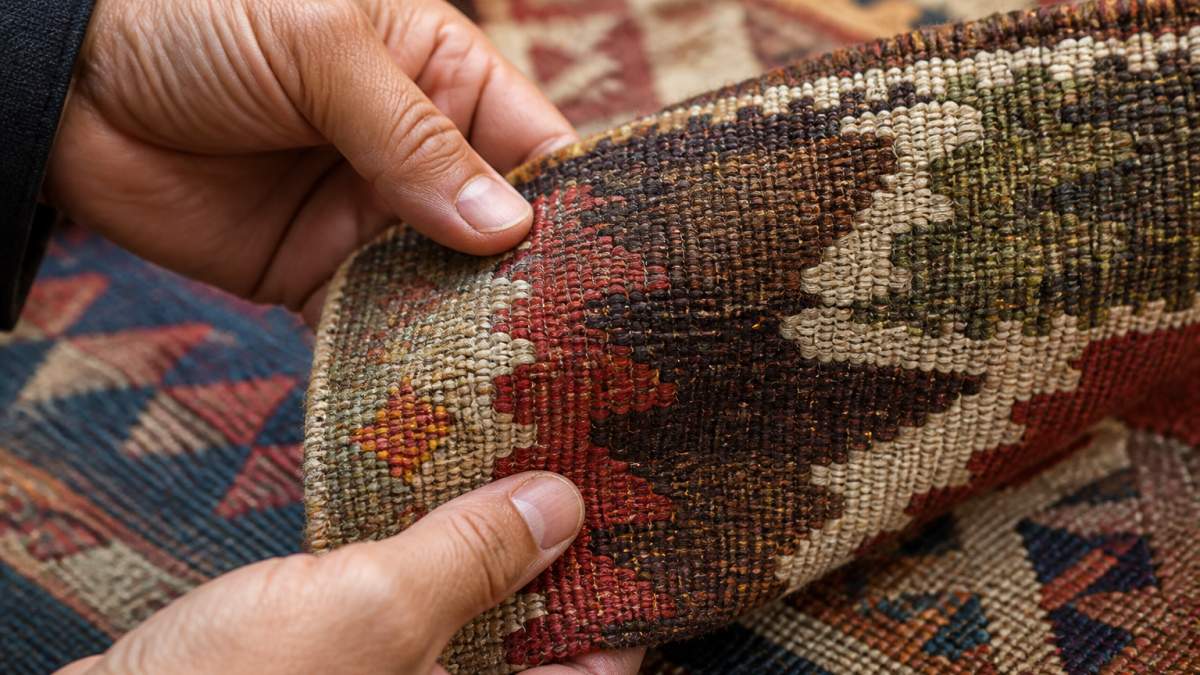
Flatweave construction and warp-weft structure
A kilim's defining characteristic is its flatweave construction, no pile, with visible interlocking warp (lengthwise) and weft (widthwise) threads creating the design.
Machine-made flatweaves display perfectly uniform thread tension, identical knot spacing, and mechanically consistent patterns. Authentic handmade kilims show subtle variations in thread thickness, occasional pattern misalignment, and natural inconsistencies in weave density, imperfections that mark authenticity.
Natural dyes versus synthetic dyes
Natural dyes produce color characteristics synthetics struggle to replicate. Madder root creates warm reds that deepen with age, indigo produces blues with complex undertones, and cochineal generates luminous crimsons and purples.
Synthetic dyes, introduced in the 1850s but not widely adopted for traditional kilims until the mid-20th century, produce uniform color saturation, synthetic reds appear the same shade across the surface.
Hand-spun yarn and irregularities
Hand-spun wool exhibits variations in thickness machine-spun yarn cannot match. Fibers twisted by hand show subtle fluctuations in diameter, creating a visual texture and light-catching quality uniform yarn lacks.
Machine-spun yarn produces perfectly consistent diameter, giving kilims a uniformly smooth surface that lacks the character of hand-spun alternatives.
Antique Rug Appraisal: Getting a Professional Valuation
A professional appraisal establishes the kilim's market value for insurance, sale, estate planning, or investment documentation. Appraisals differ in scope, methodology, and cost, understanding which type serves your needs prevents wasted expense.
Types of appraisals and when to use each
Insurance appraisals estimate replacement cost, the amount needed to purchase a comparable kilim today, focusing on condition, market comparables, and current replacement value.
Auction estimates project what a kilim might sell for at a specific auction house, based on their own comparable sales and market trends.
Finding a qualified appraiser
A qualified appraiser possesses specialized knowledge of kilims, antique textiles, and current market conditions. Look for appraisers certified by the American Society of Appraisers (ASA) or members of the International Society of Appraisers (ISA), credentials indicating they've met education, experience, and ethical standards (Start Here! ASA's Professional Credentials).
Appraisers specializing in antique textiles and kilims understand regional variations, authentication techniques, and collector demand better than generalists. Interview them about their kilim experience, authentication methods, and familiarity with current market prices, and ask for references and sample reports.
Documentation and appraisal costs
A comprehensive appraisal report includes detailed photographs, measurements, material analysis, condition assessment, authentication findings, and comparable sales supporting the valuation.
Appraisal costs vary based on the kilim's complexity, the appraiser's expertise, and the depth of research required. A straightforward appraisal of a well-documented kilim might cost $200-400, while complex pieces requiring extensive research, authentication analysis, or comparative market study can cost $500-1,500 or more.
Kilim Rug Price Guide: Understanding Market Value
Market value for antique kilims reflects current collector demand, comparable recent sales, condition, and investment potential. Understanding how prices are established prevents overpaying and helps identify undervalued opportunities.
Comparable sales and realized auction prices
Realized auction prices, what kilims actually sold for, not estimate ranges, provide the most reliable market data. Christie's, Sotheby's, and specialized textile auctioneers publish detailed results showing hammer prices, dimensions, condition notes, and provenance.
Comparable sales analysis requires identifying kilims similar in age, origin, size, condition, and design complexity.
Condition grading and restoration impact
Condition dramatically affects value. A kilim in excellent condition with only light wear might sell for 20-30% more than an identical piece with moderate wear.
Restoration decisions require careful analysis. Professional restoration addressing structural damage or stabilizing fragile areas can preserve value and prevent deterioration, but aggressive restoration that alters appearance, removes original patina, or uses inappropriate techniques can permanently reduce value.
Regional variations in pricing
Kilims from renowned weaving regions command consistent premiums. Turkish Anatolian kilims from specific villages with distinctive styles maintain strong collector demand, Persian kilims from historically significant regions appeal to investment-minded collectors, and Caucasian kilims attract specialists willing to pay premiums for rare examples.
Kilims from lesser-known regions or lacking clear attribution typically cost 30-50% less than comparable pieces with established provenance.
Antique Kilim Rug Value: Investment Returns and Risk
Kilims can function as alternative investments, offering aesthetic enjoyment alongside potential appreciation. However, returns are neither guaranteed nor consistent, and kilim investments carry distinct risks that differ from traditional financial assets.
Historical appreciation and market trends
Exceptional kilims have appreciated significantly over decades. A rare 19th-century kilim purchased for $5,000 in 1990 might sell for $15,000-25,000 today, representing 3-5% annualized returns. However, these results reflect exceptional pieces with strong provenance and documented rarity.
Market trends favor kilims with documented authenticity, clear provenance, and condition allowing display without conservation concerns.
Liquidity and resale considerations
Kilims are less liquid than stocks or bonds. Selling requires finding a buyer willing to pay your asking price.
Selling options include private sales, consignment to dealers, auction house placement, or direct sales to collectors, each with different timelines, costs, and outcomes.
Insurance and preservation costs
Insuring a kilim requires annual premiums, typically 0.5-1% of appraised value. A $10,000 kilim costs $50-100 per year, totaling $1,000-2,000 over a 20-year holding period and reducing net returns.
Preservation costs include professional cleaning every 5-10 years ($100-500 depending on size and condition), climate-controlled storage if not displayed ($50-200 annually), and potential restoration if damage occurs.
A Practical Valuation Workflow
Valuing an antique kilim follows a systematic process. Whether assessing a piece you own, considering a purchase, or preparing for sale, this workflow ensures you've examined all relevant factors.
Step 1: Document condition and provenance
Begin by photographing the kilim from multiple angles, including close-ups of construction details, damage areas, and any labels or signatures.
Assess condition thoroughly, wear patterns, color fading, tears, holes, stains, odors, pest damage, and identify any repairs or restorations, including materials used and approximate age.
Step 2: Research comparable sales
Consult auction results from Christie's, Sotheby's, and specialized textile auctioneers covering the past 3-5 years.
Check dealer websites and online marketplaces for kilims currently offered for sale, noting asking prices (which differ from realized sales prices), and consult published price guides and market reports.
Step 3: Obtain a professional appraisal
Based on your research, identify qualified appraisers specializing in antique kilims. Provide your documentation, photographs, and comparable sales data, and request a detailed report including condition assessment, authentication analysis, comparable sales justification, and clear valuation methodology.
Compare appraisals from multiple appraisers if valuations differ significantly, substantial disagreement may indicate authentication concerns or methodological differences.
Step 4: Evaluate investment fit and liquidity
Assess whether the kilim aligns with your investment objectives.
Calculate realistic returns by projecting modest annual appreciation (1-3%), subtracting annual insurance and preservation costs, and factoring in liquidity constraints.
Assessing an antique kilim rug investment requires balancing authentication, market research, and realistic return expectations.
Frequently Asked Questions
Are antique kilim rugs valuable as investments?
Yes, authentic antique kilim rugs hold and often appreciate in value when properly authenticated and maintained. Their investment potential depends on age, provenance, materials, and condition. Handmade kilims with natural dyes and tribal attribution from established weaving regions command higher prices. However, like all collectibles, returns vary. Liquidity can be slower than stocks or bonds, and restoration costs may reduce net returns. Professional appraisal is essential before treating a kilim as an investment asset.
What factors affect the value of an antique kilim rug most?
The top value drivers are age and authenticity, origin and regional attribution, materials (wool quality and natural dyes), weaving technique (knot density and flatweave construction), design rarity, and overall condition. A 19th-century Turkish kilim made with hand-spun wool and natural dyes will command significantly more than a 20th-century machine-made piece or one with synthetic dyes. Provenance documentation and tribal attribution also boost value substantially among collectors.
How can you tell if a kilim rug is authentic?
Authentic kilims feature flatweave construction with visible warp and weft threads, hand-spun yarn with natural irregularities, and natural dyes that age unevenly. Machine-made rugs show uniform knots and perfectly consistent colors. Examine dye lots for variations typical of natural indigo, madder, or cochineal. Synthetic dyes appear uniformly bright and don't fade naturally. Authentic pieces also show wear patterns consistent with age and use.
What is a fair price for an antique kilim rug?
Fair pricing depends on age, origin, size, condition, and materials. A small 19th-century Turkish kilim in good condition might range from several hundred to a few thousand dollars, while rare tribal pieces or large Persian kilims can exceed ten thousand. Comparable auction sales and specialist dealer listings provide realistic benchmarks. Condition grading is critical: restoration or significant wear reduces value. Obtain multiple appraisals and research recent sales of similar pieces before purchasing. Pricing varies by market, so consulting multiple sources ensures you understand current value.
Do antique kilim rugs increase in value over time?
Authenticated antique kilim rugs generally appreciate over decades, particularly rare pieces with strong provenance and excellent condition. Historical data shows steady appreciation for handmade kilims from established weaving regions. However, appreciation is not guaranteed and depends on market demand, condition preservation, and proper documentation. Machine-made or heavily restored kilims appreciate slowly or not at all. Investment returns are modest compared to stocks but offer tangible asset value and aesthetic enjoyment. Treat kilim investment as a long-term commitment, not a quick flip.
Where can you get an antique kilim rug appraised?
Seek appraisers certified by the American Society of Appraisers (ASA) or the International Society of Appraisers (ISA) who specialize in textiles or Oriental rugs. Auction houses like Sotheby's and Christie's offer appraisals for high-value pieces. Specialist kilim dealers and museums with textile collections can also recommend qualified appraisers.
How does condition affect an antique kilim rug's investment value?
Condition is critical to investment value. Minor wear is expected in antique pieces, but significant damage, stains, or repairs reduce value substantially. A kilim with 20% restoration may be worth 30-50% less than a comparable piece in original condition. Professional restoration can improve appearance but typically doesn't recover lost investment value. Condition grading by appraisers uses standardized scales from excellent to poor. Proper preservation, storage in cool dry environments, and professional cleaning extend life and maintain value. Document condition thoroughly with photos for insurance and resale purposes.
What makes a kilim different from other antique rugs in terms of value?
Kilims are flatweave textiles, not pile rugs, which affects valuation differently. They require less yarn and labor than knotted rugs, historically making them more affordable but also more fragile. Authentic kilims from established tribal and regional traditions command premium prices among collectors. Their geometric patterns and natural dyes appeal to designers and decorators, supporting steady demand. However, kilims wear faster than pile rugs, so condition significantly impacts value. Rarity, age, and documented provenance drive investment potential. Kilim-specific appraisers understand these distinctions and price accordingly.


