

Table of Contents
- Assessing Your Antique Kilim's Structural Integrity
- The Best Way to Hang a Rug on the Wall
- How to Attach Velcro to a Rug for Hanging
- Preparing Your Wall and Choosing the Right Location
- Antique Rug Preservation Tips for Wall Display
- Styling Antique Kilims as Textile Art
- Display Antique Kilims in Boho and Modern Interiors
- Frequently Asked Questions
Last Updated: September 28, 2026
Assessing Your Antique Kilim's Structural Integrity
Before you display antique kilims, check their condition carefully. A textile that's fragile or damaged needs different handling than one in good shape. This assessment determines which mounting method is safe for your piece.

Start by examining the fibers. Look for thin spots, loose weaving, or areas where the warp and weft are separating. Run your fingers gently across the surface. You're checking for brittleness or areas that feel unstable. Antique kilims made with natural dyes and hand-spun wool can develop weak points over decades.
Check the edges and corners next. These areas take stress when the rug hangs. Fraying, torn selvage, or loose binding means you'll need reinforcement before mounting. Pay attention to any previous repairs. Older stitching or patches tell you where the textile was already stressed.
Test the weight distribution. A kilim that's heavier on one side puts uneven pressure on mounting hardware. Heavier pieces need stronger support systems. Lighter flat-weave textiles handle simpler mounting methods better.
The goal is simple: match the mounting method to what your specific kilim can support. A sturdy 1970s kilim handles rod mounting differently than a delicate 1940s piece.
The Best Way to Hang a Rug on the Wall
Two proven methods work for displaying antique kilims: velcro mounting and rod installation. Each has real advantages depending on your textile's weight, condition, and the look you want.

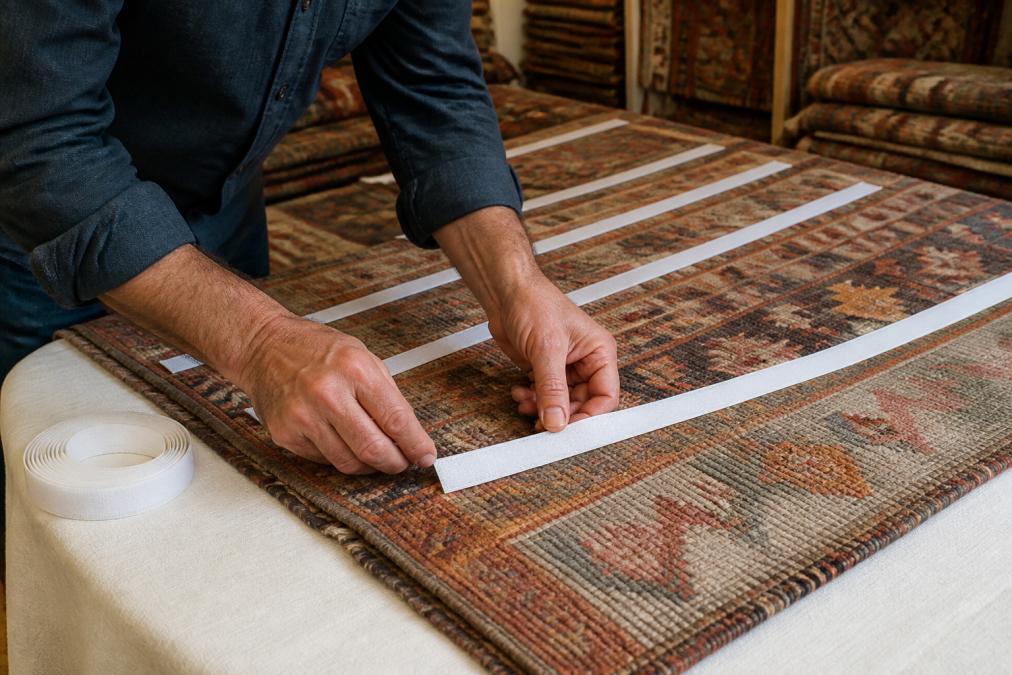
Velcro Mounting Systems
Velcro mounting spreads the weight across the top edge of the kilim. This distributes stress more evenly than a rod, which concentrates pressure at specific points. The system uses adhesive-backed velcro strips attached to both the wall and a cotton sleeve sewn to the rug's top.
This method works best for lighter flat-weave kilims and pieces under 8 feet wide. The adhesive backing on wall-mounted velcro must be strong enough to hold the textile's full weight without shifting. Most mounting velcro rated for heavy-duty use handles kilims well.
The cotton sleeve sewn to the kilim's back protects the original weaving. You're not drilling holes through the textile or applying adhesive directly to antique fibers. This non-damaging approach preserves the piece for future generations.
Installation takes about 30 minutes for a standard-size kilim. Removal is equally simple, peel the velcro strips carefully from the wall and rug. No permanent damage to either surface.
Mounting Rod Installation
A horizontal rod threaded through a cotton sleeve at the kilim's top works for heavier pieces and larger displays. The rod bears the weight while the sleeve protects the textile. This method suits kilims 8 feet or wider, where velcro alone might not provide adequate support.
Select a rod made from wood or aluminum. Wood rods blend with traditional aesthetics. Aluminum rods are lighter and stronger. Both materials resist warping better than steel, which can rust and stain the textile over time.
The sleeve must be sewn from unbleached cotton or linen. Use a needle and thread that match the kilim's fiber content. Stitching should be tight but not so tight that it pulls the textile's edge. A professional textile conservator can sew the sleeve if you're uncertain about doing it yourself.
Rod diameter matters. A 1-inch rod works for most residential displays. Thicker rods provide more support for very large or heavy pieces but look bulkier. Thinner rods suit smaller kilims but may flex under weight.
How to Attach Velcro to a Rug for Hanging
The cotton sleeve is where velcro attaches to your kilim. This sleeve protects the original weaving and distributes the mounting load. Here's how to do it correctly.
Step 1: Measure Your Kilim's Top Edge
Measure the full width of the kilim at the top. Add 2 inches to this measurement. This extra length wraps around the edges slightly, preventing the rug from slipping sideways.
Step 2: Cut and Prepare the Cotton Sleeve
Cut a strip of unbleached cotton muslin or linen. The strip should be 4-6 inches tall and as wide as your measurement from Step 1. Fold the long edges inward by half an inch and press them flat. This prevents fraying and creates clean edges.
Step 3: Sew the Sleeve to the Kilim
One Of The Kind Hand-Knotted Persian →
Position the cotton sleeve along the top back edge of the kilim. Use a needle and thread that matches the textile's color. Sew a straight line about half an inch from the top of the sleeve, then another line at the bottom. Make stitches small and tight. Spacing them close together distributes stress across more stitches, preventing tearing.
Step 4: Apply Velcro to the Sleeve
Cut velcro strips to fit the width of the cotton sleeve. Remove the adhesive backing and press the hook side (rough texture) onto the sleeve. Press firmly for 30 seconds to ensure good contact. Space multiple strips evenly if the kilim is wide, this prevents sagging in the center.
Step 5: Apply Velcro to the Wall
Measure the height of your wall display space. Mark the center point. Apply the loop side (soft texture) of velcro strips horizontally at this height, spacing them to match the strips on the kilim. Use a level to ensure strips are straight.
Step 6: Hang the Kilim
Align the velcro strips on the kilim with those on the wall. Press the textile against the wall firmly. Start from the center and work outward. This prevents wrinkles and ensures even contact.
| Step | Duration | Key Point |
|---|---|---|
| Measure and prepare | 5 minutes | Accurate width prevents slipping |
| Sew cotton sleeve | 15-20 minutes | Small, tight stitches distribute stress |
| Apply velcro strips | 10 minutes | Press firmly for 30 seconds |
| Hang and adjust | 5 minutes | Work from center outward |
Preparing Your Wall and Choosing the Right Location
The wall itself matters as much as the mounting hardware. Proper wall preparation ensures your kilim stays secure and displays beautifully for years.
Check your wall surface first. Drywall, plaster, and painted surfaces all accept velcro differently. Textured walls may not provide enough contact area for adhesive velcro. Sand textured areas smooth or use mounting strips designed for rough surfaces.
Moisture is the enemy of both textile and wall. Avoid displaying antique kilims in bathrooms or kitchens where humidity spikes.
Test your wall's load capacity before hanging. Most interior walls support velcro-mounted kilims without issue. If you're mounting on plaster or very old drywall, use mounting anchors rated for the kilim's weight. These distribute force across a wider area and prevent the textile from pulling through the wall surface.
Antique Rug Preservation Tips for Wall Display
Displaying an antique kilim vertically puts different stresses on the textile than laying it on a floor. The fibers hang under constant tension. Proper care keeps the piece stable and prevents deterioration.
Protecting Against Light Damage
Natural dyes fade when exposed to UV light. The fading happens slowly but continuously. After a few years, the side of the kilim facing the light shows noticeably different colors than the back.
Managing Humidity and Temperature
Antique wool and cotton fibers respond to moisture changes. High humidity encourages mold and mildew growth. Low humidity makes fibers brittle and prone to cracking. Aim for 45-55% relative humidity and temperatures between 65-75°F.
Styling Antique Kilims as Textile Art
An antique kilim on your wall is more than decoration, it's a piece of textile art with history and cultural significance. Styling it properly shows off the craftsmanship and makes the piece feel intentional rather than accidental.
Display Antique Kilims in Boho and Modern Interiors
Boho design celebrates handmade textiles and global aesthetics. Antique kilims fit naturally into this style. The flat weave, geometric patterns, and natural dyes align perfectly with boho principles.
Frequently Asked Questions
What is the safest way to hang an antique kilim without damaging it?
The safest method is using a cotton sleeve attached to the top of the kilim with hand-stitching, paired with a mounting rod. This distributes weight evenly across the textile rather than concentrating stress on a few points. Avoid nails or hooks that pierce the fibers. Velcro mounting is also safe when applied correctly to a cotton backing strip. Always inspect the kilim's condition first, if fibers are fragile or the weave is compromised, consult a textile conservator before hanging.
Should I use velcro or a rod to display antique kilims on walls?
Both methods work for antique kilims, but the choice depends on weight and condition. Velcro mounting is ideal for lighter kilims and flat-weave textiles under 15 pounds, offering a clean aesthetic with no visible hardware. Mounting rods suit heavier pieces and provide superior support for museum-grade antique rugs. Rods also allow easier removal for cleaning or rotation. For valuable or fragile antique kilims, a rod with a cotton sleeve distributes weight more safely across the entire top edge.
How do I clean an antique kilim before hanging it on the wall?
Vacuum gently using a screen overlay to prevent fiber damage, working in the direction of the pile. For surface dust, use a soft brush. Avoid water or chemical cleaners on antique kilims unless professionally assessed, moisture can damage natural dyes and weaken fibers. If the kilim requires deeper cleaning, consult a textile conservator specializing in hand-woven rugs. Never submerge antique textiles. Light vacuuming is sufficient for display preparation in most cases.
Can hanging a kilim rug on the wall cause it to stretch?
Properly mounted kilims rarely stretch if weight is distributed evenly. Cotton sleeve systems and quality mounting rods prevent concentrated stress. However, using nails, hooks, or improper fasteners can create weak points that lead to gradual stretching or tearing. Velcro systems also prevent stretching when applied to a backing strip rather than directly to fibers. The key is choosing non-damaging hardware and ensuring the mounting method supports the kilim's full width at the top edge.


