

Table of Contents
- Start With a Textile-First Palette for Your Luxury Interior
- Vintage Rug Living Room Ideas That Balance Old and New
- How to Decorate With Kilim Rugs in Bedrooms and Living Spaces
- Layering Rugs in a Living Room: Proportion, Texture, and Placement
- Sourcing and Authenticating Vintage Textiles for High-End Interiors
- Vintage Rug Care and Preservation: What Collectors Need to Know
- Frequently Asked Questions
Last Updated: October 13, 2026
Start With a Textile-First Palette for Your Luxury Interior
Most rooms are designed backwards. People pick the paint, buy the sofa, then hunt for a rug that matches. That order kills character.
Vintage textiles work best when they come first. A textile-first palette means you choose your antique rug, kilim, or vintage throw before anything else, then build the room around its colors.
Here is how to approach it when working with collectors and designers sourcing pieces for high-end homes:
- Pull three colors from the textile. Look for one dominant tone, one accent, and one neutral.
- Match paint to the rug's faded tones. Muted pastels, earth tones, and shades of gray almost always work.
- Keep big furniture quiet. Solid linen, wool, or bouclé lets the textile lead.
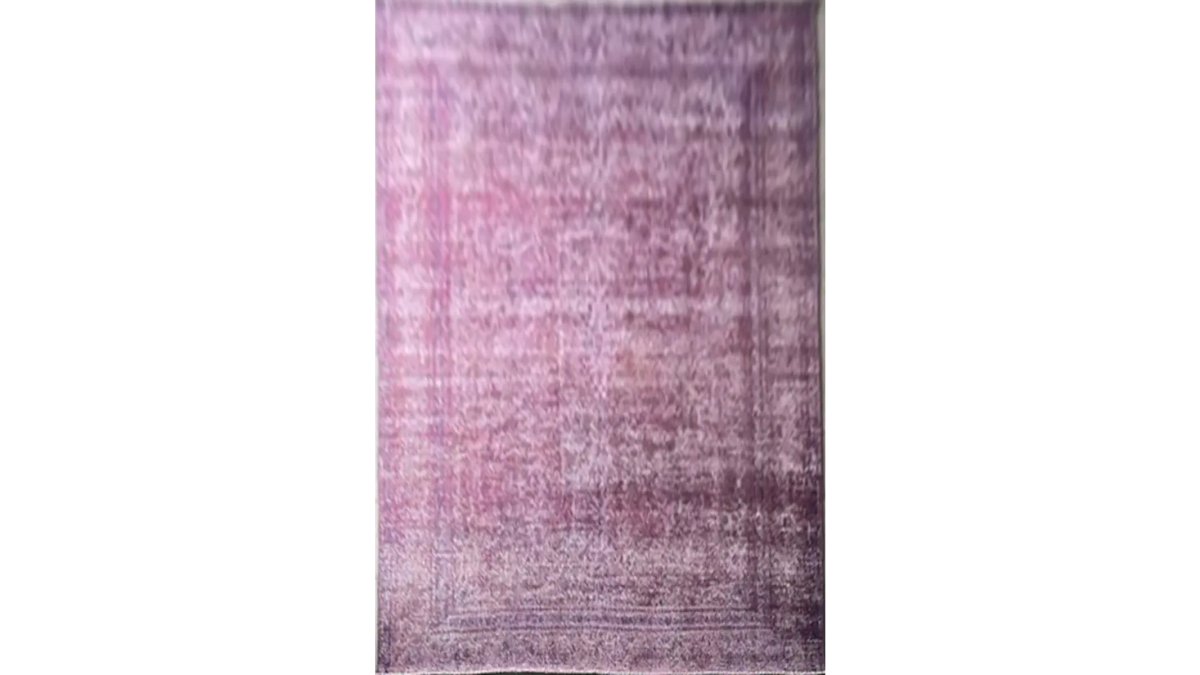
The payoff is a room that feels curated rather than shopped. We recommend starting with a large piece like the One Of The Kind Hand Knotted Persian Rug 11'6" x 9'7" R15474, a hand-knotted Persian rug in soft violet and rose with a distressed finish.

Vintage Rug Living Room Ideas That Balance Old and New
A vintage rug living room works when the rug is the oldest thing in the room and everything else supports it. The goal is visual balance, not a museum.
Mixing vintage and modern decor comes down to contrast. A distressed rug under a clean-lined sofa reads intentional. The same rug under heavy antiques reads dated.
Anchoring a Seating Area With a Distressed Persian Rug
A distressed Persian rug is the easiest anchor for a seating area. Its faded pattern hides wear and softens a modern room fast.
Size matters more than most people think. For a standard seating group, the rug should sit under the front legs of every piece.
- Sofa plus two chairs: start around 9 by 12 feet
- Sectional: go larger, or layer two rugs
- Open-plan space: use the rug to define the zone
Our One Of The Kind Hand Knotted Persian Rug 12'6" x 9'6" R15481 suits a formal living room.

Pairing Muted Pastels and Earth Tones With Modern Furniture
Muted pastels and earth tones are the safest bridge between old and new. They let a vintage textile feel current without stripping its age.
Try these pairings:
- Faded rose rug with a cream sofa and black metal accents
- Soft sage kilim with walnut furniture and brass lighting
- Warm ivory rug with charcoal upholstery and oak floors
The trick is proportion. Let the textile hold about 20 percent of the visual weight in the room. Everything else stays calm.
How to Decorate With Kilim Rugs in Bedrooms and Living Spaces
To decorate with kilim rugs, treat them as art first and floor covering second. Kilims are flat-woven, lighter than pile rugs, and often bolder in pattern.
But kilims are only one textile in a luxury room. The stronger move is to plan every vintage textile by room, with real measurements, so each piece has a job. Here is how we place them.
Living Room: Rug, Throw, and Cushion Placement
- Area rug: For a sofa plus two chairs, a 9 by 12 foot rug lets all front legs sit on the textile. For a sectional, go 10 by 14 feet or layer two rugs. Leave 12 to 18 inches of bare floor between the rug edge and the walls in a large room.
- Throw: A throw should span 50 to 60 inches so it drapes over a sofa arm without puddling. Fold it in thirds lengthwise for a tailored look.
- Cushions: Use a 22 inch insert in a 20 inch cover for a full, luxury fill. Mix one vintage kilim cushion with two solid wool cushions per sofa.
Bedroom: Bedding, Runner, and Wall Textile Scale
- Bedside runner: A 2 by 6 foot kilim runner along one side of the bed adds warmth on bare floors. For a king bed, a 2.5 by 8 foot runner reads more generous.
- Foot-of-bed textile: A vintage throw or small kilim 4 by 6 feet laid across the foot of the bed adds pattern without competing with bedding.
- Bedding: Keep sheets and duvet in solid linen or percale so a vintage coverlet or suzani can lead. A coverlet should overhang the mattress by 12 to 16 inches on each side.
Dining Room: Table Linens and Rug Proportion
- Rug: The rug should extend 24 inches beyond every edge of the table so chairs stay on the textile when pulled out. For a 6 foot table, that means a rug at least 9 by 12 feet.
- Table linens: A vintage linen runner should overhang each end of the table by 6 to 8 inches. Mix a vintage runner with modern napkins to avoid a themed look.
Hallway and Entry: Runners and Wall Textiles
- Runner: Leave 4 to 6 inches of bare floor on each side of a hallway runner. A 2.5 by 10 foot runner suits most long halls.
- Wall textile: A narrow kilim or fragment 2 by 4 feet works above a bench or console. Keep the bottom edge at least 30 inches above the floor so it clears seating.
Bathroom and Powder Room: Small Textiles, Big Impact
- Towel and textile accents: Vintage linen hand towels and small kilim mats add age without moisture risk. Keep valuable wool and silk out of steamy rooms.
- Wall piece: A small embroidered fragment framed under glass protects the fiber while adding color.
For smaller spaces, the One Of The Kind Hand Knotted Persian Rug 9'7" x 6'7" R15479 fits a bedroom or study without overwhelming it. It is hand-knotted with an ivory, lightly distressed field.

Layering Rugs in a Living Room: Proportion, Texture, and Placement
Layering rugs in a living room works when one rug is clearly the base and the other is clearly the accent. Two loud patterns fight. One quiet, one bold wins.
Follow these placement rules:
- Base rug should extend 12 to 24 inches beyond the accent rug on all sides
- Accent rug goes centered, or offset toward the main seating
- Keep pile heights different for texture contrast
Texture and material contrast do the heavy lifting here. A rough wool kilim over a smooth sisal base reads richer than two similar weaves.
The 80/20 Rule for Mixing Vintage and Modern Textiles
The 80/20 rule keeps a room from feeling like a showroom. About 80 percent of your textiles should be modern and quiet.
That 20 percent is where the eye lands. One antique rug, one vintage throw, one old cushion. That is usually enough for a whole room.
One Of The Kind Hand Knotted Persian Rug 11'6" x 9'7" R15474 →
- 80 percent: solid upholstery, neutral curtains, plain bedding
- 20 percent: vintage rug, kilim pillows, a faded floral throw
Get the ratio right and the room feels collected over time, not decorated in a weekend.
| Element | Share of Room | Examples |
|---|---|---|
| Modern and quiet | 80% | Solid sofa, linen curtains, plain bedding |
| Vintage and bold | 20% | Antique rug, kilim pillows, vintage throw |
Sourcing and Authenticating Vintage Textiles for High-End Interiors
Authenticating a vintage textile comes down to three checks: construction, materials, and wear pattern. Fakes get the look right and the details wrong. But authentication is only half the job in a luxury interior. The other half is selecting pieces that hold up next to high-end furnishings without turning the room into a theme. Preserving the integrity of these delicate acquisitions requires a disciplined approach to how you care for luxury fabrics to ensure their longevity within a contemporary space.
Step 1: Authenticate Construction and Materials
Start with the back of the piece. A genuine hand-knotted rug shows individual knots tied by hand. Machine-made copies show a uniform, glued backing.
Look for these signs of authenticity:
- Irregular knots. Slight variation signals hand work.
- Natural dyes. Older pieces fade unevenly, not in perfect stripes.
- Wear in traffic paths. Real age shows where people walked.
Condition matters as much as age. A repaired antique can still be a fine piece, but the repair should be disclosed. Ask for clear photos of the back, the edges, and any patch.
Step 2: Judge Luxury-Specific Quality
Not every old textile belongs in a luxury room. Four factors separate a piece that elevates a space from one that merely fills it:
- Fiber quality. Fine wool, silk, and pashmina have a luster and hand that coarse wool lacks. Run your palm across the pile, it should feel dense and springy, not dry or brittle.
- Craftsmanship. Knot density, dye consistency, and pattern precision separate a master workshop piece from a village production. A common pattern is 200 to 500 knots per square inch in fine Persian and Pakistani rugs.
- Rarity. Unusual colorways, early dates, and signed pieces carry more weight than common patterns in common sizes.
Step 3: Combine Heirloom Textiles With High-End Furnishings Without a Themed Look
The mistake is treating a vintage textile as the whole design. The fix is contrast and restraint:
- Pair one heirloom textile with quiet, modern upholstery in solid linen, wool, or bouclé.
- Keep metals consistent, brass with warm textiles, nickel or blackened steel with cool ones.
- Limit vintage textiles to two or three per room so each piece reads as intentional.
For buyers who want a verified starting point, our One Of The Kind Hand Knotted Persian Rug 12'1" x 8'8" R15445 is a hand-knotted Persian piece in warm ivory and rose gold neutrals, sized for a formal living room or master bedroom.
Step 4: Source Responsibly
Where you buy matters as much as what you buy. Estate sales, established dealers, and auction houses with textile specialists offer the most documentation. Online marketplaces can work, but ask for back, edge, and label photos before committing. For pieces with real value, a professional textile appraiser can confirm age, origin, and condition.
Vintage Rug Care and Preservation: What Collectors Need to Know
Vintage rug care starts with prevention, not cleaning. Most damage comes from sunlight, moisture, and foot traffic, not from dirt.
Rotate the rug every six to twelve months so wear stays even.
For routine care:
- Vacuum gently with a low setting and no beater bar
- Blot spills right away with a clean cloth
- Never machine wash or soak a wool rug
Store pieces rolled, never folded. Folds crack the foundation over time. Wrap in breathable cotton, not plastic, and keep them dry.
For guidance on textile preservation standards, the American Institute for Conservation publishes care advice for historic textiles and rugs. The Smithsonian's Museum Conservation Institute also offers notes on textile storage and light exposure.
A little prevention keeps a hand-knotted piece in good shape for decades.
Frequently Asked Questions
How do you incorporate vintage textiles into a modern interior?
Start with one strong piece, such as a hand-knotted Persian rug in a faded neutral or muted pastel, then build modern furniture around it. Keep the rest of the room quieter so the textile reads as the focal point. Mixing old and new works best when you repeat one or two colors from the textile in cushions, throws, or art. This curated look feels collected over time rather than matched, which is what gives a luxury interior its character.
Can you layer vintage rugs over other rugs?
Yes. Layering rugs in a living room is one of the most effective ways to add depth and texture. Place a smaller vintage or kilim rug over a larger neutral base, offsetting it slightly so both edges show. Keep the top rug thin so it does not create a trip hazard, and use a rug pad underneath to stop slipping. A good rule is to leave at least 12 to 18 inches of the base rug visible on the sides you see most.
How do you protect vintage textiles from fading and wear?
Rotate rugs every six to twelve months so traffic and sunlight hit them evenly, and use window film or sheer curtains in rooms with strong direct sun. Vacuum wool rugs gently on low suction without a beater bar. Blot spills immediately with a clean white cloth rather than rubbing. For valuable antique textiles, consult a specialist cleaner rather than using household products. Proper vintage rug care and preservation protects both the color and the fiber structure.
How can you tell if a vintage rug will suit your room?
Measure your space first. In a living room, the rug should be large enough that at least the front legs of all seating sit on it, which usually means a 9x12 or larger for a standard sofa arrangement. Then check the rug's dominant color against your existing palette; faded florals, earth tones, and shades of gray tend to work with almost anything. Finally, consider pile height and material against your flooring and foot traffic before committing.
Vintage textiles reward patience. The challenge is finding pieces that are authentic, well documented, and ready for a luxury room. At ABC Rugs Kilims & Jewelry, we curate handmade rugs, kilims, and Persian antique pieces, offer both retail and wholesale options, and back every listing with a 30-day exchange privilege. Get started with ABC Rugs Kilims & Jewelry and find a textile that anchors your space for years.


