

Last Updated: October 30, 2026
Quick Summary
Judge natural rubies by seven factors: color, clarity, cut, carat weight, origin, treatment, and certification. Color drives value more than anything else, so a small vivid stone often costs more than a larger dull one. Always confirm treatment status and verify the lab report before you pay.
- Look at the stone in daylight, since fluorescent bulbs can make a dull ruby look brighter.
- Eye-clean is the practical clarity standard, as no natural ruby is perfectly clean.
- Fracture-filled rubies can be damaged by heat, steam, or harsh cleaning, including a jeweler's torch.
- A report should read natural corundum, variety ruby, and vague treatment wording is a red flag.
- Verify the report number on the lab's own website before you pay for the stone.
Table of Contents
- The 7 Ruby Quality Factors That Decide What You Pay
- Ruby Treatments and Enhancements: What Sellers Must Disclose
- Natural vs Synthetic Ruby: How to Tell Them Apart
- Ruby Certification and Grading Report: How to Read One
- Origin and Rarity: Why Burma Rubies Cost More
- What Natural Rubies Cost and How to Judge Price Fairly
- In-Person and Online Buying Safeguards for Natural Rubies
- Shop Certified Natural Rubies at ABC Rugs Kilims & Jewelry
- Frequently Asked Questions
The 7 Ruby Quality Factors That Decide What You Pay
A ruby's price comes down to color, clarity, cut, carat weight, origin, treatment, and certification. Get those seven factors right and you can tell a fine stone from an overpriced one.
Here's the short version: color drives value more than anything else. A small, vivid stone often costs more than a larger, dull one.
Rubies are a variety of corundum, the same mineral family as sapphire (gia.edu).
| Factor | What to Check | Why It Matters |
|---|---|---|
| Color | Hue, tone, saturation | Biggest driver of price |
| Clarity | Inclusions, eye-clean look | Affects beauty and durability |
| Cut | Proportions, symmetry | Controls sparkle and face-up size |
| Carat | Weight in carats | Rarity jumps at larger sizes |
| Origin | Source region | Adds collector premium |
| Treatment | Heat, filling, disclosure | Changes value and risk |
| Certification | Independent lab report | Confirms what you're buying |
Color: Hue, Tone, and Saturation
Color is the first thing to judge and the hardest to fake. Hue is the basic color, from pure red to slightly purple or orange. Tone is how light or dark it looks. Saturation is how strong and vivid the red is.
The top stones show a pure, vivid red with medium-dark tone, a color often called "pigeon blood." Most fine rubies lean slightly toward purple or orange, which is normal and still valuable.
Look at the stone under daylight, not store lighting. Fluorescent bulbs can make a dull stone look brighter than it is.
Clarity, Cut, and Carat Weight
Clarity means how free the stone is from inclusions, the tiny internal marks every natural ruby carries.
Cut controls how light moves through the stone. Good proportions and symmetry give it life. A poorly cut ruby can look flat even with great color.
Carat weight measures size. Large fine rubies are rare, so price climbs steeply as weight goes up.
Ruby Treatments and Enhancements: What Sellers Must Disclose
Almost every ruby on the market has been treated. That's not automatically bad, but you deserve to know.
Heat treatment is a common and widely accepted method. It can improve color and clarity and is generally stable over time.
Fracture filling is different. It means filling cracks with glass or a lead-based material to hide flaws. These stones cost less, and they need more care.
Heat, Fracture Filling, and Durability Risk
Fracture-filled rubies carry real durability risk: the filling can be damaged by heat, steam, or harsh cleaning, including a jeweler's torch during a repair.
Watch out: buying a glass-filled ruby without disclosure. It may look fine in the case but fail in daily wear or during a resize. Always ask two questions:
- Has this stone been treated, and how?
- Is the treatment stable enough for everyday wear?
Any seller who dodges those questions is telling you something.
Natural vs Synthetic Ruby: How to Tell Them Apart
A natural ruby formed in the earth over millions of years.
To the naked eye, a good synthetic can fool almost anyone. That's why you rely on a lab, not your eyes.
Curved growth lines or gas bubbles under magnification often point to synthetic or imitation stones.
The only reliable answer comes from a gemological lab. If a seller can't provide a report, treat the stone as unverified.
Ruby Certification and Grading Report: How to Read One
A gemological report is a document from an independent lab stating what a stone is and whether it has been treated.
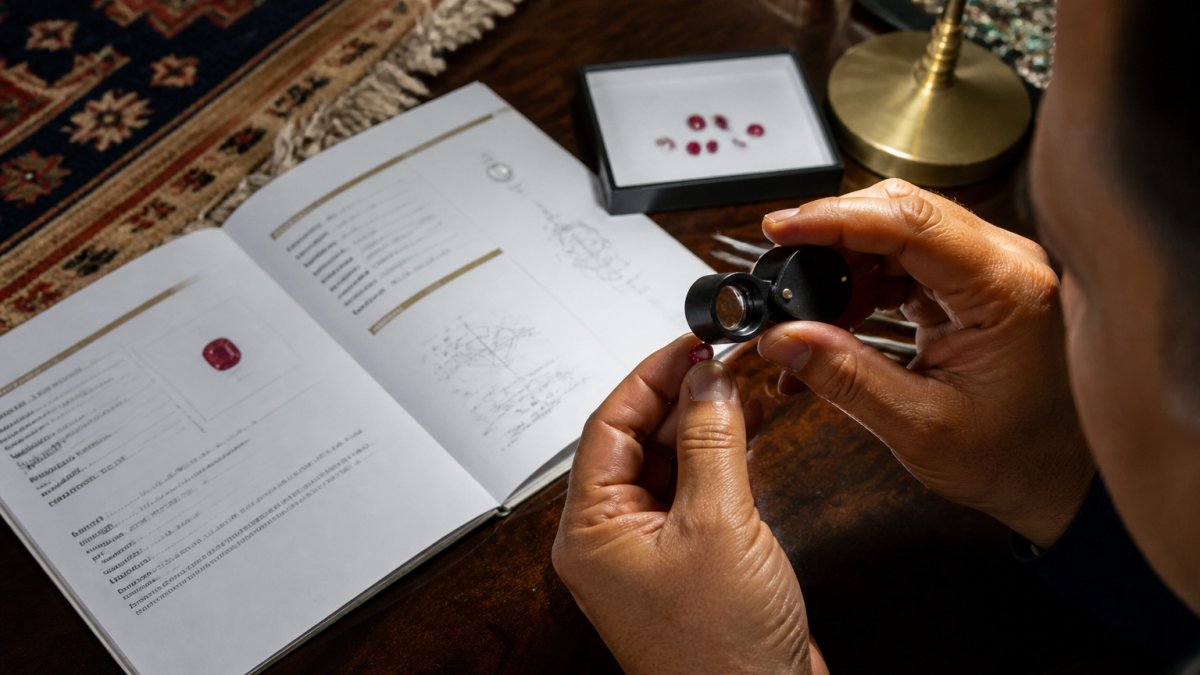
The Report Fields That Actually Matter
Most reports look similar at a glance. The details that change what you are buying are these:
Natural Exceptional Quality OVAL CABOCHON RUBY, RED COLORED, INDIAN GEMSTONE →
- Issuing lab. Recognized independent labs include the Gemological Institute of America (GIA) and the International Gemological Institute (IGI). A report from an in-house or unknown lab carries less weight because the seller controls the conclusion.
- Species and variety. The report should read "natural corundum, variety ruby." If it says synthetic, lab-grown, or imitation, the stone is not a natural ruby regardless of how it looks.
- Treatment status. Look for explicit language: "no evidence of treatment," "heat treatment," "fracture filled," or "glass filled." Vague wording like "may have been treated" is a red flag, not a disclosure.
How to Verify a Report With Its Issuer
A report is only as good as your ability to confirm it came from the lab that supposedly issued it. Do this before you pay:
- Go to the lab's official website, type the address yourself rather than clicking a link the seller sends.
- Enter the report number in the lab's verification tool.
- Confirm the returned details, weight, measurements, treatment, and photo, match the stone and the paper in front of you.
- If the lab offers an online image of the stone, compare it to the actual stone.
A common pattern is a seller showing a genuine report for a fine stone while presenting a different, lower-quality stone in the case. Verification closes that gap.
What a Report Does and Does Not Establish
A report establishes identity, weight, dimensions, and treatment status as observed by the lab at the time of examination. It does not establish:
- Value or price. Two stones with identical reports can trade at very different prices based on color quality, market demand, and origin premium.
- Origin unless explicitly stated. Many standard reports do not include geographic origin. If origin matters to you, confirm the report includes an origin opinion before you buy.
- Durability in wear. A report may note fracture filling but will not tell you how the filling will behave during a resize or repair.
Reading Treatment Disclosure Into Durability and Value
The treatment line on a report is where paperwork meets real-world risk:
- No evidence of treatment. Rarest and typically most expensive. Suitable for any setting with normal care.
- Heat treatment only. Widely accepted, stable, and the standard for most fine jewelry rubies. Value is lower than untreated but durability is not compromised.
- Fracture or glass filling. The report should say so explicitly. Filled stones cost significantly less and require care: avoid steam cleaners, ultrasonic cleaners, and high heat during repair. A jeweler's torch can damage the filling.
Ask the seller to walk you through the treatment line and explain what care the stone needs. A seller who cannot or will not is telling you something.
Origin and Rarity: Why Burma Rubies Cost More
Where a ruby formed affects its price. Burma, now called Myanmar, is the most famous source.
Origin is not just romance. Stones from classic sources often show the color and glow buyers associate with top rubies.
Other sources produce excellent rubies too. The premium is about rarity and reputation, not a guarantee of beauty. Judge the stone first, then weigh the origin.
What Natural Rubies Cost and How to Judge Price Fairly
Fine natural rubies are expensive because they are scarce. Prices swing widely based on the seven factors above, so there is no single fair number. Compare like with like and understand which factors are moving the price you are quoted.
How the Factors Interact
Price is not set by any one factor in isolation. The practical pattern most buyers encounter is this:
- Color dominates. A small, vivid, medium-dark red stone routinely commands more than a larger stone with weaker saturation.
- Clarity matters at the eye-clean line. Eye-clean stones trade at a premium; below that line, the price drop is steep because the stone no longer looks fine without magnification.
- Carat weight is nonlinear. Large fine rubies are rare, so a two-carat stone of the same quality can cost far more than double a one-carat stone, the per-carat price rises with size.
A Repeatable Price-Judgment Checklist
Use this checklist to judge any price:
- Compare stones of similar color, clarity, and carat, not across grades
- Confirm the treatment status on each stone from its report
- Check that each has an independent report and verify the report number
Example Scenarios
These scenarios show how the factors combine. They are illustrative patterns, not quotes:
- A vivid, eye-clean, certified stone with heat treatment only. Usually the best value for most buyers: beauty and documentation without the untreated or classic-origin premium.
- An untreated stone of similar appearance. Expect a meaningful premium. Worth it if rarity matters to you; not necessary for everyday wear.
- A larger stone with slightly weaker saturation. It may cost less than a smaller, more vivid stone. Decide which you value more, size on the hand or color intensity.
In-Person and Online Buying Safeguards for Natural Rubies
Buying in person lets you see the stone in daylight and inspect it with a loupe. Buying online means you need stronger paperwork and a clear return policy.
Use these safeguards either way:
- Ask for the full lab report before you pay
- Request photos and video in natural light
- Confirm the return window in writing
Watch out: sellers who show a certificate that doesn't match the stone's weight or report number. Always cross-check the number with the lab.
A good seller welcomes these questions. A rushed one doesn't.
Shop Certified Natural Rubies at ABC Rugs Kilims & Jewelry
You now have a working checklist for every ruby you consider. Color, clarity, cut, carat, origin, treatment, and certification. Run any stone through those seven factors and the right price becomes much easier to see.
At ABC Rugs Kilims & Jewelry, we source gemstones with documentation from recognized laboratories, and we're glad to walk you through the report before you buy. You can also explore our natural ruby gemstone listing to compare weight, color, and certification side by side.
Frequently Asked Questions
What should I look for when buying natural rubies?
Start with color, then confirm the stone is untreated or honestly disclosed as treated. Ask for a gemological report from a recognized lab, check the clarity and cut under daylight, and compare carat weight against your budget. Confirm treatment status and origin in writing before you pay.
Are treated rubies worth buying?
Yes, if the treatment is disclosed and priced accordingly. Heat treatment is standard and stable, and most rubies on the market have had it. Fracture or glass filling is a bigger concern because it can affect durability and should never be sold as untreated. Ask the seller which treatment was applied, request the gemological report, and pay a price that reflects the enhancement. Undisclosed filling is the real red flag, not treatment itself.
Should I get a ruby grading report before buying?
Get one for any stone above a few hundred dollars. A ruby certification and grading report confirms the species, treatment status, and often the origin. Match the report number to the stone and check that the weight and measurements agree.
How can I avoid buying a synthetic or misrepresented ruby?
Buy from sellers who provide third-party documentation and state treatment status in writing. Synthetic ruby is chemically corundum but grown in a lab, so visual inspection alone will not catch it. Ask direct seller questions: is this natural or synthetic, has it been treated, and which lab graded it. Compare the certificate number against the lab's records, and treat any listing that skips these details as a reason to walk away.
The ruby market rewards buyers who ask better questions. Start with the report, confirm the treatment, and judge color in daylight. Get those three right and you'll avoid the costly mistakes most buyers make. Get started with ABC Rugs Kilims & Jewelry and shop certified natural rubies with the documentation you need to buy with confidence.


