

Last Updated: November 20, 2026
Quick Summary
Natural dye antique rugs are worth the investment when dye quality, condition, and provenance are documented, because natural dyes soften and shift gradually into a patina collectors value. No home test proves a dye is natural, so gather converging evidence and get professional analysis for expensive pieces.
- Natural dyes come from plant, insect, and mineral sources such as madder root, indigo, and cochineal.
- Inspect the back first in raking light, since a back brighter than the front can indicate overdyeing.
- The damp-cloth test shows whether dye is currently stable, not whether it is natural.
- Abrash, the subtle banding of tone within one color, signals natural dyeing and hand-spinning.
- Over-wetting a natural-dye rug during home cleaning can cause permanent dye migration into pale areas.
Table of Contents
- Natural vs. Synthetic Rug Dyes: What Changes on the Floor
- The Natural Dye Inspection Protocol: A Step-by-Step Walkthrough
- Reading Color for Antique Rug Authenticity
- How Dye Quality Shapes Antique Rug Value
- How to Buy Antique Rugs Online Without Getting Burned
- Caring for Natural Dye Rugs by Fiber and Dye Type
- Choosing Your Natural Dye Rug from ABC Rugs Kilims
- Frequently Asked Questions
Natural vs. Synthetic Rug Dyes: What Changes on the Floor
Natural dye antique rugs carry color that behaves differently from anything made with aniline dyes, and that difference is the first thing a serious buyer learns to read. Natural dyes come from plant, insect, and mineral sources: madder root for red, indigo for blue, pomegranate rind and walnut husk for browns, cochineal insects for crimson. Synthetic dyes arrived in the late nineteenth century and changed everything about how rugs age.
The practical difference shows up over decades, not days. Natural dyes soften and shift gradually, developing a patina that many collectors value. Understanding the history of synthetic dye adoption in textiles helps explain why a rug's era matters as much as its pattern.
How to Tell Natural Dyes from Aniline Dyes
No home test proves a dye is natural. What you can do is gather evidence. These are clues, not verdicts.
The Natural Dye Inspection Protocol: A Step-by-Step Walkthrough
The sequence below gathers converging evidence and never treats one observation as proof. Work through it in order, and stop to ask for professional input whenever a piece is expensive enough that a mistake would hurt.
-
Inspect the back first, in raking light. Turn the rug over and examine the knot base where dye concentrates. Look for color pooling into undyed wool, tide lines around repaired areas, and whether the back palette matches the front. A back that reads noticeably brighter or more saturated than the front can indicate later overdyeing or repiling. Use a loupe on a few knots to see whether color sits consistently along the fiber or looks painted on.
-
Map the abrash before you judge it. Trace a single color across the field and note whether the bands follow the weave direction, whether they repeat at regular intervals, and whether they appear in every color or only one.
-
Compare edges, center, and exposed folds. Natural dyes usually shift gradually where light and foot traffic hit hardest. Look for a soft halo near borders and along fold lines, and check whether the fade is smooth or blotchy. Sharp transitions, a bright center against a faded edge, or color that stops abruptly at a repair seam are reasons to ask more questions, not automatic disqualifiers.
-
Use the damp-cloth test as one data point, not a verdict. Press a clean white cloth dampened with distilled water onto an inconspicuous area of the pile for a few seconds. A little transfer is common on antique wool; heavy color coming off suggests unstable dye. But the test has real limits: a well-fixed synthetic dye can pass easily, a heavily washed natural dye may transfer almost nothing, and some mordants and finishes can produce misleading results. On fragile or valuable pieces, skip the test entirely rather than risk disturbing the fiber.
-
Read the palette against the period. Natural palettes are limited and earthy, but the useful question is whether the colors are plausible for the rug's claimed origin and era. Electric greens, hot pinks, and uniform black outlines are worth questioning, but so is a palette that looks too perfect for its age. Compare the piece to documented examples from the same weaving tradition rather than to a generic color wheel.
-
Separate what you can see from what you cannot. In person you can assess color variation, bleed, abrash, patina, and the relationship between front and back. From photographs you cannot reliably judge dye origin, colorfastness, or whether a color has been touched up, lighting, white balance, and retouching all distort color. Ask for back-of-rug photos, close-ups of abrash, and images shot in consistent light, and treat any single photo as evidence of appearance, not of dye chemistry.
-
Know when to call a specialist. If the asking price is significant, the palette looks anomalous, or the seller's dye claims are central to the value, have the piece assessed by a conservator or a qualified rug specialist before you commit. Professional analysis can address questions a cloth test cannot, and a written opinion is worth more than any home experiment.
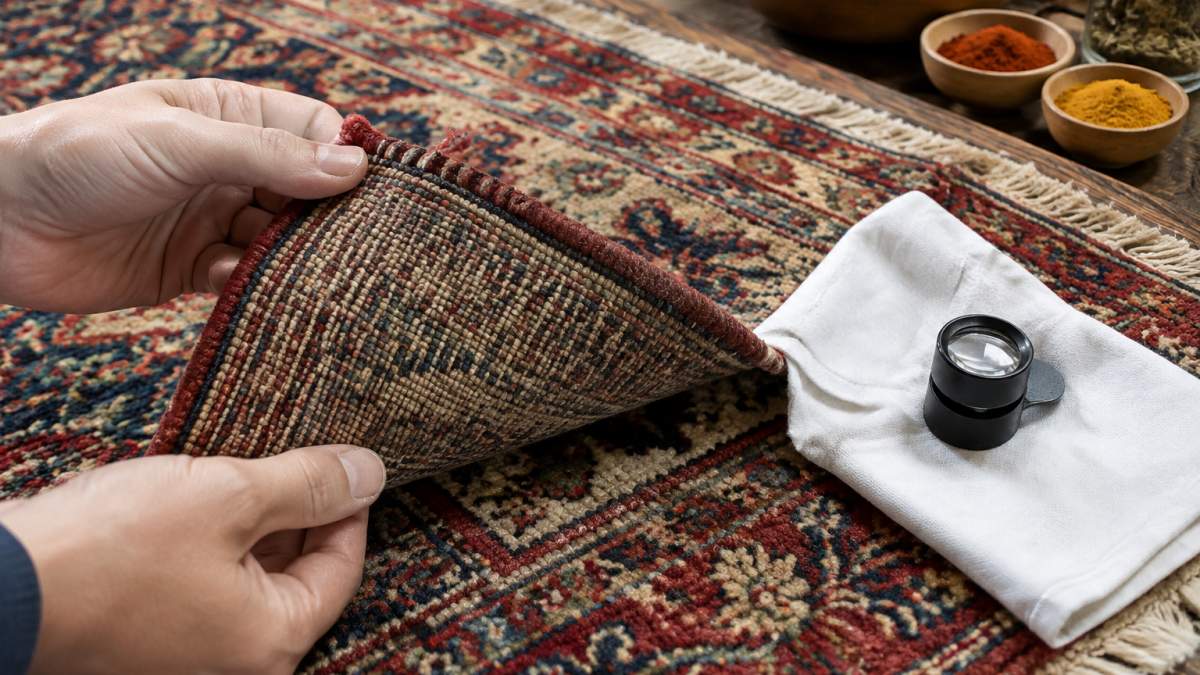
Work through these steps in order, treating each observation as one piece of evidence rather than proof.
| Step | What to do | Key caution |
|---|---|---|
| 1 | Inspect the back first in raking light | Back brighter than front can mean overdyeing |
| 2 | Map the abrash before judging it | Note whether bands follow weave direction |
| 3 | Compare edges, center, and exposed folds | Sharp transitions warrant questions, not automatic rejection |
| 4 | Use the damp-cloth test as one data point | Well-fixed synthetic dye can pass easily |
| 5 | Read the palette against the period | Compare to documented examples from same tradition |
| 6 | Separate what you can see from what you cannot | Photos cannot reliably judge dye origin |
| 7 | Know when to call a specialist | Get written opinion for significant asking prices |
Reading Color for Antique Rug Authenticity
Color is the strongest authenticity signal you have, and it is also the easiest to misread. A genuine antique rug shows color harmony that comes from decades of shared aging: reds, blues, and browns that have mellowed together rather than one color looking fresh against faded neighbors. That relationship between colors is hard to fake.
Abrash, the subtle banding of tone within a single color, is a signature of natural dyeing and hand-spinning. Patina, the soft sheen that develops as wool is walked on and washed, adds another layer. When you examine a documented antique Mahal rug, pay attention to how its natural color variation reads across the field.
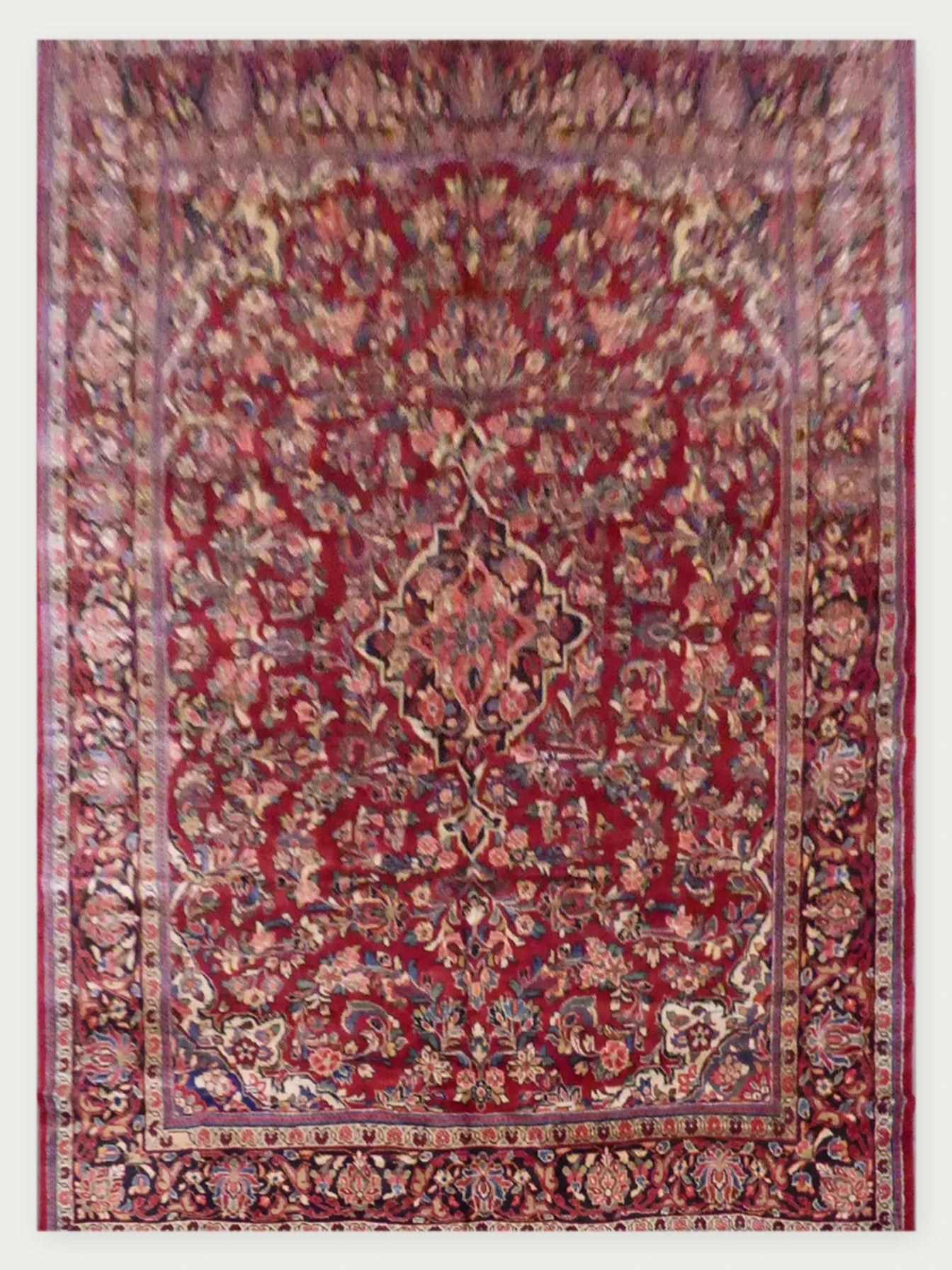
Abrash, Patina, and the Limits of the Damp-Cloth Test
The damp-cloth test tells you whether dye is currently stable, not whether it is natural. A well-fixed synthetic dye can pass a cloth test easily. A natural dye that has been heavily washed might also transfer little. Treat the test as one data point among many, and when a piece is expensive, ask for professional dye analysis before you buy.
How Dye Quality Shapes Antique Rug Value
Dye quality affects antique rug value through three channels: rarity, condition, and desirability.
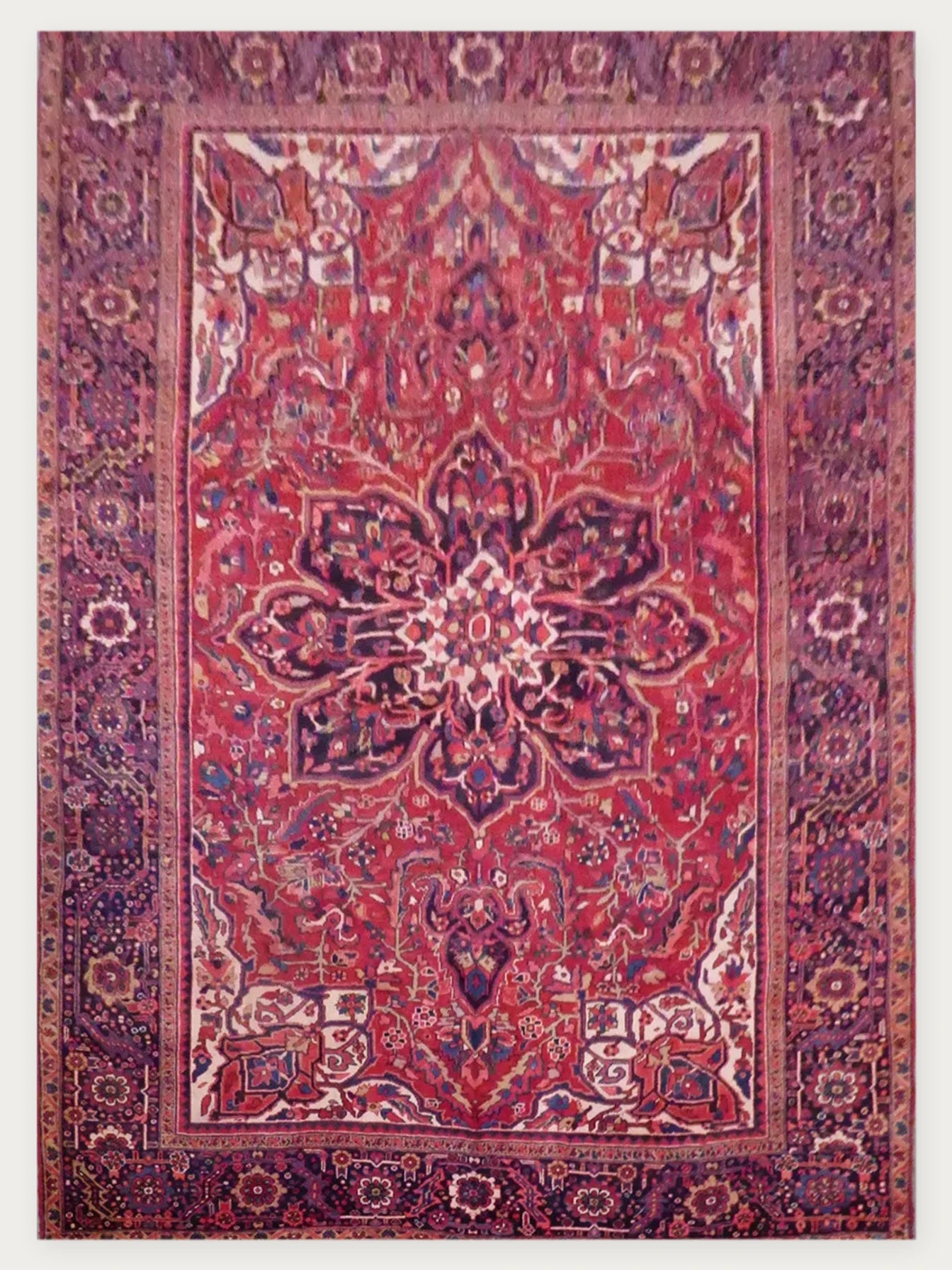
If you want to see how natural dyes read on a genuine antique, browse this antique Heriz rug with natural vegetable dyes and study the color depth in the photos.
How to Buy Antique Rugs Online Without Getting Burned
Buying online removes touch, scale, and raking light, so documentation has to replace your eyes. The strongest buyers do not rely on a seller's adjectives; they assemble a file.
Request the right photographs. Ask for the full front and back, close-ups of abrash and any worn areas, images of all four corners and selvages, and a photo of the rug beside a tape measure for scale. Insist on consistent lighting and no filters. A seller who can provide these quickly is usually organized and honest; one who sends only styled hero shots is telling you something.
Get a written condition report. The report should describe pile height across the field, areas of wear, any repairs or repiling, selvage and fringe condition, and whether the rug has been washed, stretched, or color-corrected. Ask specifically about overdyeing, painting, and tinting, because these are common and often undisclosed. See a fully documented overdye Tabriz listing to judge what a transparent product page looks like.
Demand provenance in writing. Origin, age, and attribution claims should come with a stated basis, a documented collection history, a prior appraisal, or a recognized dealer's attribution. "Old Persian" is not provenance.
Confirm the return policy and shipping terms before you pay. A written return window, who pays return shipping, and the condition in which the rug must be returned all matter.
Ask about restoration and conservation. Repairs are normal in antique rugs, but undisclosed repairs affect value. Ask who did the work, when, and whether documentation exists. A seller who volunteers restoration history is more trustworthy than one who has to be pressed.
Consider an independent appraisal for significant purchases. For a high-value piece, arrange an appraisal or a professional inspection during the return window. An independent opinion protects you far better than any seller guarantee, and it gives you a documented basis for the price you paid.
Compare asking prices on a like-for-like basis. Price reflects age, origin, condition, rarity, size, and workmanship together, so a single number tells you little. Build a small comparison set of similar rugs, same origin, comparable age, similar size and condition, and look at the range rather than the outlier.
Watch out: stock photos reused across listings, vague origin claims, and prices that seem too low for the age described remain the three most common traps, and a seller who cannot answer basic questions about dye source, condition, and restoration is a risk no matter how good the photos look.
Caring for Natural Dye Rugs by Fiber and Dye Type
Natural-dyed wool is forgiving but not indestructible. Rotate the rug periodically so light fades it evenly, and keep it out of direct sun where possible. Vacuum gently without a beater bar. Blot spills immediately rather than rubbing, and avoid harsh cleaners that can strip natural color.
Watch out: over-wetting a natural-dye rug during home cleaning can cause dye migration into pale areas, and that damage is often permanent. Professional cleaning by someone experienced with antique wool is the safer route. If you are weighing fiber and dye choices for a piece you plan to live with, compare this wool Oushak with natural vegetable dyes.
Choosing Your Natural Dye Rug from ABC Rugs Kilims
At ABC Rugs Kilims & Jewelry, we curate handmade rugs and Persian antique pieces for buyers who care about how color ages. Every piece in our collection is reviewed and trusted, whether you are shopping retail or sourcing wholesale for a design project. If you are ready to choose, view this antique Tabriz rug with natural vegetable dyes and see the difference for yourself.
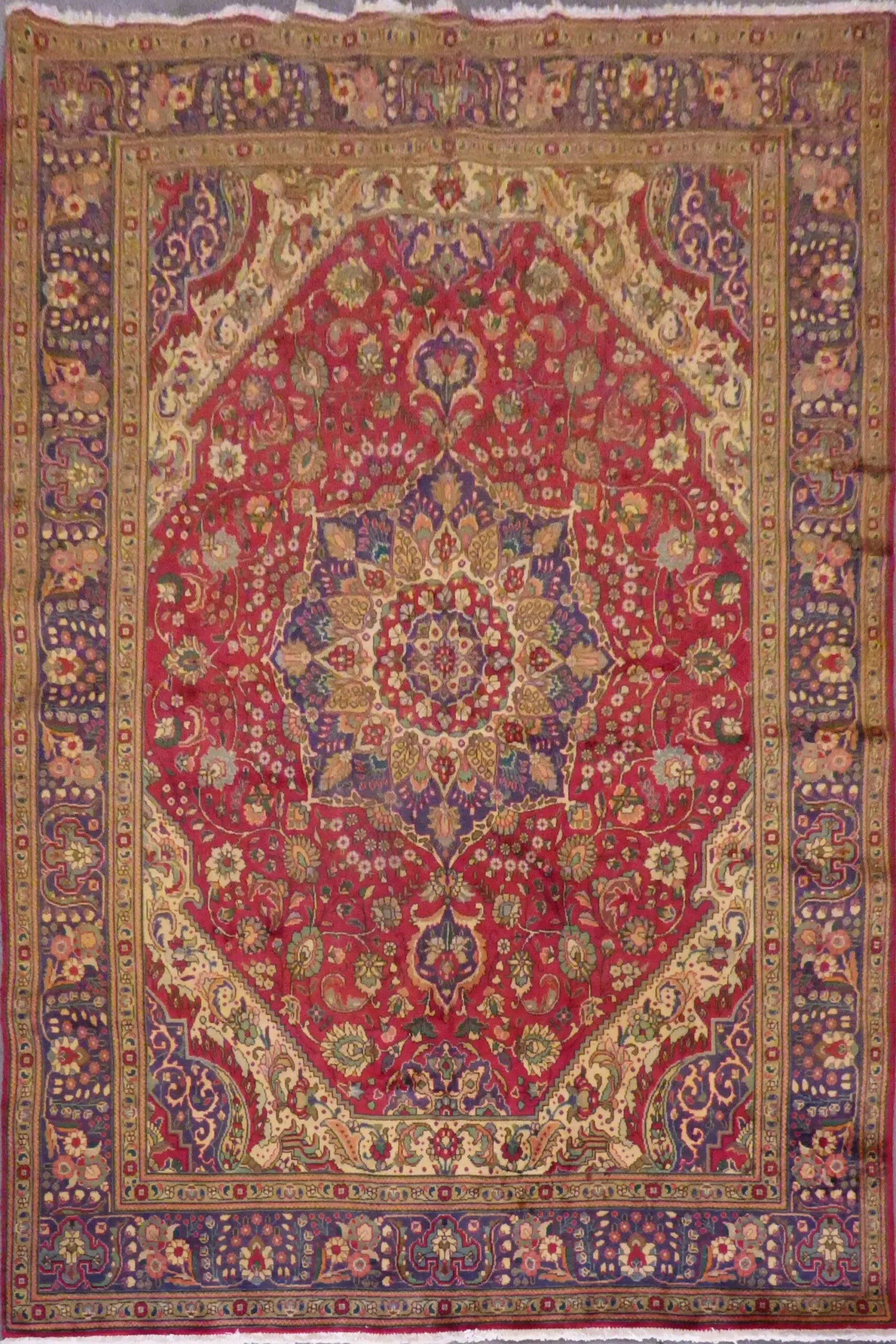
The real challenge with natural dye antique rugs is not finding beautiful color; it is verifying what you are buying before money changes hands. ABC Rugs Kilims & Jewelry helps by offering a curated selection of handmade rugs and Persian antique pieces, wholesale and retail options, and listings you can review in detail before you commit. Get started with ABC Rugs Kilims & Jewelry and choose a rug whose color will only improve with time.
Frequently Asked Questions
How can you tell if an antique rug was dyed with natural dyes?
Look at the color itself and at the back of the rug. These signals can suggest natural dyes, but they are not proof. A conservator's fiber and dye analysis is the most reliable way to get a definitive answer.
Are natural dyes better than synthetic dyes in antique rugs?
Not automatically. Natural vs. synthetic rug dyes is a question of character and age, not a simple quality score. Judge weave, condition, and design alongside the dye question, and treat natural dyes as one factor in value.
What should I check before buying an antique rug online?
Ask for photos of the front, back, edges, and any worn areas, plus the exact dimensions in feet and inches. Confirm the knot type, pile material, and whether the rug has been restored or chemically washed. Request the provenance or region of origin in writing. Read the listing carefully before you commit.
Do natural dyes fade differently from synthetic dyes?
Fading patterns vary with the materials and with how a rug has been exposed to light and washing. Fading alone will not tell you which dye was used, because sun exposure and washing affect both. Look at the whole rug, including areas that were protected under furniture, to judge how the color has aged.


