

Last Updated: November 5, 2026
Quick Summary
To protect handmade rugs from sun damage, block direct sunlight before it reaches the fibers using sheer curtains, UV-blocking window film, cellular shades, or lined drapes, and rotate the rug 180 degrees every three to six months so fading stays even. A rug that never sees direct sun holds its color for decades.
- South-facing windows are the highest-risk exposure because they receive strong light most of the day.
- Rotate high-exposure rugs every two to three months and low-exposure rugs every six months.
- Silk fades fastest and should never sit in direct sun; wool handles light better.
- Fabric protectors guard against spills and stains, not UV rays, so they cannot replace window coverings.
- Move the rug so its nearest edge sits outside the measured sun patch, even 30 centimeters of clearance helps.
Table of Contents
- How Sunlight and UV Exposure Fade Handmade Rugs
- How to Protect a Rug Near a Window
- Best Window Treatments to Prevent Rug Fading
- How Often to Rotate a Rug for Even Color
- Can You Use Fabric Protector on Handmade Rugs?
- Fiber and Dye Sensitivity: Which Rugs Fade Fastest
- Recognizing Fading Versus Other Color Changes
- Sourcing a Sun-Smart Handmade Rug from ABC Rugs Kilims
- Frequently Asked Questions
How Sunlight and UV Exposure Fade Handmade Rugs
Sun damage is the slowest theft in your home. Ultraviolet light breaks the chemical bonds in natural dyes, and the damage happens every single day, not just in summer.
Here is what actually happens. According to the National Park Service's guidance on protecting textiles from light, ultraviolet exposure is cumulative and irreversible.
So the goal of sun damage prevention is simple: reduce exposure before it starts. Below are practical steps for protecting handmade rugs.
How to Protect a Rug Near a Window
The best way to protect a rug near a window is to block direct sunlight before it reaches the fibers. That means window coverings, UV film, or smart placement, ideally all three.
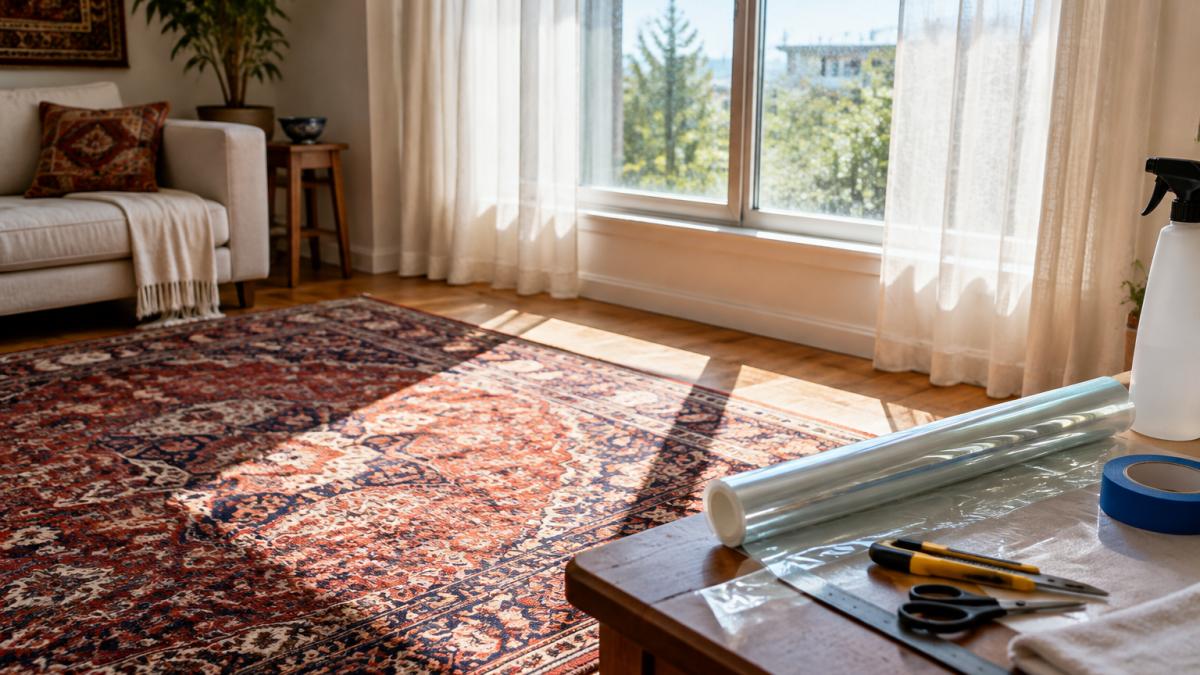
Start with these steps:
- Measure the sun path. Watch the room for a full day. Note when sunlight hits the rug and for how long.
- Move the rug out of the direct beam. Even 30 centimeters of clearance helps.
- Add a sheer layer. Sheer curtains cut glare and filter UV without darkening the room.
- Apply UV-blocking film to the glass if curtains are not practical.
- Rotate the rug regularly so no single area takes the full hit.
For rugs in high-traffic, sun-exposed spots, a quality pad also helps hold the rug flat and reduce wear. Our guide to the best rug pads for antique kilims covers the options in detail.
Best Window Treatments to Prevent Rug Fading
The best window treatment cuts UV at the glass without turning the room into a cave. Assess your exposure first, then match the treatment to the window and how you use the room. A layered approach, a base layer on the glass plus a soft layer at the window, protects a rug better than any single product.
Step 1: Assess the exposure before you buy anything
Window direction drives intensity. In the northern hemisphere, a south-facing window receives strong light most of the day and is the highest-risk exposure. West-facing windows take intense low-angle afternoon sun that reaches farther into the room.
To measure what your rug actually receives, do a simple sun-path check:
- On a clear day, note the times sunlight lands on the rug and mark the edges of the bright patch with painter's tape on the floor.
- Repeat at mid-morning, midday, and late afternoon, and again in a different season if you can, the patch moves with the sun's angle.
- Measure the distance from the window to the nearest sunlit edge of the rug. That distance tells you how much clearance a treatment must create.
A west-facing room typically needs protection from mid-afternoon onward, while a south-facing room needs it across most of the day. If the sunlit patch covers the center of the rug for hours, treat that as a high-exposure room and plan for a high-blocking layer.
Step 2: Match the treatment to the window
| Treatment | UV blocking | Daylight kept | Best for |
|---|---|---|---|
| Sheer curtains | Moderate | High | Soft diffusion in living rooms; a first step, not a full shield |
| Cellular (honeycomb) shades | High | Adjustable | South- and west-facing windows; rooms used at different times of day |
| UV-blocking window film | High | High | Fixed windows and glass doors where curtains are impractical |
| Lined drapes | Very high | Low | Rooms you can darken during peak hours |
| Exterior shade or awning | Very high | Adjustable | Stopping sun before it hits the glass, where allowed |
A few practical notes:
- Sheers soften harsh light and cut a meaningful share of UV, but they are a partial measure. Pair them with film or shades in a high-exposure room.
- Cellular shades let you open the top half so light enters above the rug while the lower half stays closed against the sun path.
- UV film is nearly invisible and works well on fixed windows and glass doors. Ask for the manufacturer's UV-blocking rating rather than assuming.
Watch out: cheap film applied to old or heat-stressed glass can bubble, peel, or stress the pane. Have film installed properly, or skip it.
Step 3: Reduce exposure without losing the room
Treatment choice is only half the job. Placement and timing do the rest:
- Pull the rug back so its nearest edge sits outside the measured sun patch, even if that means a smaller rug or a different layout.
- Close shades or drapes during peak exposure hours, then reopen for the light you want.
- Use a valance or a deeper curtain return so light does not spill around the edges.
For rugs in high-traffic, sun-exposed spots, a quality pad also helps hold the rug flat and reduce wear. Our guide to the best rug pads for antique kilims covers the options in detail.
How Often to Rotate a Rug for Even Color
Rotate a handmade rug every three to six months to keep fading even. Turn it 180 degrees so the sun-exposed edge moves into the shade. Rooms with strong afternoon sun may need a rotation every two to three months.
A practical rotation schedule
Use the exposure you measured at the window to set the interval:
- High exposure (south- or west-facing, sun on the rug for hours): rotate every two to three months.
- Moderate exposure (east-facing or filtered light): rotate every three to four months.
- Low exposure (north-facing or a rug outside the sun patch): rotate every six months, mainly to even out wear.
Tie rotation to the season change, rotate when you change the clocks or swap seasonal decor, so the habit is easy to remember. If you can see a faint line where the sun stops, your rotation schedule is behind. A faint sun line is a reminder that the same shifting light can affect nearby textiles and artwork, so protecting other home decor belongs in the seasonal rotation routine too.
The rotation method
- Mark the orientation. Slide a small note under one corner, or photograph the rug with the room in frame, so you can confirm the turn later.
- Clear and lift safely. Move furniture off the rug and have a second person help with large pieces; dragging a heavy rug can distort the weave and stress the edges.
- Vacuum both sides lightly before rotating to lift grit that would otherwise grind into the fibers.
- Rotate 180 degrees, not 90, so the pattern stays aligned with the room and the sun-exposed edge moves to the shade.
- Check the pad for shifting, compression, or wear, and reposition it under the rug.
- Reset the furniture so legs sit on the rug as before, and recheck the sun patch against the new orientation.
Account for layout, furniture, and pattern
- Furniture: heavy pieces leave compression marks. Rotating the rug moves those marks away from walkways and gives the pile time to recover. Keep furniture legs on protective cups to reduce denting.
- Directional patterns: medallion, mihrab, and pictorial designs have a clear top and bottom. A 180-degree turn keeps the design readable; a 90-degree turn does not.
- Room shape: in a long room, a 180-degree turn is usually the only option that keeps the rug centered under the furniture. If the rug is too large to turn, rotate the furniture and traffic path instead, or add a window layer to reduce exposure.
Watch out: rotating a fragile antique rug without support can crack dry foundation threads. If the rug feels stiff or the edges are frayed, have it assessed before you move it.
One Of The Kind Persian Kashan Rug#14 Size 10'x14' →
If you are weighing materials for a sunny room, our comparison of wool vs silk rugs for living rooms breaks down the trade-offs. The short version: wool handles light better, silk shows damage sooner.
Can You Use Fabric Protector on Handmade Rugs?
You can use a fabric protector on some handmade rugs, but it is not a UV shield. Most protectors guard against spills and stains, not sunlight.
Before applying anything, test a hidden corner. Some sprays can darken wool, stiffen silk, or react with natural dyes.
What protectors will not do:
- Stop UV rays from fading dyes
- Replace window coverings or film
- Make a fragile old rug safe to leave in direct sun
Treat stain protection and sun protection as two separate jobs. Window treatments handle the sun. A tested protector, used carefully, handles spills.
Fiber and Dye Sensitivity: Which Rugs Fade Fastest
Silk fades fastest, followed by fine wool with natural dyes. Kilims and flatweaves with vegetable-dyed wool are also sensitive. Synthetic dyes resist light better but still fade over years of direct sun.
Here is how the main fibers and dyes compare:
- Silk: highly sensitive. Silk rugs should never sit in direct sun.
- Fine wool with natural dyes: sensitive. Reds and blues fade first.
- Vegetable-dyed kilims: sensitive, and fading shows unevenly across flatweave.
If you are weighing materials for a sunny room, our comparison of wool vs silk rugs for living rooms breaks down the trade-offs. The short version: wool handles light better, silk shows damage sooner.
Recognizing Fading Versus Other Color Changes
Fading is a gradual lightening of color, usually uneven and matched to where the sun hits. Other color changes look different and need different care.
Use this checklist to tell them apart:
- Sun fading: smooth, even lightening in a sun-exposed area; borders stay darker.
- Moisture damage: dark tide lines, musty smell, or color bleed at the edges.
- Abrasion: fuzzy, thinned pile in walkways, not a color shift.
If the change follows the shape of your window, it is almost certainly sun damage. If it follows traffic or moisture, look elsewhere. Our guide on how to restore faded colors in antique kilim rugs walks through the realistic options.
Sourcing a Sun-Smart Handmade Rug from ABC Rugs Kilims
The smartest protection starts at purchase. Choose a rug whose fiber, dye, and size fit the room's light, and you spend far less time fighting fade later.
A few buying rules we share with customers:
- For bright, south- or west-facing rooms, favor wool over silk.
- Measure the sun path before you choose a size, so the rug can sit out of the direct beam.
- Ask about dye type; natural dyes need more care in strong light.
For collectors protecting valuable pieces, our guide on preserving antique rug value through maintenance covers the longer-term care routine.
Protecting a handmade rug from sun damage comes down to three habits: block the light, rotate on schedule, and choose the right fiber for the room. ABC Rugs Kilims & Jewelry curates handmade rugs, kilims, and Persian antique pieces with care guidance built in, plus wholesale and retail options for designers and collectors. Every piece is reviewed and trusted, with a 30-day exchange privilege on select rugs. Browse our collections to find a rug chosen with real rooms and real light in mind.
Frequently Asked Questions
Can sunlight permanently fade a handmade rug?
Yes, prolonged ultraviolet exposure can permanently break down dye molecules in wool, silk, and cotton, leaving faded patches that cannot be reversed by cleaning. The damage is cumulative, so a rug that sits in direct sunlight for months will show noticeable color loss. Once the dye structure is destroyed, restoration usually requires professional re-dyeing or recoloring, which is costly and may not perfectly match the original. Preventing sun damage is far easier and cheaper than reversing it, so window treatments and rotation are your first line of defense.
What is the 70% rule for rugs?
A common furniture placement guideline is to keep most of the rug's surface free of heavy furniture so the pile can wear evenly. The same logic applies to light: keep most of the rug out of direct sunlight at any given time. This means using sheer curtains, UV film, or strategic furniture arrangement to create shade over most of the rug, leaving only a small portion exposed. It also makes rotation easier because no single area is constantly bombarded by UV rays.
How long can you leave a rug in direct sunlight?
There is no safe duration for direct sunlight on a fine handmade rug. Even a few hours of strong afternoon sun per day can cause visible fading over a season, especially on south- and west-facing exposures. If you must air a rug outdoors, limit it to 1-2 hours in early morning or late afternoon sun, and never leave it out during peak UV hours (10 a.m. to 4 p.m.). Indoors, treat direct sun as something to block entirely with window coverings or UV film rather than something to time.
Do window films or curtains help protect rugs from UV damage?
Both help, but they work differently. Quality UV-blocking window film can reject a high share of ultraviolet rays while still letting in visible light, making it a low-profile solution for large windows. Curtains and blinds physically block light, but standard fabrics block less UV unless they are labeled UV-blocking. For the best protection, combine sheer UV-filtering curtains with film on south- and west-facing windows, and rotate your rug every 3-6 months to even out any residual exposure.


