

Last Updated: October 27, 2026
Quick Summary
Wool is the practical choice for a living room floor, while silk is the showpiece you build the room around. The wool vs silk decision comes down to how the room actually gets used, since wool takes foot traffic and forgives spills while silk reflects light and holds fine detail but needs careful handling.
- A well-made hand-knotted wool rug can serve a household for decades, with vintage pieces holding pile after 60 years.
- Silk belongs in low-traffic areas like under a console or in a formal seating zone.
- Wool resists stains better because its crimped structure holds spills near the surface for blotting.
- Never use oxygen bleach, enzyme cleaners, or carpet shampoo on silk, as damage cannot be reversed.
- Professional cleaning is advisable every 12 to 18 months for wool in a busy living room.
Table of Contents
- Wool vs Silk Rugs for Living Rooms: The Core Differences
- Quick Comparison: Wool vs Silk Rugs Side by Side
- Wool vs Silk Rug Durability and Expected Lifespan
- Softness, Sheen, and Knot Density: How Each Fiber Looks and Feels
- The Best Rug Material for Living Rooms by Household and Traffic Pattern
- Stain Resistance and How to Clean a Wool Rug vs a Silk Rug
- How to Identify a Silk Rug and Spot Fiber Blends
- Total Cost of Ownership and Choosing Your Living Room Rug
- Frequently Asked Questions
Wool vs Silk Rugs for Living Rooms: The Core Differences
The short answer: wool is the practical choice for a living room floor, and silk is the showpiece you build the room around. Wool takes foot traffic, resists crushing, and forgives spills. Silk reflects light, holds microscopic detail, and asks you to think twice before wearing shoes across it. The wool vs silk decision comes down to how the room actually gets used.
How the Two Fibers Are Made and Where They Come From
That structural difference explains nearly every trade-off . The International Wool Textile Organisation's fiber reference notes wool's natural crimp and resilience, and the same properties that make wool forgiving also make it look more subdued than silk.
Quick Comparison: Wool vs Silk Rugs Side by Side
| Factor | Wool Rug | Silk Rug |
|---|---|---|
| Durability | High, springs back | Moderate, delicate fibers |
| Traffic tolerance | High-traffic areas | Low-traffic areas |
| Feel | Warm, plush feel | Smooth, cool, lustrous |
| Appearance | Subdued, matte color depth | Sheen, fine details |
| Stain resistance | Naturally forgiving | Absorbs spills fast |
| Cleaning | Routine care, spot cleaning | Professional care preferred |
| Best for | Family living rooms | Formal, decorative spaces |
Wool vs Silk Rug Durability and Expected Lifespan
Wool rugs generally outlast silk in a living room. A well-made hand-knotted wool rug can serve a household for decades, and many vintage pieces still hold their pile after 60 years or more. Silk is strong for its weight but less forgiving of abrasion, so it wears faster in doorways and walkways.
High-Traffic vs Low-Traffic Room Suitability
Silk belongs in low-traffic areas: under a console, in a formal seating zone, or as a wall-worthy accent. If you love the look of pure silk, browse hand-made Turkish silk rugs to see what that lustrous finish looks like before you commit it to a busy floor.
Softness, Sheen, and Knot Density: How Each Fiber Looks and Feels
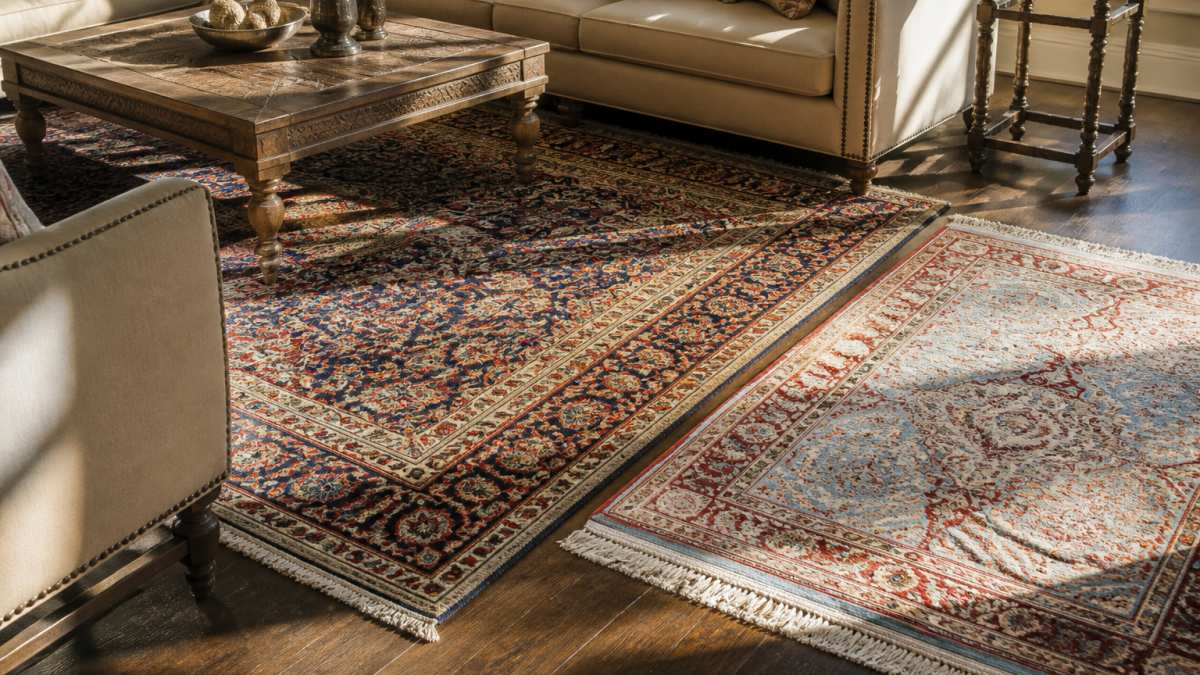
A wool-silk blend splits the difference. Our Indian Kashmiri hand-knotted wool and silk rug shows how silk highlights lift a pattern while the wool ground keeps the rug practical. A Persian Kerman wool and silk rug does the same in a more traditional Persian idiom.

The Best Rug Material for Living Rooms by Household and Traffic Pattern
For a more traditional, forgiving wool option, our vintage Persian wool rug pairs natural wool with vegetable dyes, a combination that hides everyday wear well.
Stain Resistance and How to Clean a Wool Rug vs a Silk Rug
Wool resists stains better than silk because its fibers have a natural protective layer and a crimped structure that holds spills near the surface long enough to blot them away. Silk absorbs liquid quickly, and water can leave rings or dull the sheen even after the liquid is gone. The practical difference is not whether a spill happens, it is how much time you have to react and how much of the cleanup you can do yourself.
What to do in the first five minutes
- Skip heat and harsh chemistry on silk. Hot water and alkaline cleaners can dull silk's sheen permanently; cool water and a pH-neutral solution are the safe default.
Routine care by fiber
Silk needs a lighter hand. Vacuum on the lowest suction with a bare floor attachment, and avoid pulling at fringe. Do not wet-clean silk at home beyond a fresh, small spot, water can leave tide marks and relax the pile. A common pattern is that silk rugs are cleaned professionally every few years rather than spot-treated repeatedly.
When to call a professional
The Carpet and Rug Institute's cleaning guidance recommends professional cleaning for delicate fibers, and silk is the clearest case for it. Call a professional for silk after any spill larger than a spot, for pet accidents, for red wine or coffee, and for any stain that has dried. For wool, professional cleaning is advisable every 12 to 18 months in a busy living room, and immediately for pet urine, which can set odor and dye bleed if left.
One Of The Kind Persian Nain Rug 11'6" x 8'0" →
Stain-resistance at a glance
| Spill type | Wool response | Silk response |
|---|---|---|
| Water | Blot; usually no mark | Blot; risk of ring, professional if large |
| Coffee or tea | Blot, mild detergent, rinse | Blot, call professional |
| Red wine | Blot fast; professional if set | Professional; do not DIY |
| Pet accident | Blot, enzyme cleaner, professional if odor | Professional; enzymes can damage silk |
| Oily food | Blot, wool-safe degreaser | Professional |
How to Identify a Silk Rug and Spot Fiber Blends
Be wary of viscose sold as silk. Viscose has a similar sheen but wears differently. Our Persian Nain wool and silk rug is a good reference point for what a genuine wool-silk blend looks like up close.
Total Cost of Ownership and Choosing Your Living Room Rug
Most comparisons stop at the purchase price. For a living room, the number that matters is what the rug costs you over the years you keep it, purchase, cleaning, repair, and the risk of replacement. That is the angle most guides skip, and it changes the answer for some households.
The four cost lines
- Replacement risk. This is the line most buyers miss. A wool rug in a busy living room can last decades. A silk rug in the same spot may show wear paths, crushing, and sheen loss years earlier, which shortens the replacement cycle and raises the effective annual cost.
A simple way to compare
Instead of comparing sticker prices, divide the purchase price plus expected cleaning and repair by the years you expect to keep the rug. A common pattern is that a wool rug in a family living room comes out lower per year even when the silk rug looks like the better deal at the register. The gap narrows in a formal room where the silk rug sees little foot traffic and needs less frequent cleaning.
Matching the material to your priority
Use this decision framework to skip the back-and-forth:
| Your priority | Better fit | Why |
|---|---|---|
| Durability and low replacement risk | Wool | Springs back, tolerates wear paths |
| Luxury appearance and fine detail | Silk or wool-silk blend | Sheen and high knot counts |
| Budget over the long term | Wool | Lower care and replacement cost |
| Ease of care | Wool | Home spot-cleaning is realistic |
| Showpiece in a formal room | Silk | Detail and light reflection are the point |
| Compromise | Wool-silk blend | Wool where feet land, silk in the design |
Best for: wool if the room gets daily use; silk if it is a formal space. Skip if: you have pets or young children and are considering pure silk.
Frequently Asked Questions
Is a wool or silk rug better for a living room?
It depends on traffic and household. Wool handles daily foot traffic, pets, and spills far better and is the safer pick for a family living room. Silk wins on looks: its lustrous finish and fine knot detail suit low-traffic, formal spaces. A wool-and-silk blend, like the Persian Nain rug at ABC Rugs Kilims, gives you silk sheen where it shows and wool durability where it wears.
Are silk rugs durable enough for everyday use?
Silk is strong for its weight but less forgiving than wool. Fine silk fibers show wear paths faster in doorways and seating areas, and they are more sensitive to moisture and abrasion. In a living room, keep silk to low-traffic zones or use it as an accent. For daily use under sofas and chairs, wool or a wool-silk blend holds up better over the years.
How do I tell whether a rug is wool or silk?
Check the back and the pile. Wool has a matte, slightly coarse hand and springs back when pressed. Silk feels cool and smooth, reflects light with a sheen, and fine knots look sharper. A burn test on a loose fiber helps: wool smells like burnt hair and leaves ash, while silk also smells like burnt hair but leaves a crushable bead. Ask for fiber documentation on high-value pieces.
Are wool rugs easier to clean than silk rugs?
Yes. Wool resists stains and water reasonably well and tolerates gentle spot cleaning with a wool-safe detergent. Silk absorbs moisture quickly, can water-spot, and should go to a professional cleaner for anything beyond light dust. Vacuum wool regularly with a brushless setting; for silk, use low suction and avoid wet cleaning. Always blot spills, never rub.
Which rug material is better for homes with pets or children?
Wool is the practical choice. It hides soil, tolerates frequent vacuuming, and bounces back from compression. Silk shows claw snags, spills, and wear paths quickly and costs more to repair. If you want silk in a busy home, place it where pets and kids do not play, or choose a wool-silk blend so the wool carries the wear.
The real challenge is matching fiber to room, not picking a favorite. At ABC Rugs Kilims & Jewelry, we carry hand-knotted wool, silk, and wool-silk blends with reviewed provenance, plus wholesale options for designers. Browse our curated collection of handmade rugs and kilims, or get in touch to find the piece that fits your living room.


