

Table of Contents
- Understanding Rug Fringe and the Foundation
- How to Tell If Your Rug Fringe Damage Is Structural
- How to Stop Rug Fringe from Unraveling
- Best Way to Repair Hand-Knotted Rug Fringe at Home
- Antique Rug Fringe Repair: When to Call a Professional
- Rug Fringe Replacement Cost and What Affects Your Estimate
- Rug Fringe Repair Methods: Comparing Your Options
- Care After Repair and Prevention
- Frequently Asked Questions
Last Updated: October 17, 2026
Understanding Rug Fringe and the Foundation
Hand-knotted rugs are works of art, each knot tied individually by skilled artisans.
The warp threads are the skeleton of your rug, running lengthwise through the entire piece with knots tied around them. When fringe becomes damaged or loose, those critical foundation threads need attention.
At ABC Rugs Kilims & Jewelry, we work with hand-knotted rugs from various regions. Understanding what you're dealing with makes repair much clearer.
The fringe serves two purposes: it protects the rug's edge from unraveling and gives the rug its finished appearance. Traditional hand-knotted rugs, Persian, Turkish, or Afghan, all rely on this fringe structure.
How to Tell If Your Rug Fringe Damage Is Structural
Not all fringe damage requires professional restoration. Some is purely cosmetic; other damage signals deeper problems with the rug's foundation.
Structural damage means the warp threads are compromised. This is serious, the rug's integrity depends on those threads staying intact. Here's how to tell the difference:
Minor damage (cosmetic only):
- A few loose threads at the edge
- Small knots coming undone
- Fringe that's frayed but still attached
- Some threads missing but the main fringe line is intact
Structural damage (needs professional help):
- Large sections of fringe completely missing
- Warp threads that are broken or cut
- The rug edge pulling inward or warping
- Fringe loss extending more than 1 inch along the edge
- The foundation threads visible and damaged
Run your hand along the fringe. Solid, anchored warp threads mean surface-level wear; loose, wobbly threads that come away easily mean the foundation may be compromised.
Look where the fringe attaches to the rug body. A clean line suggests surface wear; a ragged, uneven line suggests damage deeper than the fringe itself.
How to Stop Rug Fringe from Unraveling
Fringe unraveling happens gradually: threads loosen, catch on furniture or foot traffic, and more come loose. The process accelerates if you don't intervene.
The best time to stop unraveling is early, when you first notice loose threads, act immediately.
Prevention steps:
- Vacuum gently around the fringe area, never pull threads
- Avoid placing furniture directly on the fringe
- Keep the rug away from high-traffic pathways
- Rotate the rug every 6-12 months to distribute wear
To secure loose threads immediately:
- Identify which threads are loose by gently tugging
- Use a needle with matching thread color (or close to it)
- Tie the loose warp threads together in small knots
- Weave the needle through adjacent threads to anchor them
- Keep knots small and tight, not bulky
The goal is to bind loose threads before they unravel further, buying time before professional restoration becomes necessary.
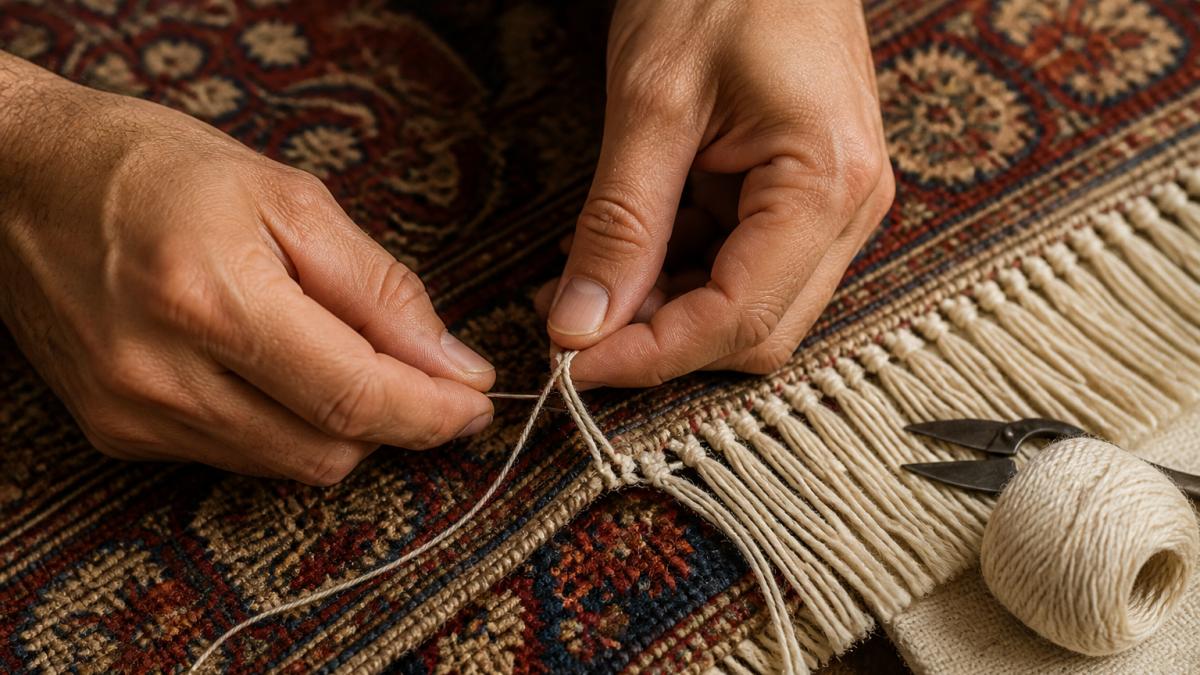
Best Way to Repair Hand-Knotted Rug Fringe at Home
Simple fringe repairs are doable at home. You don't need special training, just patience and the right materials.
What You'll Need
Gather these items before starting:
- Needle (size 7-9, tapestry needle works well)
- Thread that matches the rug fringe color as closely as possible
- Scissors
- Small bowl of water
- Magnifying glass (optional but helpful)
- Ruler or measuring tape
Material notes: Use natural thread if possible. Cotton or wool matches hand-knotted rugs better than synthetic thread. If you can't find an exact color match, choose slightly darker over lighter, it blends better.
Step-by-Step Repair Process
Step 1: Assess the damage (5 minutes)
Look closely at which threads are loose, at the edge or mid-fringe, and how many are affected.
Step 2: Prepare your work area (2 minutes)
Lay the rug flat on a clean table or floor with the damaged fringe toward you, under good lighting, sunlight or a desk lamp works well.
Step 3: Secure the loose threads (10-15 minutes)
Thread your needle and tie a small knot at the end.
Step 4: Tie the warp threads together (5-10 minutes)
Once the loose threads are anchored, tie them together in small groups with an overhand knot, kept close to where the fringe meets the rug body.
Step 5: Trim excess thread (2 minutes)
Cut away excess thread from your repair work and trim frayed warp ends. The fringe should now feel stable when you tug gently, it shouldn't move or come loose.
Common Mistakes to Avoid
Mistake 1: Using the wrong thread color
Mismatched thread stands out like a patch job. Match the fringe color first; if an exact match isn't possible, go slightly darker.
Mistake 2: Pulling threads too tight
Tight knots damage delicate warp threads. They can snap or fray. Aim for snug, not tight.
Mistake 3: Repairing too large an area at once
If more than 4-5 threads are loose, the damage is beyond simple home repair. Professional restorers have techniques you don't, and attempting a large repair yourself often makes it worse.
Mistake 4: Ignoring the underlying cause
One Of The Kind Hand Knotted Persian Rug 6'4" x 3'1" →
If fringe keeps coming loose in the same spot, something else is wrong, the rug may be stepped on or rubbed by furniture. Fix the cause or the problem will return.
Mistake 5: Using synthetic thread
Synthetic thread doesn't age like natural fibers and can look shiny and new next to aged wool or cotton. Use natural thread whenever possible.
Antique Rug Fringe Repair: When to Call a Professional
Antique rugs deserve special care, they're often more valuable and fragile than newer rugs, so damage to antique rug fringe requires different thinking.
Call a professional restorer if:
- The rug is over 50 years old
- The fringe loss is extensive (more than 2 inches of continuous missing fringe)
- The warp threads are visibly broken or discolored
- The rug has sentimental or significant monetary value
- You've attempted a repair and it didn't work
- The fringe damage is on multiple edges
Professional rug restorers have skills that take years to develop: they understand region-specific weaving techniques, know how to match fringe color and texture, and have access to replacement materials that match the original rug.
For valuable antique rugs, professional restoration preserves the rug's value, a bad DIY repair can actually decrease its worth.
Our curated collection of authentic hand-knotted rugs and antique pieces reflects a commitment to quality and proper care.
What a professional restorer will do:
- Carefully examine the entire rug for hidden damage
- Re-anchor loose warp threads using traditional techniques
- Replace missing fringe with new threads that match the original
- Restore the rug's structure and appearance
- Provide care recommendations to prevent future damage
Costs vary based on fringe length, damage severity, and the rug's value.
Rug Fringe Replacement Cost and What Affects Your Estimate
Fringe replacement isn't cheap. It's labor-intensive work. A professional restorer spends hours carefully hand-reconstructing fringe.
Factors that affect fringe repair cost:
- Rug size: Larger rugs have more fringe to repair
- Damage extent: A few loose threads costs less than complete fringe reconstruction
- Fringe length: Longer fringe takes more time to repair or replace
- Material: Wool and silk fringes cost more than cotton
- Rug value: High-value antique rugs get premium care and pricing
- Geographic location: Urban areas typically charge more than rural areas
- Rush service: Expedited work costs extra
Many professional restorers charge by the linear inch of fringe that needs repair or replacement.
Turnaround time:
Rug Fringe Repair Methods: Comparing Your Options
Different repair methods suit different situations. Understanding your options helps you make the right choice.
| Repair Method | Best For | Time Required | DIY Possible | Cost Range |
|---|---|---|---|---|
| Thread securing | 1-3 loose threads | 15-30 minutes | Yes | $0-$15 |
| Fringe tying | Small unraveling areas | 30-60 minutes | Yes | $0-$25 |
| Hand reconstruction | Moderate damage | 4-8 weeks | No | $300-$800 |
| Fringe replacement | Extensive loss | 6-10 weeks | No | $800-$2,000+ |
| Edge binding | Severe structural damage | 8-12 weeks | No | $1,200-$3,000+ |
Thread securing works when just a few warp threads have come loose. You anchor them with needle and thread. This is the simplest DIY option.
Fringe tying addresses small areas of unraveling. You tie loose threads together in small knots. This prevents further unraveling but doesn't fully restore the fringe.
Hand reconstruction is what professionals do when fringe needs rebuilding. They re-knot the warp threads to recreate the original fringe pattern.
Fringe replacement means removing the damaged fringe entirely and tying new threads. The restorer matches the original thread color, material, and length as closely as possible.
Edge binding is used when the structural damage is severe.
Care After Repair and Prevention
Once your rug fringe is repaired, protect that investment. Proper care prevents future damage.
Daily care:
- Vacuum gently, moving away from the fringe
- Never pull or tug on loose threads
- Keep the rug away from direct sunlight (fades color and weakens fibers)
- Avoid placing heavy furniture on the fringe
Monthly care:
- Rotate the rug 180 degrees to distribute wear evenly
- Check the fringe for new loose threads
- Gently brush the fringe with a soft brush to keep it neat
Annual care:
- Inspect for damage before cleaning
- Check that the fringe is still secure after cleaning
- Rotate the rug to a different room if possible
Storage:
If you're storing a rug, roll it with the fringe on the outside. This prevents the fringe from getting crushed. Wrap it in acid-free paper or cloth. Don't use plastic, it traps moisture.
Humidity and temperature:
Hand-knotted rugs prefer stable conditions. Keep humidity between 40-60%. Avoid extreme temperature changes. Dry air causes fibers to become brittle. Damp air encourages mold growth.
Professional cleaning:
When you invest in a hand-knotted rug, whether it's one of our authentic pieces from ABC Rugs Kilims & Jewelry like the One Of The Kind Hand Knotted Persian Rug 6'6" x 4'1" or an antique you've owned for decades, proper fringe care is essential.

Hand-knotted rug fringe repair doesn't have to be complicated. Minor damage responds well to simple techniques you can do at home. Larger damage calls for professional expertise. The key is knowing the difference and acting early when you spot problems.
Frequently Asked Questions
Can you repair the fringe on a hand-knotted rug yourself?
Yes, minor fringe damage on hand-knotted rugs can often be repaired at home if the warp threads (the foundation) are intact. Loose or slightly torn fringe can be secured with needle and thread using basic hand-sewing techniques. However, if the structural warp threads are damaged, missing, or if the rug is antique or valuable, professional restoration is safer. Home repair works best for surface-level fringe problems on newer rugs.
How much does it cost to replace the fringe on an Oriental rug?
Professional rug fringe replacement costs vary depending on the rug's size, material, damage severity, and regional labor rates. Many professional restorers charge by the linear foot of fringe being replaced.
What causes rug fringe to become loose or damaged?
Rug fringe becomes loose or damaged through normal wear and tear, foot traffic, vacuuming, and age. The fringe is tied to the warp threads at the rug's ends, and repeated stress can loosen these knots. Improper cleaning, aggressive handling, or exposure to moisture can accelerate fringe deterioration. In hand-knotted rugs, the fringe is part of the original weaving process, so damage to it can indicate the rug's foundation is also weakening.
How do you know if rug fringe damage is structural?
Structural damage occurs when the warp threads themselves are broken, frayed, or missing, not just the decorative fringe. Signs include unraveling that spreads into the rug's body, gaps in the edge where threads are gone, or the rug starting to come apart at the ends. If the fringe pulls away and you see broken threads underneath, the foundation is compromised. Structural damage requires professional hand reconstruction and cannot be fixed with simple home repairs.


