

Table of Contents
- Understanding Antique Rug Sourcing and Supplier Selection
- Verifying Authenticity and Provenance Before Import
- Antique Rug Import Documentation and Compliance
- Calculating Customs Duty on Antique Rugs
- Freight, Insurance, and Landed-Cost Planning
- Shipping Antique Rugs Internationally: Packaging and Protection
- Condition Assessment and Preparation for Sale or Delivery
- Frequently Asked Questions
Last Updated: October 17, 2026
Understanding Antique Rug Sourcing and Supplier Selection
When you import antique rugs wholesale, you need more than finding a vendor with inventory. You need to build relationships with suppliers who can verify authenticity, provide documentation, and handle logistics reliably. ABC Rugs Kilims & Jewelry offers a curated collection of exquisite handmade rugs, Kilims, Persian antique pieces, gemstones, jewelry, and vintage treasures.

Start by identifying established importers and wholesalers with verifiable track records. Look for businesses that specialize in hand-knotted and hand-woven rugs from specific regions, Bidjar, Kerman, Tabriz, and other traditional weaving centers. These specialists understand regional variations, know the artisans or workshops personally, and can explain the weaving technique and materials used.
Key factors when evaluating a supplier:
- Years in business and documented history with previous buyers
- Willingness to provide detailed provenance documentation and import records
- Clear communication about rug age, condition, materials, and regional origin
- Ability to arrange freight and handle export paperwork on their end
- References from other importers or retailers who've worked with them
Ask potential suppliers direct questions about their sourcing process. How do they authenticate pieces? Can they provide certificates of origin? Do they maintain relationships with weavers or regional dealers? A supplier who hedges on these questions or offers vague answers is a red flag.
Verifying Authenticity and Provenance Before Import
Authenticity verification is non-negotiable when you import antique rugs for wholesale purposes. You're investing significant capital, and buyers expect genuine hand-knotted pieces, not reproductions. Request documentation that traces the rug's history and confirms its origin and age.
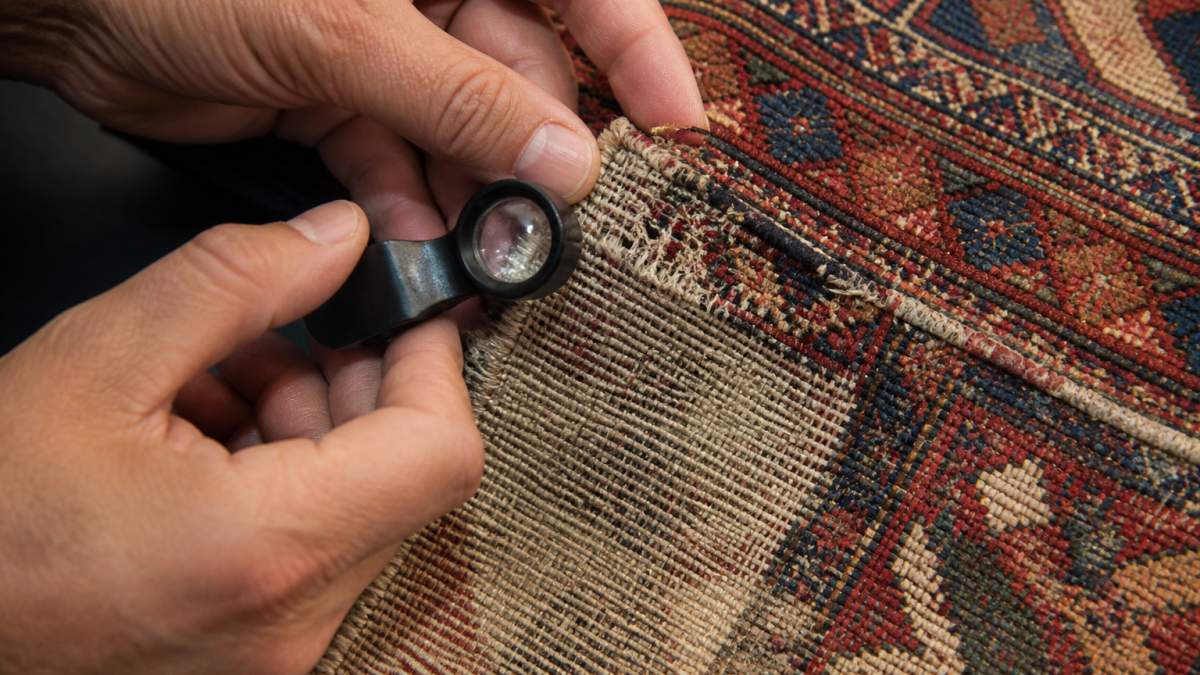
Provenance documentation should include:
- Certificate of origin stating the rug's region and estimated age
- Photos of the back and front showing weave density and knot structure
- Information about the materials used (wool, cotton, natural dyes)
- Previous ownership records if available
- Any restoration or conservation work performed
Hand-knotted rugs have specific visual markers. The knot density, the symmetry of the weave, and the way the pile sits all indicate authentic craftsmanship. Machine-made rugs have uniform knots and perfect symmetry that hand-knotted pieces lack.
According to the Smithsonian's guide to textile authentication, examining the rug's back reveals whether knots are hand-tied or machine-produced. Hand-knotted pieces show individual knot variations and sometimes loose threads where the weaver tied off sections.
Ask your supplier for a detailed condition report. This document should note stains, wear, repairs, and any areas requiring restoration.
Antique Rug Import Documentation and Compliance
Importing antique rugs into the United States requires proper paperwork and compliance with customs regulations. Missing or incomplete documentation can delay your shipment at the port, trigger inspections, or result in the cargo being held or denied entry.
Essential documents you'll need:
- Commercial invoice from the supplier with detailed rug descriptions and declared value
- Packing list showing weight, dimensions, and quantities
- Bill of lading or airway bill (depending on shipping method)
- Certificate of origin confirming the rug's country of manufacture
- Import declaration form (Entry/Immediate Delivery form at U.S. Customs)
- Any required phytosanitary certificates if the rug underwent fumigation or pest treatment
Your supplier should provide the commercial invoice and certificate of origin. These documents must match exactly, same rug descriptions, same declared values. Discrepancies trigger customs scrutiny and delays. Maintaining meticulous consistency across all shipping paperwork remains the most effective strategy for avoiding customs delays when importing high-value inventory.
The certificate of origin is critical for duty classification. According to U.S. Customs and Border Protection regulations, antique rugs are classified under different tariff codes depending on their age, materials, and origin.
Work with your customs broker or freight forwarder to complete the Entry/Immediate Delivery form before the shipment arrives. This form tells U.S. Customs what you're importing, where it's coming from, and how it will be classified. Filing this in advance speeds up clearance.
Calculating Customs Duty on Antique Rugs
Customs duty on antique rugs depends on several factors: the rug's country of origin, whether it qualifies as an antique under U.S. law, the materials used, and applicable trade agreements.
Rugs are generally classified under U.S. Harmonized Tariff Schedule (HTS) codes 5703 or 5704 for hand-knotted pieces. The duty rate varies by origin country. For example, hand-knotted wool rugs from countries with normal trade relations may carry duty rates between 8% and 12% of the declared value. Some countries benefit from preferential trade agreements that lower these rates.
To determine your exact duty rate, you'll need:
- The rug's declared value (from the commercial invoice)
- The country of origin
- The materials composition (percentage wool, cotton, silk)
- The HTS code assigned by your customs broker
Your customs broker can research the specific duty rate for each shipment. Many brokers provide duty estimates before you import, so you can calculate landed costs accurately. The landed cost includes the purchase price, freight, insurance, customs duty, and broker fees.
Freight, Insurance, and Landed-Cost Planning
Shipping antique rugs internationally requires careful planning. The total cost of importing, called the landed cost, includes the purchase price, freight charges, insurance, customs duty, and any broker or handling fees.
Freight costs depend on the shipment's weight, dimensions, and the port of origin. Ocean freight from ports in Turkey, India, or the Persian Gulf typically costs less than air freight but takes longer.
Common shipping routes and ports:
One Of The Kind Persian Bidjar Rug#12 Size 525x318 cm →
- From Turkey: Istanbul port to U.S. East Coast ports (typically 3-4 weeks by ocean)
- From India: Nhava Sheva or Mundra ports to U.S. West Coast (typically 4-5 weeks by ocean)
- From the Middle East: Jebel Ali (Dubai) to U.S. ports (typically 3-4 weeks by ocean)
Insurance protects your shipment against loss or damage during transit. Marine insurance typically costs 1-3% of the shipment's declared value. This is essential for high-value antique rugs.
Work with your freight forwarder to get a complete quote that includes:
- Ocean or air freight charges
- Customs broker fees (typically $200-$500 per shipment)
- Port handling and documentation fees
- Insurance premium
- Estimated duty (based on declared value and origin)
Add these together to calculate your true landed cost. This is the figure you use to set your wholesale price and retail markup.
The International Air Transport Association guidelines on fragile cargo recommend specific handling procedures for textiles and antique pieces during air transport. Ocean freight is generally safer for large, heavy rugs because handling is less frequent.
Shipping Antique Rugs Internationally: Packaging and Protection
Proper packaging protects your investment during transit. Antique rugs are vulnerable to moisture, dust, pests, and physical damage. The packaging must account for long transit times and multiple handling points.
Standard packaging for wholesale antique rugs:
- Roll the rug tightly around an acid-free tube or cardboard core
- Wrap the rolled rug in acid-free tissue paper to prevent color transfer
- Place the rolled rug in a sturdy cardboard box with at least 2 inches of cushioning on all sides
- Use bubble wrap, foam peanuts, or air pillows for cushioning
- Seal the box securely with reinforced packing tape
- Label the box clearly with "Fragile," "Handle with Care," and the destination address
For high-value pieces, consider double-boxing: place the first box inside a larger box with additional cushioning between them. This reduces the risk of damage from impacts during loading and unloading.
Fumigation may be required depending on the country of origin and destination. Many countries require phytosanitary treatment to prevent pest infestation. Your supplier should arrange this before shipment, but confirm it's completed and documented. The fumigation certificate becomes part of your import documentation.
Coordinate with your freight forwarder on pickup and delivery. Confirm that the carrier will handle the shipment with appropriate care and that insurance covers the full declared value. Request tracking information so you can monitor the shipment's progress.
Condition Assessment and Preparation for Sale or Delivery
When the shipment arrives, inspect each rug carefully before accepting delivery. Check for signs of damage, moisture, pest activity, or condition issues that weren't noted in the supplier's description.
Create an inspection checklist:
- Examine the front and back for new stains, tears, or loose knots
- Check for musty odors indicating moisture exposure
- Feel for brittleness in the pile or warp (sign of age or damage)
- Verify dimensions match the supplier's description
- Compare the rug's condition to the pre-import photos
- Check for pest damage or evidence of insects
If you find damage not disclosed by the supplier, document it with photos and contact your customs broker and freight forwarder immediately.
Before listing or delivering the rug, plan for cleaning or restoration if needed. Professional rug cleaning removes dust, allergens, and surface dirt without damaging the fibers.
ABC Rugs Kilims & Jewelry offers pieces like the One Of The Kind Hand Knotted Persian Rug 10'7" x 7'5" R15497 that showcase the quality and condition standards you should target when importing wholesale antique rugs.
Document the rug's condition with detailed photos from multiple angles. These photos help you describe the rug accurately to customers and provide evidence if a dispute arises later.
Importing wholesale antique rugs is complex, but breaking it into clear steps makes the process manageable. Verify authenticity upfront, handle documentation correctly, calculate landed costs accurately, and protect your shipment during transit.
Frequently Asked Questions
What are the customs requirements for importing antique rugs?
Antique rugs imported into the United States must comply with U.S. Customs and Border Protection (CBP) regulations. You'll need to provide a commercial invoice, bill of lading, and a certificate of authenticity or provenance documentation. Rugs must be classified under the correct Harmonized Tariff Schedule (HTS) code, typically 5705.00.00 for antique Oriental rugs. CBP may require proof that the rug meets the legal definition of an antique (generally 100+ years old) to qualify for duty rates. Failure to provide proper documentation can result in seizure or penalties.
How do I calculate the total cost of importing antique rugs wholesale?
Total landed cost includes the purchase price, shipping freight, insurance, customs duties, and brokerage fees. Start with your wholesale price (for example, a hand-knotted Persian rug like our One Of The Kind Antique Persian Kerman Rug at $19,216.00). Add ocean freight (typically $800-$2,500 depending on volume and origin port), insurance (1-3% of cargo value), and customs duty (generally 2.5-8% depending on classification). Include brokerage fees ($150-$400 per shipment). Use this formula: Purchase Price + Freight + Insurance + Duty + Brokerage = Total Landed Cost. Request itemized quotes from freight forwarders to avoid surprises.
What documentation do I need for antique rug import documentation?
Required documents include a commercial invoice (itemizing each rug with description, value, and origin), a packing list (weight and dimensions per carton), a bill of lading from the carrier, a certificate of authenticity or provenance letter from the supplier, export permits from the origin country (if applicable), and proof of insurance. For antique rugs, include a statement confirming the age and hand-knotted or hand-woven construction. CBP may request additional documentation such as photographs of the rug's condition, weaving technique details, and regional origin information. Keep all documents organized and readily accessible for customs broker submission.
Is there a difference in shipping antique rugs internationally versus standard rugs?
Yes. Antique rugs require specialized handling to prevent damage during shipping antique rugs internationally. Use climate-controlled containers to avoid moisture and temperature fluctuations that can weaken fibers. Rugs must be rolled (never folded) and wrapped in acid-free paper and protective plastic. Antique rugs also require higher insurance coverage due to their value and fragility. Choose freight forwarders experienced with fine art and textiles, and always request door-to-door delivery with tracking rather than port-to-port service to minimize handling and risk.


