

Table of Contents
- Start With a Side-by-Side Costume Jewelry vs Fine Jewelry Checklist
- Jewelry Metal Stamps and Hallmarks: What the Numbers Actually Mean
- How to Tell if Jewelry Is Real Gold: Plating, Filled, Vermeil, and Solid
- How to Identify Real Gemstones vs Simulated and Imitation Stones
- Vintage Costume Jewelry Identification: Signed Pieces and Modern Materials
- Limits of At-Home Tests and When to Get a Professional Appraisal
- Conclusion
- Frequently Asked Questions
Last Updated: October 21, 2026
Start With a Side-by-Side Costume Jewelry vs Fine Jewelry Checklist
Costume jewelry is fashion jewelry made from base metals, glass, plastic, or plated layers, while fine jewelry is made from solid precious metals and genuine gemstones. The fastest way to spot the difference is a close look at the stamp, the weight, and the wear points.
Here is a checklist to use before anything goes into a case:
- Stamp: A quality mark like 925, 14K, 18K, or PLAT.
- Weight: Fine pieces feel dense for their size.
- Wear points: Plating rubs off; solid metal does not.
- Clasp and prongs: Look for sturdy, soldered construction.
- Stone setting: Hand-set stones sit tight and even.
- Price versus size: Big and cheap usually means plated.
Run these six checks in order. Most pieces reveal themselves by check three.
Jewelry Metal Stamps and Hallmarks: What the Numbers Actually Mean
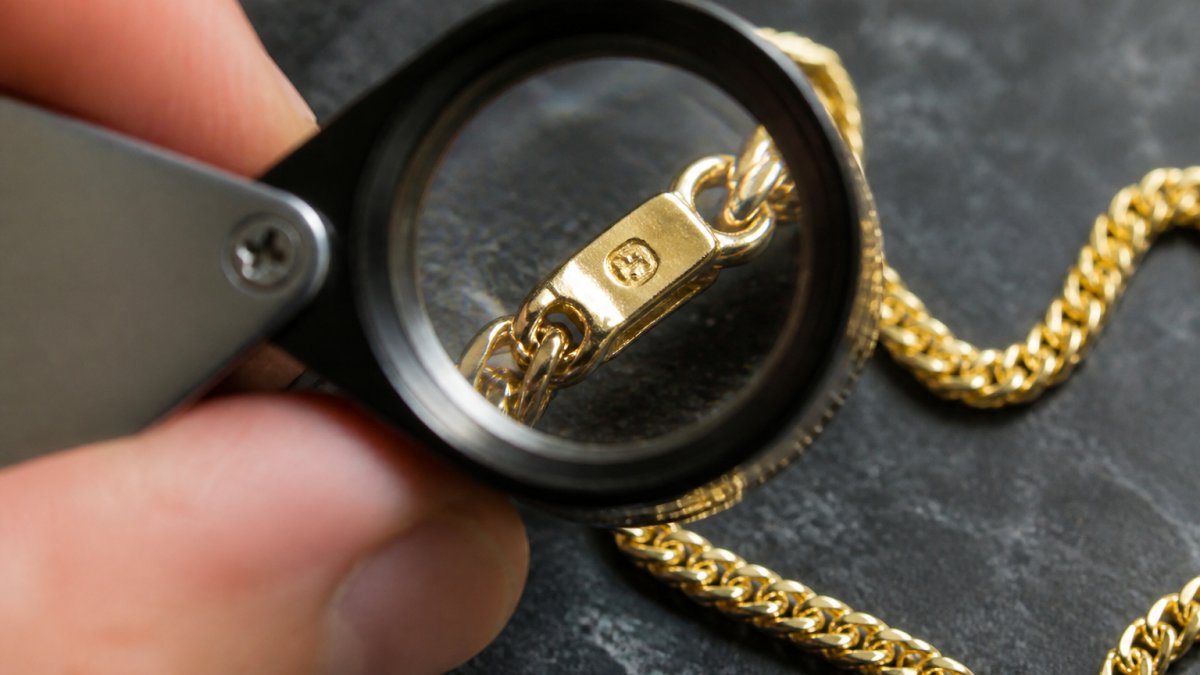
A hallmark is a stamped mark that tells you the metal's purity, and it is the single most useful clue on any piece. Turn the item over and look at the clasp, the inside of a ring band, or the back of a pendant.
Reading 925, 14K, 18K, and Platinum Marks
- 925 or "sterling": 92.5% silver.
- 14K: 14 parts gold out of 24, or about 58.5% gold.
- 18K: 75% gold.
- PLAT or 950: platinum group metal.
- GP, GF, HGE, or RGP: gold plated, gold filled, heavy gold electroplate, rolled gold plate. These are costume marks.
When a Mark Is Missing or Misleading
No stamp does not prove a piece is fake. Very old or very small items often went unstamped. But a stamp that reads "14K" on a piece that feels light and wears through to gray metal is a warning. Modern costume makers also stamp decorative numbers that look official but mean nothing. When a mark and the physical evidence disagree, trust the physical evidence.
How to Tell if Jewelry Is Real Gold: Plating, Filled, Vermeil, and Solid
Real gold means solid gold alloy all the way through. Everything else is a gold finish over another metal, and each finish behaves differently.
- Gold plated: a microscopic gold layer over base metal. Wears off first.
- Gold filled: a thicker bonded gold layer. Lasts years, still not solid.
- Vermeil: gold over sterling silver, usually marked 925 with a gold tone.
- Solid gold: the same karat throughout, stamped accordingly.
A magnet is a rough first pass: solid gold and silver are not magnetic. But many base metals are not magnetic either, so a magnet that does not stick proves very little. Our Exceptional Quality Vintage 14KT Gold-Electroplated Necklace w/ Red Oval Gemstone Pendant Cus-Jew62 is a good example of honest labeling: it says electroplated right in the name, and that is exactly what it is.


How to Identify Real Gemstones vs Simulated and Imitation Stones
A real gemstone is a natural mineral; a simulated stone mimics a gem's look, and an imitation stone copies it with glass, plastic, or paste. The difference shows up in how the stone handles light and temperature, but only as a clue, never as proof.
Simulant vs. Imitation vs. Synthetic: Three Different Things
These terms get used interchangeably and should not be:
- Simulant: a material that looks like a specific gem but has a different chemical makeup. Cubic zirconia and moissanite are common diamond simulants. Glass can simulate almost anything.
- Imitation: a stone made to copy a gem's appearance with no pretense of matching its composition, paste, plastic, and foil-backed glass are typical.
- Synthetic (lab-created): a stone with the same chemical and crystal structure as the natural gem, grown in a lab. A lab-created ruby is still a ruby by composition; it is not natural.
A real gemstone in a fine setting and a lab-created stone in the same setting can look identical to the eye. That is why the FTC jewelry guides require lab-created stones to be disclosed as such, the distinction is legal, not just aesthetic.
What the Eye Can and Cannot Tell You
- Temperature: real stones feel cool at first touch and warm slowly. Glass warms fast. This is a weak clue, a stone sitting on a warm display case feels warm too.
- Sharpness: glass and paste edges look rounded under magnification; cut gemstones have crisp facet junctions. A 10x loupe is the standard tool, and even then, a well-cut simulant can fool an untrained eye.
- Inclusions: natural stones usually have tiny internal flaws, feathers, crystals, pinpoints. Perfect clarity in a large, inexpensive stone is a warning sign, not a selling point.
- Double refraction: some gems show doubled facet edges under a loupe. This is a real diagnostic, but it requires knowing which stones to expect it from.
- Setting quality: fine stones get precise, tight settings; glued or pronged-in-haste stones usually do not.
Why a Real Stone Does Not Make the Piece Fine Jewelry
Gemstone verification and metal verification are separate jobs. A piece can have a solid 14K setting and a glass stone, and that combination is common in estate jewelry. The reverse also happens: a genuine diamond in a plated setting. Judge the metal and the stone independently, then combine the two findings.
Federal Trade Commission jewelry guides spell out how stones and metals must be described, which is why honest sellers label lab-created stones clearly. If a seller cannot tell you what the stone is, treat that as information too.
Vintage Costume Jewelry Identification: Signed Pieces and Modern Materials
Vintage costume jewelry identification starts with the maker's mark, not the metal. Signed pieces from known costume houses carry real collector value even though they contain no precious metal.
Exceptional Quality Vintage 14KT Gold-Electroplated Necklace w/ Red Oval →
- Signature: a stamped or engraved maker's name on the back.
- Construction: glued stones, riveted settings, and pot metal castings point to costume.
- Finish: older plating often shows a warm, uneven tone.
- Modern materials: titanium, stainless steel, and ceramic blur the old rules.
A designer name on costume jewelry can raise its value far above its metal content. Value and material are two different questions.
Modern misleading marks deserve a mention too. "Stainless steel" and "tungsten" are real, durable metals, but neither is a precious metal. A piece can be well made and still be fashion jewelry.
Limits of At-Home Tests and When to Get a Professional Appraisal
At-home tests narrow the field; they do not settle it. Acid kits, magnets, and loupes all have blind spots, and a false result can cost you real money in either direction. The useful mental model is screening versus confirmation: most home checks are screening tools that raise or lower suspicion, and only a few are confirmation tools.
Which Checks Screen and Which Confirm
- Magnet test: screens only. Solid gold and silver are not magnetic, but so are many base metals. A magnet that does not stick proves very little; a magnet that does stick is a strong signal of ferrous base metal.
- Acid test kits: can confirm gold content on a scraped spot, but they damage the surface and are easy to misread. Not appropriate for a finished piece you plan to keep or sell.
- Loupe inspection: screens. Useful for reading hallmarks and spotting plating wear, not for identifying stones.
- Weight and heft: screens. Dense metal feels different, but tungsten and stainless steel are also heavy.
- Electronic gold testers: confirm karat range on many alloys, but results vary by model and surface condition.
Stop testing the moment a check would require removing metal, scratching a stone, or applying a chemical to a finished piece. At that point you are no longer screening, you are risking damage for an answer you can get professionally.
A Decision Tree for Uncertain Pieces
Work from the least invasive evidence to the most:
- Read every mark. Clasp, band interior, pendant back, and the tongue of a lobster claw. Photograph each mark before you clean anything.
- Check wear points. Edges of bands, backs of clasps, and the underside of settings show plating wear first. Gray or copper tone under a gold surface is a strong costume signal.
- Weigh it in your hand. Compare against a known piece of similar size if you have one.
- Loupe the stone settings. Glue, foil backs, and uneven prongs point to costume.
- Stop and document. If the marks and the physical evidence agree, you likely have your answer. If they disagree, do not keep testing, move to professional verification.
When to Get a Professional Appraisal
Get a written appraisal when you plan to sell, insure, donate, or settle an estate. An appraisal establishes replacement value for a specific purpose; it is not the same as identification, and identification alone does not establish market value. For stones where identity is genuinely uncertain, lab gem identification is the final step, Gemological Institute of America gem identification services exist because even trained eyes need lab equipment for the final call.
| Situation | Best Next Step |
|---|---|
| Clear stamp, solid feel, tight settings | Document it and insure it |
| No stamp, light weight, worn edges | Treat as costume until proven otherwise |
| High-value claim or inheritance | Professional appraisal |
| Uncertain stone | Lab gem identification |
| Signed vintage piece | Research the maker's mark |
If you plan to sell, insure, or donate a piece, get a written appraisal. It protects you, and buyers trust paperwork. For pieces with real value, GIA certification and verification for vintage jewelry, diamonds, and gemstones can be arranged, with fees paid directly to GIA.
Conclusion
Telling costume from fine jewelry comes down to patience: read the stamp, feel the weight, and check the wear points before you decide. When a piece still leaves you guessing, professional verification is the honest answer. Discover timeless artistry and craftsmanship with our carefully selected inventory available for purchase today. Browse our curated jewelry collection at ABC Rugs Kilims & Jewelry, where every piece is reviewed and trusted, with certified gemstones and clear labeling on plated and solid metals alike.
Frequently Asked Questions
How can you tell if jewelry is costume or fine?
Start with the metal. Fine jewelry carries a stamp such as 925, 14K, 18K, or PLAT, usually on the clasp, inner band, or back of a pendant. Costume jewelry often has no precious-metal mark at all, or says something like gold-tone or silver-plated. Then check weight and construction: fine pieces tend to feel denser for their size, with secure settings and clean solder joints. A magnet and a loupe will confirm what the stamp suggests, but a professional appraisal is the only definitive answer for high-value pieces.
What markings indicate that jewelry is made of precious metal?
Look for a purity stamp plus a maker's mark. Common United States marks include 925 or sterling for silver, 14K or 585 for 14-karat gold, 18K or 750 for 18-karat gold, and PLAT or 950 for platinum. Gold-filled pieces are marked 1/20 12K GF or similar, which means a bonded layer of gold over a base metal, not solid gold. A stamp alone is not proof: counterfeit marks exist, so pair the mark with a magnet test, a close visual inspection, and an appraisal if the value is significant.
How can you tell if a gemstone is real or imitation?
Real stones usually show slight natural variation in color, tiny inclusions under magnification, and cool-to-the-touch surfaces. Imitation stones such as glass, cubic zirconia, and rhinestones tend to look too uniform, may show bubbles or mold seams under a loupe, and warm up quickly against your skin. A diamond tester or a jeweler's refractometer gives a firmer answer. For anything above a few hundred dollars, get a written appraisal or a lab report before you buy or insure the piece.
Does heavy jewelry mean it is fine jewelry?
No. Weight is one of the most misleading signals. Brass, zinc alloys, and steel costume pieces can feel heavier than a delicate 14K gold chain, and hollow gold jewelry can feel surprisingly light. Judge density relative to size and compare against a known piece of the same metal. A heavy feel plus a proper stamp, tight settings, and no green skin discoloration is a better combination of clues than weight alone.


