

Last Updated: November 9, 2026
Quick Summary
How to appraise vintage area rugs starts with confirming the rug is genuinely old and hand-knotted. Check the back for individual knots, feel for uneven pile, and look for natural patina. Then grade condition, since damage often affects value more than age.
- Turn the rug over and look for individual knots; machine-made rugs show a uniform backing.
- A vintage rug is generally 20 to 40 years old; an antique is usually 100 years or more.
- Count knots per inch horizontally and vertically, then multiply to get knots per square inch.
- Structural problems like foundation damage and large holes reduce value far more than cosmetic wear.
- Photograph the rug flat in daylight, including the back, corners, edges and any damage.
Table of Contents
- What Makes a Vintage Rug Valuable
- Step 1: Confirm the Rug Is Truly Vintage or Antique
- Step 2: Examine Knot Density, Materials and Dyes
- Step 3: Inspect Condition and Damage
- Step 4: Photograph the Rug for an Online Appraisal
- Using a Free Online Rug Appraisal, and Its Limits
- When to Pay for an Antique Rug Appraisal
- Frequently Asked Questions
How to appraise vintage area rugs at home starts with one honest question: is the rug really old, and is it really hand-knotted? Owners who inherited a rug or found one at an estate sale often ask this same question.
A vintage rug is generally 20 to 40 years old; an antique is usually 100 years or more, though cutoffs vary by appraiser. Value rests on construction, materials, condition, design and provenance.
What Makes a Vintage Rug Valuable
Value is a mix of factors, and no single one decides the price. Hand-knotting, wool or silk quality, knot density, intact pile and fringe, clear origin and attractive design push value up. Heavy wear, repairs, stains and reproduction construction push it down.
Here are the factors most appraisers check first:
- Construction: Hand-knotted rugs are worth far more than machine-made copies.
- Knot density: More knots per inch usually means finer detail and more labor.
- Materials: Natural wool, silk and cotton hold value better than synthetics.
An old rug can still have modest value, and a younger rug can be quite valuable if finely made. Age alone is not the answer.
Step 1: Confirm the Rug Is Truly Vintage or Antique
Before anything else, confirm the rug's age and that it is hand-knotted. Many rugs sold as "vintage" are newer reproductions.
How Age Is Determined
Look for signs of genuine wear and aging rather than trusting a label. Real age usually shows up in several places at once:
- Soft, even patina across the pile, especially where foot traffic was heavy
- Natural, uneven fading rather than sharp, blotchy color changes
- Wear on the high points of the pattern that matches normal use
A seller's written statement about age is useful but not proof. If age matters to your decision, a qualified appraiser can date it more reliably than a quick visual check. For a fuller walkthrough, see our complete guide to identifying the age of antique Persian rugs.
Hand-Knotted vs. Machine-Made Construction
This is the most important check. Turn the rug over and look at the back. Hand-knotted rugs show individual knots, and the pattern on the back is often a little less crisp than the front.
Run your fingers across the back to feel for irregularities. For more detail, see our guides on How To Identify Genuine Hand Knotted Rug Knots, How To Tell If A Kilim Is Handmade 7 Tests for flatweaves, and How Can You Spot Fake Antique Rugs? for reproduction warning signs.
Step 2: Examine Knot Density, Materials and Dyes
Once you know the rug is hand-knotted, look at how finely it was made and what it is made from.
Knot density is measured in knots per square inch (KPSI). Turn the rug over, count the knots along one inch horizontally and one inch vertically, then multiply.
Materials matter too. Check the feel and sheen of the pile:
- Wool has a natural, slightly matte texture and springs back when pressed.
- Silk has a noticeable sheen and feels smooth and cool.
- Cotton is used mostly for the foundation (warp and weft) and feels firm underneath.
Dyes signal age and quality. Natural dyes often show subtle, variegated color; synthetic dyes look flat and uniform.
Step 3: Inspect Condition and Damage
Condition is the single largest swing factor in what a vintage rug is worth, often more than age, origin or knot count combined. A finely knotted rug with a crumbling foundation can be worth less than a coarser rug in sound original condition. Work through the rug methodically in good daylight, checking front, back, edges and fringe.
Grade the Rug on a Simple Scale
Most appraisers and dealers mentally sort rugs into rough condition bands. You can do the same to anchor your expectations:
- Excellent / original: Full, even pile; intact original fringe; sound selvages; no repairs or only invisible ones. Top of the market for any type.
- Very good: Minor, even wear on high-traffic areas; fringe mostly intact; no structural issues. Modest discount from excellent.
- Good: Visible wear, some low pile or minor re-weaving, possibly replaced fringe. Still usable and structurally sound.
The Condition Checklist, With What Each Item Signals
- Pile height is even, with no large bare or thinned patches. Uneven pile usually means concentrated traffic or furniture wear. Bare patches exposing white cotton foundation are a major deduction because re-piling is expensive and rarely invisible.
- No dry rot, brittle foundation, or crumbling fibers. Gently flex a corner: healthy wool flexes; one that crackles or sheds fibers is failing. Dry rot cannot be reversed, only stabilized.
- No moth damage. Larvae leave small, clean holes and bald tracks, often under furniture or along folds. Check the back and folds; active infestations can spread to other textiles.
How Damage Translates to Value
A useful rule of thumb: minor, even wear is expected in a genuinely vintage rug and is priced in. Structural problems are not.
Watch out: amateur repairs are often worse than the original damage. Glued patches, machine-sewn fringe, and painted or marker-touched worn areas can permanently reduce value and may be flagged as a restoration liability rather than an asset.
Be honest about what you see, and photograph anything you are unsure about. If you find significant damage, How Much Does Rug Repair Cost gives a sense of what restoration typically involves before you decide whether the rug is still worth keeping or buying.
The article grades condition on a simple scale and lists the checks that signal how a rug's condition affects its value.
| Condition | What It Means |
|---|---|
| Excellent / original | Full, even pile; intact fringe; no repairs |
| Very good | Minor, even wear; fringe mostly intact |
| Good | Visible wear; minor re-weaving possible; sound structure |
| Fair | Significant pile loss; repaired edges; value drops sharply |
| Poor / fragment | Dry rot, large holes, active moth damage |
Step 4: Photograph the Rug for an Online Appraisal
Good photos make a big difference for an online appraisal. Blurry or poorly lit pictures slow the process and lead to vague estimates.
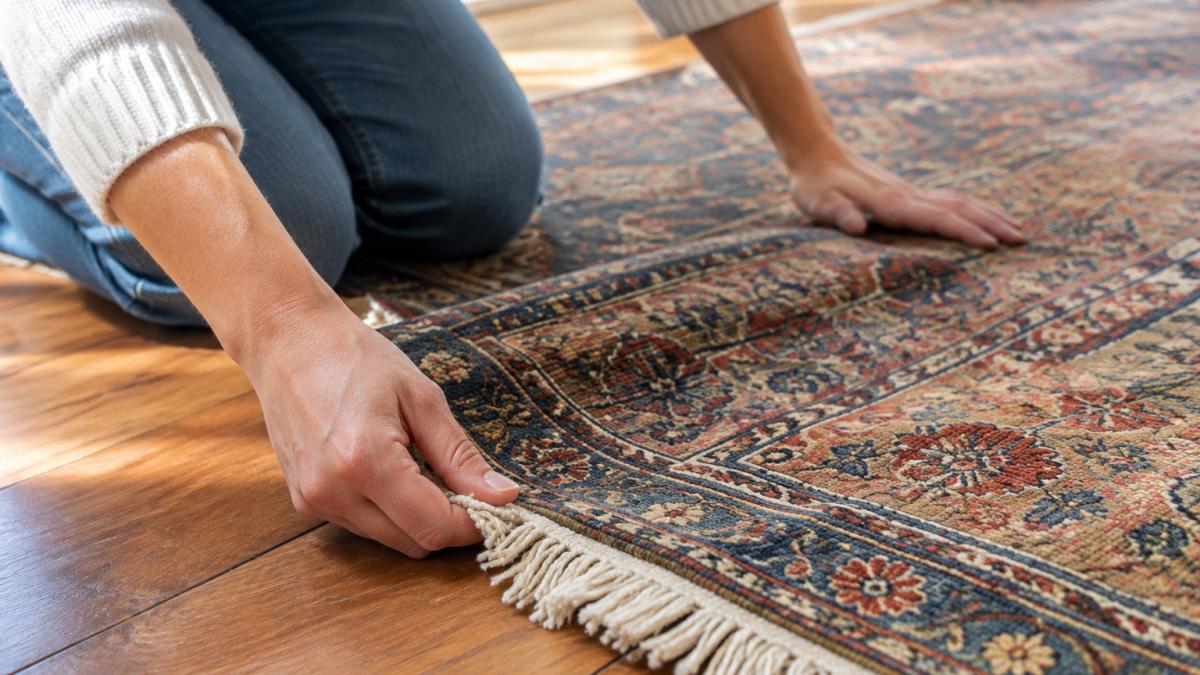
Lay the rug flat on a clean floor in natural daylight, and avoid harsh overhead or flash lighting that washes out color. Take these shots:
- A full view of the rug from above, with the entire piece in frame
- Close-ups of the pattern, the pile texture and the colors
- The back of the rug, showing the knots or the lack of them
- Each corner and both edges, to show condition and fringe
- Any damage, stains, repairs or wear, photographed up close
- A label or marking, if there is one, and any maker's mark
Use a ruler or coin for scale, and note the rug's measured dimensions. Clear, honest photos help any appraiser give a more useful opinion.
Using a Free Online Rug Appraisal, and Its Limits
Many websites offer free online rug appraisals. These can be a useful first step, especially if you upload strong photos and provide detailed notes. Some will give you a rough estimate or confirm whether a rug is worth a closer look.
Keep the limits in mind. A free online review cannot feel the knots, check the back in person, or detect every reproduction or repair. Photo-based estimates are less reliable than in-person assessment.
When to Pay for an Antique Rug Appraisal
A professional appraisal is a paid, written opinion of value from someone who examines the rug in person. It differs from a free online estimate in three ways: the appraiser can feel knots, test dyes and fibers, and inspect the back and foundation directly; the result is a signed document; and it can be used for insurance, tax, estate and legal purposes.
What a Professional Appraisal Costs
Appraisal fees vary by appraiser, rug value, and purpose, but the common structures are:
- Flat fee per rug: Often used for straightforward pieces; quoted up front.
- Hourly rate: Common for complex or high-value rugs where research and comparables take time.
- Percentage of value: Used for higher-value pieces. A percentage-based fee creates an incentive question, which is why many institutions prefer flat or hourly structures for insurance and estate work.
For most vintage area rugs, an appraisal is a few hundred dollars; high-value antiques can run into four figures. Ask for the fee structure and turnaround before committing, and confirm whether the report includes photographs and comparables. When comparing fees and report details, remember that an online antique condition report may not provide the same basis for judging a rug’s value as an in-person appraisal.
When an Appraisal Is Worth the Cost
Pay for a professional appraisal when any of these apply:
- Insurance: Many insurers ask for a written appraisal before covering a fine rug, so check your policy's requirements.
- Estate and inheritance: Settlements and step-up-in-basis calculations often need a dated, signed valuation. An appraiser who understands estate requirements can format the report accordingly.
- Sale or consignment: A written appraisal gives you a negotiating anchor and helps you recognize a low offer.
When You Can Skip It
If your home checks point to a machine-made rug, a heavily damaged piece, or a common commercial production, a paid appraisal usually costs more than it returns. A free online review or a dealer's informal opinion is enough to confirm the rug is not a candidate for a formal valuation.
What to Ask Before You Hire an Appraiser
- What credentials do you hold, and are you accredited by a recognized appraisal organization?
- What is your fee structure, and is it flat, hourly, or percentage-based?
- Will the report include photographs, measurements, condition notes, and comparables?
A credible appraiser will answer these plainly and put the scope and fee in writing. Treat any pressure to pay before you receive a clear, reasoned scope as a warning sign.
Many owners do a home check first and then decide. If your checks suggest the rug is genuinely old, hand-knotted, and in reasonable condition, an appraisal is usually worth the cost.
If you are looking to buy vintage rugs, ABC Rugs Kilims & Jewelry offers a range of hand-knotted vintage pieces you can review. Our current selection includes a Hand Knotted Persian Vintage Rug, Half Round Traditional Wool Area Rug, 9 ft 0 in x 7 ft 1 in priced at $6,832.00, and a Hand Knotted Persian Vintage Rug, Oval Traditional Wool Area Rug, 8 ft 2 in x 4 ft 9 in priced at $8,064.00.


Frequently Asked Questions
How do I tell if my rug is valuable?
Start by checking whether it is hand-knotted, which you can see from the irregular pile and the back of the rug. Then look at knot density, the natural fibers used (wool, silk or cotton), the condition of the pile and fringe, and any signs of repair or restoration. Rugs with fine knots, good original condition and a recognized regional origin usually carry the most value. A common first step is to count knots in a one-inch square; higher counts generally indicate more labor and higher value. Keep in mind that age alone does not guarantee value, so these factors together give the clearest picture before you pay for a formal appraisal.
Are vintage rugs worth anything?
Some are, and many are not. Vintage rugs, typically those 25 to 99 years old, can hold meaningful value when they are hand-knotted, made from quality materials and in good condition. Machine-made rugs of the same age usually sell for far less. Market demand also matters, since prices for antique rugs fluctuate with buyer interest and the secondary market. An appraisal from a qualified professional, such as a member of a recognized appraisal association, will give you a documented fair market value or replacement cost for insurance or estate purposes.
Can I get a vintage rug appraised online?
You can get a preliminary online assessment by submitting clear photographs of the front, back, corners, fringe and any damage, along with measurements and whatever history you know. This can help you decide whether the rug merits further attention. However, a remote review cannot physically confirm fiber content, knot count or repairs as precisely as an in-person inspection. For insurance, estate or sale purposes, you will generally need a written appraisal from a qualified appraiser who has examined the rug directly.
When should I hire a professional rug appraiser?
Hire a professional when the rug may be worth more than a few hundred dollars and you need documented value for insurance, an estate, a divorce, a donation or a sale. Professionals are also worth the cost if you suspect the rug is antique, see signs of extensive restoration, or cannot identify its origin. Ask whether the appraiser is certified, whether they charge a flat fee instead of a percentage of value, and whether they will produce a written report that states the type of value being estimated.


