

Last Updated: October 24, 2026
Quick Summary
Choosing the right gemstone necklace formal event requires matching the necklace length and pendant style to your dress neckline, selecting colors that complement your skin tone, and ensuring the piece sits securely throughout the evening. A 16-18 inch length works best for most formal occasions, with the pendant sitting just above the bust for balanced proportion.
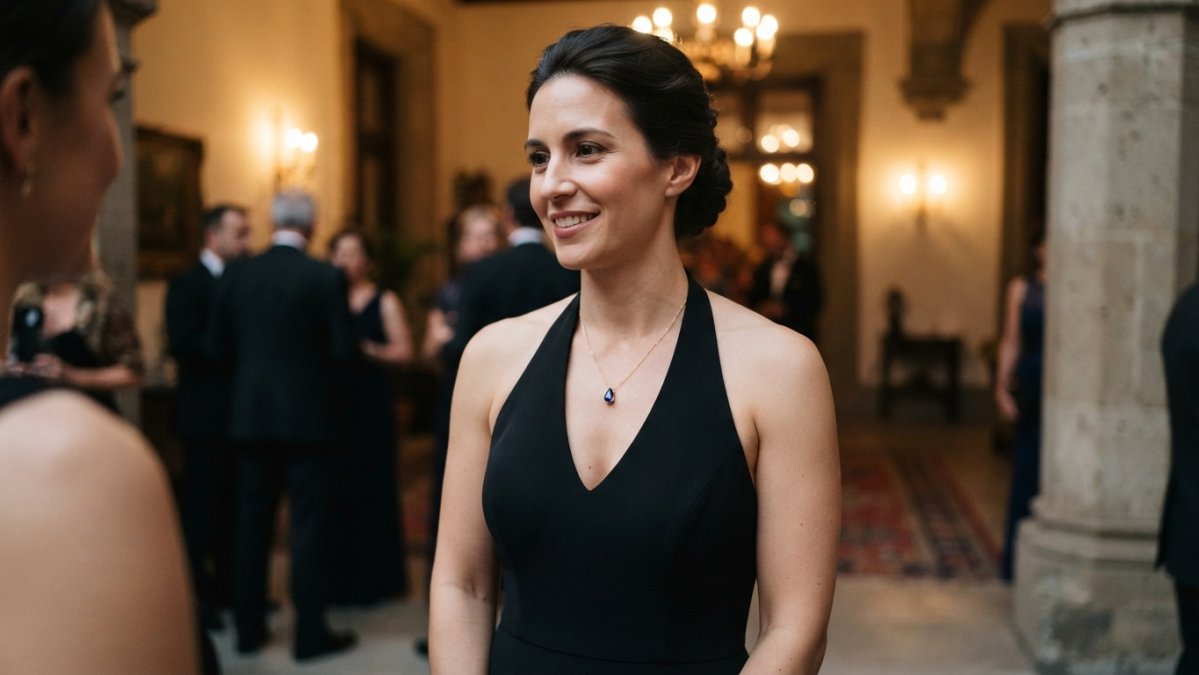
- Strapless and halter necklines work best with 16-18 inch necklaces featuring small-to-medium pendants at mid-chest
- V-neck dresses pair beautifully with pear, marquise, or teardrop-cut gemstones positioned at the same depth as the V
- Red and pink gemstones like rubies convey confidence and work with jewel-toned dresses, while blue gemstones are versatile across multiple skin tones and dress colors
- White gold and platinum have cool undertones that flatter cool skin tones and jewel-toned dresses, while yellow gold suits warm skin tones
- Test your necklace with the dress from three distances, arm's length, across the room, and in a photo, before the event
Table of Contents
- Understanding Gemstone Necklaces for Formal Events
- How to Choose a Necklace for a Formal Dress
- Matching Jewelry to Dress Neckline
- Gemstone Necklace Colors and Meanings
- Selecting Metal Type and Undertone
- Length, Proportions, and Fit for Formal Occasions
- Balancing Gemstone Necklaces with Your Complete Outfit
- Finding Your Formal Event Gemstone Necklace
- Frequently Asked Questions
Understanding Gemstone Necklaces for Formal Events
Choosing the right gemstone necklace formal event transforms how you feel in an elegant outfit.
The best formal gemstone necklaces share common traits: quality materials, appropriate length, and colors that complement your skin tone and dress.
Many people choose a necklace on beauty alone and hope it works. That rarely delivers a polished result, think strategically about how it fits your complete formal look.
How to Choose a Necklace for a Formal Dress
Start by assessing your dress. The neckline, color, and overall style of your gown determine what gemstone necklace will work best.
Here's the practical approach:
- Examine the neckline. High neck, scoop, V-neck, or strapless? This is your most important decision point.
- Consider the dress color. Warm tones pair differently than cool tones. A emerald gemstone necklace works beautifully with jewel-toned dresses but may clash with pastels.
- Check the dress detail level. Beading, embroidery, or dramatic patterns call for a simpler necklace; an understated dress gives you more freedom.
Matching Jewelry to Dress Neckline
Your dress neckline determines where jewelry sits on your body and how much skin it covers, the single most important factor in necklace selection. Use the guide below as a starting point, then adjust for your frame and the event's formality.
A Neckline-by-Neckline Guide
| Neckline | Best Necklace Length | Best Pendant or Shape | Gemstone Cut That Works | What to Avoid |
|---|---|---|---|---|
| Halter | 16-18 inches | Small-to-medium pendant that sits at mid-chest | Pear, oval, or round | Long chains that slide under the halter strap |
| Strapless | 16-18 inches | Pendant or short statement piece | Round, oval, or cushion | Heavy pieces that pull the chain forward |
| V-neck | 16-18 inches, pendant at the depth of the V | Pendant that follows the V line | Pear, marquise, or teardrop | Pendants that sit above the V and create a second point |
| Sweetheart | 14-16 inches | Delicate pendant or short collar | Small round or oval | Heavy statement pieces that crowd the bust |
| Scoop | 16-18 inches | Pendant or graduated strand | Round or oval | Chokers that cut across the scoop |
| Square | 16-18 inches | Pendant centered in the square | Princess or square | Asymmetric pendants that fight the clean lines |
| High neck or turtleneck | 14 inches or skip | Choker or no necklace | Small round or bezel-set | Long pendants that sit on the fabric |
| Off-the-shoulder | 14-16 inches | Short pendant or collar | Round or oval | Long chains that cross the bare shoulder line |
| One-shoulder | 16-18 inches | Pendant offset toward the bare shoulder | Pear or oval | Symmetric pieces that emphasize the asymmetry |
Halter and Strapless Necklines
Halter and strapless necklines expose your shoulders, collarbone, and upper chest, open space that is your canvas. A pendant at mid-chest creates visual interest without competing with exposed skin, and statement pieces work well here because there's room to shine. Just ensure the necklace doesn't slip or move uncomfortably.
A 16-18 inch necklace typically works best for strapless dresses, sitting just above the bust and feeling secure. Our 14kw 1/2ct Lab Grown Diamond & Ruby Composite 18in Halo Necklace exemplifies this proportion, the 18-inch length pairs perfectly with strapless or halter styles, and the ruby adds formal elegance without overwhelming the look.
V-Neck and Sweetheart Necklines
V-neck and sweetheart necklines create a natural focal point, so your necklace should complement rather than compete. For V-necks, place a pendant at the same depth as the V at 16-18 inches; pear and marquise cuts echo the V most naturally. Sweetheart necklines call for a smaller pendant or delicate design, since the neckline itself is the statement.
High Necklines and Turtlenecks
High necklines and turtlenecks cover most of your upper body, changing the jewelry equation. Skip the pendant; consider a choker-style gemstone piece or no necklace at all. If you do wear one, keep it short and simple, no longer than 14 inches. These necklines work beautifully with statement earrings instead, shifting focus to your face.
Scoop, Square, and Off-the-Shoulder Necklines
Scoop necklines leave a wide, curved area of skin; a pendant inside the curve at 16-18 inches keeps the look balanced, and avoid chokers that cut across the scoop. Square necklines have clean, architectural lines, a centered princess or square-cut pendant echoes them, so keep the chain fine. For off-the-shoulder, a short pendant or collar at 14-16 inches keeps focus on the collarbone; for one-shoulder, offset the pendant toward the bare shoulder so the jewelry follows the dress's asymmetry.
Adjusting the Guide for Your Frame
The table is a starting point, not a rule. Petite frames often look best with shorter lengths and smaller pendants; taller frames can carry longer chains and larger stones. Between two lengths, choose the shorter for high necklines and the longer for open ones. The goal is for the necklace to sit on skin, not fabric, whenever the neckline allows.
Gemstone Necklace Colors and Meanings
Gemstone color carries weight at formal events: the right color enhances your complexion and coordinates with your dress, while the wrong one can wash you out or clash.
Red and pink gemstones like rubies convey confidence and passion.
Green gemstones like emeralds suggest elegance and sophistication. The 14kw 1/2ct Lab Grown Diamond & Emerald Composite 18in Halo Necklace offers refined formal styling with its classic emerald hue.
Blue gemstones work across multiple skin tones and dress colors. The 14kw 1/2ct Lab Grown Diamond & Sapphire Composite 18in Halo Necklace delivers this versatility with its cool, sophisticated blue tone.
14kw 1/2ct Lab Grown Dia VS/SI+ G+ & Cr Sapphire Comp 18in Halo Necklace →
Clear or white gemstones like diamonds feel classic and never go out of style.
Selecting Metal Type and Undertone
Metal type affects how your gemstone necklace looks against your skin and dress.
White gold and platinum have cool undertones and pair beautifully with cool skin tones and jewel-toned dresses.
Yellow gold has warm undertones, flatters warm skin tones, and pairs well with warm-colored dresses.
Sterling silver offers versatility and accessibility across skin tones and dress colors. The Sterling Silver Rhodium-plated London and Sky Blue Topaz with 2in Extender Necklace demonstrates how sterling silver delivers formal sophistication with its rhodium plating and blue topaz gemstone.
Mixed metals are increasingly acceptable at formal events. If your earrings are gold and your dress has silver accents, mixing metals creates intentional coordination rather than looking accidental.
Length, Proportions, and Fit for Formal Occasions
Necklace length matters more than most people realize, the wrong length can make your entire outfit feel off-balance. The right length depends on where the necklace sits relative to your neckline, how the pendant scale relates to your frame, and whether the piece stays comfortable and secure all evening.
Standard Lengths and Where They Sit
| Length | Where It Sits | Best For | Formality Note |
|---|---|---|---|
| 14 inches | Base of the neck | High necklines, chokers | Formal when the piece is refined |
| 16 inches | Collarbone | Sweetheart, off-the-shoulder | Classic formal length |
| 18 inches | Just above the bust | Strapless, halter, V-neck | The most versatile formal length |
| 20 inches | On the bust | Scoop and square necklines | Works when the pendant is small |
| 24 inches and longer | Below the bust | Tall frames, dramatic pendants | Can read less formal; use with care |
16-18 inches is the standard formal length, sitting just above your bust and creating elegant proportion for most body frames. 14-16 inches works for petite frames or high necklines, sitting closer to the collarbone for a more delicate look. 20+ inches can work for tall frames or a lower pendant, but longer lengths can feel less formal, save them for daytime or casual events.
Proportion: Pendant Scale, Chain Weight, and Frame
Proportion is the relationship between the stone, the chain, and your body, a large gemstone on a delicate chain looks unbalanced, and so does a tiny gemstone on a chunky chain. A practical rule: the pendant should be no wider than the distance between your collarbones divided by three. Petite frames usually read as balanced under about 10mm across; average and taller frames suit 10-15mm.
Comfort and Security for a Long Event
Comfort and security matter too. Your necklace should stay in place throughout the event, and a secure clasp is non-negotiable. Test it beforehand so it won't slip or need constant adjustment.
- Clasp type. A lobster clasp is the most secure common option. Spring rings are smaller but can open under pressure; avoid box clasps on heavy pendants unless rated for the weight.
- Weight. A pendant that feels fine for five minutes can feel heavy after three hours, wear it for an hour at home first.
- Snagging. Beaded, embroidered, or sequined dresses can catch on prongs and chain links. Check the setting against the fabric.
Fit Adjustments for Real Bodies
A well-fitting necklace sits flat against the skin without twisting; if the chain twists, the pendant flips and shows its back, which a slightly shorter length or small extender can fix. If it sits on fabric, it moves with the dress and may sit unevenly, so adjust the length so the pendant rests on skin whenever the neckline allows. For shorter necks, a 16-inch chain often sits better than an 18-inch because it keeps the pendant above the bust line; for longer necks, an 18-inch fills the space more gracefully.
Balancing Gemstone Necklaces with Your Complete Outfit
Your gemstone necklace doesn't exist in isolation, it's one piece of your complete formal look. If you're wearing statement earrings or a bold bracelet, keep your necklace more subtle. Don't layer multiple statement pieces: a dramatic gemstone necklace, chandelier earrings, and a bold bracelet together create visual chaos. Choose one focal point and build around it. Your hair matters too, an upswept style exposes your neck and collarbone so the necklace can shine, while loose hair over the shoulders can hide it.
Finding Your Formal Event Gemstone Necklace
The right gemstone necklace formal event elevates your formal appearance and makes you feel confident. At ABC Rugs Kilims & Jewelry, we curate gemstone necklaces specifically designed for formal events, featuring authentic materials, refined designs, and quality craftsmanship.
The difference between looking polished and overdone at a formal event often comes down to one choice: your gemstone necklace. We recommend selecting a piece that complements your dress neckline, flatters your skin tone, and feels secure throughout the evening.
| Consideration | Best Choice | Why It Matters |
|---|---|---|
| Strapless dress | 16-18 inch pendant | Sits securely, creates visual balance |
| High neckline | Skip necklace or choker | Avoids crowding the neck area |
| Warm skin tone | Yellow or rose gold | Complements your natural coloring |
| Cool skin tone | White gold or platinum | Enhances your complexion |
| Jewel-toned dress | Matching gemstone color | Creates coordinated elegance |
| Statement earrings | Delicate necklace | Balances overall jewelry impact |
Frequently Asked Questions
How do you choose a gemstone necklace for a formal event?
Start by considering your dress neckline, the formality level of the event, and your personal undertone. Strapless or halter dresses pair well with statement gemstone necklaces that draw attention to the neckline, while high necklines work better with delicate pendants worn lower on the chest. Choose gemstone colors that complement both your skin tone and dress color. For formal galas, opt for deeper-toned stones like emerald, sapphire, or ruby; for evening events, softer pastels or diamonds offer elegant restraint. Keep the necklace length proportional to your body frame and dress style.
What gemstone colors work best with different dress colors?
Understanding gemstone color and undertone ensures your necklace enhances rather than clashes with your overall look.
Should you wear a statement necklace or a delicate pendant to a formal event?
The choice depends on your dress style and the event's formality. Statement gemstone necklaces work best with simple, unadorned formal dresses that lack embellishment or dramatic necklines. They create visual impact and draw focus upward. Delicate pendants suit dresses with intricate beading, lace, or detailed patterns, as they add elegance without competing for attention. For black-tie galas, either option works if executed with restraint, avoid oversized pieces that overwhelm your frame. The 2:1:1 rule suggests keeping jewelry balanced: if your necklace is bold, keep earrings and bracelets minimal. Comfort and security matter too; ensure your chosen piece has a reliable clasp and won't shift during the event.
What necklace length works best with different dress necklines?
Strapless and halter necklines allow longer necklaces (18-20 inches) that rest on the collarbone or slightly below, creating an elongated silhouette. V-neck and sweetheart necklines pair well with 16-18 inch necklaces that follow the dress's line. High necklines and turtlenecks require shorter necklaces (14-16 inches) worn higher on the neck to avoid layering conflicts. Your body frame also matters: petite frames benefit from shorter, more delicate necklaces, while taller frames can carry longer, more substantial pieces. Ensure the pendant length doesn't compete with the dress neckline, the goal is visual harmony where the necklace complements rather than crowds the neckline area.


