

Table of Contents
- Why Antique Silver Clasps Matter for Collectors
- Vintage Jewelry Clasp Identification: The Main Types
- How to Date Antique Jewelry by Clasp
- Sterling Silver Necklace Clasp: Hallmarks and Verification
- Barrel Clasp Jewelry: Design, Construction, and Age Indicators
- Repair, Replacement, and Preservation of Antique Clasps
- Common Mistakes When Evaluating Antique Silver Clasps
- Conclusion
- Frequently Asked Questions
Last Updated: October 18, 2026
Why Antique Silver Clasps Matter for Collectors
Understanding antique silver clasps is essential for anyone collecting vintage jewelry or inheriting pieces with historical value.
A jewelry clasp is the fastening mechanism that holds a necklace or bracelet securely.
Most collectors inherit or purchase vintage jewelry with no idea what they're looking at. The clasp might be original or a replacement, and the metal might be sterling silver, silver plate, or something else.
Vintage Jewelry Clasp Identification: The Main Types
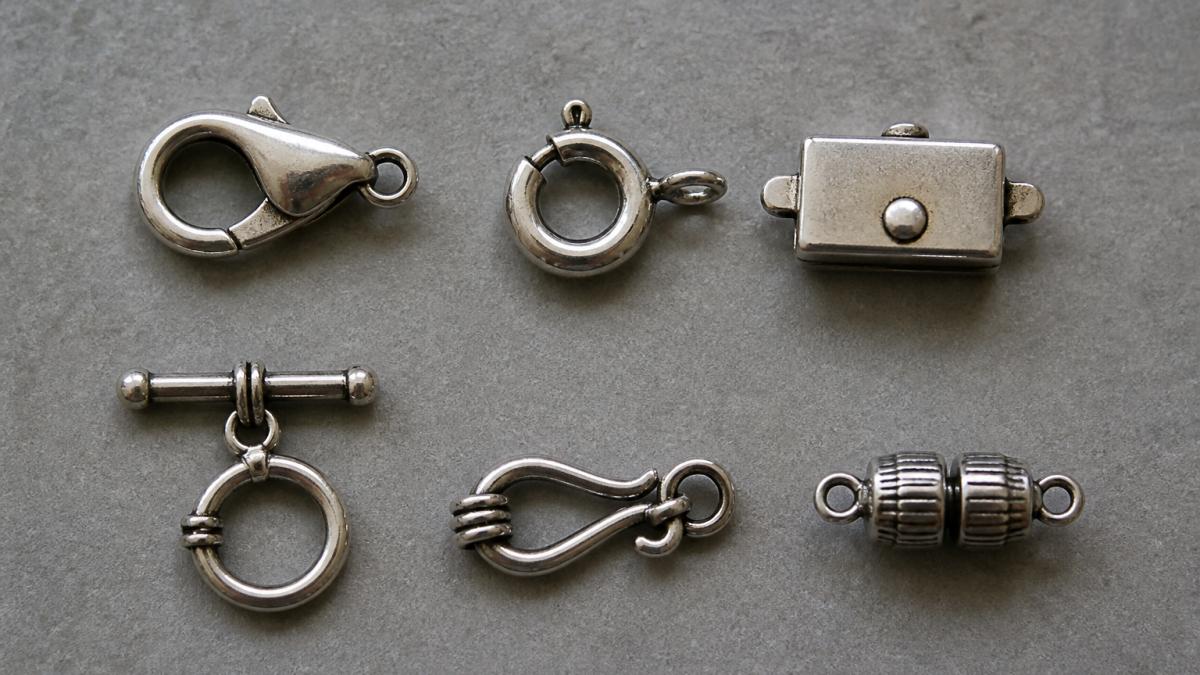
The most common antique silver clasps fall into six main categories, each with a distinct mechanism, appearance, and timeline. Once you know what to look for, identification becomes straightforward.
Lobster and Trigger Clasps
The lobster clasp has a small hinged lever resembling a lobster's claw; pressing it retracts inward and releases the ring or loop. It became popular in the mid-20th century and remains common today.
Trigger clasps work the same way but with a straight lever you squeeze. Both are extremely secure, though difficult for people with arthritis or weak grip strength.
When examining an antique silver clasp of this type, look for wear on the hinge. A well-used lobster clasp shows smoothing and slight discoloration where the metal has rubbed repeatedly. If it looks pristine and new, it may be a replacement added to an older piece.
Spring-Ring Clasps
A spring-ring clasp is a circular ring with a small hinged opening on one side: press the lever, slip the ring over a loop or post, and release to snap shut. These became standard on many mid-century bracelets and necklaces.
Spring-ring clasps are smaller and more delicate than lobster clasps. They suit lighter jewelry but can fail under tension as the spring weakens. Test gently before wearing; a clasp that no longer springs back firmly may break.
One identifying feature of antique spring-ring clasps is the hinge construction. Older versions often show hand-finishing marks, while modern reproductions look machine-perfect. Examine the hinge closely with a magnifying glass to date a piece.
Box and Tongue-and-Groove Clasps
Box clasps, also called tongue-and-groove clasps, are rectangular: one half has a protruding tongue, the other a groove that receives it. When the halves slide together they lock, often with a small safety catch.
These clasps were popular on mid-range vintage jewelry from the 1920s through the 1960s, balancing security and ease of use. Many feature ornamental details like filigree or gemstone settings on the outer surface.
When evaluating a box clasp, check whether the tongue slides smoothly into the groove. A loose fit may mean damage or warped metal; a tight one can be gently adjusted by a professional jeweler. Never force a stuck clasp yourself.
Toggle Clasps
A toggle clasp consists of a bar and a ring: the bar slides through at an angle and locks; to open, push it parallel and slide it out. Toggle clasps were fashionable in the Victorian and Edwardian eras, then regained popularity in the 1960s and 1970s.
Toggle clasps can be highly ornamental, with the bar shaped like a scroll, leaf, or animal head, making the clasp a focal point rather than a hidden fastener.
Toggle clasps require more dexterity than other styles. If the bar doesn't fit snugly in the ring, the clasp can slip open during wear, a common problem with antique pieces where the metal has stretched over time.
Hook-and-Eye and Barrel Clasps
Hook-and-eye clasps are simple: a hook on one end slides into an eye or loop on the other. The design dates back centuries and appears on many antique pieces.
Barrel clasps, also called screw clasps, consist of two cylindrical halves that screw together. They offer excellent security but require both hands to operate, which some find inconvenient.
Antique barrel clasps in sterling silver show specific wear patterns: the threads may develop slight play if opened and closed thousands of times. Decorative caps or finials on the ends can be engraved with maker's marks or initials, providing clues to the piece's origin.
Magnetic and Snap Clasps
Magnetic clasps use two magnets to hold jewelry closed. They're convenient but can lose strength and pose a risk to people with pacemakers or certain medical devices. They're modern and rarely appear on truly antique pieces.
Snap clasps, sometimes called push clasps, lock with a click and release via a small button or lever. They became common on costume and mid-range pieces in the 1950s and 1960s and, while durable and easy to use, can wear out over decades.
| Clasp Type | Era | Security Level | Ease of Use | Durability |
|---|---|---|---|---|
| Lobster | Mid-20th century to present | Very high | Moderate | Excellent |
| Spring-ring | Mid-20th century | Moderate | Easy | Fair to good |
| Box/tongue-and-groove | 1920s-1960s | High | Easy | Good |
| Toggle | Victorian to present | High | Moderate | Excellent |
| Hook-and-eye | Ancient to present | Low to moderate | Easy | Fair |
| Barrel | 19th century to present | Very high | Difficult | Excellent |
| Magnetic | Modern | Low | Very easy | Fair |
| Snap | 1950s-1960s | Moderate | Very easy | Fair |
How to Date Antique Jewelry by Clasp
Victorian jewelry, roughly 1837 to 1901, typically features hook-and-eye or early toggle clasps in gold or sterling silver, with hand-finishing marks and hand-polished surfaces.
Edwardian jewelry, about 1901 to 1910, kept toggle and hook-and-eye styles but added decorative elements, and box clasps began appearing.
Art Deco pieces, roughly 1920 to 1940, frequently feature box clasps and early barrel clasps with geometric designs.
Mid-century vintage jewelry, 1940 to 1970, embraces lobster, spring-ring, and snap clasps. Costume jewelry and casual designs rose in this era, with clasps typically functional rather than decorative.
Late 20th-century pieces often feature lobster or magnetic clasps; by the 1980s and 1990s, lobster clasps were the industry standard.
Sterling Silver Necklace Clasp: Hallmarks and Verification
Collectors often ask whether a clasp is sterling silver or silver plate, which affects value and care. Sterling silver is 92.5% pure silver mixed with other metals for durability; silver plate is a thin silver layer over a base metal like brass or copper (Buying Platinum, Gold, and Silver Jewelry).
Look for hallmarks stamped into the metal. Sterling silver clasps typically bear "925" or ".925," and some older pieces show "STERLING." European pieces may display country-specific hallmarks; British hallmarks are especially detailed, with maker's marks, date marks, and assay office symbols.
Examine the clasp under strong light with a magnifying glass. Sterling silver often shows subtle patina or tarnish, helping verify authenticity. Silver plate shows wear where the base metal becomes visible, with discoloration in frequently rubbed areas.
If you're unsure about a piece, have it tested by a professional jeweler or appraiser, who can perform acid tests or use X-ray fluorescence to determine metal content definitively. This is especially important before purchasing an expensive antique piece.
Barrel Clasp Jewelry: Design, Construction, and Age Indicators
Barrel clasps deserve special attention because they reveal so much about a piece's age and quality: construction, metal, and wear patterns all provide clues.
Antique barrel clasps in sterling silver often feature hand-threaded construction.
The finials or caps on barrel clasps often bear maker's marks, tiny stamps identifying the jeweler or manufacturer, such as initials, city abbreviations, or manufacturer symbols.
Barrel clasps show wear in predictable ways: the threads gradually loosen with repeated use.
Decorative elements on barrel clasps vary widely, from simple and functional to elaborate engraving, gemstone settings, or artistic metalwork. Victorian and Edwardian barrel clasps tend to be more ornate; mid-century versions are typically simpler.
Repair, Replacement, and Preservation of Antique Clasps
Keeping your antique silver clasps in good condition requires understanding common problems and knowing when to seek professional help.
When replacing a clasp, match the original style and era. A modern lobster clasp on a Victorian piece looks out of place and reduces historical authenticity and value.
Storage matters significantly. Keep your antique jewelry in a cool, dry place away from humidity. Moisture promotes tarnishing and corrosion.
Cleaning should be gentle: use a soft cloth and mild soap and water, or a silver polishing cloth for stubborn tarnish.
Common Mistakes When Evaluating Antique Silver Clasps
Many collectors make predictable errors when assessing vintage jewelry. Understanding these mistakes helps you avoid them.
The first mistake is assuming all old clasps are valuable.
The second mistake is replacing original clasps without considering the consequences. Once replaced, the piece loses historical integrity, and collectors and appraisers notice.
The third mistake is over-cleaning antique clasps. Aggressive scrubbing removes the patina that helps establish authenticity and age, and can damage delicate mechanisms. Gentle cleaning is always the better approach.
The fourth mistake is ignoring clasp condition during purchase.
The fifth mistake is confusing silver plate with sterling silver. A clasp that looks silver might be silver plate over base metal, which wears through over time.
Conclusion
Understanding antique silver clasps transforms how you collect and care for vintage jewelry. Each clasp type tells a story about when the piece was made, who made it, and how it was meant to be used.
When you're ready to add to your collection or need guidance preserving pieces you already own, the team at ABC Rugs Kilims & Jewelry can help. Our curated selection includes pieces from multiple eras.
Collecting antique jewelry is deeply personal. The pieces you choose reflect your taste, your history, and your appreciation for craftsmanship. The clasp may seem like a small detail, but it's often what separates an authentic vintage treasure from a modern reproduction.
Frequently Asked Questions
How can I identify the clasp on an antique silver necklace?
Look at the fastening mechanism at the necklace's end. Antique silver clasps come in distinct shapes: lobster clasps have a hinged claw; spring-ring clasps are circular with a spring-loaded opening; box clasps feature a rectangular tongue-and-groove design; toggle clasps use a T-shaped bar and ring; hook-and-eye clasps are simple metal loops; barrel clasps screw together; and magnetic clasps snap closed. Examine the metal for hallmarks (925 for sterling silver, 800 for European silver, or maker's marks) to verify authenticity and age.
What is a barrel clasp, and how does it work?
A barrel clasp consists of two cylindrical metal pieces that screw together to secure a necklace or bracelet. The male end has threads that insert into the female end, which contains matching internal threads. When twisted, the two pieces lock together. Barrel clasps are common on vintage and antique jewelry because they are secure and durable. They are often found on pearl necklaces and delicate bracelets. The construction and threading style can help date the piece, earlier examples may show cruder machining or hand-finished details.
How can a clasp help date antique jewelry?
Clasp design evolved significantly over time. Spring-ring clasps became standard in the late 1800s and early 1900s. Box clasps with safety catches became popular in the mid-20th century. Hook-and-eye clasps are typically older, often pre-1900. Magnetic clasps are modern and rarely found on genuine antiques. Hallmarks on the clasp itself (925, 800, maker's marks) also indicate period and origin. However, clasps are sometimes replaced or added later, so use clasp style as one clue among many, never as the sole dating method. Wear patterns, metal patina, and overall construction provide context.
Are antique spring-ring clasps made of sterling silver?
Not always. Spring-ring clasps on antique jewelry may be sterling silver (925), European silver (800 or 900), silver plate, or base metal with silver plating. Check for hallmarks stamped directly on the clasp itself. If no mark appears, the clasp may be plated or a replacement. Sterling silver clasps will feel heavier and show consistent wear and patina matching the rest of the piece. Silver-plated clasps often show wear at the edges, revealing base metal underneath. When evaluating antique jewelry, verify the clasp material separately from the chain or bracelet body, they may not match.


