

Table of Contents
- Identify Your Silver Before Cleaning
- When Not to Remove Tarnish From Vintage Silver
- How to Clean Tarnished Sterling Silver
- How to Clean Silver-Plated Items Safely
- How to Clean Vintage Silver Jewelry Without Damage
- Does Cleaning Antique Silver Devalue It?
- Storage and Tarnish Prevention for Vintage Silver
- Common Mistakes to Avoid When Cleaning Vintage Silver
- Frequently Asked Questions
Last Updated: October 10, 2026
Identify Your Silver Before Cleaning
Before you tackle how to remove tarnish from vintage silver, you need to know what you're working with. Sterling silver, silver plate, and antique silver each require different approaches.

Sterling Silver vs. Silver-Plated Items
Sterling silver is solid silver containing at least 92.5% pure silver mixed with other metals for durability. Look for a "925" stamp on the piece.
The difference matters because silver plate has less silver to work with. Aggressive cleaning can wear through the plating and expose the base metal underneath.
To identify what you have, check for hallmarks inside jewelry or on the bottom of flatware and decorative pieces.
Spotting Antique vs. Vintage Pieces
Antique silver is typically over 100 years old. Vintage silver is usually 20-100 years old. This matters because antique pieces often have historical or collector value that cleaning can diminish.
Look at patina carefully. Antique silver sometimes develops a rich, dark patina that collectors prize. Removing it completely can actually reduce the piece's value.
Vintage silver from the mid-20th century is usually safer to clean. These pieces were made more recently and rarely have the same collector restrictions as true antiques.
When Not to Remove Tarnish From Vintage Silver
Some tarnish should stay. This is the part most cleaning guides skip, but it's crucial.
Dark patina on antique silver often adds value and authenticity. Collectors and museums actually want that aged look. Removing it completely can make an antique piece look stripped and modern, which reduces its desirability and market value.
If your piece is over 80 years old, has significant historical value, or came from an estate or auction house, research before cleaning. Check online auction results for similar pieces. If sold pieces show the same dark patina, leave yours alone. If you inherited something from a family collection, ask relatives about its history first.
Heavily tarnished silver that's been stored untouched for decades sometimes has a protective layer of corrosion that actually slows further tarnishing. Removing all of it exposes fresh silver underneath, which will tarnish faster going forward.
The rule: if you're unsure, don't clean it. A light polish is always reversible. Complete tarnish removal isn't.
How to Clean Tarnished Sterling Silver
The Baking Soda and Aluminum Foil Method
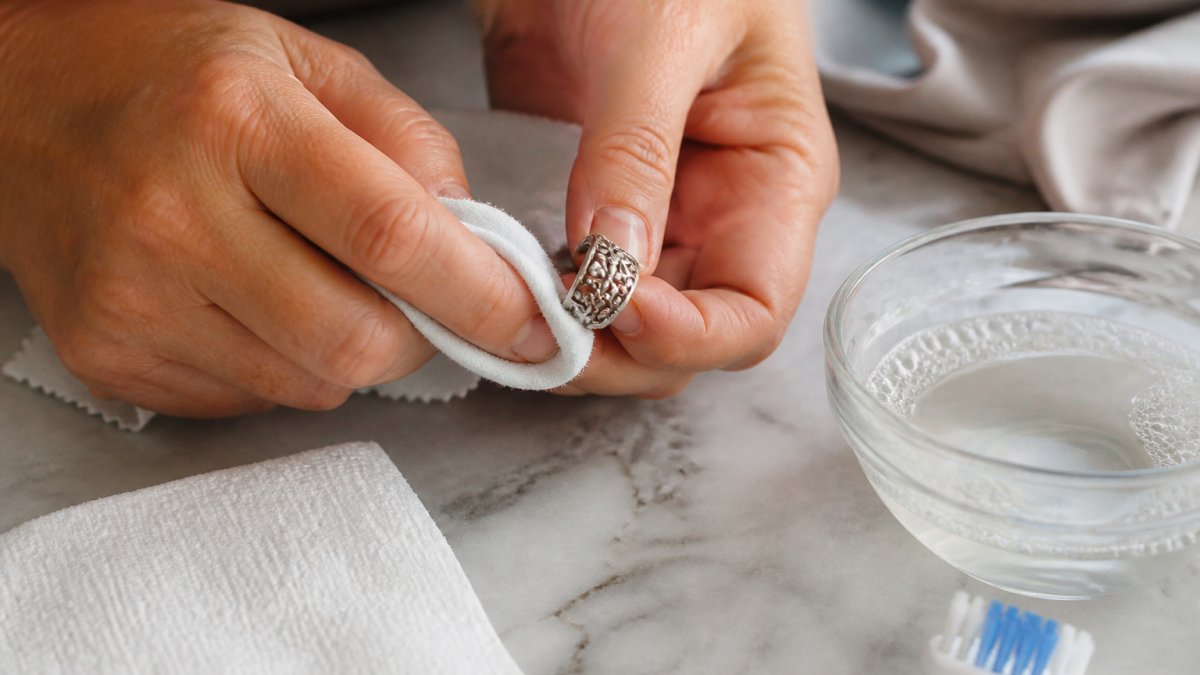
This is the most popular household method, and it works because of a simple chemical reaction. Tarnish on silver is silver sulfide, a dark compound that forms when silver reacts with sulfur in the air (pubmed.ncbi.nlm.nih.gov).
Here's how to do it:
- Line a bowl or shallow dish with aluminum foil, shiny side up
- Fill the bowl with hot water (not boiling, around 160-180°F is ideal)
- Add one tablespoon of baking soda per cup of water
- Place your silver pieces in the water, making sure they touch the foil
- Let them soak for 5-15 minutes depending on tarnish severity
- Remove carefully and rinse with cool water
- Dry immediately with a soft cloth
The tarnish should come off as a dark residue in the water. For lightly tarnished pieces, five minutes is enough.
This method works best for flatware, decorative pieces, and solid sterling silver items without delicate details or gemstones.
White Vinegar and Salt Solution
This method is gentler than the foil approach and works well for lightly tarnished vintage silver. It takes longer but gives you more control.
Mix equal parts white vinegar and salt in a glass bowl. The salt acts as a mild abrasive while the vinegar's acidity helps dissolve tarnish.
This approach is safer for delicate pieces because you're not relying on a chemical reaction that happens automatically.
Boiling Water Soak for Lightly Tarnished Silver
For pieces with minimal tarnish, sometimes hot water alone helps. Boiling water can loosen light tarnish without any additional chemicals.
Boil water in a pot, then carefully place your silver pieces in a heat-safe bowl. Pour the boiling water over them and let sit for 10-15 minutes.
This method is the gentlest option. It works best on lightly tarnished sterling silver and won't damage most pieces.
How to Clean Silver-Plated Items Safely
Silver-plated items need extra caution because the silver layer is thin. Aggressive scrubbing or extended soaking can wear through the plating.
Use the vinegar and salt method rather than the foil method for silver plate. The foil method's chemical reaction is more intense and risks damaging the plating. Soak for no more than 20-30 minutes, and avoid scrubbing hard. A gentle wipe with a soft cloth should be enough.
For lightly tarnished silver plate, skip soaking entirely. Mix a paste of baking soda and water, apply it with a soft cloth, and polish gently in circular motions. Rinse immediately and dry.
Never use a wire brush or steel wool on silver plate. These will scratch through the coating. Soft cloths and gentle brushes only.
If the plating is already worn and the base metal shows through, stop cleaning. Further cleaning will only expose more of the base metal. Accept the worn appearance or consider professional replating if the piece has significant sentimental value.
Vintage Silver-Plated Figural Wager Cup (Nuremberg Wedding Cup) →
How to Clean Vintage Silver Jewelry Without Damage
Vintage silver jewelry requires different handling than flatware or decorative pieces. Jewelry is often delicate and may contain materials that don't tolerate water or chemicals.
Jewelry With Gemstones or Glued Components
Never soak jewelry with gemstones in water or chemical solutions. Many gemstones are porous and absorb liquids, which can cause discoloration or damage. Glued stones may come loose if soaked.
For vintage silver jewelry with stones, use a dry-cleaning approach:
- Mix a small amount of mild dish soap with just enough water to create a paste
- Apply the paste directly to the silver with a soft brush
- Gently scrub only the silver parts, avoiding stones
- Use a damp cloth to wipe away the paste
- Dry immediately with a soft cloth
This keeps moisture away from stones while still cleaning the silver. For heavily tarnished jewelry with gemstones, professional cleaning is safer than attempting it yourself.
Delicate Chains and Filigree Pieces
Vintage chains and filigree work are fragile. Extended soaking can weaken joints and solder connections. The foil method is too harsh for these pieces.
For delicate vintage silver jewelry, make a gentle solution of warm water and a few drops of mild dish soap. Dip a soft cloth in the solution and wipe the piece carefully. Don't soak it. For tight spaces in filigree, use a soft-bristled toothbrush with the same solution, brushing very gently.
Dry immediately and completely. Any moisture trapped in filigree or chain links can cause corrosion.
Does Cleaning Antique Silver Devalue It?
This depends on what you're cleaning and how you do it.
Removing light surface tarnish from vintage silver doesn't hurt value. Most collectors expect vintage pieces to be clean and polished. What damages value is removing the patina from truly antique pieces or using methods that scratch or damage the surface.
If you use gentle methods and stop before the patina is completely gone, you're fine. If you strip away decades of aged character to make something look brand new, you've likely reduced its value.
For antique silver (over 100 years old), the safest approach is professional cleaning by a conservator who specializes in silver. They understand how to preserve patina while removing damaging tarnish. This costs more than DIY cleaning, but protects pieces that have real historical or monetary value.
For vintage silver from the mid-20th century, careful cleaning with household methods is usually safe. These pieces rarely have the same collector restrictions as true antiques.
When in doubt, clean minimally. You can always clean more later, but you can't restore patina you've removed.
Storage and Tarnish Prevention for Vintage Silver
The best approach to tarnish is preventing it in the first place. Proper storage slows tarnishing dramatically.
Store vintage silver in airtight containers or sealed plastic bags. Tarnish forms when silver reacts with sulfur compounds in the air. Removing air exposure stops the reaction. Use acid-free tissue paper or cloth to wrap pieces before storing them. Never use regular newspaper or cardboard, which contain acids that accelerate tarnishing.
Silica gel packets in storage containers absorb moisture, which also slows tarnishing. Replace packets every few months if you're storing pieces long-term.
Keep silver away from rubber bands, wool, and certain plastics. These materials contain sulfur compounds that accelerate tarnishing. Use cotton or acid-free materials instead.
For pieces you use regularly, a simple approach works: store them in a cool, dry place away from direct sunlight. Use them often, the friction from handling actually helps prevent tarnish buildup.
For displayed pieces, avoid areas with high humidity or temperature fluctuations. A glass cabinet with a silica gel packet inside is ideal.
Common Mistakes to Avoid When Cleaning Vintage Silver
Using harsh abrasives. Steel wool, scouring pads, and aggressive polishing cloths scratch silver. Scratches are permanent and reduce value. Stick to soft cloths and gentle brushes.
Overscrubbing. More effort doesn't mean better results. Light pressure with a soft cloth removes tarnish just as effectively as hard scrubbing. Patience beats force.
Mixing methods. Don't combine the foil method with vinegar or add extra baking soda hoping for faster results. Chemical reactions can become unpredictable and damage silver.
Ignoring patina. Not all dark coloring is tarnish that needs removal. Some patina adds character and value. Learn to recognize the difference before cleaning.
Leaving pieces wet. Water spots and corrosion form quickly on silver. Dry immediately after any cleaning or rinsing.
Storing improperly after cleaning. Clean silver tarnishes faster than dirty silver because you've removed the protective layer. Store cleaned pieces properly to slow retarnishing.
Attempting professional-level restoration at home. If a piece is valuable or heavily damaged, professional conservation is worth the cost.
| Mistake | Why It Matters | Better Approach |
|---|---|---|
| Steel wool or harsh pads | Scratches permanent; reduces value | Soft microfiber cloths only |
| Soaking silver-plated items too long | Wears through thin plating | Limit soaks to 20-30 minutes max |
| Mixing cleaning methods | Unpredictable chemical reactions | Use one method at a time |
| Not drying immediately | Water spots and corrosion form quickly | Dry with cloth while still warm |
| Cleaning antique patina away | Reduces collector value significantly | Preserve aged appearance |
| Storing in rubber or wool | Sulfur compounds accelerate tarnishing | Use acid-free materials |
Vintage silver deserves care that respects both its age and its value.
Frequently Asked Questions
Will white vinegar clean silver tarnish effectively?
White vinegar works well for light to moderate tarnish on sterling silver. Mix equal parts white vinegar and salt, soak the item for 5-10 minutes, then rinse thoroughly and dry immediately. This method is gentler than foil-and-baking-soda for delicate pieces, though it may require longer soaking for heavily tarnished silver. Always test on a less visible area first if you're uncertain about the silver's finish.
How do you remove tarnish from vintage silver safely without damaging patina?
The safest approach depends on whether you want to preserve patina or restore shine. For pieces where patina adds value, use only soft brushing with a polishing cloth and avoid chemical methods. For restoration, use the baking soda and foil method with hot water, which is gentler than commercial silver polish. Never use abrasive scrubbing pads, and always rinse and dry immediately to prevent water spots and further oxidation.
Can silver-plated vintage pieces be cleaned the same way as sterling silver?
No. Silver-plated items require extra caution because aggressive cleaning can wear through the plating layer and expose base metal. Avoid foil-and-baking-soda methods and boiling water. Instead, use a soft polishing cloth with gentle circular motions, or try a diluted white vinegar solution with minimal soaking time. For heavily tarnished silver-plated items, professional cleaning is safer than home methods.
Does cleaning antique silver devalue it?
Improper cleaning can reduce value, but gentle restoration typically doesn't. Collectors value pieces that retain original patina and show no signs of aggressive polishing or buffing. If you're uncertain about a valuable piece's provenance or rarity, consult a professional appraiser before cleaning. For decorative vintage silver, light cleaning with soft methods preserves both appearance and value.


