

Table of Contents
- Why Antique Kilims Need Specialized Rug Pads
- Felt and Rubber Rug Pad Benefits for Delicate Fibers
- Rug Pad Thickness for Flatweave Rugs: Finding the Right Balance
- Rug Pad Materials to Avoid for Antique Kilims
- Chemical Off-Gassing and Floor Finish Reactions
- Installation and Maintenance Best Practices
- Frequently Asked Questions
Last Updated: October 2, 2026
Why Antique Kilims Need Specialized Rug Pads
Antique kilims are hand-woven investments with fragile fibers that require the best rug pads for antique kilims, specialized protection that standard pads cannot provide.
The best rug pads for antique kilims prevent slipping, cushion impact, and protect floors from moisture and chemical damage, most people overlook the last two.
Flatweave kilims have no pile to absorb shock, making them vulnerable to permanent creasing if they shift underfoot. Brittle aged fibers mean wrong pad choices cause irreversible damage within months.
The right pad anchors the kilim securely, distributes weight evenly, and creates a breathable barrier between rug and floor.
Felt and Rubber Rug Pad Benefits for Delicate Fibers
Felt and natural rubber are the two materials that work best for antique kilims. They're not interchangeable, and understanding the difference matters.
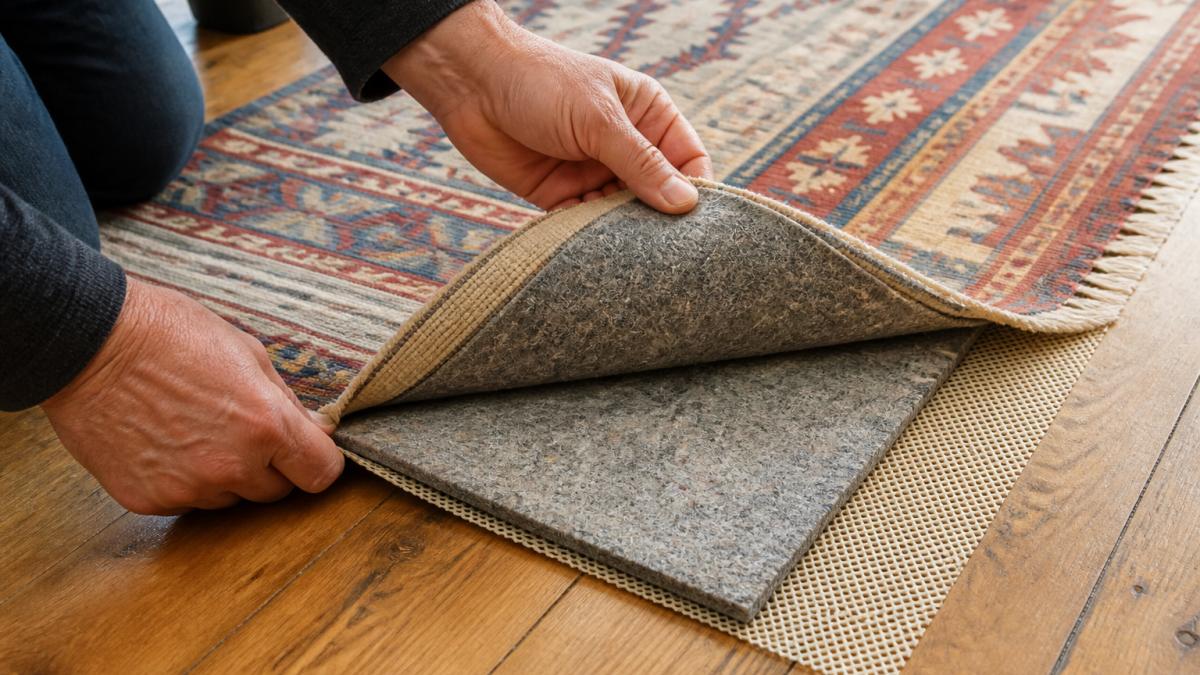
Felt pads are made from compressed fibers that cushion without stressing the rug's fibers and allow breathability. However, felt alone provides no grip; it must be paired with rubber backing for anchoring.
Natural rubber creates friction to prevent sliding. Unlike synthetic rubber, it won't off-gas chemicals that damage vintage floor finishes like lacquer or shellac.
Felt on top protects the kilim's fibers; natural rubber on bottom prevents slipping. Together they create stable, stress-free support.
For flatweaves, this combination prevents buckling by distributing pressure evenly across the entire underside, eliminating weak points.
Rug Pad Thickness for Flatweave Rugs: Finding the Right Balance
Thickness matters, but not the way most people think. Thicker isn't always better, and for flatweaves, it's often worse.
The ideal thickness for a flatweave kilim is between one-eighth and one-quarter inch.
The Weight-to-Grip Ratio: Why Thin Pads Need Higher Density
Low-density thin pads compress and lose grip within weeks; higher-density pads maintain grip for years.
Rubber density must be at least 40 PCF (pounds per cubic foot) to resist compression under foot traffic; below this, buckling develops.
Wool felt should be 0.5 inches thick at 8-12 PCF density to distribute weight evenly without compressing.
Low-density pads compress unevenly under foot traffic, causing the rug to sag and fibers to bunch, buckling develops gradually from uneven support.
When evaluating a pad, ask the manufacturer for density specifications.
Testing Grip Before Committing
After installation, test the pad's grip by walking across the rug in different directions. Start at the center and move toward the edges.
For runners or long, narrow kilims, test by pulling gently on the rug's edge. The rug should resist movement.
Older kilims with fragile fibers benefit from thicker pads (one-quarter inch); newer rugs in good condition handle thinner options (one-eighth inch).
Rug Pad Materials to Avoid for Antique Kilims
Several common pad materials will damage antique kilims. Knowing what to avoid is as important as knowing what to buy.
Synthetic rubber off-gasses VOCs that discolor vintage fibers and damage old finishes like lacquer or shellac, causing permanent staining over months.
PVC-based pads release phthalates that accumulate under the rug, migrate into fibers, and cause color shifts in vegetable-based antique dyes.
Crumb rubber traps moisture, creating mold conditions that accelerate fiber deterioration and stain lighter rugs permanently.
Latex pads vary widely in quality; confirm with manufacturers that any latex option is VOC-free and lacks antimicrobial treatments that damage fibers.
Low-density felt without a rubber backing provides no grip. The rug will shift, creating the buckling and creasing problems you're trying to prevent. Felt-only pads are sometimes marketed as safe for antique rugs, but they're only half the solution.
The safest approach is sticking with felt-and-natural-rubber combinations from manufacturers who specifically address antique rug protection. These products are engineered for the unique demands of older, delicate textiles.
Chemical Off-Gassing and Floor Finish Reactions
This is the angle most rug pad guides skip entirely, and it's where real, permanent damage happens, especially on antique hardwood floors.
Antique kilims often sit on hardwood floors sealed with finishes that are decades old.
Understanding Volatile Organic Compounds (VOCs)
VOCs are carbon-based chemicals that evaporate at room temperature.
Damage develops over weeks to months; by the time yellowing or staining appears, refinishing is often required, preventable with the right pad.
Identifying Your Floor Finish
Before choosing a pad, identify what finish is on your hardwood. This determines your chemical safety requirements.
- Shellac (common pre-1950): Amber or orange-tinted, warm appearance. Extremely reactive to alcohol and VOCs. Synthetic rubber pads will cause discoloration within 2-4 months.
- Lacquer (common 1950-1980): Clear or slightly yellowed, very glossy. Reactive to ketones and esters found in synthetic rubber off-gassing. Develops a cloudy or sticky surface when exposed.
- Wax-based finishes (common pre-1970): Dull or satin appearance, can be scratched with a fingernail. Reactive to petroleum-based VOCs. Synthetic pads cause the wax to soften and become tacky.
- Polyurethane (common 1980-present): Very glossy or satin, extremely durable. More resistant to VOCs than older finishes, but still vulnerable to prolonged exposure.
- Oil-based stains with no topcoat (common in older homes): Bare or lightly sealed wood. Highly vulnerable to moisture and chemical penetration from pads.
If you're unsure, perform a simple test: apply a drop of water to an inconspicuous area. If it beads up, there's a topcoat.
Material Safety for Vintage Finishes
Natural rubber doesn't off-gas. It's a stable material that's been used in flooring and furniture for over a century without chemical reactivity issues.
Synthetic rubber, by contrast, releases toluene, xylene, and other aromatic hydrocarbons. These compounds are solvents.
PVC-based pads release phthalates and vinyl chloride.
Testing Protocol for Uncertain Floors
If you're unsure about your floor finish or its age, use this two-week test before committing to a pad:
- Choose a corner of the room hidden by furniture or a closet.
- Place the pad in that location and lay a sample of the kilim (or a similar textile) on top.
- Leave it undisturbed for 14 days.
- Lift the pad and inspect the floor for discoloration, stickiness, cloudiness, or any change in appearance.
- If you notice any reaction, the pad is incompatible with your floor finish. Remove it immediately and allow the floor to air for 48 hours.
This simple step catches problems before they spread across the entire floor.
Moisture and Breathability
Chemical reactivity is one concern; moisture is another.
In humid climates or basements, breathability becomes critical. A pad that doesn't allow air circulation will trap moisture year-round, especially in summer months.
Installation and Maintenance Best Practices
How you install the pad matters as much as which pad you choose.
Start with a clean floor; vacuum thoroughly and wipe with a damp cloth, then dry completely to prevent pressure points that stress fibers.
Cut the pad to match the rug's dimensions exactly or slightly smaller; exposed edges create tripping hazards and leave rug edges unanchored.
Lay the pad flat, place the kilim on top, and walk across sections to confirm no shifting. Movement indicates insufficient grip or density.
Maintenance is straightforward. Vacuum the top of the rug normally. Every six months, lift one corner of the rug and inspect the pad underneath. Check for moisture, mold, or deterioration.
If you spill liquid on the kilim, address it immediately. Blot (don't rub) the affected area, then lift the rug to allow air circulation underneath. Moisture trapped between the rug and pad creates mold conditions. Leave the rug lifted for at least 24 hours.
Rotate the rug annually if foot traffic allows. This distributes wear evenly and prevents certain areas from compressing more than others. Rotation is especially important for kilims in high-traffic zones.
Protecting an antique kilim is about understanding that every layer underneath matters. The right pad, felt and natural rubber, correct thickness, proper installation, preserves both the rug and the floor it sits on. ABC Rugs Kilims & Jewelry works with collectors who understand that preservation starts with foundations. Our curated kilim collection pairs each piece with guidance on proper care and protection. Explore our selection of authentic, hand-knotted kilims and learn how to protect your investment.
| Pad Material | Best For | Key Drawback |
|---|---|---|
| Felt + Natural Rubber | Antique kilims on hardwood | Higher cost |
| Natural Rubber Only | Budget-conscious buyers | Less cushioning |
| Synthetic Rubber | Modern rugs only | Off-gassing risk for antiques |
| PVC-Based | Not recommended | Chemical damage to fibers |
| Crumb Rubber | Not recommended | Moisture trapping, staining |
Frequently Asked Questions
What thickness is best for a rug pad under an antique kilim?
For flatweave kilims, a low-profile pad between 1/8 and 3/16 inch works best. Thicker pads can cause buckling and stress on delicate fibers. The goal is enough cushioning for grip without adding bulk that alters how the kilim sits on hardwood floors. Hand-knotted pieces may tolerate slightly thicker options, but test on a small section first.
Why is felt-and-rubber padding recommended for antique rugs?
Felt provides breathability and distributes weight evenly, preventing moisture buildup that damages vintage fibers. Natural rubber offers non-slip grip without adhesive, which can off-gas and react with old floor finishes. This combination anchors the rug while allowing air circulation, essential for fiber preservation in heirloom pieces.
Can a cheap rug pad damage the backing of an antique kilim?
Yes. Low-quality synthetic pads often contain adhesives that off-gas and can chemically interact with aged floor finishes, causing discoloration or finish breakdown. Poor-quality rubber may also degrade over time, leaving residue on the kilim's backing. Investing in a VOC-free, adhesive-free pad prevents costly damage to irreplaceable textiles.
Should I use a rug pad under a flatweave antique kilim on hardwood floors?
Absolutely. Flatweaves lack the density of hand-knotted rugs and are prone to bunching and buckling without proper anchor support. A quality non-slip pad protects both the kilim and the hardwood floor beneath it from friction and movement damage. Choose a low-profile, moisture-resistant option to prevent moisture-related fiber issues.


