

Table of Contents
- Why Antique Kilim Rugs Need Special Care
- What You'll Need Before Cleaning
- Step 1: Vacuum Your Antique Kilim Rug Safely
- Step 2: How to Remove Stains from Wool Kilim
- Step 3: Dry Cleaning vs. Wet Washing
- Step 4: Drying and Moisture Prevention
- Step 5: Fringe Care and Maintenance
- When to Use Professional Antique Rug Cleaning Services
Last Updated: August 11, 2026
Why Antique Kilim Rugs Need Special Care
Antique kilim rugs represent centuries of craftsmanship and cultural heritage. Unlike modern machine-made textiles, these hand-woven pieces feature natural dyes, delicate wool fibers, and intricate patterns that demand fundamentally different care. Improper cleaning can permanently damage the qualities that make these rugs valuable.
The fibers in antique kilims are more fragile than contemporary rugs. Natural dyes can bleed or shift when exposed to harsh chemicals, excessive moisture, or aggressive scrubbing. Wool fibers lose resilience when overwetted or treated with pH-imbalanced solutions. Flatweave construction, common in kilims, offers less structural protection than pile rugs, making them vulnerable to fiber distortion and fringe damage.
Professional conservators agree on one core principle: prevention and gentle maintenance extend the life of antique textiles far more effectively than aggressive cleaning. This guide walks you through the safest methods for maintaining your antique kilim at home, and when to call specialists.
What You'll Need Before Cleaning
Gather these supplies before you begin any cleaning work on your antique kilim rug:
Essential supplies:
- Canister vacuum with suction-only floor brush (no beater bar)
- Soft-bristled brush for fine textiles
- Distilled water
- White cotton cloths or paper towels
- Mild, pH-neutral cleaning solution (diluted wool detergent or specialized rug shampoo)
- Spray bottle
- Baking soda
- Towels for blotting
Optional but recommended:
- Moisture meter
- Fan for air circulation
- Wooden rug rack or clean plastic sheeting for elevation during drying
The Miele Classic C1 Pure Suction Canister Vacuum ($329.00) stands out for antique rug care. Its suction-only floor brush eliminates fiber damage from rotating bristles, and adjustable suction settings let you use minimal power on delicate pieces.
For spot cleaning, the Grandi Brush for Fine Carpets and Oriental Rugs ($59.79) is purpose-built for kilim maintenance. Its soft bristles agitate cleaning solutions without causing fiber distortion.
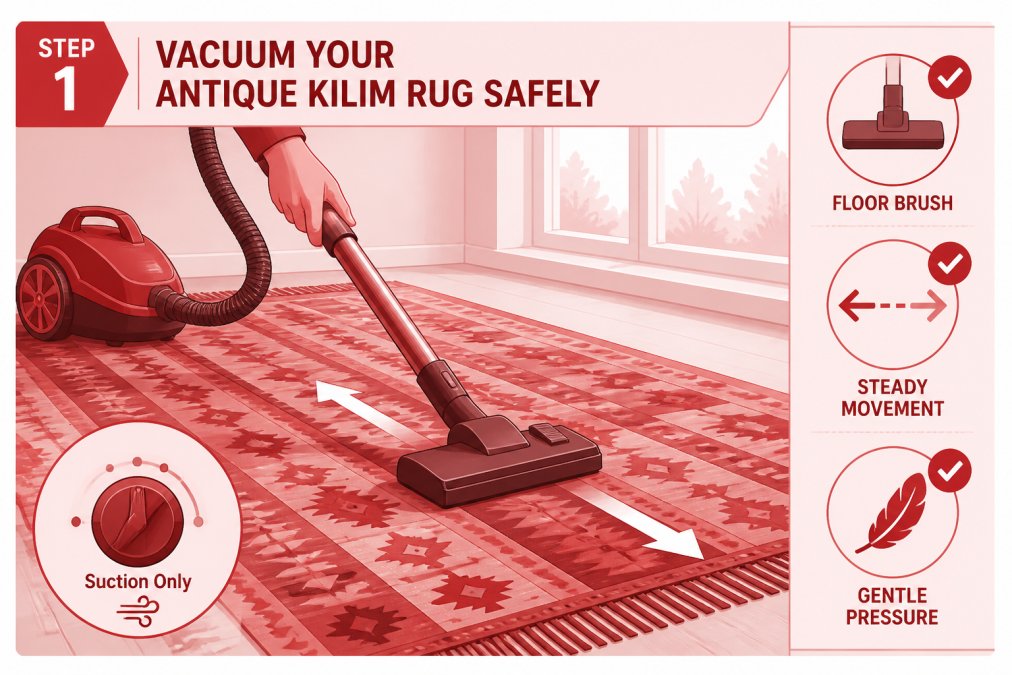
Step 1: Vacuum Your Antique Kilim Rug Safely
Vacuuming removes surface dust and debris that, when accumulated, become embedded in fibers. Regular vacuuming prevents buildup and reduces the need for wet cleaning, which means less water exposure and lower risk to your rug.
The critical difference between safe and damaging vacuuming comes down to the brush mechanism. Upright vacuums with rotating beater bars will distort flatweave fibers, pull threads, and damage fringe. Canister vacuums with suction-only floor brushes are correct for antique kilims.
Vacuuming technique:
- Start with the lowest suction setting and test on an inconspicuous area
- Use slow, deliberate passes in the direction of the pile
- Pay special attention to fringe areas without applying direct suction to the fringe itself
- Vacuum both sides; the back accumulates dust that doesn't show visually
- Never use the hose attachment directly on the rug surface
Most antique kilim owners vacuum every 2-4 weeks during normal use, increasing frequency in high-traffic areas.
Best Vacuum Settings for Flatweave Rugs
Flatweave kilims lack the pile structure that anchors fibers in traditional rugs. Set your canister vacuum to its lowest or second-lowest suction setting when cleaning antique kilims.
Test your vacuum's suction on a hidden corner before cleaning visible areas. Place your hand over the floor brush opening; you should feel gentle suction, not a strong pull. If the suction feels powerful, reduce it further or use the hose attachment from a distance instead of the floor brush.
The Dyson Ball Animal 3 Extra ($499.99) offers an alternative: its beater bar disengages completely, converting it to suction-only mode. However, canister vacuums remain ideal for delicate textiles.
Never use the motorized floor brush attachment on antique kilims, even with low suction.
Step 2: How to Remove Stains from Wool Kilim
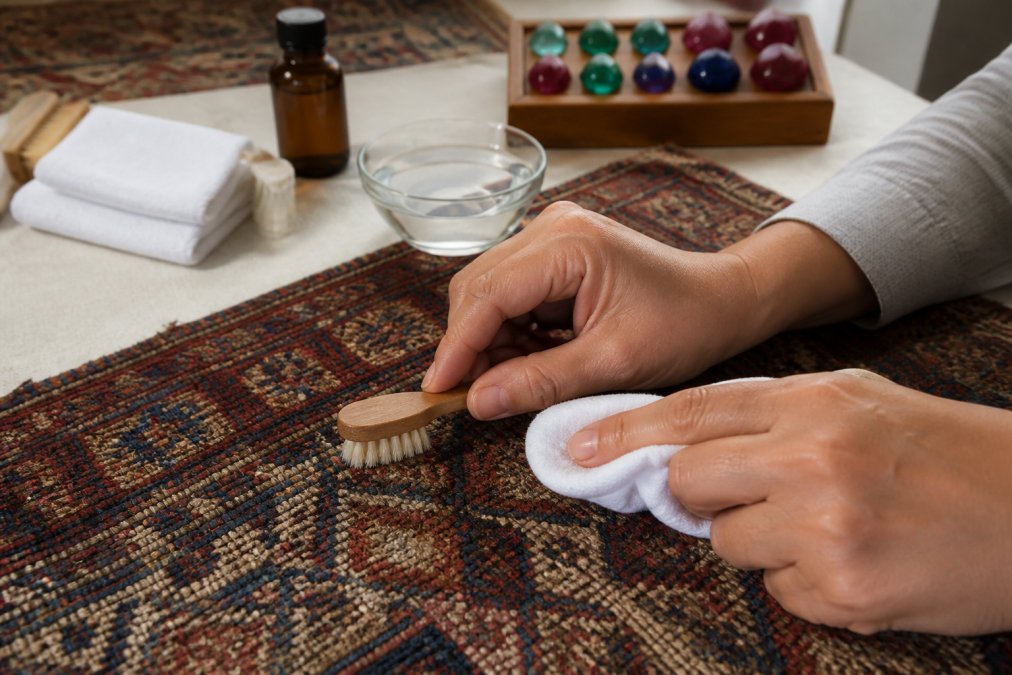
Stain removal from antique kilims requires patience and restraint. Aggressive scrubbing or strong chemicals cause more damage than the original stain. Fresh spills are far easier to address than set-in stains.
The first rule is: blot, never rub. Rubbing pushes the stain deeper into fibers and damages the wool structure. Blotting lifts the substance away from the fibers.
Testing for Colorfastness and Dye Stability
Before applying any cleaning solution to your antique kilim, test for colorfastness. Natural dyes can shift or bleed when exposed to water and cleaning agents, especially in rugs older than 50 years.
Colorfastness test procedure:
- Mix a small amount of your intended cleaning solution (diluted 1:10 with distilled water)
- Apply a few drops to a white cloth
- Press the cloth against an inconspicuous area of the rug
- Wait 5-10 minutes
- Check the white cloth for color transfer; any dye indicates the rug is not colorfast to that solution
- If dye transfers, use dry cleaning methods instead
This test prevents catastrophic dye bleeding that cannot be reversed.
Spot Cleaning Fresh Spills
Immediate response to spills dramatically improves outcomes. The longer a substance sits on wool fibers, the more it bonds to the fiber structure.
Immediate spill response:
- Blot up excess liquid or substance with a clean, white cloth; press gently, don't rub
- For liquids, continue blotting with fresh cloth sections until no more liquid transfers
- For solids, let dry completely, then gently brush away with a soft brush
- Apply a small amount of distilled water to the area and blot again
- Allow to air dry completely
For water-based spills, diluted Woolite Delicates Laundry Detergent works well on colorfast kilims. Dilute one part detergent to ten parts distilled water, apply sparingly to a cloth, and blot repeatedly. Do not soak the area.
For oil-based spills, avoid water-based solutions. Sprinkle baking soda over the affected area, let it sit for 30 minutes to absorb the oil, then vacuum gently.
Treating Set-In Stains
Set-in stains are more resistant to removal and more likely to cause permanent discoloration if treated aggressively. Most antique kilim owners find that attempting to remove set-in stains at home risks more damage than leaving them alone. This is when professional cleaning becomes the safer choice.
If you attempt treatment, use the mildest approach: distilled water applied with minimal moisture, blotted repeatedly, and allowed to air dry. Avoid scrubbing, heating, or chemical solutions. If the stain persists after one gentle attempt, consult a professional.
Step 3: Dry Cleaning vs. Wet Washing
The choice between dry and wet cleaning depends on your rug's condition, age, dye stability, and the nature of soiling. Most antique kilim owners use dry cleaning as their primary maintenance method and reserve wet washing for occasional deep cleaning.
Dry cleaning removes surface dust, light soiling, and odors without exposing fibers to moisture. Wet washing removes deeper embedded soil but carries higher risk of dye bleeding, fiber damage, and prolonged drying times.
Dry Cleaning with Baking Soda
Baking soda is one of the safest cleaning agents for antique kilims because it's pH-neutral, non-toxic, and doesn't require rinsing. It absorbs odors and lifts light surface soiling without chemical residue.
Dry cleaning procedure:
- Vacuum the rug thoroughly with your suction-only canister vacuum
- Sprinkle baking soda evenly across the entire rug surface
- Let the baking soda sit for 30-60 minutes
- Gently brush the baking soda through the fibers with a soft brush, working in the direction of the weave
- Vacuum thoroughly to remove all baking soda residue
Repeat every 3-6 months as part of routine maintenance, or more frequently in high-traffic areas.
Wet Washing for Deeper Cleaning
Wet washing should be reserved for visibly soiled kilims, those with absorbed odors, or pieces that haven't been professionally cleaned in many years.
Wet washing procedure:
- Test for colorfastness using the method in Step 2
- Prepare a solution of pH-neutral rug shampoo diluted according to product instructions (typically 1:10 with distilled water)
- Apply the solution with a soft brush or cloth, working in small sections
- Allow the solution to sit for 10-15 minutes without oversaturating
- Blot repeatedly with white cloths to lift the solution and loosened soil
- Rinse each section with distilled water applied sparingly, blotting thoroughly
- Continue rinsing until no soap residue remains
- Proceed to drying procedures
MasterBlend Oriental Rug Shampoo is formulated specifically for wool and natural dyes with neutral pH. For homeowners, diluted Woolite Delicates ($5.99-$12.99) provides an accessible alternative when colorfastness testing confirms its safety.
The key to successful wet washing is restraint with moisture. Antique kilims should never be soaking wet. The goal is to dampen fibers enough to loosen soil, not saturate them.
Step 4: Drying and Moisture Prevention
Drying is as critical as cleaning itself. Improper drying causes mildew, mold, musty odors, and fiber rot, damage that cannot be reversed. The goal is to remove all moisture as quickly as possible while avoiding direct heat.
Air drying procedure:
- After wet cleaning, roll the rug loosely in a clean, dry towel to remove excess moisture
- Unroll and lay flat on a clean surface (plastic sheeting, wooden racks, or clean floor)
- Position the rug in a well-ventilated area with air circulation
- Avoid direct sunlight, which can fade natural dyes
- Flip the rug every 12-24 hours to ensure even drying on both sides
- Monitor moisture levels; the rug should feel dry to the touch within 48-72 hours
Position a fan to move air across the rug surface without blowing directly on it. Avoid heat sources like radiators or heating vents, which can cause uneven drying and fiber damage.
In humid climates, drying times extend significantly. If your rug hasn't dried within 5 days, increase air circulation and consider using a dehumidifier. Never roll a damp rug for storage; trapped moisture creates ideal conditions for mold growth.
Step 5: Fringe Care and Maintenance
Fringe is often the first casualty of improper rug cleaning. The fringe threads are thinner and more delicate than main rug fibers and exposed to more handling and foot traffic. Protecting fringe requires specific techniques.
Fringe should never be vacuumed directly with a floor brush. Gently lift the fringe away from the rug surface and vacuum only the rug body.
Fringe cleaning and maintenance:
- Never apply cleaning solution directly to fringe
- If fringe gets wet during cleaning, blot thoroughly with white cloths and allow extra drying time
- Gently brush fringe in the direction of the fibers to remove dust
- For tangled or knotted fringe, use a wide-tooth comb, working gently from the ends upward
- If fringe becomes severely matted or damaged, consult a professional conservator
Fringe damage is one of the most common reasons antique kilims require professional restoration. Prevention through careful handling is far more effective than attempting repairs after damage occurs.
When to Use Professional Antique Rug Cleaning Services
Some situations require professional expertise. Attempting advanced cleaning on valuable antique kilims risks permanent damage.
Signs your antique kilim needs professional cleaning:
- Visible mold, mildew, or musty odor that won't respond to baking soda and ventilation
- Set-in stains that resist gentle home treatment
- Overall soiling that dry cleaning doesn't address
- Water damage or flooding exposure
- Significant color fading suggesting fiber degradation
- Fringe damage, loose threads, or structural issues
- Rugs older than 75-100 years with delicate fibers
- Valuable investment pieces where any risk of damage is unacceptable
When selecting a professional service, look for specialists in Oriental and antique rugs, not general carpet cleaners. Ask about their drying facilities, cleaning methods, and whether they use pH-neutral solutions appropriate for natural dyes. Request references from customers with similar rugs.
Maintaining an antique kilim requires patience, restraint, and realistic expectations about what home care can accomplish. The vacuum-test-blot-dry approach handles routine maintenance and fresh spills effectively. For deeper soiling, dye stability concerns, or valuable pieces, professional cleaning offers expertise that protects your investment far better than aggressive home treatment.
ABC Rugs Kilims & Jewelry specializes in sourcing authentic, hand-woven kilims and connecting collectors with pieces that deserve proper care. Whether you're maintaining a recent acquisition or preserving an inherited treasure, the methods in this guide apply across all antique kilims. Start with prevention, regular vacuuming and prompt spill response, and you'll find that most antique kilims require surprisingly little intervention. When deeper cleaning becomes necessary, professional specialists ensure your rug emerges refreshed without the risk of damage that well-intentioned home methods might cause. The Textile Conservators' Association provides conservation guidelines for antique textiles
One Of The Kind Hand-Knotted Persian Wool Rug _ Luxurious Vintage Design, 10'7" x 7', Artisan Crafted: https://abcrugskilims.com/products/bakhtiar-semi-antique-hand-knotted-persian-tabriz-rugs-traditional-floral-natural-vegetable-dyes-wool-cotton-blue-107-x-7-abcr02466-red-10582 ($2,336.00)

Frequently Asked Questions
Is it safe to vacuum an antique kilim rug?
Yes, vacuuming is safe for antique kilim rugs when done correctly. Use a canister vacuum with a suction-only floor brush (no beater bar or bristles) to avoid damaging delicate wool fibers. Adjust suction to the lowest effective setting and vacuum in the direction of the pile. Avoid vacuuming fringes directly. For flatweave kilims, gentle suction without agitation is essential to preserve fiber integrity and prevent debris from embedding deeper into the weave.
How do you get stains out of a vintage kilim rug?
First, blot fresh spills immediately with a clean, white cloth to absorb excess liquid. Test any cleaning solution on a hidden area to ensure colorfastness. For water-based stains, use a pH-neutral cleaner diluted with distilled water. Apply the solution sparingly with a soft brush, working from the outside of the stain inward to prevent spreading. For stubborn stains on wool kilim, a mild detergent like Woolite Delicates diluted appropriately can help, but avoid harsh chemicals that damage natural dyes. Always air dry completely after cleaning.
Can you wash an antique kilim rug at home?
Light cleaning can be done at home using gentle methods, but full washing requires caution. Hand-washing with pH-neutral solutions and soft brushes is possible for small areas or spot cleaning. However, immersion washing risks over-wetting, which causes browning, mildew, and water damage to wool fibers and natural dyes. For valuable antique kilims, professional antique rug cleaning services offer specialized equipment, climate-controlled drying rooms, and expertise to safely clean without risking fiber damage. Home dry cleaning with baking soda is a safer alternative for maintenance between professional cleanings.
How often should you professionally clean an antique rug?
Most antique kilim rugs benefit from professional cleaning every 3 to 5 years, depending on foot traffic and use. High-traffic areas may need cleaning more frequently to prevent dust mites and debris from embedding into wool fibers. Light-use rugs in low-traffic spaces can go longer between cleanings. Regular vacuuming and spot cleaning extend the time between professional services. Professional cleaners use advanced techniques to remove allergens, restore color vibrancy, and preserve the integrity of natural dyes and hand-woven construction without the risk of damage from DIY methods.
This article was written using GrandRanker


