

Table of Contents
- Understanding Antique Kilim Damage and Restoration
- Common Types of Kilim Damage and How They Occur
- Reknotting, Reweaving, and Edge Binding Techniques
- Antique Kilim Rug Restoration Cost and Budget Planning
- Finding Certified Rug Restoration Experts
- DIY vs. Professional Restoration: Risk Assessment
- Long-Term Preservation and Storage After Restoration
- How Professional Repair Affects Authenticity and Value
- Frequently Asked Questions
Last Updated: September 29, 2026
Understanding Antique Kilim Damage and Restoration
Antique kilim rugs represent centuries of textile artistry, but time, use, and environmental factors take their toll. Repairing damaged antique kilim rugs professionally requires understanding the structural vulnerabilities of hand-woven textiles and the specialized techniques needed to preserve authenticity and value. Unlike modern machine-made rugs, kilims use hand-tied knots, natural dyes, and fibers that respond differently to restoration depending on age, origin, and condition.
We work with collectors and homeowners who recognize that improper repair can permanently diminish a rug's historical significance and value. The difference between amateur and expert restoration comes down to knowing which techniques preserve the original weaving structure versus which compromise it. This guide covers damage assessment, common restoration methods, and how to evaluate whether professional intervention is necessary.
Common Types of Kilim Damage and How They Occur
Understanding kilim damage patterns helps you recognize problems early and prevent further decline.
Structural Damage and Fiber Loss
Structural damage occurs when warp threads (running lengthwise) or weft threads (running widthwise) deteriorate. When either fails, the rug's integrity collapses through foot traffic, shifting furniture, or improper storage.
Fiber loss manifests as thinning patches, bare spots, or worn knots, typically in high-traffic zones. Wool fibers compress and break down under repeated pressure. Antique kilims using vegetable dyes are sometimes more vulnerable because natural dyes can weaken fiber structure over time.
Look for soft spots, visible backing, or separation along selvage edges, warning signs of structural failure.
How to Identify Moth Damage on Rugs
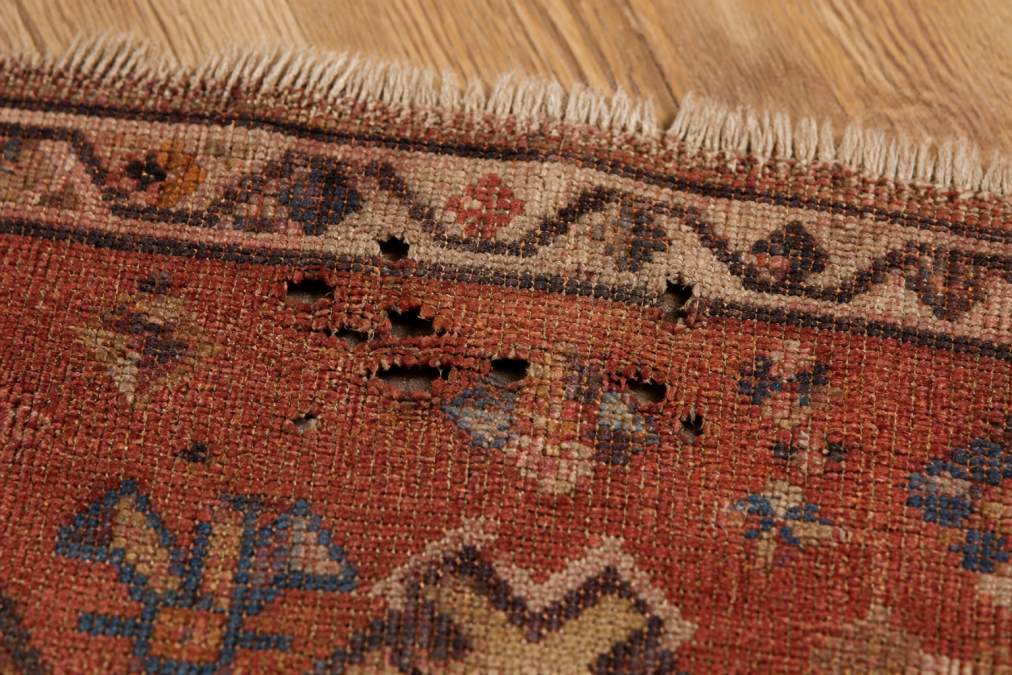
Moth damage is a common threat to antique kilims. Carpet moths feed on protein in natural wool, creating irregular holes and bald patches randomly across the surface, unlike wear damage which concentrates in high-traffic areas.
Telltale signs include small holes tunneling through the pile, weakened fibers, cocoon casings, or musty odor. Damage sometimes appears as thinning areas where fibers are partially consumed. Run your hand across the surface, rough, brittle spots indicate active moths.
Prevention is easier than cure. Store kilims in cool, dry conditions and inspect regularly. Cedar blocks deter moths, but once infestation starts, professional intervention is often necessary to assess damage and determine whether areas can be reintegrated or require reweaving.
Stain, Fading, and Color Loss
Stains present a dilemma: aggressive cleaning damages fibers, but leaving stains causes permanent discoloration. Water stains, pet accidents, wine, and food spills respond differently depending on materials and dyes. Natural vegetable dyes react unpredictably to water or cleaning agents, potentially spreading stains or bleeding into adjacent areas.
Fading from direct sunlight is more visible in kilims with natural dyes. While often a natural characteristic of age that collectors value, severe fading indicates UV damage that weakens fibers, not just color.
Color loss occurs when dyes chemically degrade, leaving white or pale fibers. This is irreversible through cleaning alone. Professional restorers often use color matching and selective reweaving, requiring skill to match original dye lots and patterns.
Reknotting, Reweaving, and Edge Binding Techniques
Professional restoration of antique kilims relies on specialized hand techniques that have been refined over centuries. These methods are not interchangeable, each addresses specific types of damage and requires different skill levels.
Hand-Knotting Restoration Methods
Reknotting retires knots where they've deteriorated. A skilled artisan examines original knot density (knots per square inch) and replicates it exactly, requiring understanding of the kilim's regional weaving technique.
Restoration often begins with color matching by examining undyed fibers or hidden areas. For antique kilims, this is challenging because natural dyes fade and shift over time. Professional restorers typically test dyes on sample fibers to ensure restored areas blend seamlessly.
Reweaving reconstructs entire sections of the weave pattern for large damaged areas. This painstaking work requires understanding knot structure, design pattern, color placement, and symmetry.
Successful hand-knotting restoration respects original craftsmanship without improving design or altering pattern.
Fringe Repair and Selvage Restoration
Fringe and selvage edges are vulnerable because they extend beyond the main weave and bear stress during handling. Fringe repair involves reattaching or rewrapping loose fibers, requiring precision to match original style and fiber type.
Selvage restoration addresses the side edges where the weft threads wrap around the outermost warp threads. When these edges fray or separate, the entire edge binding can unravel. Professional restorers often reinforce the selvage by carefully rewrapping it with matching yarn, ensuring the repair is structurally sound and visually consistent with the original edge treatment.
These edge repairs are often the first signs of professional care. A kilim with well-maintained edges can last significantly longer than one with deteriorating edges, because edge failure often leads to unraveling that compromises the entire rug.
Antique Kilim Rug Restoration Cost and Budget Planning
Restoration costs vary based on damage extent, rug size, and repair complexity. Simple fringe repair costs several hundred to a few thousand dollars; extensive reweaving can exceed tens of thousands. A master restorer may spend many hours on a large kilim.
One Of The Kind Antique Persian Kerman →
When evaluating quotes, ask restorers to break down costs by repair type: fringe work, reweaving, color matching, cleaning, and finishing.
Prioritize repairs that prevent further damage: stabilize structural failures and address moth damage before cosmetic stain removal. This staged approach spreads costs while protecting your investment.
If restoration costs approach the rug's market value, focus on preservation and preventive care. For heirloom pieces or rugs with sentimental value, cost becomes secondary to preservation.
Finding Certified Rug Restoration Experts
Not all rug restorers are equally qualified. The textile restoration field includes specialists with decades of experience and hobbyists with minimal training. Finding a certified expert requires research and verification.
Look for restorers specializing in antique kilims, not general rug cleaning. Ask about training, apprenticeships, and experience. The best restorers often learned their craft in weaving regions, Anatolia, Persia, or the Caucasus, under master weavers. Such dedication to traditional techniques mirrors the meticulous care required for preserving vintage collectibles, ensuring that the integrity of these delicate artifacts remains intact for future generations.
Verify credentials and ask for references. Request before-and-after photographs of similar kilims. A reputable restorer provides detailed documentation, explains methodology, and discusses limitations or risks.
Professional organizations like the American Institute for Conservation (AIC) maintain directories of certified conservators. While not all skilled restorers hold formal certifications, AIC members follow ethical standards and continuing education requirements. This provides some assurance of professional standards.
When you contact a restorer, ask specific questions about their approach to your rug's condition. How would they address the moth damage? What dyes would they use for color matching? Would they recommend full cleaning or spot treatment? A knowledgeable restorer will ask detailed questions about your rug's history, previous repairs, and your goals for restoration. This consultation process itself reveals their expertise.
DIY vs. Professional Restoration: Risk Assessment
The temptation to attempt home repairs on an antique kilim is understandable, especially when professional restoration costs are high. However, the risks often outweigh any savings. Understanding these risks helps you make an informed decision about when professional expertise is non-negotiable.
DIY cleaning is the most common mistake. Commercial carpet cleaners and even "gentle" home cleaning solutions can damage natural fibers and dyes irreversibly. Water itself poses risks, it can cause dyes to bleed, fibers to shrink unevenly, or mold to develop if the rug doesn't dry properly. If you decide to clean at home, test any solution on a hidden corner first and use minimal water.
Attempting reknotting or reweaving without training almost always produces visible damage. Uneven tension, mismatched colors, and incorrect knot density immediately devalue the rug. A failed repair is often harder to correct than the original damage because the restorer must work around your mistakes.
The real risk is permanence. A professional mistake can sometimes be corrected by another professional. Your mistake may be irreversible. For antique kilims worth thousands of dollars, this risk calculus strongly favors professional intervention.
That said, some preventive maintenance you can safely do yourself: regular vacuuming with a low-suction setting, rotating the rug quarterly to distribute wear evenly, and protecting it from direct sunlight. These simple steps extend the rug's lifespan without risk.
Long-Term Preservation and Storage After Restoration
Restoration is not the end of the story. How you care for the kilim after professional work determines whether that investment pays off long-term. Proper storage and handling prevent damage from recurring.
Store antique kilims in cool, dry conditions with stable temperature and humidity. Fluctuating moisture causes fibers to expand and contract, weakening them over time. Ideal storage maintains 45-55% relative humidity and temperatures between 60-70°F. Basements and attics are poor choices because humidity varies seasonally. Climate-controlled closets or storage rooms are better.
Roll kilims rather than folding them.
How Professional Repair Affects Authenticity and Value
This is the question every collector asks: does restoration increase or decrease a kilim's value? The answer is nuanced and depends on the type and extent of repairs.
Frequently Asked Questions
Is it worth repairing an antique kilim rug?
Yes, professional restoration of an antique kilim rug is typically worthwhile, especially for hand-woven pieces with historical or sentimental value. Expert repair preserves structural integrity, restores visual appeal, and can maintain or increase the rug's market value when done correctly. The decision depends on the rug's age, rarity, and current condition. Pieces like the One Of The Kind Antique Persian Kerman Rug exemplify the investment-grade quality that merits professional restoration to protect long-term value.
Can moth damage be repaired on antique kilims?
Yes, moth damage can be repaired through professional restoration techniques including reweaving, reknotting, and fiber replacement. The extent of repair depends on damage severity. Small holes may require simple patching, while extensive damage needs skilled reweaving to match the original knot density and weaving technique. Early detection and professional assessment are critical, untreated moth damage can spread rapidly and become more expensive to repair.
How much does antique kilim rug restoration cost?
Antique kilim rug restoration costs vary widely based on damage severity, rug size, and repair complexity. Professional assessment is essential before budgeting, specialists examine fiber type, weaving technique, and structural integrity to provide accurate estimates. Request detailed quotes from certified restoration experts.
How do I find a reputable professional for antique rug restoration?
Look for textile conservators certified by organizations that recognize professional restoration standards. Request references from previous clients, ask about their experience with antique kilims specifically, and verify they use period-appropriate materials and traditional hand-weaving techniques. Reputable experts provide detailed written assessments and transparent pricing.


