

Table of Contents
- Why Fiber Construction Decides Everything in High Traffic Areas
- Quick Comparison: Rug Materials for Busy Rooms
- Natural vs. Synthetic Fibers: Durability and Wear Resistance
- Stain Resistant Rug Materials for Families and Pets
- Best Rug Pads for High Traffic Areas: The Layer Nobody Talks About
- How to Clean High Traffic Rugs Without Wrecking the Pile
- Room by Room: Matching Material to Foot Traffic
- Conclusion: Choosing the Best Rug Materials for High Traffic Areas
- Frequently Asked Questions
Last Updated: October 6, 2026
Why Fiber Construction Decides Everything in High Traffic Areas
Walk through any busy hallway and you will see the problem within a season: flattened pile, dark traffic lanes, and fibers that never spring back. At ABC Rugs Kilims & Jewelry, we handle hand-knotted Persian rugs and flat-woven kilims daily, and the difference between a rug that lasts two years and one that lasts twenty comes down to how the fiber was built, not how it looks in a photograph.

Most guides rank materials by softness. Traffic cares about resilience, fiber density, and how tightly the pile is packed.
Below: every material worth considering, the pile numbers that matter, and why the pad matters as much as the rug.
Quick Comparison: Rug Materials for Busy Rooms
| Material | Durability | Stain Resistance | Best For | Watch Out For |
|---|---|---|---|---|
| Wool | Excellent | Good (natural oils) | Living rooms, family rooms | Higher cost, needs rotation |
| Nylon | Excellent | Excellent | Hallways, stairs | Can look synthetic up close |
| Polypropylene | Very good | Excellent | Entryways, patios, playrooms | Lower resilience under heavy wear |
| Bamboo silk / viscose | Fair | Poor | Low-traffic bedrooms | Crushes and stains easily |
| Woven grass, jute, sisal | Good | Fair | Layered, casual rooms | Rough underfoot, hard to spot clean |
The short version: wool and nylon are the workhorses, polypropylene is the budget pick, and anything glossy or silky belongs somewhere quieter.
Natural vs. Synthetic Fibers: Durability and Wear Resistance
The natural versus synthetic split is really a question of how the fiber behaves after ten thousand footsteps. Natural fibers, wool above all, have a crimped structure that springs back after compression.
Neither category wins outright. Wool handles wear gracefully and ages into a patina; synthetics hold color and resist spills better but can flatten permanently in a true high-traffic area.
Wool as a Premium Option
Wool is the gold standard for durability in a natural fiber rug. Its fibers have a natural crimp, so the pile rebounds after being crushed, and the lanolin in the wool gives it some resistance to stains. Hand-knotted wool rugs, like our One Of The Kind Persian Torkman Rug, are woven with a tight, compressed foundation that resists wear for decades.

Nylon Performance Characteristics
Nylon is the most durable synthetic fiber for area rugs. It springs back after compression better than polypropylene, takes dye deeply so colors stay rich, and resists stains well when treated. The downside is texture: cheaper nylon can feel slick underfoot. For stairs and hallways where crush resistance matters most, nylon is a strong, practical choice.
Polypropylene for High Traffic
Polypropylene is the value pick for high traffic areas. It is solution-dyed, so color goes all the way through the fiber, and it is naturally stain resistant and moisture resistant. That makes it ideal for entryways, kitchens, and even covered patios. Machine-made polypropylene rugs like our Aloha ALH14 are flat-woven, stain-resistant, and can be rinsed with a hose. The catch is resilience: polypropylene flattens under sustained heavy wear faster than nylon or wool, so it works best in medium-traffic spots or as an outdoor layer rather than the main rug in a hallway.
Stain Resistant Rug Materials for Families and Pets
For households with kids and pets, stain resistance should lead the decision. The most stain resistant rug materials are solution-dyed synthetics, polypropylene and treated nylon, because the color is locked into the fiber rather than applied to the surface. Wool resists stains to a point thanks to lanolin, but it absorbs liquids if they sit, so spills need attention within minutes.
A few practical rules we give customers:
- Blot, never rub, and work from the outside of the stain inward
- Keep a pet enzyme cleaner on hand for accidents
- Choose a low-shedding fiber if shedding bothers you; wool sheds more than nylon
Pile Height and Density: The Numbers That Matter
Pile height and fiber density determine durability more than the fiber name on the tag. A low pile, under roughly a quarter inch, resists crushing and is easier to vacuum and spot clean. A high, plush pile feels luxurious but mats down quickly.
Density is the number most shoppers ignore. It measures how tightly the tufts are packed, usually expressed in knots per square inch on a hand-knotted rug.
Best Rug Pads for High Traffic Areas: The Layer Nobody Talks About
Memory foam and PVC foam. These feel plush but are the wrong pick for a high-traffic rug.
Felt-and-rubber (the combination). The workhorse for busy rooms: a felt core for cushion and a rubber or latex base for grip.
Thickness is a separate decision from material.
A few compatibility rules worth knowing:
- Hand-knotted and wool rugs: felt-and-rubber, never an adhesive-backed pad. Adhesives can pull fibers and leave residue on the foundation.
- Flat-weave, kilim, and reversible rugs: a thin, high-grip pad. A thick pad makes a flat-weave ripple.
- Rugs on carpet: a thinner pad or a rug-to-carpet grip pad, since a thick pad on carpet creates a lumpy, unstable surface.
Spend a little more on the pad than feels necessary. Replacing a pad is inexpensive. Replacing a crushed rug is not.
How to Clean High Traffic Rugs Without Wrecking the Pile
Cleaning a high traffic rug is mostly about frequency and gentleness, not intensity. Vacuum weekly, spot clean immediately, and deep clean once a year.
Follow this routine:
- Vacuum weekly with a suction-only head, no beater bar on wool or hand-knotted rugs. On a high-traffic runner, vacuum in both directions so grit does not work down into the foundation.
- Rotate the rug every six months so traffic lanes wear evenly. On a runner, flip it end-for-end as well as rotating it.
- Spot clean with a mild solution and a white cloth, blotting from the edge inward. Test any cleaner on a hidden corner first.
- Deep clean annually, professionally for wool and hand-knotted pieces, and check the backing for moisture before laying it back down.
- Air dry both sides if the rug got wet, and never fold a damp rug for storage.
For a flat-woven polypropylene rug, cleaning is simpler: rinse with a hose, let both sides air dry fully, and bring it indoors during extreme weather to extend its life. For a hand-knotted wool rug, treat it like the heirloom it is and let a professional handle the deep clean.
The Lifecycle Question: What Happens to the Rug After It Wears Out
Natural fibers, wool, jute, sisal, cotton, are biodegradable and, in wool's case, renewable. A wool rug that is worn but structurally sound can often be repaired, re-fringed, or repurposed rather than thrown out.
Synthetic fibers, nylon, polypropylene, polyester, are petroleum-derived and do not biodegrade on any human timescale.
The practical takeaway is not "natural good, synthetic bad." The most sustainable choice is usually the one you keep the longest.
Indoor Air Quality and Off-Gassing
A new rug can affect the air in a room, a topic most guides avoid. New synthetic rugs, and the adhesives and backing materials in some machine-made construction, can release volatile organic compounds (VOCs) after unrolling.
If indoor air quality is a concern, a few practical steps help:
- Air the rug out before it goes down. Unroll it in a garage, covered porch, or well-ventilated room for a few days before placing it in a bedroom or a room where children play.
- Ventilate the room for the first week or two after installation, especially in warmer weather, since off-gassing increases with temperature.
- Look for low-emission claims. Some manufacturers test their products for VOC emissions and label them accordingly; a rug carrying a recognized low-emission certification is a reasonable signal, though it is not a guarantee.
For most people, a new rug is not a health problem, and the smell fades. But for a nursery, a bedroom, or a home with someone chemically sensitive, choosing a natural-fiber rug or airing a synthetic one out thoroughly is a low-cost precaution worth taking.
Room by Room: Matching Material to Foot Traffic
The right material changes from room to room because foot traffic, moisture, and mess change from room to room. A single "best" fiber does not exist; the best match does.
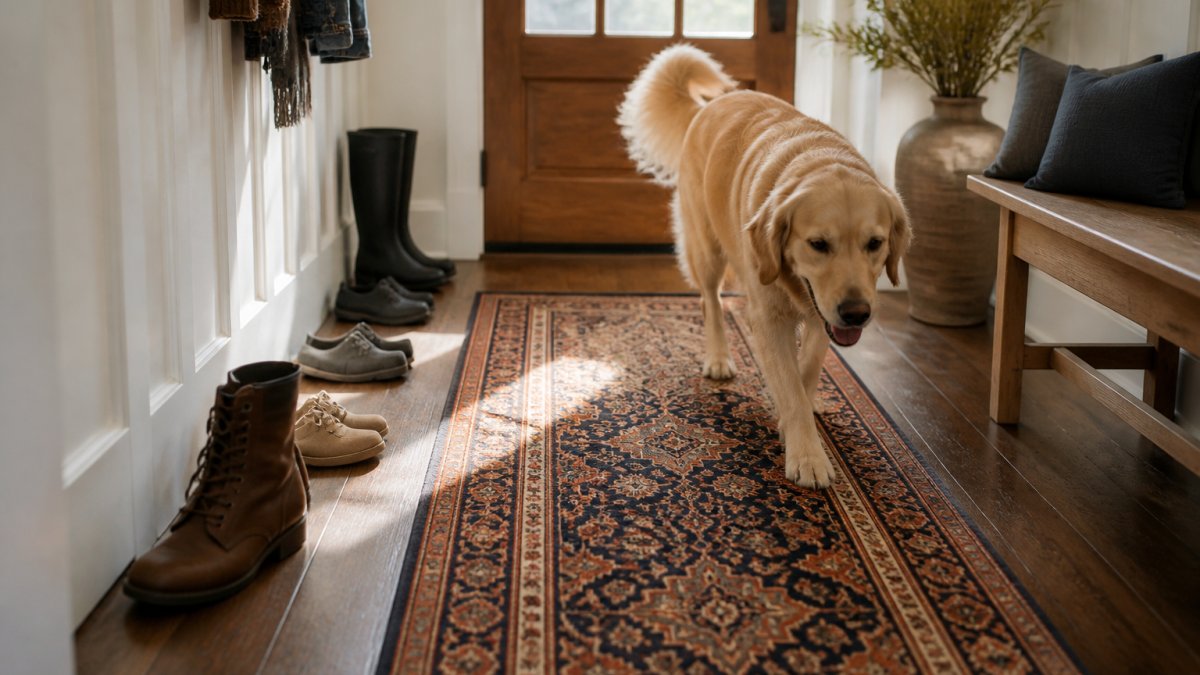
Match the material to the room:
- Entryway: polypropylene or nylon, low pile, easy to hose or spot clean
- Family room: wool or nylon, mid pile, dense enough to survive daily use
- Hallway and stairs: a hand-knotted wool runner or nylon, the two most crush-resistant options
- Dining room: wool or a low-pile synthetic, since chairs drag and food drops
For a long corridor, a hand-knotted runner such as our Persian Sarough runner combines a dense wool pile with a heavy-bodied construction that resists wear in exactly the format a hallway needs.

Conclusion: Choosing the Best Rug Materials for High Traffic Areas
Choosing the best rug materials for high traffic areas comes down to three decisions: pick a resilient fiber, insist on high density and a sensible pile height, and never skip the pad.
That is the standard we hold our own inventory to. ABC Rugs Kilims & Jewelry curates handmade rugs and kilims, Persian antique and vintage pieces, and one-of-a-kind hand-knotted wool rugs built to take real wear, each reviewed before it reaches the site.
Frequently Asked Questions
What kind of rug is best for high traffic?
Dense, tightly constructed rugs handle foot traffic best. Hand-knotted wool rugs with a tight knot count resist crushing and wear for decades, while machine-made rugs in nylon or polypropylene offer a lower-cost option with strong stain resistance. Look for fiber density, a low to medium pile height, and a firm backing. A rug pad underneath adds cushioning and stops slipping, which extends the life of any high traffic rug.
Are wool rugs good for high-traffic areas?
Yes. Wool is one of the most durable natural fibers available, and its dense, oily structure resists wear and tear while holding up under repeated foot traffic. Hand-knotted wool rugs like the Persian Torkman and Sarough styles are built for decades of use, and their natural resilience helps the pile bounce back instead of flattening. Wool also hides dirt well between cleanings, which matters in entryways and family rooms.
What are the best stain-resistant rug materials for families?
Polypropylene and nylon are the top performers for stain resistance because their synthetic fibers resist moisture and most spills bead on the surface. Many polypropylene rugs, such as the Aloha collection, can be hosed down and air dried, which makes them practical for kids and pets. Wool treated with a stain protectant is a strong middle ground, offering natural durability with added spill protection for high traffic areas.
How do synthetic rug materials compare to natural fibers in high-traffic zones?
Synthetic fibers like nylon and polypropylene cost less, resist stains and moisture, and are easy to clean with a hose or upholstery cleaner. Natural fibers like wool and hand-woven kilims cost more upfront but last far longer and develop a patina that many buyers prefer. In high traffic areas, the trade-off comes down to budget and lifespan: synthetics win on price and cleanup, wool wins on longevity and resilience.
Can handmade kilims hold up in high-traffic areas?
Flat-woven kilims are thinner than piled rugs, so they show wear faster in the busiest zones unless you pair them with a quality rug pad. That said, tightly woven wool kilims are surprisingly tough and many vintage pieces have already survived decades of use. Place them in medium-traffic rooms like dining areas or bedrooms, and reserve denser hand-knotted rugs for hallways and entryways.
A busy home will always test a rug, and most rugs fail that test within a few years. ABC Rugs Kilims & Jewelry offers hand-knotted Persian rugs, flat-woven kilims, and durable runners built for real foot traffic, with authentic pieces, a curated selection, and a lifetime exchange guarantee on qualifying rugs. Get started with ABC Rugs Kilims & Jewelry and find a rug that holds up as beautifully as it looks.


