

Table of Contents
- Why Authentic Rugs Need Specialized Care
- 1. Master the Art of Regular Vacuuming
- 2. Act Fast: Spot Cleaning and Blotting Spills
- 3. How to Clean Vintage Rugs at Home Safely
- 4. Best Rug Pads for Authentic Rugs
- 5. Rotate, Protect, and Manage Sunlight Exposure
- 6. Professional Rug Cleaning Frequency and Timing
- Seasonal Storage and Pet-Specific Maintenance
- Frequently Asked Questions
Last Updated: September 7, 2026
Why Authentic Rugs Need Specialized Care
An authentic handmade rug is a functional antique. Unlike machine-made floor coverings from synthetic yarns with glued backing, a hand-knotted piece is a textile investment woven from natural fibers with a structural integrity that demands a different maintenance philosophy. Treating a Persian wool rug like standard wall-to-wall carpet leads to fiber damage and premature wear that no cleaning solution can reverse.
Learning how to care for authentic rugs correctly is straightforward once you understand the materials. Wool is resilient but porous; silk is delicate and water-sensitive; the dyes, even quality ones, have limits. Proper care for authentic rugs means matching your routine to these material realities, not following generic carpet advice.
1. Master the Art of Regular Vacuuming
Vacuuming is the single most important thing you can do for your rug, but technique matters more than frequency. Vacuum at least once a week in low-traffic areas and two to three times weekly in high-traffic zones to remove grit before it settles deep into the pile, where it acts like sandpaper on the wool with every footstep.
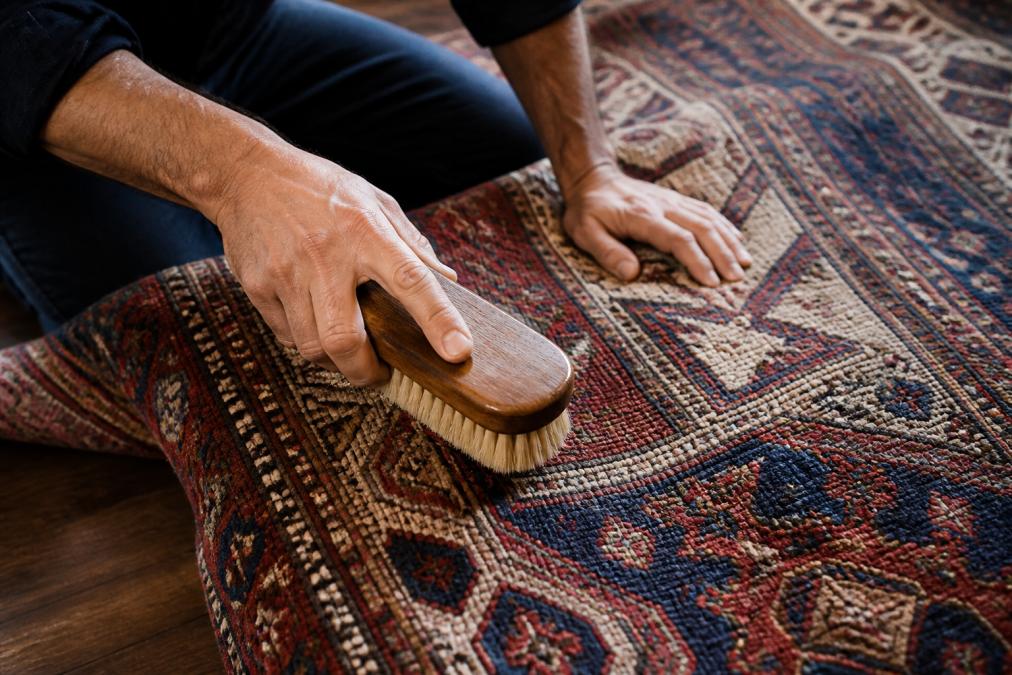
The proper technique is to vacuum slowly, in the direction of the pile, without the beater bar. The rotating brush on most upright vacuums is too aggressive for hand-knotted pieces and can pull at the knots and fringe. Use the suction-only setting or a canister vacuum with a bare-floor attachment. For the fringe, vacuum gently or skip it entirely; it is best cleaned with a soft brush.
2. Act Fast: Spot Cleaning and Blotting Spills
The golden rule of spill management is blot, never rub. Rubbing pushes liquid deeper into the pile and spreads it across adjacent knots, turning a small stain into a large one. Use a clean, dry, white cloth or paper towel to blot, working from the outside edge of the spill toward the center.
For most spills, plain room-temperature water is the first and best treatment. Dampen a cloth, blot, and repeat with a dry cloth to absorb moisture. For tougher spots, a few drops of pH-neutral detergent mixed with cool water is usually sufficient. Avoid harsh chemicals, bleach, and optical brighteners, which can strip the dye and cause color bleeding.
3. How to Clean Vintage Rugs at Home Safely
Cleaning a vintage rug at home requires understanding that not all natural fibers respond the same way to moisture, detergents, or agitation. Each fiber has distinct physical properties that dictate a different cleaning approach.
Wool: Resilient but Alkaline-Sensitive
Wool is the most forgiving natural fiber for home cleaning. Its scales resist dirt penetration and it can absorb significant moisture without immediate damage, provided it dries thoroughly. However, wool is sensitive to alkaline substances; dish soap or laundry detergent are typically alkaline (pH 8-10) and break down wool's protein structure over time, causing it to feel harsh and look dull.
For wool, use a detergent specifically formulated for wool or a pH-neutral cleaner (pH 7). Mix a few drops into cool water, never hot, which can felt the fibers and shrink the rug. Dip a soft white cloth into the solution, wring until barely damp, and blot in the direction of the pile. Rinse by blotting with plain cool water, then extract moisture with a dry towel.
Silk: Water-Sensitive and Structurally Delicate
Silk rugs require a fundamentally different approach. Silk fibers are smooth and absorb water rapidly, causing them to swell and become temporarily weaker; over-wetting can distort the weave permanently. Silk dyes are also more vulnerable to bleeding, even with pH-neutral products.
For silk, avoid wet cleaning unless absolutely necessary. The safest home method is dry maintenance: vacuum on a low-suction setting without a beater bar, and use a soft brush to lift dust. For localized spots, use a barely damp cloth with plain water, no detergent, and blot gently. Never pour water directly onto a silk rug, and never use vinegar, which can degrade the silk protein.
Cotton: Absorbent but Prone to Shrinkage
Cotton foundation rugs or cotton-blend pieces are highly absorbent and prone to shrinkage when wet. They also hold onto soil more readily than wool. For cotton, the same pH-neutral detergent approach works, but drying is critical. Cotton that stays damp for more than 24 hours will develop mildew odors that are difficult to remove.
The Over-Wetting Risk Across All Fibers
The most common error in how to clean vintage rugs at home is over-wetting, regardless of fiber. A saturated hand-knotted rug can take weeks to dry, and trapped moisture leads to mildew, rot, and a weakened woven structure. Work in small sections, roughly one square foot at a time, and extract moisture immediately after each pass using a wet-dry vacuum on a low setting or clean, dry towels pressed firmly into the wet area.
Air drying is essential. Place the rug flat in a well-ventilated area out of direct sunlight and allow it to dry completely before walking on it. Elevate the rug on blocks or a drying rack to allow airflow underneath. Do not use a hair dryer, space heater, or iron to speed drying, these cause uneven shrinkage and can crack the wool fibers. safe stain removal.
When Home Cleaning Is Not Enough
For antique textiles with significant value, home washing carries real risk. Color bleeding, dye instability, and fiber damage are all possible even with gentle products. If the rug is more than 50 years old, has visible dye variation, or has areas of existing fiber weakness, do not attempt wet cleaning at home. When in doubt, consult a professional who specializes in textile conservation rather than a standard carpet cleaner.
4. Best Rug Pads for Authentic Rugs
A rug pad is not optional; it is the cheapest insurance you can buy for your investment. A quality pad prevents slipping, adds cushioning, and creates an air gap that improves airflow and reduces moisture buildup. The best rug pads for authentic rugs are made from natural rubber or felt, which are breathable and will not off-gas onto your rug.
Avoid pads made from PVC or recycled rubber, which can discolor the rug backing and trap moisture. Choose a pad about an inch shorter on each side so it is completely hidden. On hardwood or tile, a felt-and-rubber combination pad offers the best grip and cushioning; on carpet, a thinner felt pad prevents wrinkling.
5. Rotate, Protect, and Manage Sunlight Exposure
Authentic rugs age unevenly when left in one position. Sunlight fades dyes in exposed areas, while foot traffic compresses the pile along walking paths. Rotate your rug 180 degrees every six to twelve months to distribute wear patterns and ensure even color fading.
Direct sunlight is the most destructive force for natural dyes. Use sheer curtains or blinds to filter direct sun during peak hours, and be particularly careful with silk rugs, which are more sensitive to light damage than wool. If a rug sits in a bright room, consider moving it seasonally or repositioning furniture to cast protective shadows.
6. Professional Rug Cleaning Frequency and Timing
Even the best home routine cannot replace professional intervention. An authentic rug should receive a professional deep cleaning every one to three years, depending on traffic and pets. Homeowners with children or animals should lean toward the annual end of that range; a rug in a low-traffic guest room can often go three years.
A Practical Decision Framework
Rather than guessing, use these signals to determine when professional cleaning is needed:
- The water test: Sprinkle a few drops of water on an inconspicuous area. If the water beads up, the wool still has its natural lanolin coating and is protected. If the water soaks in immediately, the lanolin has worn away and the rug is vulnerable to soiling, time for professional cleaning.
- The white cloth test: Wipe a white cotton cloth firmly across the surface. If visible gray or brown soil transfers to the cloth, embedded grit is present and is actively abrading the fibers with every step.
- The bend test: Fold back a corner of the rug. If dust or debris falls out, or if the backing shows a visible line of accumulated dirt, the rug needs professional attention.
- Odor detection: Musty or stale odors indicate trapped moisture or organic matter that home vacuuming cannot remove.
What Professional Cleaning Actually Involves
Professional rug cleaning is different from standard carpet cleaning. A specialist who works with handmade rugs will inspect the piece, test for dye stability, and use techniques appropriate for the specific fibers and construction. The Institute of Inspection, Cleaning Restoration Certification recommends hiring a certified firm with demonstrated experience in wool and silk textiles.
Most reputable specialists use one of two methods:
- Hand-washing with controlled immersion: The rug is submerged in a pH-balanced solution, gently agitated, rinsed thoroughly, and then dried flat with controlled airflow. This is the preferred method for most wool rugs because it removes deeply embedded soil without mechanical stress.
- Dry-cleaning with solvent: For silk rugs or pieces with unstable dyes, a solvent-based cleaning avoids water entirely. This method is gentler on dyes but less effective at removing water-soluble stains.
Avoid firms that use steam cleaning or rotary extraction machines on hand-knotted rugs. These methods force water deep into the weave and can cause shrinkage, dye bleeding, and foundation rot.
The Cost-Benefit Reality
The cost of professional cleaning is modest compared to the replacement value of an antique or hand-knotted piece. A typical professional cleaning for a 6x9 wool rug ranges from $150 to $400 depending on the firm, condition, and method. Silk rugs cost more, often $300 to $600 for the same size, because they require solvent cleaning. Replacement costs for a hand-knotted wool rug of similar size routinely start at $1,500 and climb steeply for antique or silk pieces.
Professional cleaning is the only reliable way to remove deeply embedded soil that home vacuuming cannot reach. It also lets a specialist inspect the rug for early signs of moth damage, foundation weakness, or dye deterioration, issues that are far less expensive to address early.
Working with Your Dealer
When you purchase from a specialist dealer, ask whether they offer guidance on professional cleaning frequency. Many reputable dealers provide care advice with their pieces and can recommend vetted cleaning specialists who understand the specific construction of the rugs they sell.
Seasonal Storage and Pet-Specific Maintenance
Seasonal Storage: When storing a rug for the season, clean it thoroughly first. Any soil left in the pile will attract moths and other pests. Roll the rug, never fold it, with the pile side inward, and wrap it in a breathable cotton or muslin sheet. The Smithsonian's textile conservation guidelines recommend avoiding plastic wrap, which traps moisture and promotes mildew. Add cedar blocks or lavender sachets to deter moths, but keep them away from direct contact with the wool. Store the rolled rug flat or standing on end, off the concrete floor, in a dry, climate-controlled space.
Pet-Specific Maintenance: Pets accelerate wear on authentic rugs in predictable ways. Claws snag the pile and pull at knots, accidents introduce moisture and odor deep into the woven structure, and pet hair embeds quickly into the wool. Keep pet nails trimmed, vacuum more frequently in pet-traffic zones, and treat accidents immediately with the blotting technique described earlier. For recurring issues, a professional pet stain treatment guide from the Carpet and Rug Institute can help, but for valuable pieces, professional cleaning is the safer route.
The real secret to a long-lived rug is prevention. A rug pad, a consistent vacuuming schedule, careful blotting, and professional cleaning every few years will preserve the beauty and value of your investment. Authentic rugs are heirlooms, and with proper care for authentic rugs, they will serve multiple generations.
Frequently Asked Questions
How often should authentic rugs be professionally cleaned?
Most hand-knotted wool and silk rugs benefit from professional cleaning every 12 to 18 months in normal household conditions. Homes with heavy foot traffic, pets, or allergies should shorten that window to every 8 to 12 months. Professional cleaning uses controlled immersion and pH-neutral detergents that remove embedded dust and dirt without causing fiber damage. Between professional sessions, regular vacuuming and prompt spot treatment keep your rug in good condition. If you notice dull colors, a musty smell, or visible dirt after vacuuming, schedule professional cleaning sooner rather than later.
Can I use Dawn dish soap to wash my authentic rug?
No. Dish soaps like Dawn contain degreasers and strong surfactants that strip the natural lanolin from wool fibers and can cause color bleeding in hand-knotted rugs. These detergents are designed for dishes, not delicate textile conservation. Instead, use a pH-neutral detergent specifically formulated for wool or silk rugs. For spot cleaning at home, a mild cleaning solution of white vinegar and water works well on many stains. Always test any cleaning solution on a small, hidden corner of the rug first to check dye stability before treating the visible area.
Does baking soda really clean authentic rugs?
Baking soda helps with odors and light surface freshening, but it does not actually clean the rug's fibers. Sprinkling baking soda on a rug and vacuuming it up can temporarily mask smells, yet it leaves a fine alkaline residue that attracts dirt over time. For authentic hand-knotted rugs, skip the baking soda treatment. Instead, address odor sources directly through proper vacuuming, air drying, and professional cleaning when needed. If you must deodorize, use a very light dusting and vacuum thoroughly, but understand this is a temporary fix, not a cleaning method.
What is the best way to remove spills from a wool or silk rug?
Blot, never rub. Rubbing pushes the liquid deeper into the pile and spreads the stain while damaging the wool or silk fibers. Start by blotting the spill with a clean, white cloth or paper towel, working from the outer edge toward the center to prevent spreading. Use a mild cleaning solution with pH-neutral detergent and cold water for most spills. For silk rugs, use plain cold water first. Continue blotting until the area is barely damp, then place a stack of dry towels on top with a weight to absorb remaining moisture. Never use hot water, which can set protein-based stains.
Should I use a rug pad under my authentic rug?
Yes. A high-quality rug pad is one of the best investments you can make for an authentic hand-knotted rug. Rug pads prevent slipping, reduce friction wear on the foundation, and provide cushioning that protects the pile from crushing under foot traffic. Choose a pad made from natural rubber or felt that is slightly smaller than your rug so it does not show at the edges. Avoid PVC pads, which can off-gas and cause color bleeding or fiber degradation over time. A proper pad extends the life of your rug significantly by absorbing the daily stress of walking and furniture weight.
Authentic rugs reward patience and consistency, but every piece is unique. At ABC Rugs Kilims & Jewelry, we pair our curated collection of handmade rugs and kilims with the practical guidance you need to protect them. Whether you are sourcing a wholesale piece for a design project or adding a vintage treasure to your home, our reviewed and trusted inventory is built for long-term enjoyment. Explore our collection and find a rug that will age beautifully.


