

Table of Contents
- What Defines Antique Kilim Rugs and Flat-Woven Textiles
- Regional Origins: Turkish, Persian, and Central Asian Kilim Traditions
- How to Identify Antique Kilim Rugs: Key Markers of Authenticity
- Geometric Patterns and Symbolic Meanings in Kilim Design
- Distinguishing Kilim Rugs from Traditional Pile Carpets
- Caring for and Preserving Vintage Kilim Rugs
- Antique Kilim Rugs in Modern Interior Design
- Frequently Asked Questions
Last Updated: September 30, 2026
What Defines Antique Kilim Rugs and Flat-Woven Textiles
Antique kilim rug styles represent distinctive textile traditions rooted in centuries of nomadic and settled weaving cultures. At ABC Rugs Kilims & Jewelry, we specialize in curating authentic pieces that showcase their craftsmanship and cultural significance.
A kilim is a flat-woven textile created without the pile structure of traditional carpets. Kilims use the warp and weft technique, where horizontal threads (weft) interlace through vertical threads (warp) to create the design. This produces a lighter, more flexible fabric essential for nomadic communities needing portable, durable furnishings.
Kilims were woven by tribal artisans across vast regions, from the Anatolian highlands to Central Asia, each developing distinctive regional characteristics. Antique kilim rug styles are valued for their textile heritage, authentic materials, and cultural narratives embedded in every pattern.
Flat-weave construction allowed weavers to create intricate geometric designs through careful manipulation of colored weft threads. Weavers worked from memory or simple sketches passed down through generations, creating pieces that were simultaneously functional and artistically sophisticated.
Antique kilim rug styles served practical purposes in tribal societies as floor coverings, wall hangings, storage bags, and ceremonial textiles. Patterns and colors communicated tribal identity, regional origin, and spiritual meanings. This functional artistry distinguishes authentic antique pieces from modern reproductions.
Regional Origins: Turkish, Persian, and Central Asian Kilim Traditions
Turkish, Persian, and Central Asian kilim traditions developed unique characteristics based on local materials, cultural influences, and trade patterns. Understanding these regional differences is essential for identifying and appreciating antique kilim rug styles.
Anatolian Kilim Patterns and Meanings
Turkish Anatolian kilims are among the most recognizable antique kilim rug styles in the Western market. Woven in Anatolia's highlands and western regions, they showcase bold geometric patterns and distinctive color palettes of deep reds, warm oranges, and rich blues from vegetable dyes.
Anatolian kilims feature large-scale geometric medallions in repeating patterns, including diamond shapes, stepped polygons, and angular designs reflecting Islamic and pre-Islamic traditions. The sofreh kilim, originally a dining cloth, exemplifies this with its rectangular format and densely patterned surface.
Tribal identity appears in Anatolian patterns through signature variations. Different Turkic tribes developed distinctive arrangements that served as visual markers. Skilled collectors can identify tribal origin by analyzing pattern arrangements, color choices, and weaving density.
Anatolian kilims typically employ the slit-weave method, where adjacent color areas are separated by vertical slits. This creates clean color transitions and precise geometric definition, distinguishing Anatolian work from Persian and Central Asian traditions.
Persian and Caucasian Styles
Persian kilim traditions emphasize intricate, densely patterned textiles with smaller-scale geometric designs, contrasting with Turkish bold medallions. Weavers in regions like Senneh and Bijar created more refined pieces.
Persian kilims incorporate complex color relationships with subtle gradations. Their vegetable dye palette features deeper, muted tones, burgundies, forest greens, and navy blues, creating sophisticated visual effects.
Caucasian kilims blend Turkish geometric boldness with Persian refinement. Woven between the Black and Caspian Seas, they feature intricate star patterns, small-scale medallions, and complex borders demonstrating exceptional technical skill.
Caucasian weavers accessed diverse natural dye sources and developed sophisticated techniques for subtle color variations within pattern elements, distinguishing their work through technical mastery while maintaining authentic, hand-woven character.
How to Identify Antique Kilim Rugs: Key Markers of Authenticity
Identifying authentic antique kilim rug styles requires understanding the physical characteristics that distinguish genuine historical pieces from modern reproductions. Several specific markers can help collectors and designers verify authenticity and assess quality.
Weaving Techniques and Materials
Genuine antique kilim rug styles feature hand-spun wool or cotton for warp and weft threads. Hand-spun quality creates visible irregularities in thread thickness that modern industrial production deliberately eliminates.
Examining the back reveals crucial information: visible warp threads, consistent weft interlacing, natural color variations, occasional historical repairs, and wear patterns consistent with age.
Weave density varies between regional traditions. Persian kilims typically feature tighter, more densely packed weaves than Turkish Anatolian pieces, affecting durability and pattern fineness.
Modern reproductions use synthetic fibers or commercially spun wool appearing too uniform in color and thickness. Industrial looms create perfectly regular weaves lacking subtle hand-loom variations, signaling modern manufacture.
One Of The Kind Persian Bidjar Rug#12 →
Vegetable Dyes and Color Palettes
Vegetable dyes represent a crucial authenticity marker in antique kilim rug styles. Genuine pieces were colored exclusively with natural pigments producing characteristic color palettes and aging patterns nearly impossible to replicate synthetically.
Common vegetable dyes include madder root (deep reds and burgundies), indigo (blues), weld (yellows and greens), cochineal (vibrant reds and purples), and walnut husks (browns and dark tones).
Authentic antique kilim rug styles display warm, earthy tones rather than synthetic brightness. Vegetable-dyed textiles age predictably, with reds and yellows fading while blues and blacks retain depth.
According to textile conservation guidelines from the Smithsonian Institution, examining dye behavior under light is one of the most reliable methods for authenticating antique textiles. Genuine vegetable dyes show characteristic fading patterns and color shifts that synthetic dyes cannot replicate.
Abrash, subtle horizontal color variations within a single color area, is a positive authenticity indicator in antique kilim rug styles. It results from batch dyeing variations. Modern dyers eliminate abrash, so its presence suggests authentic, historical production.
Geometric Patterns and Symbolic Meanings in Kilim Design
The geometric patterns woven into antique kilim rug styles carry cultural significance that extends far beyond aesthetic appeal. Each motif, arrangement, and color choice communicated meaning within the communities that created these textiles. Understanding this symbolic language deepens appreciation for these remarkable artifacts.
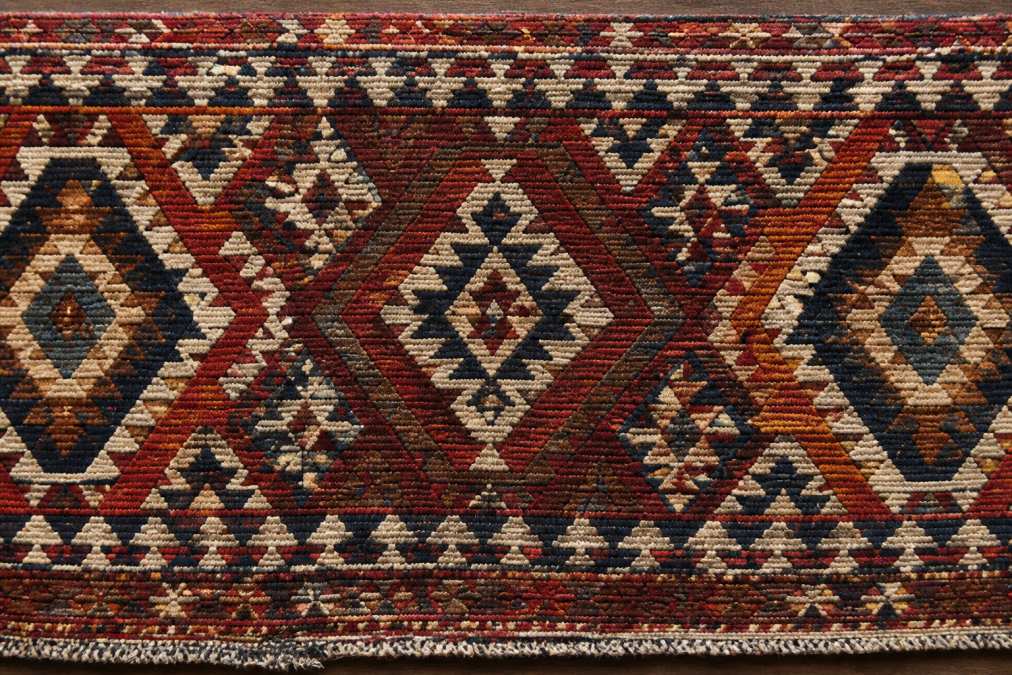
Antique kilim rug styles feature several pattern types: medallion patterns (central geometric shapes arranged symmetrically), all-over geometric patterns (repeating motifs), striped patterns, prayer kilims (with niche designs), and sofreh patterns (dense geometric arrangements for dining cloths).
Pattern symbols reflect spiritual beliefs and tribal affiliations. Diamond shapes represented protection, stepped patterns suggested mountains or spiritual boundaries, red symbolized courage, and blue represented spiritual transcendence.
Tribal identity appears in antique kilim rug styles through distinctive pattern arrangements that served as visual signatures. Collectors can often determine geographic region and sometimes specific tribal origin by analyzing these characteristics.
Weavers worked without written patterns, relying on memory to maintain complex geometric relationships. The mathematical precision in antique kilim rug styles, perfect corner alignment and symmetry despite hand-loom challenges, demonstrates remarkable cognitive and technical ability.
Distinguishing Kilim Rugs from Traditional Pile Carpets
The difference between kilims and traditional pile carpets represents a fundamental distinction in textile construction, aesthetics, and historical function. Understanding these differences helps collectors make informed decisions and appreciate why antique kilim rug styles occupy a unique position in textile history.
Pile carpets feature thousands of individual knots tied onto warp and weft threads, then trimmed to create a raised surface.
Caring for and Preserving Vintage Kilim Rugs
Proper care and preservation of antique kilim rug styles ensures these cultural artifacts maintain their beauty and integrity for future generations. The flat-weave construction of kilims requires somewhat different care approaches than traditional pile carpets, though the fundamental principles of textile preservation remain consistent.
Antique Kilim Rugs in Modern Interior Design
Antique kilim rug styles have experienced a resurgence in contemporary interior design. Designers and homeowners appreciate their graphic boldness, cultural authenticity, and warmth.
Frequently Asked Questions
How can you tell a real antique kilim rug from a modern reproduction?
Authentic antique kilim rugs display specific markers: hand-spun wool with visible irregularities, vegetable dyes that fade naturally over time rather than uniformly, and uneven weaving patterns that reflect the weaver's individual technique. Check the warp and weft structure on the back, genuine kilims show consistent, tight flat-weave construction. Examine color variation across the rug; natural dyes create subtle shifts in tone. Modern reproductions often have overly uniform colors, synthetic dyes with harsh hues, and machine-like precision in the weave pattern.
What are the most common regional patterns found in antique kilim rugs?
Anatolian kilims feature bold geometric designs with tribal motifs like diamonds, hexagons, and stepped patterns, often in deep reds and blues. Persian kilims display more intricate, curvilinear designs including floral medallions and garden scenes. Caucasian kilims are known for distinctive star medallions and geometric borders. Central Asian pieces showcase characteristic gul (geometric flower) designs repeated across the field. Each region's patterns reflect local tribal identity and cultural heritage, making them valuable markers for identifying a kilim's origin and age.
Are antique kilim rugs valuable as collector's items?
Yes, antique kilim rugs hold significant value, especially those with documented provenance and exceptional craftsmanship. Rarity, age, condition, and regional origin drive pricing. A genuine antique kilim from the 19th or early 20th century can appreciate over time, particularly pieces from renowned weaving regions like Anatolia or Persia. However, value depends on authenticity, reproductions and modern kilims do not hold collector value. Pieces with historical significance, unusual motifs, or superior weaving techniques command premium prices in the collector market.
What is the difference between a flat-weave kilim and a traditional pile rug?
Kilims are flat-woven textiles with no pile, the warp and weft threads are interlocked to create a dense, reversible surface. Traditional pile rugs, by contrast, have loops of wool knotted onto the warp, creating a thick, cushioned surface. Kilims are lighter weight and more flexible. Pile rugs are thicker and more durable for heavy foot traffic. Kilims showcase weaving technique through their geometric patterns, while pile rugs often display more intricate, detailed designs. Both are handmade textiles, but their construction methods and aesthetic qualities differ significantly.


