

Table of Contents
- How to Identify the Age of Antique Persian Rugs: Key Indicators
- Antique vs. Vintage Persian Rugs: Dating by Era
- Hand Knotted vs. Machine Made Rugs: A Critical Age Indicator
- Dyes and Color as Age Markers: Natural vs. Synthetic Rug Dyes
- Physical Wear Patterns and Patina: Reading Age Through Use
- Design, Motif, and Regional Identification Keys
- Professional Testing and Documentation: Confirming Age
- Common Mistakes in Age Identification and What to Ignore
Last Updated: August 19, 2026
How to Identify the Age of Antique Persian Rugs: Key Indicators
Identifying the age of antique Persian rugs requires knowledge of specific construction and material markers that shift across different eras. A hand-knotted rug from the 1880s shows entirely different characteristics than a semi-antique from the 1960s or a modern reproduction.
Age determination is systematic: visual inspection, material analysis, and understanding how weaving techniques evolved over centuries reveal predictable patterns. The foundation structure, dye chemistry, wear patterns, and design elements all shift with time.
Understanding Age Categories: Antique vs. Vintage vs. Modern
The rug industry uses three primary classifications: Antique rugs (pre-1920, sometimes to 1930), Vintage or semi-antique rugs (1920-1980), and Modern rugs (post-1980). These categories correlate with specific manufacturing methods, dye types, and design conventions.
Antique rugs almost always feature hand-knotted construction with natural vegetable dyes. Vintage pieces show the transition toward synthetic aniline dyes. Modern reproductions mimic older aesthetics but reveal themselves through consistent, uniform color and machine-perfect construction that real aging never produces.
Before 1920, most Persian rugs used traditional methods passed down through generations. The 1920s marked industrialization in weaving centers, introducing new tools and materials. By 1980, synthetic dyes and machine-assisted looms had become standard in many regions, though some traditional workshops continued hand methods.
The Foundation: Examining Backing and Weave Structure
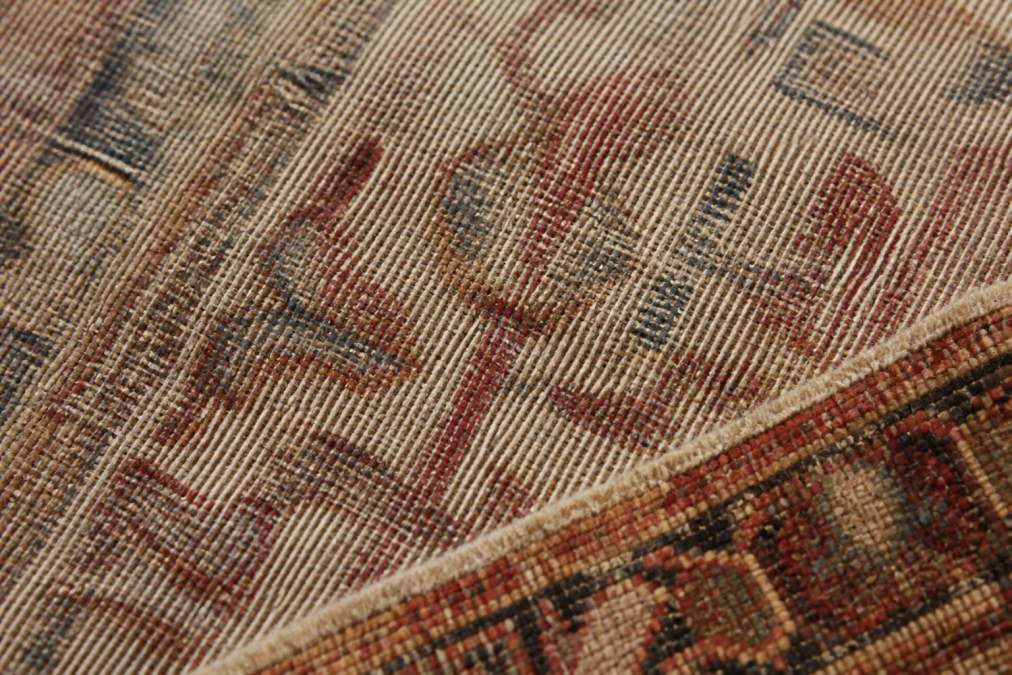
The foundation, warp and weft threads forming the structural base, reveals more about age than almost any other element. On an antique rug, the warp threads (running lengthwise) are typically hand-spun wool or cotton, visibly irregular in thickness. Hand-spun fibers have diameter variations that machine-spun thread cannot replicate.
When you run your hand across the back of an antique piece, it feels organic. Modern reproductions use uniform, perfectly consistent thread that feels stiff and industrial. The selvage, where weft threads wrap around the outermost warp, is crucial. On authentic antiques, it's often irregular, sometimes loose or slightly frayed. Modern rugs have perfectly uniform, tightly wrapped selvages. The fringe (unwoven warp threads extending from each end) should show natural wear and potential repairs on truly old pieces.
Antique vs. Vintage Persian Rugs: Dating by Era
Antique Rugs: Pre-1920 Characteristics
Genuine antique rugs made before 1920 display features that collectively point to their age. Most obvious is the exclusive use of natural vegetable dyes; no synthetic colors appear anywhere. These dyes age distinctively, developing patina: subtle, beautiful fading and shifting of hues over decades.
Hand-knotted structure on antiques is consistently dense and tight, typically 100-300 knots per square inch depending on region and skill level. Knots are visibly irregular because they were tied by hand, one at a time. This imperfection marks authenticity. Design motifs reflect regional traditions unchanged for centuries. Medallion patterns, tribal geometric designs, and floral borders follow established conventions specific to weaving centers like Tabriz, Isfahan, and Heriz. Colors flow into one another with soft transitions created by abrash, natural color variations from non-uniform vegetable dye batches.
Antique rugs show genuine age. Pile wear is expected and increases value when even and consistent. The fringe may be partially worn or replaced. Selvage edges might show repairs. These signs of use evidence authenticity.
Vintage and Semi-Antique Rugs: 1920-1980 Markers
Vintage and semi-antique rugs (1920-1980) occupied a transitional period when weaving traditions shifted toward industrial methods, though many workshops maintained hand-knotting. The most significant change was the introduction and gradual adoption of synthetic aniline dyes, beginning in the 1920s and becoming increasingly common through the 1960s.
A 1940 rug might show mixed natural and synthetic dyes. Natural dye areas have aged and softened; synthetic areas may retain vivid color or show different aging patterns. This creates a visual tell: uneven color aging across the rug. Hand-knotted construction remained standard for quality pieces, though consistency improved with better tools. Design evolution shows increasing European influence mixed with traditional patterns. Some vintage pieces feature more elaborate floral designs or experimental color combinations.
Vintage rugs typically show moderate wear appropriate to their age. A 1950s rug should show some pile loss and color fading, but not the extensive wear of a 100-year-old piece. Fringe may be partially worn or replaced. Overall condition suggests regular use over several decades.
Hand Knotted vs. Machine Made Rugs: A Critical Age Indicator
Hand-Knotted Construction: The Hallmark of Authentic Antiques
Hand-knotted construction defines authentic antique and quality vintage Persian rugs. When a weaver hand-knots a rug, they tie thousands of individual knots using a wooden loom and metal knotting tool. A weaver might complete 10,000-15,000 knots daily on a high-density rug.
Because each knot is tied individually, subtle variations are inevitable. Knot height varies slightly. Examining the back reveals knots are not perfectly aligned; they follow the natural rhythm of hand work. Run your finger across the back; you'll feel individual knots, not a smooth, uniform surface. Knot density should be consistent across the rug, though not perfectly uniform. The pile shows natural variation. Wear patterns should be even and consistent across the entire surface, not concentrated in specific areas.
Machine-Made vs. Hand-Spun: Identifying Manufacturing Methods
Machine-made rugs entered the market significantly during the early 20th century, though most were not produced in Persia. These are not antiques and should not be confused with hand-knotted pieces.
A machine-made rug has a completely different back structure. Knots are perfectly uniform in size and spacing, arranged in a precise grid pattern. The back appears almost like printed textile, with no individual knots visible. Pile height is absolutely consistent across the entire rug. Hand-spun thread shows visible irregularity in diameter. Machine-spun thread is perfectly smooth and consistent. If a rug is hand-knotted, it could potentially be antique or vintage. If machine-made, it's definitely not antique and is likely from the mid-20th century onward.
Dyes and Color as Age Markers: Natural vs. Synthetic Rug Dyes
Natural Vegetable Dyes: Evidence of Pre-1900 Origin
Natural vegetable dyes are the hallmark of authentic antique Persian rugs made before synthetic alternatives. These dyes came from plants, insects, and minerals: indigo for blues, madder root for reds, walnut husks for browns, pomegranate for yellows, and cochineal insects for crimsons. These dyes age in beautiful, predictable ways.
Abrash, the natural color variation within a single color area, is distinctive. When dyers prepared vegetable dye batches, each had slight variations in concentration and chemical composition. This created horizontal or vertical bands of slightly different shades within uniform color fields. Abrash is evidence of authentic vegetable dye work, not a defect. Vegetable dyes develop patina, a subtle, overall softening and fading over decades. An antique rug with natural dyes doesn't look artificially aged. Colors have genuinely mellowed. The overall effect is a harmonious, sophisticated palette no reproduction can perfectly replicate.
Look for abrash within color fields. Vegetable dye colors flow into one another with soft, natural transitions. The color palette should show evidence of age; no area should look artificially bright or preserved.
Aniline and Synthetic Dyes: Dating Rugs After 1856
Synthetic aniline dyes were invented in 1856 and began appearing in Persian rugs during the 1920s, though adoption was gradual. Early synthetic dyes faded unevenly and created harsh, artificial-looking hues contrasting sharply with traditional vegetable dye aesthetics. By the 1950s and 1960s, synthetic dyes had improved substantially.
Identifying synthetic dyes requires examining color characteristics. Synthetic dyes often appear slightly harsh or artificial compared to soft, complex vegetable dye tones. Color transitions at borders are sharper and more defined. There's no abrash; color fields are uniform. A rug with synthetic dyes can still be valuable and beautiful, particularly if well-made and well-preserved. But its age is typically post-1920, more likely post-1940.
Abrash and Oxidization: Natural Color Aging Patterns
Abrash and oxidization are two distinct aging processes telling different stories about a rug's age and authenticity. Abrash occurs during creation from how vegetable dyes were applied. Oxidization occurs after creation as dyes chemically change through exposure to light, air, and moisture.
Abrash appears as horizontal or vertical bands of slightly different color intensity within a single color field. These bands are typically subtle and most visible in solid-color areas like the field or borders. Abrash indicates vegetable dyes, strongly suggesting pre-1920 origin, though some traditional workshops continued using vegetable dyes into the mid-20th century.
Oxidization is a chemical process where certain dyes, particularly reds and browns from natural materials, darken or shift color over time. Some reds in antique rugs appear almost black in certain areas due to extreme oxidization. This is a positive sign of age, not damage. Genuine abrash combined with appropriate oxidization patterns indicates a rug that has genuinely aged for decades.
Physical Wear Patterns and Patina: Reading Age Through Use
Pile Wear and Knot Density: Measuring Age Through Deterioration
How a rug's pile wears over time is one of the most reliable age indicators. A rug walked on regularly for 80 years shows specific wear patterns that cannot be artificially replicated. Pile in high-traffic areas, typically the center and pathways, will be noticeably shorter than pile at edges and corners.
On an antique rug, wear should be even and consistent across high-traffic zones. Pile doesn't disappear suddenly; it gradually shortens as knots deteriorate from friction. In some areas, pile may be worn down to the foundation, revealing warp and weft threads. This is normal on genuinely old rugs. Knot density affects aging. A high-density rug (200+ knots per square inch) shows wear more gradually than a low-density rug (80 knots per square inch). Wear patterns should follow logic. The center and main pathways show the most wear. Edges and corners are relatively preserved. A rug showing no wear despite being claimed as 100 years old is suspicious.
Selvage and Fringe Condition: Identifying Original vs. Restored Elements
The selvage and fringe are the most vulnerable parts of a rug, and their condition reveals much about age and handling. The selvage, where weft threads wrap around the outermost warp threads, often shows wear, loose areas, or partial loss on antique rugs. The wrapping may be irregular or loose in places.
The fringe, the unwoven warp threads extending from each end, is particularly telling. On genuinely old rugs, the fringe shows significant wear. Some threads may be broken or missing. The fringe may be knotted or braided to prevent further unraveling. A replacement fringe is not necessarily negative; it's quite common on antique rugs because the original fringe wears out from handling and foot traffic. Original fringe shows age-appropriate wear and may include repairs. Threads will be hand-spun wool or cotton, consistent with the rug's era. Replaced fringe is often made from newer materials and shows more uniform appearance.
Design, Motif, and Regional Identification Keys
Design evolution and regional characteristics are crucial for dating Persian rugs. Different weaving centers developed distinct design traditions, and these traditions evolved over time. Understanding regional styles helps narrow down both origin and approximate age.
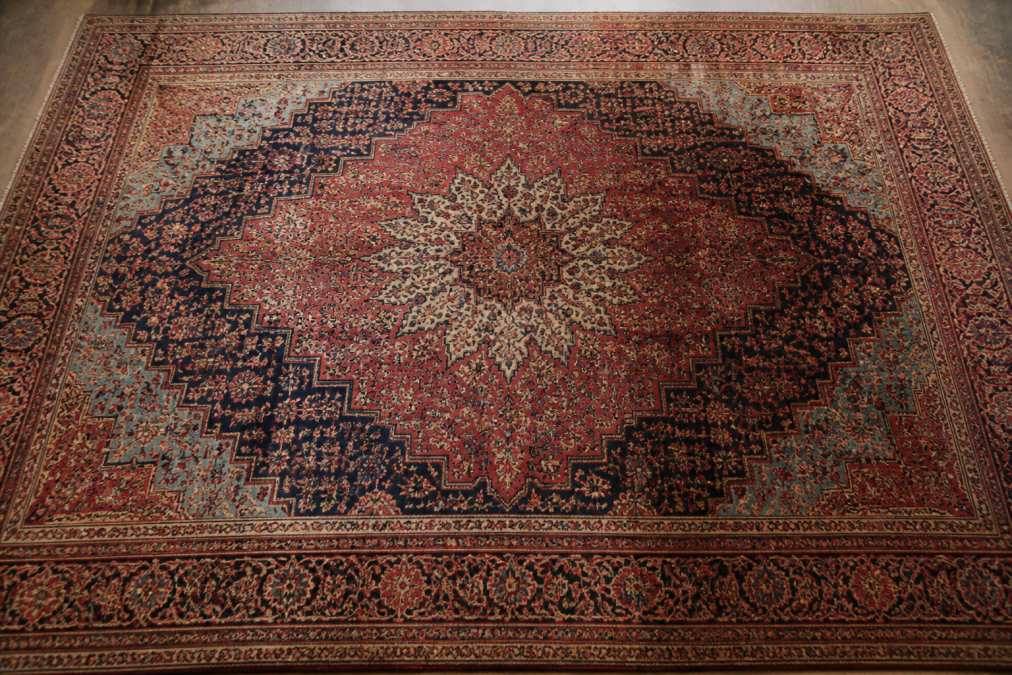
The medallion, a central geometric or floral design element, is defining in many Persian rugs. Antique medallions tend toward geometric simplicity and symmetry. Vintage medallions show increasing complexity and sometimes incorporate more floral elements. Borders surrounding the medallion also evolved, becoming more elaborate in later pieces. Tribal rugs from nomadic weaving communities feature geometric patterns that remained relatively consistent over long periods, but subtle design complexity and color palette changes help date them. City rugs, produced in urban weaving centers like Tabriz, Isfahan, and Heriz, typically feature more elaborate, refined designs than tribal pieces.
Medallion and Border Patterns: Tracing Design Evolution
The medallion pattern is perhaps the most recognizable element of Persian rug design, and its evolution provides valuable dating clues. In antique rugs from the 1800s, medallions tend toward geometric simplicity. A Heriz medallion from 1880 is typically a bold geometric shape, often a diamond or hexagon, with relatively simple internal divisions.

By the 1920s and 1930s, medallion designs became increasingly complex. Weavers added more floral elements within the geometric framework. By the 1950s, some medallions had become quite elaborate, incorporating detailed floral representations within the geometric structure. Borders framing the medallion also evolved. Antique borders are often relatively simple, with geometric patterns or stylized floral elements. Vintage borders became increasingly elaborate, sometimes rivaling the medallion in complexity. Comparing your rug to documented examples from known periods helps date it.
Tribal vs. City Rugs: Regional Weaving Traditions and Age Markers
Tribal and city rugs represent fundamentally different weaving traditions. Tribal rugs come from nomadic and semi-nomadic communities where weaving skills and designs passed down through families. City rugs came from established weaving centers where professional weavers worked in workshops, often following designs created by professional designers.
Tribal rugs typically feature geometric patterns that remained relatively consistent within a particular tribe or region over many decades. Color palettes in tribal rugs tend toward earth tones and natural dye colors. City rugs show more obvious design evolution because they were influenced by changing aesthetic preferences and market demands. A Tabriz from 1890 looks noticeably different from a Tabriz from 1950. Regional identification keys help narrow down origin and suggest an approximate age range.
Professional Testing and Documentation: Confirming Age
Fiber Analysis and Chemical Testing
When visual inspection isn't conclusive, professional fiber analysis and chemical testing provide definitive answers about a rug's age and composition. Fiber analysis examines actual materials, wool, cotton, silk, under magnification to determine their characteristics and origin.
Natural wool from antique rugs has specific characteristics. Fibers show natural variation in diameter and color. Under magnification, authentic hand-spun wool displays irregular structure that machine-spun wool lacks. Chemical testing can identify dye types. A laboratory can analyze small pile samples to determine whether dyes are natural vegetable dyes or synthetic aniline dyes. Carbon-14 dating is available for extremely valuable pieces, though it's expensive and typically reserved for rugs where significant value or authentication questions justify the cost. Professional testing should only be performed by qualified textile laboratories with experience in rug analysis.
Provenance and Authentication Documentation
Provenance, the documented history of ownership and origin, is valuable evidence of age and authenticity. A rug with clear provenance documentation showing it was purchased in 1950 is clearly not antique, but it's definitively vintage. A rug with documentation showing it came from a collection assembled in the 1890s is strong evidence of antique status.
Provenance documentation might include old receipts, insurance appraisals, auction house catalogs, or family records showing when and where the rug was acquired. When purchasing antique and vintage rugs, requesting provenance documentation is standard practice. Absence of provenance doesn't necessarily indicate a rug is not authentic or old; many older rugs lack documented history simply because they changed hands before detailed record-keeping became standard.
Professional Appraisal and Textile Expertise
A professional textile appraisal from a qualified expert provides valuable documentation of age, condition, and value. Professional appraisers have examined thousands of rugs across multiple eras and can identify age markers that might not be obvious to an untrained eye.
A professional appraisal should include detailed documentation: dimensions, materials, construction method, knot density, dye types, design elements, condition, and estimated age. Professional appraisals are particularly valuable when purchasing significant pieces or when you need documentation for insurance purposes. When selecting a professional appraiser, look for credentials and experience with antique and vintage rugs.
Common Mistakes in Age Identification and What to Ignore
Assuming that a rug showing significant wear must be old is a common mistake. Wear patterns can be artificially created through distressing techniques. The key is examining whether the wear pattern makes sense and is consistent with genuine aging.
Another frequent error is overweighting color as an age indicator. While color provides clues, it's not definitive. An old rug can be professionally cleaned and restored, affecting its color appearance. Conversely, a newer rug can be dyed with vegetable dyes and artificially aged. Color should be one factor among many, not the sole basis for age determination.
Assuming that any hand-knotted rug is old is a significant mistake. Hand-knotting is still practiced today by traditional weavers. A rug can be hand-knotted in 2026 using traditional methods. Hand-knotting indicates quality and authenticity of construction, but not necessarily age.
Trusting seller claims without verification is risky. When purchasing, request documentation and be willing to have the rug professionally appraised if the purchase price justifies it. Ignoring restoration work is another common oversight. Many antique rugs have been professionally restored, with new fringe added, damaged areas rewoven, or colors enhanced. This restoration doesn't make the rug less valuable or authentic, but it's important to know about it.
| Age Category | Construction | Dyes | Design Characteristics | Expected Wear |
|---|---|---|---|---|
| Antique (pre-1920) | Hand-knotted, hand-spun foundation | Natural vegetable dyes | Geometric or traditional floral, regional simplicity | Significant, even pile wear in high-traffic areas |
| Vintage (1920-1980) | Hand-knotted, mixed foundation materials | Synthetic or mixed dyes | Increasingly complex, some European influence | Moderate to significant wear appropriate to age |
| Modern (post-1980) | Hand-knotted or machine-made | Synthetic dyes | Contemporary designs or traditional reproductions | Minimal wear unless intentionally distressed |
Identifying the age of antique Persian rugs combines visual inspection, material knowledge, and understanding historical weaving practices. Construction methods, dye types, design evolution, wear patterns, and regional characteristics work together to tell a rug's story. When evaluating a significant piece, use multiple markers rather than relying on any single indicator. Professional testing and appraisal provide valuable confirmation when stakes are high.
At ABC Rugs Kilims & Jewelry, our curated collection of hand-knotted Persian rugs includes pieces from multiple eras, each with documented characteristics and provenance. Whether you're building a collection, furnishing a space, or seeking a specific era's aesthetic, our team can help you identify pieces that meet your criteria and authenticate their age. Explore our inventory of Persian Antique Hand Knotted Persian Tabriz Rugs and other authenticated pieces, each selected for quality, authenticity, and the craftsmanship that makes antique rugs timeless investments.

Frequently Asked Questions
How do I tell if a Persian rug is truly antique versus a modern reproduction?
Authentic antique Persian rugs show specific markers: hand-knotted construction with visible knots on the back, natural vegetable dyes with color variations (abrash), and a foundation of wool or silk rather than cotton. Examine the selvage edges, original antique rugs have tightly wrapped edges, not machine-stitched hems. Check the fringe; antique rugs have hand-spun fringe integrated into the weave, not sewn on afterward. Provenance documentation and professional appraisal provide definitive confirmation of authenticity.
What's the difference between antique and vintage Persian rugs in terms of age?
Antique Persian rugs are those made before 1920, typically 100+ years old, with characteristics like all-natural vegetable dyes and hand-spun wool. Vintage and semi-antique rugs date from 1920 to 1980 and may show a mix of natural and synthetic dyes. Antique rugs command higher prices due to rarity and historical significance. Both categories require hand-knotted construction to be considered genuine, but antique pieces show deeper patina, more pronounced wear patterns, and often superior craftsmanship reflecting pre-industrial production methods.
How can I identify if a rug is hand-knotted versus machine-made?
Flip the rug over and examine the back. Hand-knotted rugs show individual knots tied to the warp and weft foundation, each knot is visible and slightly irregular. Machine-made rugs display uniform, printed patterns on the back with no actual knots. Count the knot density: antique hand-knotted rugs typically have 100-300+ knots per square inch, while machine-made versions have far fewer or none. Hand-knotted rugs also have a flexible foundation that moves naturally, whereas machine-made rugs feel stiff. The selvage edges on hand-knotted pieces are wrapped by hand, not machine-stitched.
What role do natural versus synthetic dyes play in determining a rug's age?
Natural vegetable dyes indicate a rug was likely made before 1900, as synthetic aniline dyes were introduced in 1856 and gradually adopted. Rugs dyed with natural plant-based pigments show softer, more muted colors with abrash, natural color variation across the rug caused by hand-dyeing inconsistencies. Synthetic dyes produce uniform, bright colors. Examine the rug's color for oxidization patterns; natural dyes often shift to warmer tones over decades. Professional fiber analysis can confirm dye type chemically, providing definitive age markers when visual inspection is inconclusive.
What physical signs indicate a rug is truly antique and not recently aged artificially?
Authentic aging shows in specific ways: pile wear is uneven and follows traffic patterns, not uniform. Fringe and selvage show natural deterioration, threads are worn thin, not cut. The foundation (warp and weft) may show slight separation in places, but the rug holds together because of hand-knotting integrity. Patina appears gradually across the entire surface. Artificial aging attempts to create uniform wear or chemically strip color, which looks obvious under close inspection. Knot density remains consistent in genuine antique rugs; artificially distressed pieces often show inconsistent knot work. Professional textile appraisers can distinguish authentic aging from artificial treatment through fiber analysis.
Can I identify a Persian rug's age by its design and regional origin?
Yes, design evolution and regional patterns provide strong age clues. Antique rugs from specific regions (Tabriz, Heriz, Joshghan) display characteristic motifs tied to their era. Tribal rugs show simpler geometric patterns and were typically woven before 1920, while city rugs with complex medallion designs became more common after 1850. Border styles, color palettes, and knot density vary by region and period. A Tabriz rug with intricate floral medallions and high knot density likely dates 1850-1920, whereas a geometric tribal design suggests earlier production. Regional identification requires knowledge of weaving traditions; professional appraisers use design analysis combined with fiber testing to confirm age.
Should I get my antique Persian rug professionally appraised, and what does that involve?
Professional appraisal is highly recommended for valuable antique rugs. Appraisers examine hand-knotted construction, fiber type, dye composition, knot density, design authenticity, and regional origin. They may perform fiber analysis or chemical testing to confirm age and dye type. Appraisals provide documentation for insurance, resale, or authentication purposes. A qualified textile appraiser will inspect the rug's foundation, selvage, fringe, and wear patterns, then provide a detailed report with age estimate, provenance notes, and condition assessment. This documentation increases the rug's credibility and value, especially if you plan to sell or pass it to collectors.
This article was written using GrandRanker


