

Last Updated: November 14, 2026
Quick Summary
An antique silver clasp is the fastening hardware on a vintage or antique necklace, and its construction, metal purity, and wear pattern reveal whether a piece is genuinely old or a modern reproduction. Check the clasp before the chain, since clasps are replaced more often than chains and a mismatched one can signal a repair or a fake.
- Sterling silver is 92.5 percent silver and 7.5 percent other metals, usually copper.
- A strong magnet will not stick to sterling silver but may attract plated base metal.
- A safety chain is the cheapest insurance against losing a necklace you wear often.
- Skip abrasive polishes on antique clasps because they can wear away hand-struck hallmarks.
- If repair cost approaches the piece's resale value, walk away or negotiate the price down.
Table of Contents
- Why the Clasp Decides an Antique Silver Necklace's Value
- Vintage Necklace Clasp Types and What They Signal
- How to Tell the Age of a Necklace by Its Clasp
- How to Identify Sterling Silver Jewelry Before You Pay
- Clasp Durability, Weight Capacity, and Everyday Wear
- How to Value Vintage Silver Jewelry: Purity, Rarity, and Repair Costs
- Allergy, Patina, and Cleaning Questions Buyers Should Ask
- Choosing Your Antique Silver Clasp Necklace at ABC Rugs Kilims & Jewelry
- Frequently Asked Questions
Why the Clasp Decides an Antique Silver Necklace's Value
The clasp is the first thing we check on any antique silver clasp necklace, because it tells you more about age, origin, and authenticity than the chain itself.
Collectors often pay for the chain and overlook the fastener. That is a mistake.
Below, we break down the clasp types you will encounter, how to date a necklace by its hardware, and how to spot plated base metal before it costs you.
Vintage Necklace Clasp Types and What They Signal
Clasp style is a dating tool. Each mechanism arrived at a different point in jewelry manufacturing, so the fastener narrows the era of a piece faster than almost any other feature.
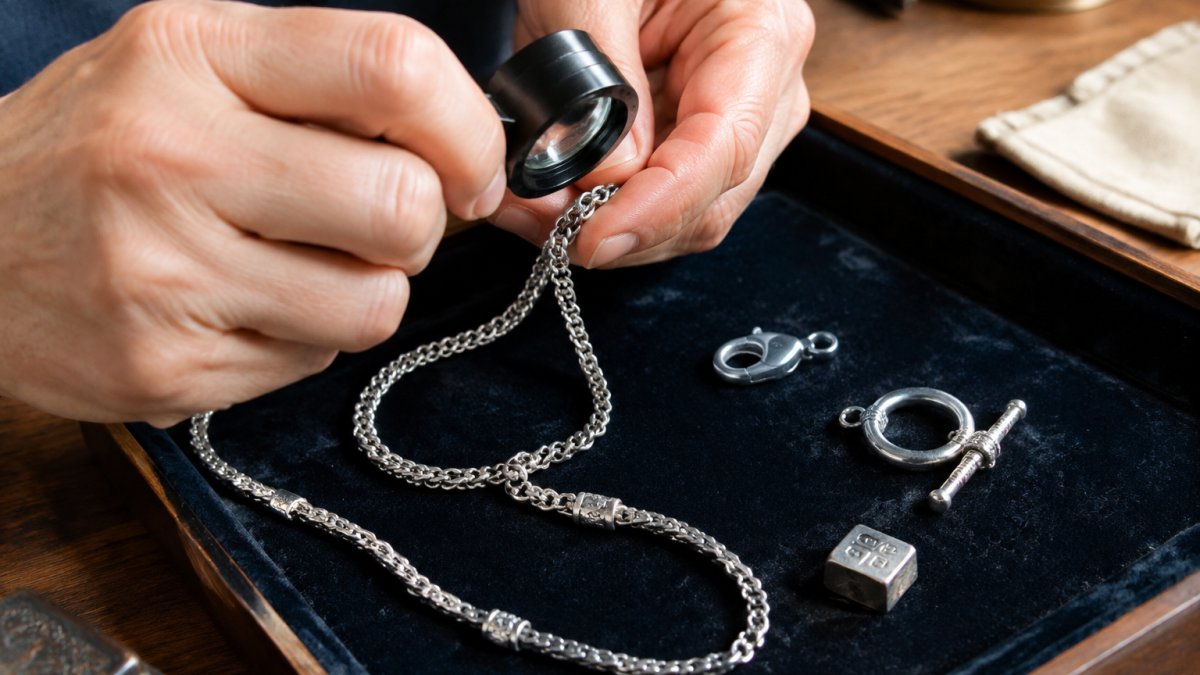
Lobster Claw, Spring Ring, and Toggle Clasps
The lobster claw is a spring-loaded hook with a trigger. It is sturdy and holds heavier chains well, which is why it appears on both mid-century pieces and modern necklaces.
The spring ring is a small circular clasp with a spring-loaded opening.
A toggle clasp uses a ring and a T-bar. It is decorative and self-fastening, and it shows up frequently on handcrafted and artisan pieces. Toggle clasps suit statement necklaces where the hardware is meant to be seen.
Box, Barrel, and Magnetic Clasps
Box clasps snap shut with a tongue that fits into a rectangular housing. They appear on finer chains and offer a clean, low-profile finish.
Barrel clasps screw together and are common on pearl strands and heavier chains. Magnetic clasps are a modern convenience and rarely original to antique pieces.
For a deeper reference on the styles you will meet, our guide to common types of antique silver clasps breaks each one down.
How to Tell the Age of a Necklace by Its Clasp
You can estimate a necklace's age by matching its clasp to known manufacturing periods, then confirming with hallmarks and wear. No single feature proves age on its own, so read the clasp alongside the chain, the marks, and the patina.
A few practical signals we look for:
- Spring rings with thin, simple construction point to the early to mid-20th century and later.
- Lobster claws became widespread from the mid-20th century onward and are still made today.
- Toggle and hook fastenings appear across many eras, so they date a piece less reliably than a hallmark.
- Screw barrel clasps on pearl strands suggest older construction, though replacements are common.
What most guides miss is that clasps were routinely swapped during repair. A period-correct clasp supports a date; a mismatched one does not disprove it, but it does mean you should look harder at the rest of the piece.
How to Identify Sterling Silver Jewelry Before You Pay
Sterling silver is an alloy of 92.5 percent silver and 7.5 percent other metals, usually copper. That ratio is the single most useful fact in authentication, because it is what the 925 hallmark certifies.
Reading the 925 Hallmark and Other Marks
Look for a stamped 925, sterling, or ster mark, usually on the clasp, the chain tag, or the back of a pendant. A genuine 925 hallmark identification should be crisp and consistent with the piece's age.
Use a loupe. A mark that looks laser-sharp and perfectly centered on a piece sold as antique deserves a second look, since that finish is typical of modern production.
For a step-by-step walkthrough, see our guide on how to check vintage jewelry metal purity.
Spotting Fake Antique Clasps and Plated Base Metal
Electroplating is the most common deception. A base metal core is coated with a thin silver layer, then aged to mimic patina. Three checks catch most of it:
- Weight: sterling silver feels denser than plated base metal of the same size.
- Wear points: plating rubs off at high-friction spots like the clasp trigger, revealing a darker or brassy core.
- Magnetism: a strong magnet will not stick to sterling silver but may attract plated base metal.
Our authentication tips for antique silver jewelry go deeper on testing at home.
Clasp Durability, Weight Capacity, and Everyday Wear
Clasp durability depends on mechanism, spring tension, and how much weight the necklace carries. A delicate spring ring is fine for a lightweight chain and a poor choice for a heavy pendant, while a lobster claw handles more load. The failure mode matters as much as the rating, because a clasp that fails open loses the necklace, while one that fails closed only strands you until you can fix it.
Match the fastener to the piece:
| Clasp Type | Weight Capacity | Best For | Main Weak Point | Failure Mode |
|---|---|---|---|---|
| Spring ring | Light | Fine chains, small pendants | Spring tension wears out | Opens under load |
| Lobster claw | Medium to heavy | Heavier chains, pendants | Trigger spring | Trigger sticks or snaps |
| Toggle | Medium | Statement and artisan pieces | Ring wear | T-bar slips through worn ring |
| Box | Light to medium | Fine chains, low-profile look | Hinge integrity | Tongue fails to seat |
| Barrel | Medium to heavy | Pearl strands, heavy chains | Thread wear | Unscrews and separates |
Reading Weight Capacity in Practice
Manufacturers rarely publish load ratings for vintage clasps, so you have to judge by construction. A spring ring's capacity is set by the gauge of its wire and the strength of its spring; a thin, easy-to-open ring is a light-duty part no matter how old it is.
A practical test: hang the necklace from the closed clasp and give it a gentle tug. A clasp that holds firm under a light pull is likely adequate for the chain's own weight.
Safety Chains and Everyday Wear
A safety chain adds a backup connection on valuable pieces and is worth adding to any necklace you wear often. It is a short secondary chain that catches the necklace if the primary clasp opens, and it is the single cheapest insurance against loss.
Watch out: a magnetic clasp sold as antique is almost always a modern replacement, and magnetic clasps can release under a sharp pull, never trust one on a heavy or high-value piece.
How to Value Vintage Silver Jewelry: Purity, Rarity, and Repair Costs
Valuing vintage silver jewelry starts with metal purity, then adds rarity, craftsmanship, and condition. A 925 hallmark confirms the silver content, but it does not set the price on its own. The part most guides skip is the repair math, and that is where a collector either protects a purchase or overpays for a problem piece.
Here is how we think about valuation:
- Metal purity: sterling commands more than plated or lower-grade silver. A 925 stamp is the floor, not the ceiling.
- Rarity: unusual clasps, signed pieces, and scarce makers lift value. A period-correct box clasp from a known maker can add more than the chain itself.
- Condition: original patina and intact hardware support a higher figure; heavy restoration can reduce collector appeal.
- Repair costs: a worn clasp or damaged hinge is a negotiating point, not a dealbreaker, but only if you know what the fix actually costs.
Repair vs. Replace: A Cost-Benefit Framework
When a clasp fails, you have three routes: repair the original, replace it with period-correct hardware, or replace it with modern hardware. Each carries a different cost and a different effect on value.
Repairing the original clasp can preserve value when the mechanism is sound and only the spring or hinge is worn.
Replacing with period-correct antique hardware is the collector's choice when the original is lost or unsalvageable.
Replacing with modern hardware is usually the quickest fix, but it is the one most likely to reduce value.
A simple rule of thumb: if the repair cost approaches the piece's resale value, walk away or negotiate the price down by the repair estimate.
Allergy, Patina, and Cleaning Questions Buyers Should Ask
Metal sensitivity is a real concern, and it is one buyers rarely raise until after a purchase.
Patina is the dark oxidation that develops on aged silver. Collectors often prize it as evidence of age, while some buyers prefer a bright finish.
Cleaning is where pieces get ruined. Our guide on how to remove tarnish from vintage silver covers safe methods step by step.
Watch out: over-polishing an antique clasp can erase the very hallmark that proves its purity and value.
Choosing Your Antique Silver Clasp Necklace at ABC Rugs Kilims & Jewelry
At ABC Rugs Kilims & Jewelry, we curate antique and vintage silver jewelry. Our collection includes pieces built around the clasps collectors look for.
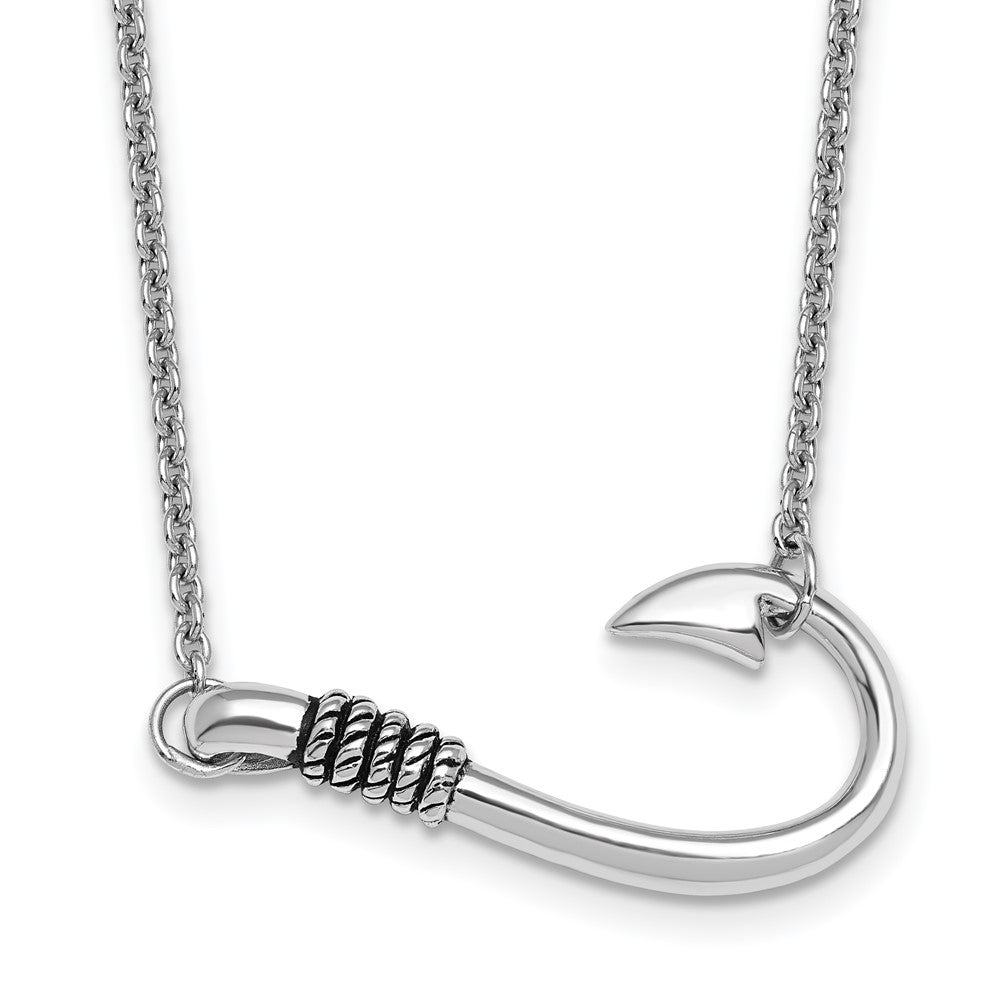
The Sterling Silver Oxidized Dangle Guardian Angel Toggle Clasp Necklace is a strong example: a toggle clasp, 925 sterling silver, and an antiqued finish that shows the patina buyers ask about. For a lighter everyday option, the Sterling Silver Rhodium-Plated Polished&Antiqued 16 +2in Hook Necklace pairs a lobster clasp with a 16-inch chain plus a 2-inch extender at $57.29. If you prefer a box-link chain with a lobster clasp, the Sterling Silver Antiqued Brushed Fancy Box Link 4mm 19.75in Necklace is listed at $278.56.


We serve both retail and wholesale buyers. If you are sourcing for a project or a collection, you can browse our current inventory for the clasp styles and metal purity you need.
The clasp is the fastest way to judge an antique silver necklace, and it is the detail most buyers skip.
Frequently Asked Questions
How can you tell the age of a necklace by its clasp?
Clasp design changed with manufacturing methods. Spring rings became common in the early 1900s, lobster claws spread from the 1970s onward, and box or barrel clasps with tight hinge integrity usually point to mid-century or later production. Older pieces often show hand-soldered joints, uneven file marks, and a patina that sits in the recesses rather than on the surface. A clasp that looks machine-perfect on a supposedly antique silver necklace is a reason to check the hallmarks and construction more closely before you buy.
What condition issues should you check on an antique silver clasp?
Open and close the clasp several times and listen for a clean snap. On a lobster claw, check spring tension and that the gate returns fully; on a box clasp, check hinge integrity and that the tongue seats without wobble; on a toggle, confirm the ring is not worn thin where the bar rubs. Look for cracks at solder joints, bent safety chain links, and replacement clasps in a different metal color. Any clasp that opens under light pull is a repair cost, not a collectible feature.
How do you identify sterling silver jewelry and avoid plated base metal?
Start with the 925 hallmark, usually stamped on the clasp, the chain tag, or the back of a pendant. Sterling silver is 92.5 percent silver, so the mark should be crisp and struck into the metal rather than printed on top. Check wear points: electroplating rubs off to reveal a copper or brass tone, while solid sterling stays white through the surface. A magnet should not stick to sterling silver. When marks are absent or unclear, treat the piece as base metal until a jeweler confirms metal purity.
What does it cost to repair or replace an antique-style clasp?
Repair pricing depends on the clasp mechanism and whether the piece needs re-soldering. A straightforward lobster claw or spring ring swap is usually the cheapest fix, while box clasps and toggle clasps with decorative elements cost more because the replacement hardware must match the original construction and finish. Ask for the quote before work begins, and confirm the materials used so the repair does not lower the piece's value.


