

Table of Contents
- What Determines Antique Rug Value
- How to Identify Handmade Rugs vs. Machine-Made Reproductions
- Condition, Restoration, and Market Impact
- Factors Affecting Oriental Rug Value: Commercial Period vs. Antique
- Professional Appraisal vs. DIY Valuation Methods
- Antique Rug Appraisal Cost and Online Services
- Red Flags and How to Avoid Appraisal Scams
- Using Auction Results and Market Trends for Fair Market Value
Last Updated: August 16, 2026
What Determines Antique Rug Value
Antique rug value depends on craftsmanship, materials, condition, and provenance, not age alone. A poorly made 200-year-old rug never commands the price of a masterfully hand-knotted piece from 50 years ago. At ABC Rugs Kilims & Jewelry, we offer a curated collection of exquisite handmade rugs, Kilims, Persian antique pieces, Gemstones, jewelry, and vintage treasures.
Knot Density and Craftsmanship
Knot density, measured in KPSI (knots per square inch), is one of the most reliable indicators of a rug's quality and value. A rug with 200+ KPSI typically commands significantly higher prices than one with 80 KPSI, assuming similar age and condition. However, knot density alone doesn't determine value, a poorly executed design with high knot density won't outvalue a masterfully composed pattern with moderate density.
Examine the knot structure closely. In hand-knotted rugs, knots should be uniform in size and tension. Inconsistent knots suggest either a less skilled weaver or machine production. The warp and weft (foundation threads) should be visible on the back with consistent spacing. Machine-made rugs have perfectly uniform knots, which is actually a red flag, human hands create natural variation.
Material Quality and Natural Dyes
High-quality wool from specific regions (like the highlands of Persia or Turkey) has longer fibers and richer color absorption than lower-grade wool. Silk accents increase value significantly, though rugs made entirely of silk are less durable.
Natural dyes command premium prices because color complexity is superior and they age beautifully. Colors made from indigo, madder root, cochineine, and pomegranate skin create depth that synthetic dyes cannot replicate. A rug from the 1920s with synthetic dyes is worth less than an 1880s rug with natural dyes, all else equal.
Run a white cloth dampened with water over a small inconspicuous area. If color bleeds onto the cloth, you're dealing with either synthetic dyes or poorly made natural dyes. This finding should lower your valuation estimate.
Age, Provenance, and Origin
Age matters, but not in isolation. A rug from 1950 isn't automatically less valuable than one from 1850. What matters is the combination of age, region, and historical significance. A rug from a celebrated weaving period carries more value than a contemporary piece from the same region.
Provenance, the documented history of ownership and origin, dramatically increases value. A rug with a clear chain of ownership, especially if it passed through respected collections or auction houses, commands a premium. Origin and region determine design tradition and technique. Persian rugs from Tabriz are prized for fine detail work. Turkish Kilims are valued for geometric patterns. Afghan rugs often feature rich reds and bold designs.
How to Identify Handmade Rugs vs. Machine-Made Reproductions
The market is flooded with machine-made rugs marketed as handmade. Understanding the physical differences is essential for accurate antique rug valuation.
Examining the Back and Knot Structure
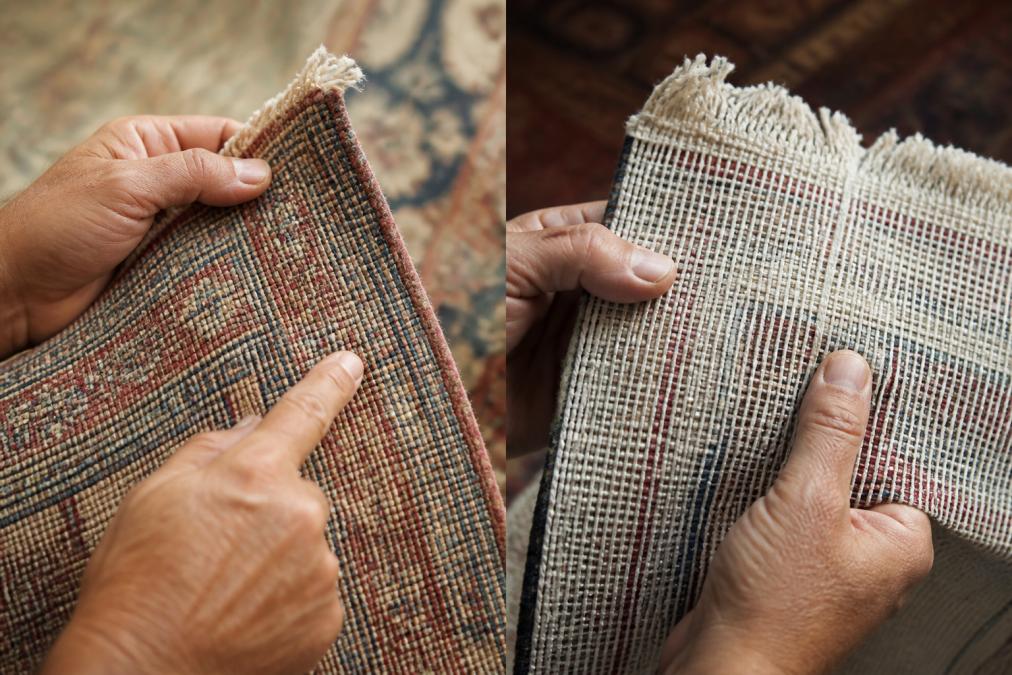
Turn the rug over. A hand-knotted rug's back shows individual knots tied around the warp threads with slight irregularities in knot size and spacing. Machine-made rugs have a uniform, almost printed appearance on the back with perfectly consistent knots. The pattern on the back mirrors the front exactly, which doesn't happen with hand-knotted rugs.
Press your finger against the back. On a hand-knotted rug, you'll feel individual knots. On a machine-made rug, the back feels flat and uniform. This tactile test is quick and reliable.
Checking for Natural Wear and Imperfections
Hand-knotted rugs develop character over time. The pile wears unevenly because foot traffic concentrates in certain areas. The fringe may show wear, unraveling, or repairs. These imperfections are signs of authenticity.
Machine-made rugs wear uniformly because the construction is uniform. Look for color variations across the rug. Hand-knotted rugs from different dye batches may show subtle color shifts, this is authentic. Machine-made rugs have consistent color throughout.
Condition, Restoration, and Market Impact
The condition of an antique rug directly affects its market value. A pristine 100-year-old rug commands double or triple the price of an identical rug in poor condition.
Common Damage: Moth Damage, Dry Rot, and Color Bleeding
Moth damage is one of the most common issues in antique rugs. Moths eat wool fibers, creating holes and weak spots. A rug with significant moth damage loses 40-60% of its value compared to an undamaged equivalent.
Dry rot occurs when wool fibers deteriorate from age or improper storage. The fibers become brittle and break easily. Rugs with dry rot are difficult to restore and their value drops substantially.
Color bleeding happens when dyes aren't properly set or when moisture causes dyes to migrate. This is especially common in rugs with synthetic dyes or those stored in damp conditions and significantly reduces value.
When Restoration Adds or Reduces Value
Professional restoration can increase value if done correctly. Repairing moth damage, stabilizing fringe, and cleaning can restore 20-30% of lost value. However, aggressive restoration such as re-dyeing faded areas or reweaving large sections often reduces value because it compromises authenticity.
Collectors distinguish between conservation (stabilizing without altering) and restoration (actively repairing). A conserved rug retains more value than a heavily restored one. If more than 5-10% of the rug has been rewoven, the value drops significantly because the rug is no longer primarily original. Small repairs to the fringe or isolated holes are acceptable and don't significantly impact value.
Factors Affecting Oriental Rug Value: Commercial Period vs. Antique
Understanding the distinction between commercial period rugs and true antiques is essential for accurate valuation. A rug is technically antique when it's over 100 years old. Rugs from 1900-1950 are often called "semi-antique." Rugs from 1950 onward are typically classified as "vintage" or "contemporary."
Commercial period rugs were produced during the late 1800s and early 1900s when Western demand exploded. Many are still beautiful and valuable, but they're priced lower than earlier pieces because they're seen as more mass-produced. True antique rugs (pre-1900) from celebrated weaving centers command the highest prices. The distinction between commercial period and antique can easily represent a 30-50% price difference.
Professional Appraisal vs. DIY Valuation Methods
You can estimate a rug's value yourself using online research, but a professional appraisal is more reliable and necessary for insurance or resale purposes.
When to Seek a Certified Appraiser
A certified appraiser is essential when the rug is valuable enough to insure, when you're planning to sell at auction, or when you need documentation for estate purposes. Professional appraisers have access to auction databases and specialized knowledge that DIY research cannot replicate.
The appraisal process involves detailed examination of construction, materials, age, condition, and provenance. A written appraisal report includes photographs, measurements, and detailed condition notes. Certified appraisers typically charge between $150-$500 for a standard appraisal, depending on the rug's complexity. This investment is worthwhile for rugs valued over $2,000.
Insurance vs. Resale Valuation
Insurance appraisals and resale valuations differ significantly. An insurance appraisal is typically higher because it's based on replacement cost. A resale valuation is lower because it accounts for the fact that you're a seller, not a buyer. The difference typically ranges from 20-40%, with insurance value being higher.
Antique Rug Appraisal Cost and Online Services
Professional Appraisal Pricing
In-person appraisals typically cost $200-$400 for a standard residential rug. Some appraisers charge per hour (usually $100-$150/hour). Remote appraisals, where you submit photos and measurements, are less expensive at $75-$200, but they're less reliable because the appraiser cannot physically examine the rug in detail.
Online Rug Appraisal Services and Digital Authentication
Several online platforms offer rug appraisal services using AI and expert analysis, typically charging $50-$150 per appraisal. Digital authentication tools are emerging as well, using image analysis to verify whether a rug is hand-knotted or machine-made and to estimate age and origin. These tools are improving but should not replace professional appraisal for high-value rugs.
When using online services, provide clear photos of the rug's front, back, fringe, and any damaged areas. Include measurements and describe the rug's condition in detail.
Red Flags and How to Avoid Appraisal Scams
The antique rug market attracts scammers because high values and subjective assessment create opportunities for fraud. A common scam involves artificially inflating appraisals to justify high prices. An unscrupulous dealer might claim a commercial period rug is a true antique or exaggerate the rarity of the design.
Verify credentials before hiring an appraiser. Look for membership in professional organizations like the American Society of Appraisers (ASA) or the International Society of Appraisers (ISA). Be skeptical of appraisals that seem unusually high or low. Cross-reference the appraiser's estimate with auction results and dealer pricing for comparable rugs.
Never accept an appraisal from someone who is also trying to sell you the rug. This creates an obvious conflict of interest.
Using Auction Results and Market Trends for Fair Market Value
Auction results provide the most reliable data for determining fair market value. Research recent auction results for rugs similar to yours at major auction houses like Christie's, Sotheby's, and specialized rug auction platforms. Note the hammer price (the actual sale price) rather than the pre-sale estimate, which is often inflated.
Auction results reveal market trends. Certain regions and styles are more desirable now than they were five years ago. Persian rugs remain consistently popular, while some Turkish and Afghan styles fluctuate in demand.
However, auction prices include buyer's premium (typically 15-25%). If a rug sold for $10,000 at auction, the seller received approximately $8,000-$8,500 after fees. This is closer to the true market value.
For comprehensive antique rug valuation, combine auction data with dealer pricing, condition assessment, and professional appraisal. Track market trends over time to make better decisions about buying, selling, or insuring your collection.
Understanding antique rug valuation requires attention to multiple factors: craftsmanship, materials, condition, provenance, and market demand. Start by assessing your rug's construction and materials. Examine its condition honestly. Research comparable rugs in the market. When value is significant or stakes are high, invest in professional appraisal.
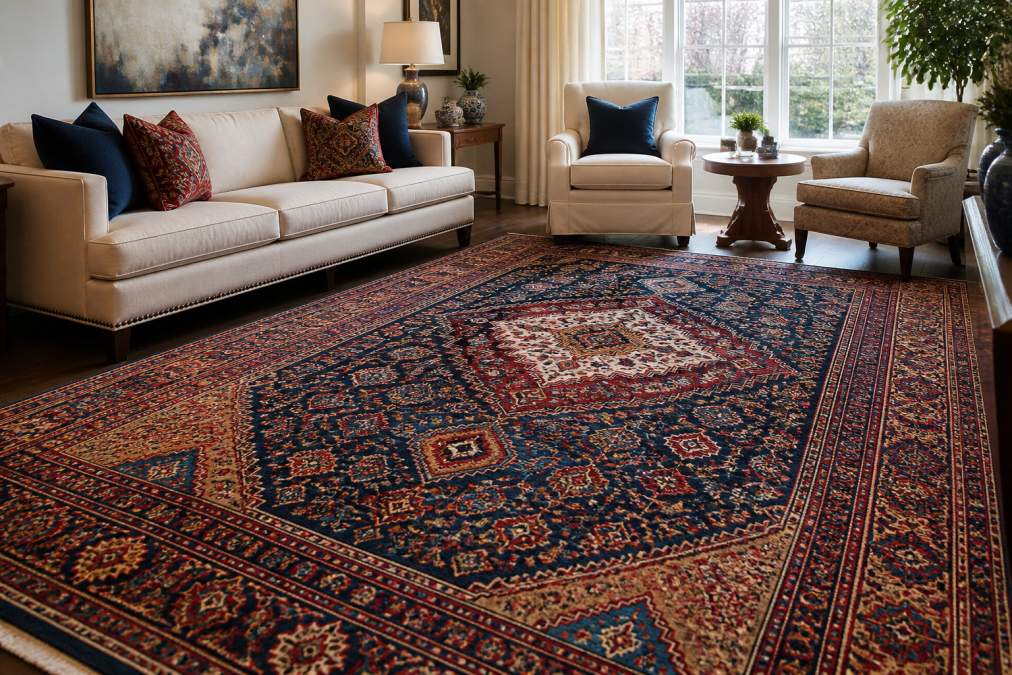
The goal isn't to become an expert appraiser, it's to make informed decisions about your rugs. Whether you're protecting an inheritance, planning to sell, or simply curious about what you own, this framework provides the foundation. ABC Rugs Kilims & Jewelry specializes in authenticated handmade rugs. Explore our curated collection of verified antique and vintage pieces to see how quality, provenance, and condition translate into real value in today's market. Consider our One Of The Kind Hand-Knotted Persian Wool Rug _ Luxurious Vintage Design, 10'7" x 7', Artisan Crafted for a truly authentic piece. This exquisite rug, priced at $2,336.00, is an authentic hand-knotted traditional antique vintage Persian rug, showcasing luxurious vintage design and artisan craftsmanship. Find it at https://abcrugskilims.com/products/bakhtiar-semi-antique-hand-knotted-persian-tabriz-rugs-traditional-floral-natural-vegetable-dyes-wool-cotton-blue-107-x-7-abcr02466-red-10582.

Frequently Asked Questions
How do I know if my old rug is valuable?
Check the knot density (KPSI), material quality, and age. Hand-knotted rugs with high KPSI, natural dyes, and fine wool or silk are more valuable. Examine the back for consistent knots and inspect for damage like moth damage or dry rot. Rugs from specific regions like Persia with clear provenance and tribal or geometric patterns typically command higher prices. If uncertain, consult a certified appraiser for professional antique rug valuation.
What factors affect the value of an antique rug?
Key factors affecting oriental rug value include knot density, material (wool, silk, natural dyes vs. synthetic), age and origin, condition, provenance, and market demand. Hand-knotted rugs with high KPSI, tribal designs, and minimal wear are more valuable. Restoration history matters too, well-executed restoration can preserve value, but poor work reduces it. Commercial period rugs (mass-produced after the 1950s) are worth less than true antiques. Auction results and regional demand also influence fair market value.
Is it worth getting a professional antique rug appraisal?
Yes, if your rug is valuable, rare, or you need it for insurance or resale. Professional appraisers provide detailed appraisal reports that document condition, provenance, and fair market value. This is essential for insurance claims and estate planning. For high-value pieces, the cost of appraisal is justified. However, for common commercial-period rugs, DIY valuation using online resources and auction comparisons may suffice. Digital authentication tools and online rug appraisal services offer budget-friendly alternatives for initial assessments.
How can I distinguish between a handmade antique rug and a machine-made reproduction?
Examine the back of the rug closely. Hand-knotted rugs show individual knots and consistent warp and weft patterns, while machine-made rugs display uniform, printed patterns on the back. Handmade rugs have slight irregularities in color and design, this is a sign of authenticity. Look for natural dyes, which fade unevenly, versus synthetic dyes that fade uniformly. Check the fringe condition; handmade rugs have hand-tied fringes, while reproductions have glued or machine-stitched fringes. Authentic antique rugs also show natural wear and patina that cannot be replicated.
What is the typical cost of a professional antique rug appraisal?
Professional appraisal costs vary based on rug size, complexity, and appraiser expertise, typically ranging from $150 to $500 for a detailed appraisal report. High-value or rare pieces may cost more. Online rug appraisal services offer lower-cost alternatives, often $50 to $150, though they provide less detailed analysis. Insurance appraisals may cost more due to documentation requirements. For valuable rugs, the investment in a certified appraiser is worthwhile to ensure accurate fair market value and proper insurance coverage.
What are red flags that indicate an appraisal scam?
Avoid appraisers who pressure you to sell immediately, offer inflated valuations without detailed inspection, or work on commission from sales. Be wary of unsolicited offers to buy your rug at 'top dollar' or claims that your rug is worth far more than comparable auction results show. Legitimate appraisers provide detailed written reports, verify credentials with professional organizations, and charge flat fees, not percentages. Always verify appraiser credentials and request references. Scammers often exploit unfamiliarity with antique rug valuation to undervalue pieces or pressure hasty sales.
How does the condition of an antique rug affect its value?
Condition significantly impacts value. Rugs with minimal wear, intact fringe, and no moth damage or dry rot command premium prices. Minor wear is acceptable and expected in antique pieces. Major damage like large holes, color bleeding, or significant pile loss reduces value by 20-50% or more. Professional restoration can preserve value if done well, but poor restoration work can decrease it. A well-maintained rug with documented care history is worth more than a neglected piece of similar age and origin.
Can I use online rug appraisal services for valuable rugs?
Online rug appraisal services are useful for initial assessments and quick valuations, but they have limitations for high-value pieces. Digital authentication tools can help verify materials and age, but they cannot assess condition, provenance depth, or market nuances as thoroughly as in-person appraisals. For rugs worth over $1,000 or those with significant historical importance, hire a certified appraiser for a detailed report. Online services work well for commercial-period rugs or as a first step before seeking professional appraisal.
This article was written using GrandRanker


