

Table of Contents
- Why Antique Rugs Need Special Care in High-Traffic Zones
- How to Rotate Area Rugs to Prevent Wear
- Vacuuming Antique Rugs Safely: Technique and Equipment
- Choosing the Best Rug Pads for Antique Rugs
- Spot Cleaning vs. Professional Deep Cleaning
- Preventing Wear Patterns and Traffic Lanes
- Seasonal Maintenance and Environmental Factors
Last Updated: August 22, 2026
Why Antique Rugs Need Special Care in High-Traffic Zones
Hand-knotted Persian and vintage rugs are investments in centuries of craftsmanship, yet they're vulnerable to the exact conditions that make them desirable for living spaces. Placing an antique rug in high-traffic areas, entryways, hallways, living room centers, accelerates natural aging. Most homeowners treat antique rugs like standard area rugs, rotating them once yearly and vacuuming with standard equipment. For hand-knotted pieces with natural fibers like wool and silk, this approach causes gradual, irreversible pile degradation.
Hand-knotted rug integrity depends on fiber structure remaining intact. Abrasive particles, dirt, sand, pet dander, embed into the pile and act like tiny knives with each step. Static electricity compounds this, pulling fibers apart microscopically. Unlike modern rugs designed for industrial-grade traffic, antique pieces were crafted for homes with lighter, more predictable foot patterns.
With the right maintenance strategy, you can preserve these pieces for decades. ABC Rugs Kilims & Jewelry specializes in sourcing authentic hand-knotted pieces, and our team has compiled this guide to help collectors maintain their investments in high-traffic spaces.

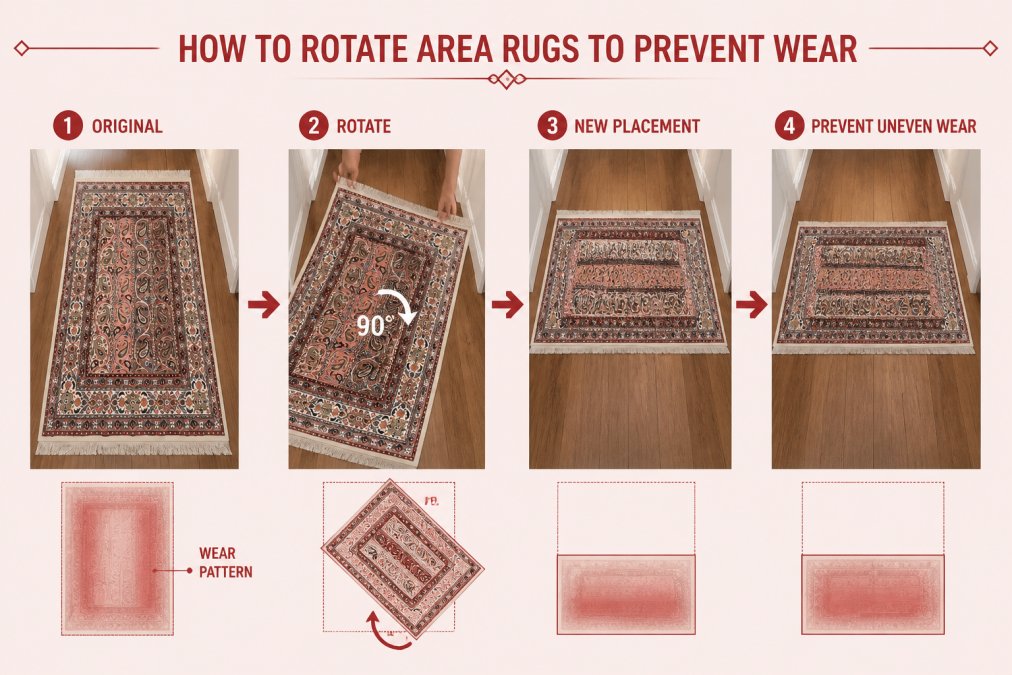
How to Rotate Area Rugs to Prevent Wear
Rug rotation is the single most effective preventative maintenance strategy for antique pieces in high-traffic zones. Traffic lanes develop because the same foot paths cross the rug repeatedly. By rotating the rug, you redistribute foot traffic across different sections, preventing concentrated wear patterns.
Rotate your antique rug 180 degrees every three to six months (si.edu). For extremely high-traffic areas like main hallways and entryways, rotate every three months. For moderately trafficked spaces, six months is sufficient.
The rotation process:
-
Clear the area completely. Remove all furniture and decorative items to prevent damage during movement.
-
Inspect the rug before rotating. Look for new stains, damaged fringes, or flattened pile areas. Document these in photos if tracking the rug's condition over time.
-
Rotate 180 degrees. Flip the rug so the end that was at the back is now at the front. This shifts traffic lanes effectively.
-
Realign carefully. Ensure the rug sits flat without wrinkles or bunching, which trap moisture and create stress points.
-
Replace furniture slowly. Distribute weight evenly rather than placing all heavy pieces back at once.
For runner-style rugs in hallways, rotation is critical because foot traffic follows a predictable linear path. Without rotation, visible traffic lanes develop where the pile appears darker and flatter. These lanes are permanent damage; crushed pile doesn't recover. Rotation prevents concentrated wear patterns from becoming permanent by distributing weight across the entire surface.
Vacuuming Antique Rugs Safely: Technique and Equipment
Vacuuming is necessary for antique rugs, but wrong equipment or technique causes more damage than dirt. Standard household vacuums with beater bars, rotating brushes designed for synthetic fibers, are unsuitable for natural fibers like wool and silk. Beater bars pull fibers apart and accelerate pile degradation.
Use suction-only vacuuming, which removes dirt without mechanical agitation. Verify that the beater bar can be disabled entirely; some vacuums claim a "low" setting but the brush still rotates.
Choosing the right vacuum:
Suction-only upright vacuums or handheld canister vacuums work well for antique rugs. Look for models with adjustable suction settings; lower suction is gentler on delicate fibers. Many mid-range vacuums offer a "bare floor" or "rug" mode that disables the beater bar.
Vacuuming technique:
-
Vacuum in the direction of the pile. Run the vacuum along the nap of the rug, not against it.
-
Use light, slow passes. Let suction do the work. Multiple gentle passes are safer than one forceful pass.
-
Avoid the fringes. The fringe is hand-knotted and delicate. Vacuum around it, not over it.
-
Vacuum weekly in high-traffic areas (the American Academy of Dermatology). Antique rugs in hallways or entryways should be vacuumed once per week. Less-trafficked areas can go two weeks between vacuuming.
-
Never use a steam cleaner on antique rugs. Steam damages natural dyes and fiber structure.
Regular, gentle vacuuming removes abrasive particles before they cause harm. Weekly vacuuming prevents dirt from becoming compacted into the pile.
Choosing the Best Rug Pads for Antique Rugs
The right rug pad prevents slipping, protects the floor underneath, and reduces stress on fibers caused by foot traffic. The wrong pad can damage both the rug and your floor.
Pad material options:
Natural rubber pads are the gold standard for antique rugs. They provide reliable grip without damaging fibers and allow airflow underneath, preventing moisture accumulation. Natural rubber pads typically cost $40-$120 depending on rug size and last 5-7 years.
PVC-based pads are cheaper but problematic; they can off-gas chemicals and leave residue on hardwood floors. Avoid them for antique pieces.
Felt pads offer minimal grip and work only on non-slip surfaces like concrete or sealed tile.
Combination pads, natural rubber bonded to felt, provide better grip than felt alone while remaining gentler than pure rubber. These typically cost $50-$100.
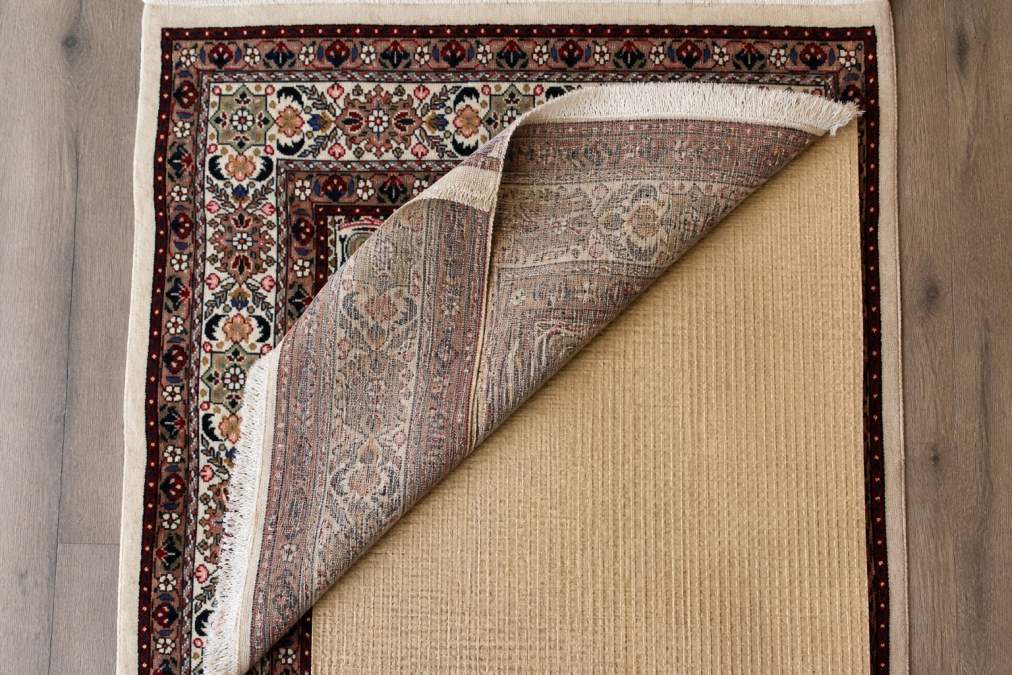
Installation and maintenance:
Cut the pad to match your rug size exactly, slightly smaller than the rug itself. A pad extending beyond the edges creates a tripping hazard. Check the pad quarterly; if it's bunching or shifting, replace it immediately. A loose pad stresses the rug's fibers more than no pad. fix carpet traffic lanes.
For runners and hallway rugs, pads are non-negotiable. Constant foot traffic creates stress that a pad absorbs. Without a pad, the rug shifts slightly with each step, damaging the foundation of the weave. A quality pad protects a piece worth thousands.
Spot Cleaning vs. Professional Deep Cleaning
Spills require immediate attention to prevent stains from setting. Spot cleaning addresses fresh spills; professional deep cleaning removes embedded soil and addresses stains that spot cleaning can't handle. Both are necessary for antique rugs.
Spot cleaning for fresh spills:
Act immediately. Blot, don't rub, with a clean, dry cloth. Rubbing pushes liquid deeper into fibers. For water-soluble spills like coffee or juice, use cool water and a white cloth. Apply water sparingly, blot, and repeat until the stain lifts. Never soak the rug.
For oil-based spills, sprinkle baking soda on the area and let it sit for 15 minutes to absorb the oil. Vacuum gently, then blot with a dry cloth.
For pet accidents, neutralize odor with white vinegar diluted in water (1:1 ratio). Blot thoroughly and allow to air dry completely.
Minimal water, gentle blotting, and patience work better than aggressive scrubbing or chemical cleaners.
Professional deep cleaning:
Schedule professional cleaning every 1-2 years for antique rugs in high-traffic areas. Choose a cleaner specializing in hand-knotted and antique pieces. Ask about their process; reputable cleaners use gentle methods like low-moisture cleaning or hand washing, not high-pressure steam cleaning.
Spot cleaning handles immediate problems; professional cleaning maintains overall condition. Both are essential for pieces in high-traffic areas.
Preventing Wear Patterns and Traffic Lanes
Traffic lanes, visible paths where pile appears darker and flatter, are permanent damage once formed. Prevention is far easier than remediation. The strategy combines rotation, padding, and strategic placement.
Traffic lanes develop because foot traffic follows predictable patterns. In hallways, people walk the same path repeatedly. Over time, concentrated pressure crushes pile fibers, making them appear darker and feel smoother.
Strategic placement for high-traffic areas:
If placing an antique rug in a hallway, orient it so traffic runs perpendicular to the rug's length rather than along it. This distributes pressure more evenly than a lengthwise orientation.
In living rooms, position the rug so main traffic routes cross different sections as people move through the space. Avoid placing the rug so a single traffic lane runs directly across its center.
For high-traffic entry areas, consider using a lower-value rug as a "sacrifice" piece in front of the main entry to absorb initial foot traffic, then position your antique rug slightly back.
Monitoring for early signs:
Inspect your rug monthly for early signs of wear patterns. Look at the pile from different angles in different lighting. Catching developing traffic lanes early allows you to adjust placement or increase rotation frequency before permanent damage occurs.
Traffic lanes are irreversible. Once pile is crushed, it doesn't spring back. Prevention through strategic placement and rotation is infinitely more effective than restoration.
Seasonal Maintenance and Environmental Factors
Environmental conditions, humidity, temperature, sunlight, and air quality, affect antique rugs as much as foot traffic. Seasonal changes create stress on fibers.
Humidity and moisture control:
Antique rugs with natural fibers are sensitive to humidity fluctuations. High humidity promotes mold and mildew growth; low humidity makes fibers brittle. Ideal humidity is between 40% and 60% (the NIH).
In summer, ensure adequate air circulation around the rug. Use ceiling fans or portable fans. In damp areas, consider a dehumidifier. Never place antique rugs in bathrooms or kitchens.
In winter, heating systems dry indoor air significantly. Running a humidifier in rooms with antique rugs maintains fiber flexibility, especially important for silk-content rugs.
Sunlight protection:
Direct sunlight fades natural dyes and weakens fibers irreversibly. If your rug receives direct sunlight, use UV-blocking window treatments or rotate more frequently to prevent uneven fading.
Temperature stability:
Fluctuating temperatures stress fibers and knots. Avoid placing antique rugs near heating vents, air conditioning units, or exterior walls. Stable temperature is more important than the specific temperature.
Seasonal rotation adjustments:
During high-traffic seasons like winter or when homes have guests, increase rotation frequency to every four weeks instead of six.
Air quality:
Smoke, cooking odors, and pet odors embed in rug fibers. Ensure good ventilation in rooms with antique rugs. Use air purifiers if your area has poor air quality or if you cook frequently.
Environmental stress compounds with foot traffic stress. A rug experiencing both deteriorates twice as fast as one experiencing either condition alone.
Maintaining antique rugs in high-traffic areas requires a multi-layered approach addressing both mechanical stress and environmental factors. Rotation, safe vacuuming, quality padding, spot cleaning, strategic placement, and environmental control work together to preserve these investment pieces for decades.
ABC Rugs Kilims & Jewelry offers carefully curated hand-knotted Persian and antique pieces designed to withstand living spaces. Our team understands the durability and craftsmanship of authentic hand-knotted rugs and is committed to helping collectors maintain their investments. Explore our collection of One Of The Kind Persian Sarough Rug#04 and other high-traffic-appropriate pieces that combine beauty with the structural integrity needed for active households. Start protecting your antique rug today with the right maintenance foundation.

Frequently Asked Questions
Q: How often should I rotate antique rugs in high-traffic areas?
A: Rotate antique rugs every 3 to 6 months in high-traffic zones. Frequent rotation prevents uneven wear patterns and traffic lanes from forming in the pile. Start with every 3 months if the rug sits in a hallway or entryway with constant foot traffic. Once you see the wear pattern beginning to even out, you can extend rotation to every 6 months. This preventative maintenance extends the life of hand-knotted pieces significantly.
Q: What type of rug pad is safest for antique wool rugs?
A: Use non-slip rug pads made from natural rubber or felt-and-rubber combinations. Avoid PVC or synthetic materials that can trap moisture and damage wool fibers. Natural rubber pads allow air circulation underneath the rug, preventing mold and mildew growth. For delicate antique pieces, felt pads alone are too slippery; choose pads specifically labeled for hardwood floors that provide grip without adhesive residue. Check that the pad is at least 1/8 inch thick for adequate cushioning.
Q: Is it safe to use a vacuum on an antique rug?
A: Yes, but use only suction-only vacuums without a beater bar, which can damage delicate fibers and pile degradation. High-traffic antique rugs benefit from regular suction vacuuming to remove dirt accumulation and abrasive particles that grind into fibers. Vacuum in the direction of the nap, not against it. For particularly valuable or fragile pieces, use a handheld vacuum or hire a professional. Avoid vacuuming the fringe entirely, use a soft brush instead.
Q: How do I know if my antique rug needs professional cleaning?
A: Schedule professional deep cleaning every 12 to 18 months for antique rugs in high-traffic areas. Signs you need professional service include visible soil filtration, dull colors, musty odors, or stains that spot cleaning won't remove. Professional cleaners use methods safe for wool and silk that restore dye stability and textile preservation. Between professional cleanings, spot clean spills immediately and vacuum regularly to reduce the need for harsh treatments.
This article was written using GrandRanker


