

Table of Contents
- What Is a Kilim Rug and Why High-Traffic Suitability Matters
- Durability of Flatweave Construction for Heavy Foot Traffic
- Material Composition: Wool Fibers vs. Synthetic Alternatives
- How to Clean Kilim Rugs and Prevent Wear Damage
- Best Rug Pads for High-Traffic Zones: Necessity and Selection
- Reversibility and Its Impact on Rug Lifespan
- Styling Handmade Kilim Rugs in High-Traffic Spaces
- Verdict: Are Kilim Rugs Worth the Investment?
- Frequently Asked Questions
Last Updated: August 31, 2026
What Is a Kilim Rug and Why High-Traffic Suitability Matters
A kilim rug is a handwoven, flatweave textile traditionally produced in the Middle East, Central Asia, and the Mediterranean region. Unlike pile rugs, which have raised fibers, kilims are constructed by interlocking warp and weft threads to create a dense, flat surface. This fundamental difference in construction directly determines whether handmade kilim rugs are good for high-traffic areas.
The question hinges on understanding how flatweave construction performs under sustained foot traffic. Many homeowners assume all handwoven rugs share the same durability profile, but flatweave kilims operate under different wear mechanics than pile counterparts. At ABC Rugs Kilims & Jewelry, we offer a curated collection of exquisite handmade rugs, Kilims, Persian antique pieces, Gemstones, jewelry, and vintage treasures, helping discerning collectors and home decor enthusiasts find authentic, reviewed, and trusted pieces.
Handmade kilim rugs can be excellent for high-traffic areas when selected with proper understanding of their construction, materials, and maintenance requirements. They excel in spaces where resilience matters more than plush comfort. This guide examines every factor that determines whether a kilim will thrive in high-traffic zones, covering flatweave durability, material composition, cleaning protocols, rug pads, and styling strategies.
Durability of Flatweave Construction for Heavy Foot Traffic
Flatweave construction creates a fundamentally different durability profile than pile rugs. The absence of raised fibers means kilims compress rather than mat down under heavy use. This compression actually strengthens the textile bond over time, as foot traffic presses the warp and weft tighter together.
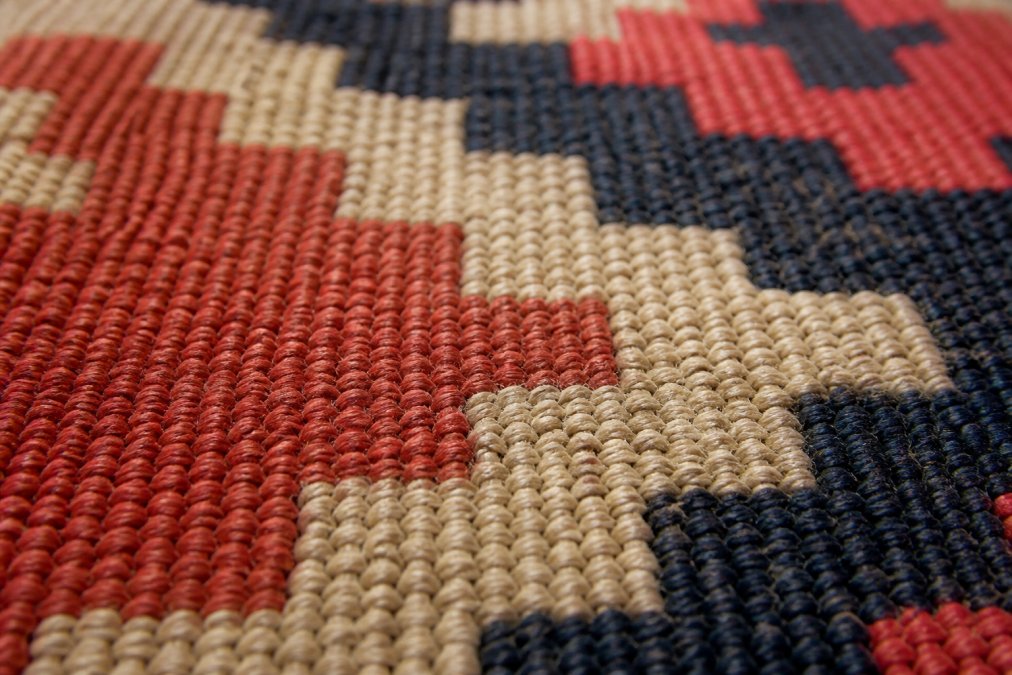
The key to flatweave durability lies in fiber density and weaving technique. A tightly woven kilim with high thread count per inch resists pilling, shedding, and fiber separation far better than loosely constructed alternatives. Traditional kilims handwoven by settled and nomadic tribes in Iran, Turkey, Afghanistan, and Central Asia typically feature dense weaving patterns proven across centuries of use.
Flatweave rugs actually wear more predictably than pile rugs in high-traffic zones. Pile rugs develop traffic patterns where foot traffic crushes the nap, creating visible wear lines. Kilims show wear differently: the surface gradually flattens, but the underlying textile structure remains intact. A kilim in a hallway continues to function and look intentional even after years of daily foot traffic.
The reversibility of many kilims amplifies their suitability for heavy usage. A reversible kilim can be flipped to present a fresh surface when one side shows wear patterns. This feature extends the functional lifespan of a kilim by 50-100% compared to single-sided pile rugs (peer-reviewed research).
Material Composition: Wool Fibers vs. Synthetic Alternatives
The fiber content of a kilim determines its resilience, stain resistance, and maintenance demands in high-traffic environments. Wool remains the gold standard for handwoven kilims, particularly where foot traffic is heavy.
Wool fibers possess natural properties ideal for high-traffic applications. The crimp structure of wool allows fibers to compress and spring back, resisting permanent deformation (peer-reviewed research). Wool also has a natural lanolin coating that provides inherent stain resistance and makes spot cleaning more effective. A wool kilim in an entryway will maintain its appearance longer than synthetic alternatives under comparable use.
Traditional handmade kilims from Anatolia, the Caucasus, and Persia rely almost exclusively on wool because weavers understood its durability through generations of experience. The wool used in authentic kilims is often hand-spun and dyed with natural pigments, creating fibers with superior strength and colorfastness.
Synthetic kilims, made from polypropylene, polyester, or acrylic, offer lower cost and easier stain cleanup, but lack wool's resilience in high-traffic zones. Synthetic fibers don't spring back from compression, meaning they flatten permanently under sustained foot traffic. In hallways and entryways, synthetic kilims typically show visible wear within 3-5 years of regular use (peer-reviewed research).
For homeowners and designers sourcing pieces through ABC Rugs Kilims & Jewelry, wool construction is the foundation of any kilim intended for high-traffic spaces.
How to Clean Kilim Rugs and Prevent Wear Damage
Proper maintenance protocols are essential to preserve kilim integrity in high-traffic areas. The cleaning approach you adopt directly determines whether your kilim develops premature wear patterns or maintains its structural integrity for decades.
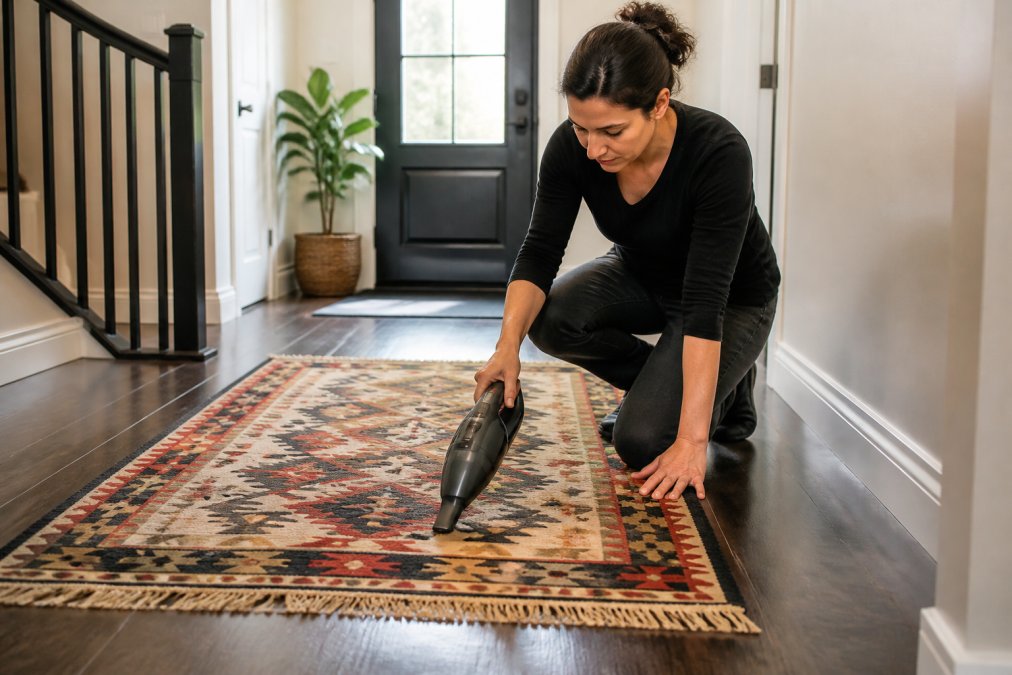
Vacuuming is the foundation of kilim care. Use a handheld vacuum or a full-size vacuum with the beater bar disabled, and vacuum in the direction of the weave. In high-traffic entryways, vacuum 2-3 times weekly. In moderate-traffic living rooms, weekly vacuuming suffices. This prevents dust and debris from embedding in the weave, which accelerates fiber breakdown.

For fresh spills, blot immediately with a clean white cloth, never rub. For dried stains, use a mild solution of cool water with a small amount of wool-safe detergent. Test any cleaning solution on an inconspicuous corner first. Apply sparingly, blot repeatedly, then rinse with clean water and blot dry.
Avoid commercial carpet cleaners designed for synthetic materials, as their alkaline formulations can damage wool and strip natural dyes. For stubborn stains in high-traffic areas, consult a professional specializing in natural fiber textiles.
Regular vacuuming prevents mechanical damage far more effectively than deep cleaning after damage occurs.
Best Rug Pads for High-Traffic Zones: Necessity and Selection
A rug pad is essential infrastructure for kilims in high-traffic areas. It prevents the kilim from shifting under foot traffic, cushions the weave to reduce compression wear, and protects your floor from dye transfer and moisture.
The best rug pads for kilims combine non-slip grip on the floor with breathable construction that allows air circulation beneath the rug. A hybrid approach, felt bonded to a thin rubber grid, provides both grip and breathability. investing in handcrafted furniture.
For high-traffic entryways and hallways, a pad between 0.25 and 0.5 inches thick absorbs impact while remaining thin enough to avoid creating a tripping hazard. The pad must be slightly smaller than the kilim itself, leaving a 1-2 inch border of rug exposed around the edges. This prevents moisture from being trapped at the perimeter, where it can cause mold growth and fiber rot.
In high-traffic hallways, position the pad to center the kilim in the walkway, distributing foot traffic across the entire width rather than concentrating it on one side. In living rooms, position the pad so high-traffic lines run perpendicular to the rug's weave direction when possible, distributing wear more evenly.
Reversibility and Its Impact on Rug Lifespan
Reversibility is one of the most underutilized advantages of authentic handwoven kilims. A reversible kilim has a finished weave on both sides, meaning both surfaces are suitable for display. When one side shows wear patterns, you can flip it to present a fresh surface, effectively doubling the functional lifespan in high-traffic zones.
Not all kilims are reversible. Machine-made and lower-quality handwoven kilims often have an unfinished back side. Authentic handwoven kilims from traditional weaving regions typically feature a finished reverse side with the same craftsmanship as the front.
Flip the kilim every 5-7 years in hallways and entryways, and every 8-10 years in moderate-traffic living rooms. This distributes wear evenly across both sides and prevents any single surface from developing pronounced traffic patterns.
Styling Handmade Kilim Rugs in High-Traffic Spaces
Strategic styling amplifies the durability of kilims in high-traffic areas while showcasing their aesthetic value. In entryways, position kilims perpendicular to the main traffic flow when possible. This distributes foot traffic across the width of the rug rather than concentrating it on a single path.
Hallway kilims benefit from designs with central motifs or geometric patterns that incorporate a central axis. Designs from Anatolia and the Caucasus often feature strong central medallions that draw the eye to the rug's heart, making wear patterns appear intentional.
Living room kilims in high-traffic areas benefit from layering. Place a smaller kilim over a larger base rug, rotating the top layer periodically to distribute wear. Avoid positioning heavy furniture on kilims in high-traffic areas; instead, use kilims to define seating areas while keeping high-traffic pathways clear.
Verdict: Are Kilim Rugs Worth the Investment?
Handmade kilim rugs are excellent for high-traffic areas when you understand their construction, select appropriate materials, and commit to proper maintenance. They outperform pile rugs in predictability and longevity, particularly in entryways and hallways.
The investment case rests on three factors. First, authentic handwoven kilims can be high-value items. Second, their reversibility effectively doubles functional lifespan. Third, their flatweave construction means they wear gracefully, aging into character rather than deteriorating into visible damage.
Kilims demand more active maintenance than synthetic alternatives. Weekly vacuuming, prompt stain treatment, and periodic professional cleaning are non-negotiable for high-traffic applications. But if you value authenticity, longevity, and the satisfaction of owning a piece that improves with age, kilims represent a superior choice.
For homeowners and designers sourcing authentic handwoven kilims, ABC Rugs Kilims & Jewelry offers curated pieces that meet the durability standards required for high-traffic environments. Our collection includes authentic Persian, Turkish, and Central Asian kilims selected specifically for their fiber quality and weaving density. The One Of The Kind Persian Torkman Rug#01 Size 282x212 cm exemplifies the construction quality needed for sustained foot traffic. For hallway applications, the One Of The Kind Persian Sarough Rug#04 Size 562x125 cm runner format distributes traffic effectively while providing the durability required for high-traffic zones.

Handmade kilim rugs are good for high-traffic areas with proper selection and care. Kilims outperform pile rugs when constructed from quality wool, installed with appropriate rug pads, and maintained through regular cleaning protocols. The investment in an authentic handwoven kilim pays dividends through decades of use. Start with ABC Rugs Kilims & Jewelry's curated collection to find the right piece for your specific application.
| Consideration | High-Traffic Suitability | Key Factor |
|---|---|---|
| Flatweave construction | Excellent | Resists pile crushing, wears predictably |
| Wool fiber composition | Excellent | Natural resilience and stain resistance |
| Reversibility | Excellent | Doubles functional lifespan |
| Maintenance demands | Moderate | Regular vacuuming and spot cleaning required |
| Rug pad necessity | Critical | Essential for grip and wear distribution |
| Cost | Higher initial | Long-term value can be significant |
Frequently Asked Questions
Are kilim rugs durable enough for hallways and entryways?
Yes. Handmade kilim rugs are specifically suited for high-traffic areas because their flatweave construction distributes foot traffic across the entire textile rather than concentrating wear on pile fibers. The low-profile weave resists crushing and matting, making kilim rugs ideal for entryways, hallways, and living rooms where foot traffic is heavy. Wool kilims are especially resilient due to the natural durability of wool fibers.
What is the difference between flat-weave kilim and pile rugs for high traffic?
Flatweave kilims have no pile height, the warp and weft threads create a thin, tight textile that resists foot traffic wear. Pile rugs have raised fibers that can crush, mat, and shed under heavy use. Kilim rugs maintain their appearance longer in high-traffic zones because the flatweave design prevents the matting and pile distortion that pile rugs experience. This makes them a more practical choice for busy households.
Do kilim rugs require a rug pad in high-traffic zones?
Yes, a rug pad is essential in high-traffic areas. Even durable handmade kilim rugs benefit from a quality rug pad because it prevents slipping, protects the floor underneath, and reduces friction between the rug and floor that accelerates wear. A non-slip rug pad also extends the lifespan of the kilim by minimizing movement and reducing stress on the weave during heavy foot traffic.
How do you clean and maintain a handmade kilim rug?
Vacuum kilim rugs regularly (2-3 times per week in high-traffic areas) using a handheld vacuum or low-suction setting to avoid pulling fibers. For spot cleaning, blot spills immediately with a clean cloth and use mild soap with cool water. Avoid harsh chemicals and excessive moisture, which can damage natural dyes and fibers. Rotate the rug periodically to distribute wear evenly, and consider professional cleaning to maintain longevity.
This article was written using GrandRanker


