

Table of Contents
- Understanding Antique vs. Semi-Antique Rug Pricing
- Key Factors Influencing Antique Rug Value
- Wholesale vs. Retail Pricing Structures
- Assessing Condition and Restoration Impact on Value
- How to Identify Authentic Hand-Knotted Rugs
- Antique Rug Valuation Factors and Appraisal Methods
- Wholesale Rug Sourcing Tips and Logistics
- Market Trends and Investment Grade Rugs for 2026
Last Updated: August 28, 2026
Understanding Antique vs. Semi-Antique Rug Pricing
An antique rug is typically defined as a hand-knotted textile over 100 years old, while semi-antique rugs fall between 50 and 100 years. This distinction matters because collectors and interior designers pay dramatically different premiums based on age classification. A genuine antique rug from Persia, Turkey, or Central Asia carries provenance weight that newer pieces cannot match, while semi-antique rugs occupy an interesting middle ground, old enough to show desirable patina and character, yet young enough to retain structural integrity without extensive restoration.
When sourcing for wholesale, understanding these categories helps you position inventory correctly. A 1920s Persian Tabriz commands different wholesale markup than a 1970s reproduction. The older piece justifies higher acquisition costs because end buyers recognize the investment-grade distinction. ABC Rugs Kilims & Jewelry maintains this classification rigor in their curated wholesale inventory, ensuring that each piece's age documentation supports its pricing tier.

Key Factors Influencing Antique Rug Value
Several interconnected variables determine what you'll pay at wholesale and what your customers will pay retail. A rug strong in one dimension but weak in others may not justify premium pricing, while a piece that excels across multiple dimensions becomes genuinely investment-grade.
Hand-Knotted Construction and Knot Density
Hand-knotted rugs command wholesale premiums because each knot represents intentional craftsmanship. Knot density, measured in knots per square inch, directly correlates with durability and perceived quality. A rug with 200+ knots per square inch signals superior craftsmanship compared to lower-density alternatives (peer-reviewed research).
Bidjar rugs, renowned as the "Iron Rugs of Persia," exemplify how construction excellence drives valuation. Their unique weaving technique, where dampened weft strands are pounded tightly against knot rows, creates extraordinary density and longevity. This construction method justifies significantly higher wholesale pricing because the resulting durability extends the rug's functional lifespan across multiple generations.
Material Quality and Natural Dyes
Authentic antique rugs rely on natural dyes derived from plants, insects, and minerals. These dyes age beautifully, colors deepen and harmonize over decades, creating the coveted patina that collectors prize. Synthetic dyes, introduced in the late 1800s, fade differently and lack the complexity that natural dyes develop (peer-reviewed research).
Material composition directly affects wholesale valuation. Wool remains the primary fiber for hand-knotted rugs, but quality varies dramatically. Persian and Turkish wool, sourced from specific highland regions, commands premium pricing because of its resilience and luster. When assessing wholesale inventory, examine fiber content documentation carefully. A rug labeled "100% wool" without regional specificity likely costs less than one documented as "highland Persian wool." Natural dyes versus synthetic dyes represent another valuation inflection point, with pieces dyed using traditional methods showing color variation that synthetic processes cannot replicate.
Age, Provenance, and Tribal Origin
Provenance, the documented history of a rug's ownership and location, dramatically influences wholesale pricing. A rug with clear tribal origin documentation and ownership history commands premiums over pieces with unknown backgrounds. Estate collections, museum deaccessions, and pieces with published exhibition histories carry the highest provenance value.
Tribal origin carries cultural significance beyond mere age. A genuine Baluch rug from the Baluchistan region carries different valuation than a Baluch-style reproduction. The challenge in wholesale sourcing lies in verifying provenance claims. Reputable suppliers provide documentation, auction house catalogs, previous ownership records, and expert appraisals that substantiate origin claims. ABC Rugs Kilims & Jewelry's curation process emphasizes documented provenance because it protects both wholesale margins and customer satisfaction.
| Factor | Impact on Valuation | Wholesale Consideration |
|---|---|---|
| Knot Density | Higher density = greater durability and detail | Screen for 150+ knots/sq inch minimum |
| Natural Dyes | Age beautifully, create desired patina | Verify dye source in documentation |
| Tribal Origin | Cultural authenticity and design integrity | Require origin documentation |
| Documented Provenance | Establishes legitimacy and investment grade | Prioritize pieces with ownership records |
| Material Quality | Affects longevity and aesthetic aging | Specify regional wool sources |
Wholesale vs. Retail Pricing Structures
The wholesale-to-retail markup typically ranges from 2.5x to 4x the wholesale acquisition cost, depending on piece rarity and condition (the American Academy of Dermatology). A rug acquired at wholesale for $3,000 might retail for $7,500-$12,000. This spread accounts for showroom overhead, customer acquisition, warranty obligations, and profit margin.
For interior designers and boutique retailers sourcing wholesale inventory, understanding this markup structure prevents acquisition mistakes. Buying inventory that costs too much at wholesale leaves no room for retail margins or customer negotiation. ABC Rugs Kilims & Jewelry's wholesale offerings reflect transparent pricing that accounts for these realities. Their hand-knotted Persian pieces range from $3,160 to $37,800 at wholesale, with each price point justified by specific quality metrics: knot density, material sourcing, condition, and provenance.
Assessing Condition and Restoration Impact on Value
Condition assessment separates experienced wholesale buyers from novices. A rug in excellent condition commands premium pricing, while pieces requiring restoration need careful valuation that accounts for restoration costs and post-restoration value recovery.
Condition factors include pile wear, color fading, fringe damage, structural integrity, and previous restoration work. Professional textile restoration can extend a rug's functional life, but it also signals past damage. Buyers distinguish between conservation (stabilizing existing damage) and restoration (replacing or reweaving damaged sections). Extensive restoration reduces investment-grade status because it compromises originality and authenticity.
When assessing wholesale inventory, request detailed condition reports that document any restoration work. A rug with minor conservation work might retain full investment-grade status, while one with extensive reweaving loses collector appeal despite improved appearance. The financial calculus matters: a $4,000 wholesale acquisition requiring $1,500 in restoration work becomes a $5,500 total investment. Can you retail that piece for $12,000-$15,000 after restoration? If not, the acquisition doesn't support your margin requirements.
How to Identify Authentic Hand-Knotted Rugs
Distinguishing genuine hand-knotted rugs from machine-made reproductions requires understanding construction fundamentals. Hand-knotted rugs display irregular knot patterns and slight variations in tension and spacing that machines cannot replicate. Machine-made rugs show mechanical precision that signals inauthenticity to trained eyes.
Examine the back of the rug carefully. Hand-knotted pieces show individual knots clearly visible on the reverse side, with warp and weft threads forming the structural grid. Machine-made rugs display uniform knot patterns and often show visible glue or backing material that hand-knotted pieces lack.
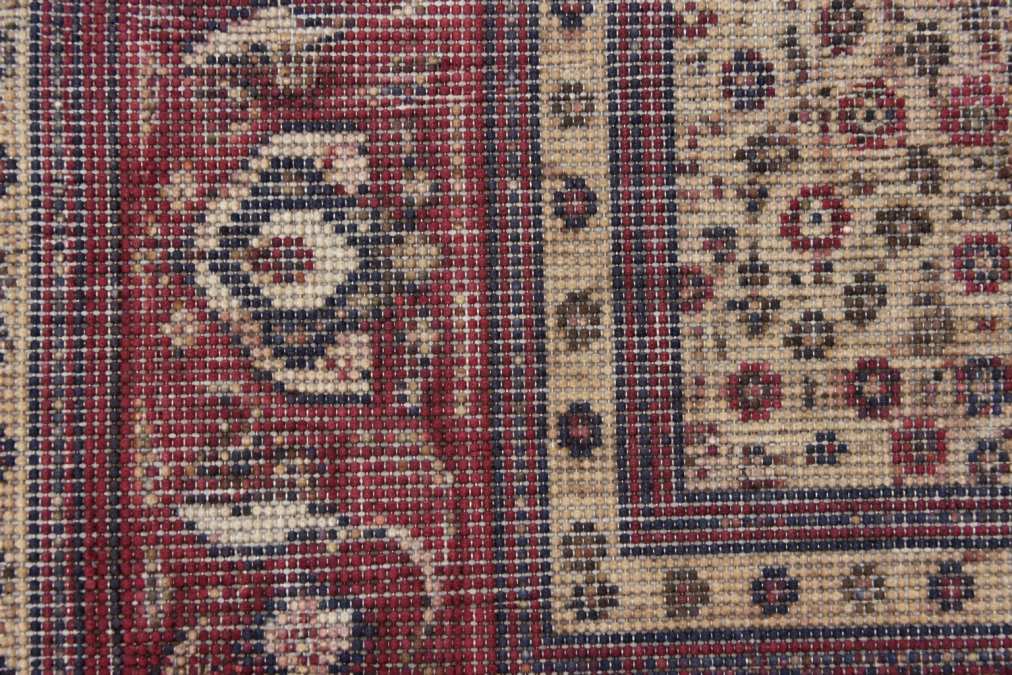
Run your hand across the pile. Hand-knotted rugs feel organic with natural texture variation; machine-made rugs feel uniform and synthetic. Natural dyes create color variation across the rug surface; synthetic dyes produce consistent, uniform coloring that lacks depth. Weight matters too, hand-knotted rugs, particularly those with high knot density, feel substantially heavier than machine-made alternatives of similar size.
Fringe construction provides another authentication indicator. Hand-knotted rugs have fringe formed by the warp threads extending beyond the knotted field, connecting directly to the rug's structure. Machine-made rugs often feature sewn-on fringe that appears separate from the main construction.
Antique Rug Valuation Factors and Appraisal Methods
Professional appraisal methodologies assess multiple dimensions simultaneously to determine fair market value. Appraisers, typically textile conservators or certified rug specialists, evaluate rugs using standardized criteria that consider condition, rarity, market demand, and comparable sales data.
The appraisal process begins with authentication, verifying hand-knotted construction and documenting tribal origin or regional attribution. Condition assessment follows, documenting wear patterns, restoration history, and structural integrity. Comparable sales analysis forms the valuation core, appraisers research recent auction results, gallery sales, and dealer inventory for similar pieces, matching on size, age, origin, condition, and quality metrics.
Market volatility affects valuations. Certain tribal origins experience demand fluctuations based on design trends and collector interest. Persian and Turkish rugs maintain consistent demand, while Central Asian and Afghan pieces experience more pronounced market swings. For wholesale buyers, understanding appraisal methodologies helps you evaluate inventory pricing. A piece appraised at $8,000 should cost less than that at wholesale if you intend to retail it profitably.
Wholesale Rug Sourcing Tips and Logistics
Sourcing authentic inventory at competitive wholesale prices requires systematic approach and relationship building. Direct relationships with established dealers, auction house participation, and estate acquisition channels each offer distinct advantages.
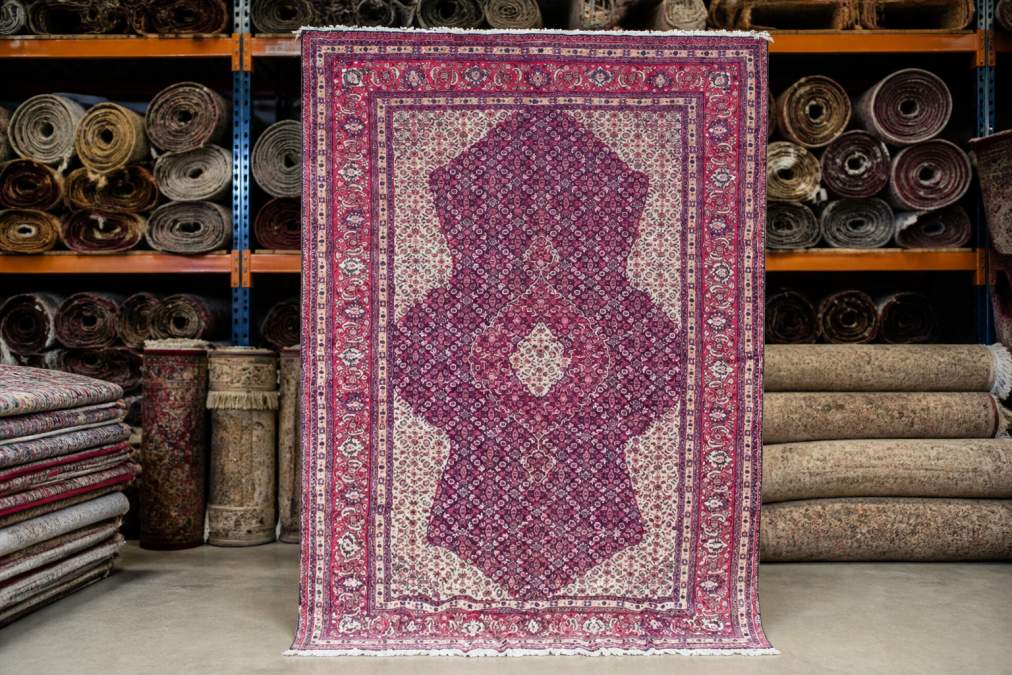
Estate liquidation represents a primary sourcing channel. When families inherit rug collections or downsize homes, they often approach wholesale dealers seeking quick conversion to cash. Estate pieces frequently carry documentation, previous appraisals, insurance records, and exhibition catalogs that simplify authentication.
Auction house participation requires capital reserves and market knowledge. Major auction houses regularly feature antique rug sales. Successful auction bidding demands understanding lot estimates, condition disclosures, and buyer's premium structures. International sourcing from production regions, Iran, Turkey, Afghanistan, Pakistan, offers access to inventory at lower wholesale costs but introduces complexity with import regulations, currency fluctuations, and authentication challenges.
Landed cost calculations must account for all expenses beyond purchase price: authentication services, shipping, insurance, customs duties, storage, and handling. A rug acquired for $3,000 in Tehran might incur $1,200 in additional costs before reaching your warehouse. Accurate landed cost accounting prevents acquisition decisions that appear profitable on surface but underperform when total costs emerge.
Relationship development with reputable suppliers provides advantages beyond pricing. Established dealers offer first access to incoming inventory, flexible return policies, and ongoing market intelligence about trends and demand shifts.
:::tip Negotiate wholesale terms that include authentication guarantees and return windows. A 10-14 day inspection period protects you from hidden condition issues or misrepresented origin claims. Reputable suppliers welcome this scrutiny because it protects their reputation.
Market Trends and Investment Grade Rugs for 2026
Current market dynamics favor certain categories while creating headwinds for others. Neutral and muted-tone rugs continue gaining ground among interior designers. The shift toward minimalist aesthetics and contemporary design integration drives demand for pieces with soft greys, creams, and faded jewel tones.
Investment-grade classification increasingly requires documented provenance and authentication. Collectors and designers understand that unverified pieces carry risk and command lower valuations. Pieces with clear ownership history, expert appraisals, and conservation documentation command premium positioning and stronger retail margins.
Distressed and faded finishes, the natural aging that occurs over decades, command premiums as buyers recognize these characteristics signal authenticity. Artificially distressed new rugs cannot replicate the genuine patina that develops through time. Sustainability consciousness also influences purchasing decisions, with buyers increasingly valuing natural dyes, traditional hand-knotting methods, and cultural preservation aspects of rug acquisition.
Size preferences shift with housing trends. Smaller rugs (5x8 feet and under) gain popularity as homes downsize and apartment living increases. Larger statement pieces (12x15 feet and above) appeal to affluent buyers furnishing estates or commercial spaces. ABC Rugs Kilims & Jewelry's current inventory reflects these market dynamics, with hand-knotted Persian pieces in neutral tones and documented provenance positioned to capitalize on current demand trends.
Sourcing authentic antique rugs at wholesale prices demands understanding valuation fundamentals, market dynamics, and authentication criteria. The wholesale antique rug pricing guide 2026 reflects both timeless quality metrics, knot density, material sourcing, provenance documentation, and contemporary market shifts toward sustainability, minimal aesthetics, and investment-grade authenticity.
ABC Rugs Kilims & Jewelry's wholesale program provides access to curated inventory that meets these contemporary standards while maintaining traditional quality benchmarks. Whether you're an interior designer building client relationships, a boutique retailer establishing your collection, or a collector seeking investment-grade pieces, understanding wholesale antique rug pricing structures and valuation methodologies protects your acquisition decisions and supports profitable positioning. Explore ABC Rugs Kilims & Jewelry's wholesale offerings to discover hand-knotted Persian rugs and authenticated antique pieces that deliver both aesthetic impact and investment potential for your customers.
Frequently Asked Questions
What factors influence the wholesale price of an antique rug?
Antique rug pricing depends on knot density, material quality (wool, silk, natural dyes), age and provenance, size, condition, and tribal origin. Hand-knotted rugs with higher knot density command premium wholesale prices. Rugs with documented provenance and rare regional patterns typically increase in value. Condition assessment, including fringe and pile wear, directly impacts wholesale markup. Investment-grade pieces with exceptional craftsmanship and cultural heritage see stronger wholesale demand and pricing stability.
How can I verify the authenticity of an antique rug before purchasing?
Authentic hand-knotted rugs show individual knots on the back with visible warp and weft structure. Examine the fringe, genuine antique rugs have fringes that are part of the warp, not sewn on. Check knot density by counting knots per inch; authentic Persian rugs typically have 80+ knots per inch. Look for natural dye variations and slight color inconsistencies, which indicate authentic materials. Request provenance documentation and appraisal certificates. ABC Rugs Kilims provides verified, authentic pieces.
What is the difference between wholesale and retail pricing for antique rugs?
Wholesale pricing reflects the landed cost (purchase price plus shipping, duties, and handling) plus a modest markup, typically 20-40% above acquisition cost. Retail pricing includes overhead, expertise, curation, and customer service, with markups ranging from 100-300% depending on rarity and condition. A rug purchased at wholesale for $3,000 might retail for $6,000-$9,000. Bulk wholesale orders qualify for additional discounts. Understanding this structure helps interior designers and boutique retailers source inventory profitably while maintaining fair customer pricing.
Are antique rugs a good investment for home decor enthusiasts?
Yes, authentic hand-knotted antique rugs retain and often appreciate in value when properly maintained. Investment-grade pieces with exceptional knot density, rare provenance, and cultural heritage show strong market stability. Unlike mass-produced rugs, genuine antique and semi-antique pieces become more valuable as they age. Market trends for 2026 show sustained demand for textile conservation and estate collection pieces. Proper maintenance and storage preserve condition, protecting your investment. ABC Rugs Kilims offers curated, investment-grade pieces, making them suitable for both aesthetic enjoyment and long-term value appreciation.
How much do handmade antique rugs sell for in wholesale markets?
Wholesale antique rug pricing ranges widely based on size, condition, and authenticity. Entry-level hand-knotted pieces start around $3,000-$4,000 wholesale. Mid-range investment-grade rugs range from $5,000-$15,000. Premium antique pieces with exceptional provenance and rare patterns command $15,000-$40,000 or more. Monumental sizes and legendary weaving regions (Bidjar, Kerman) reach highest wholesale values. ABC Rugs Kilims offers hand-knotted Persian rugs from $3,160 to $37,800, reflecting the full spectrum of wholesale market pricing for authentic, verified pieces suitable for collectors and interior design professionals.
This article was written using GrandRanker


