

Table of Contents
- Measure Your Room and Furniture First
- Standard Area Rug Sizes and How They Work
- Kilim Rug Placement Rules for Different Rooms
- The Importance of Rug Pads for Kilim Protection
- How to Style Vintage Rugs and Kilims in Your Space
- Layering Kilims and Flat-Weave Considerations
- Common Mistakes to Avoid When Sizing a Kilim Rug
- Frequently Asked Questions
Last Updated: September 2, 2026
Measure Your Room and Furniture First
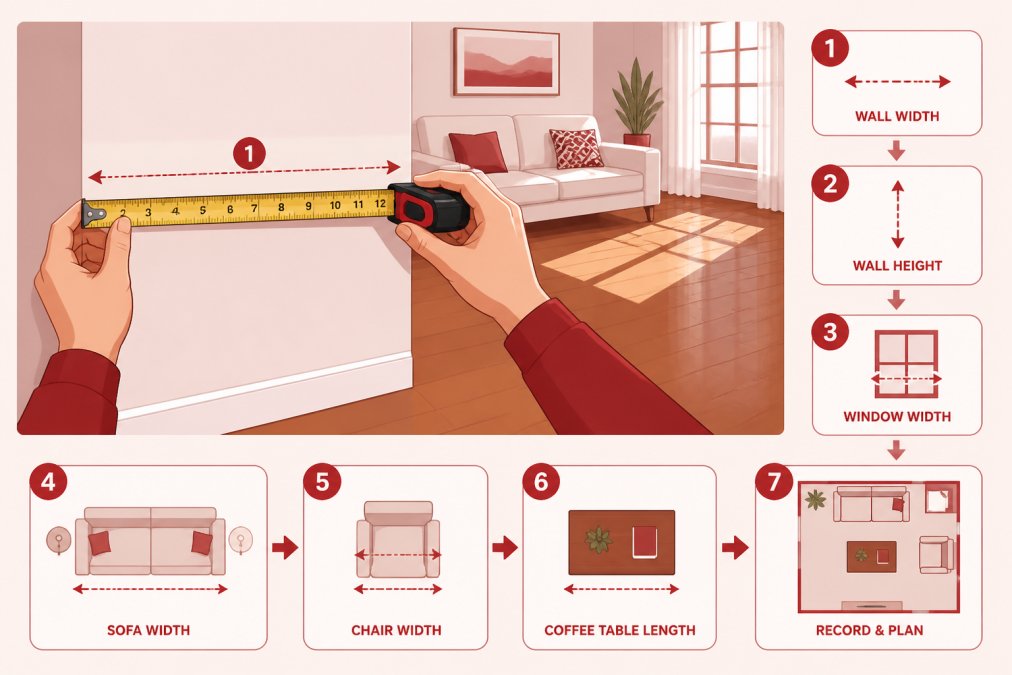
Choosing the right kilim rug size starts with a tape measure and exact measurements. Before selecting a pattern or color, know precisely what dimensions will work in your space. Many people skip this step and end up with a rug that overwhelms the room or looks lost on the floor.
Measure your room length and width wall to wall, then measure key furniture: sofa depth and length, dining table dimensions, and distances from walls to where the rug should sit. These numbers become your anchor points for determining what kilim rug size will actually work.
The floor plan matters significantly. A 9x12 rug looks completely different in a 12x14 room than in a 20x16 space. If your room is narrow and long, a rectangular kilim works better than a square one. Write down measurements before shopping, relying on memory leads to expensive mistakes.
Standard Area Rug Sizes and How They Work
Area rugs come in standard dimensions because these sizes work reliably across most rooms. The most common sizes are 5x8, 6x9, 8x10, 9x12, and 10x14 feet.
A 5x8 rug suits smaller spaces like entryways, home offices, or bedrooms under 120 square feet. A 6x9 rug works well for medium living rooms, providing enough coverage to ground furniture while leaving visible floor space around the edges. The 8x10 and 9x12 sizes are the workhorses of interior design, fitting most living rooms and dining areas. An 8x10 works best in rooms between 150-200 square feet; a 9x12 handles larger spaces, typically 200-300 square feet. For expansive rooms or open floor plans, 10x14 or larger dimensions create the anchoring effect needed to prevent furniture from floating.
Common Kilim Dimensions Explained
Kilims, being handwoven, often come in non-standard sizes. However, kilim weavers typically work within certain traditional dimensions that have proven proportional and practical.
Common kilim sizes range from 3x5 feet for accent pieces up to 12x18 feet for room-dominating statements. A 5x7 kilim works as an accent or smaller bedroom rug. A 6x9 kilim provides substantial coverage in a living room without overwhelming it. An 8x10 or 9x12 kilim becomes the focal point, anchoring furniture and defining spatial zones.
At ABC Rugs Kilims & Jewelry, we curate kilims in sizes that balance traditional authenticity with modern room requirements. Our handmade pieces respect traditional weaving practices while fitting contemporary living spaces. For example, our One Of The Kind Hand Knotted Persian Rug 10'5" x 7'11" R15427 provides the generous coverage needed for anchoring a living room while maintaining the proportions that make kilims visually distinctive.

Kilim Rug Placement Rules for Different Rooms
Where you position your kilim rug matters as much as its size. The fundamental rule: a rug should anchor a furniture grouping, not float randomly on the floor. At least the front legs of your seating furniture should sit on the rug. Ideally, all legs touch the rug, creating a unified visual zone.
Border space is critical. You want at least 12-18 inches of visible floor between the rug edge and the room's walls. This creates breathing room and prevents the rug from feeling cramped.
Living Room Layout and Rug Anchoring
In a living room, your kilim rug should anchor the primary seating area. For a standard living room with a sofa facing a TV wall, an 8x10 or 9x12 kilim works best. Position it so the sofa's front legs sit on the rug, with the coffee table centered on it. Side chairs can have front legs on the rug or positioned just off it.
If your living room is open to a dining area, use the rug to define zones. The kilim anchors the living space while leaving the dining area visually separate. Never place a rug directly in a walkway. Position it so people naturally walk around it, protecting the rug from excess wear and making the room feel more intentional.
Dining Room and Bedroom Considerations
A dining room rug should extend at least 24 inches beyond the table on all sides, allowing chairs to sit fully on the rug when pulled out. An 8x10 rug works for most dining tables; a 9x12 provides more generous coverage.
In bedrooms, a kilim rug typically anchors the foot of the bed or sits beside it. A 5x8 or 6x9 kilim works well for most bedrooms. Position it so you step onto it when getting out of bed, creating comfort and defining the room's focal point. living room wall art.
The Importance of Rug Pads for Kilim Protection
A quality rug pad is essential protection for your kilim investment. Rug pads prevent slipping, protect your flooring, and extend your rug's life by reducing stress on fibers.
A non-slip rug pad grips both the rug's underside and your floor, preventing the rug from shifting when walked on. Rug pads also create a moisture barrier between your kilim and the floor, preventing moisture absorption that can lead to mildew or fiber deterioration (the CDC).
Choose a pad made from natural materials when possible, felt, rubber, or felt-rubber combinations. Avoid plastic pads that can trap moisture or damage hardwood floors. The pad should be slightly smaller than your rug so it's not visible at the edges.
How to Style Vintage Rugs and Kilims in Your Space
Styling a kilim rug goes beyond placement. The rug becomes a design anchor that influences color, texture, and mood throughout your room.
Start by identifying the kilim's dominant colors. These become your palette anchors. If your kilim features deep reds and golds, your furniture and accessories should echo these tones rather than clash with them. Kilims work best when they're the room's statement piece. Avoid competing patterns or textures that fight for attention.
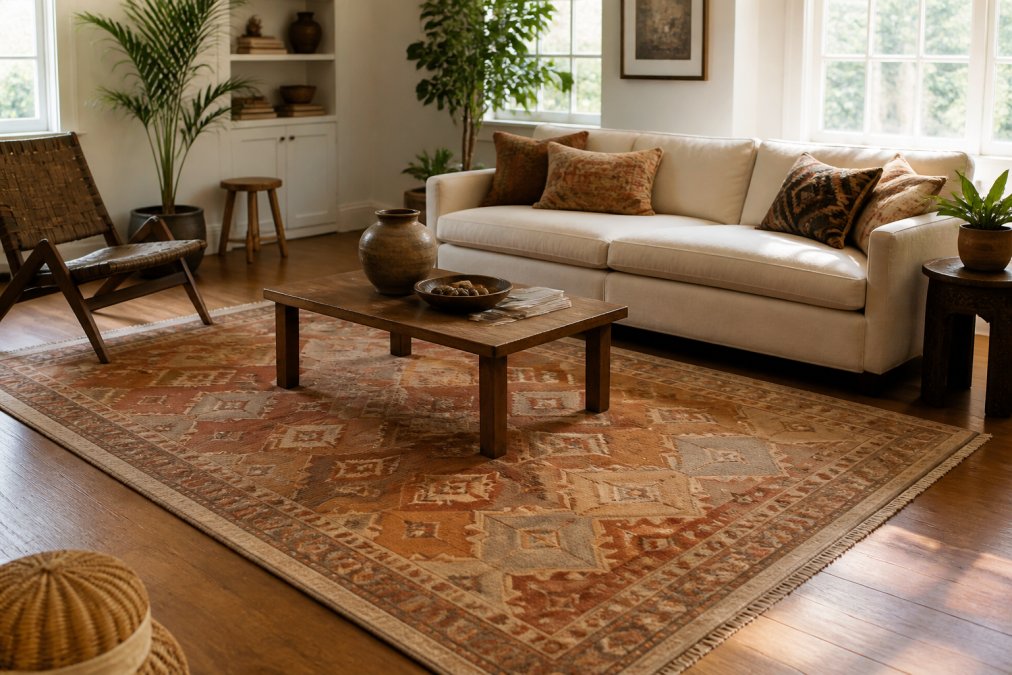
Layering is a sophisticated technique that works beautifully with kilims. Position a smaller, complementary rug on top of your kilim to add texture and define a smaller zone within the larger space. Furniture arrangement should respect the kilim's proportions. If your kilim is rectangular, arrange furniture in rectangular groupings. If it's square, square groupings work better.
Layering Kilims and Flat-Weave Considerations
Layering kilims with other rugs adds dimension and sophistication. The flat-weave construction of kilims makes them ideal for layering because they don't create bulk or uneven surfaces.
A kilim layered over a larger, neutral base rug creates visual interest while protecting both pieces. The base rug anchors the space; the kilim adds pattern and personality. The flat-weave characteristic means kilims sit smoothly on other rugs without creating tripping hazards.
Consider the scale when layering. A large kilim layered over an equally large base rug creates visual confusion. Better to use a smaller kilim as the top layer, positioned off-center on the base rug. Kilims work beautifully layered over natural fiber rugs like jute or sisal, creating texture contrast and protecting both pieces.
Common Mistakes to Avoid When Sizing a Kilim Rug
The most frequent error is choosing a kilim rug that's too small for the space. When in doubt, size up. Another common mistake is ignoring your room's actual dimensions and estimating measurements instead. Measure. Write it down. Check measurements twice.
Choosing a kilim based purely on color without considering how it coordinates with existing furniture creates visual tension rather than harmony. Placing a rug in a high-traffic walkway damages it unnecessarily and makes the room feel poorly designed. Position your kilim so foot traffic flows around it.
Ignoring the importance of rug pads is surprisingly common. Quality pads prevent damage to both your rug and your flooring. Failing to account for furniture leg placement creates visual awkwardness. Either commit to having all seating furniture on the rug or accept that some pieces will sit off it, but do it intentionally.
Choosing the right kilim rug size for your room requires honest assessment of your space, clear measurements, and understanding how kilims work proportionally. At ABC Rugs Kilims & Jewelry, our curated collection includes handmade kilims in sizes and styles that work with contemporary living spaces while respecting traditional weaving authenticity. Explore pieces like our One Of The Kind Hand Knotted Persian Rug 12'2" x 8'10" R15451 for generous living room anchoring, or our One Of The Kind Hand Knotted Persian Rug 11'10" x 9'3" R15438 for grand spaces that demand statement-making proportions. Getting the size right transforms how your kilim functions in your home.


| Kilim Size | Best Room Type | Ideal Furniture | Visual Effect |
|---|---|---|---|
| 5x7 | Bedroom, small living room | Single seating area | Accent piece |
| 6x9 | Medium living room | Sofa + chairs | Anchoring element |
| 8x10 | Standard living room | Full seating grouping | Primary focal point |
| 9x12 | Large living room, dining room | Multiple groupings | Room-defining |
| 10x14+ | Grand spaces, open floor plans | Multiple zones | Statement piece |
Frequently Asked Questions
What is the best kilim rug size for a 12x12 room?
For a 12x12 room, an 8x10 kilim rug works well for most layouts, leaving 2 feet of floor space on each side. If you want more coverage, a 9x12 kilim provides better proportions while still maintaining visual balance. Measure your furniture placement first, if your sofa is 7-8 feet long, the 8x10 size will anchor it appropriately without overwhelming the space.
Does a kilim rug need a rug pad for safety and longevity?
Yes, a rug pad is essential for kilims. It prevents slipping on hard floors, protects both the rug and flooring from damage, and helps the flat-weave kilim stay in place during foot traffic. Quality rug pads also reduce wear on the delicate fibers and prevent moisture from accumulating underneath, which extends your kilim's lifespan significantly.
How do you measure a room for a flat-weave kilim rug?
Use a tape measure to record your room's length and width in feet. Next, measure your main furniture pieces, sofa length, dining table dimensions, and bed size. Mark traffic patterns and entry points. For kilims specifically, account for their flat-weave texture when planning placement; they work best when anchoring furniture groupings with at least 18 inches of border space around the edges for visual balance.
Is an 8x10 rug too big for a 10x12 room?
An 8x10 kilim rug is not too large for a 10x12 room, it's actually an ideal standard area rug size for that space. It will leave approximately 1 foot of exposed floor on the sides and about 2 feet at the ends, which maintains proper proportions and visual balance. This sizing works well for living rooms and bedrooms when you want the rug to anchor your furniture layout without dominating the room.
This article was written using GrandRanker


