

Table of Contents
- Why Collectors Look Beyond Nazmiyal for Curated Rugs
- ABC Rugs Kilims & Jewelry: Transparent Pricing and Direct Sourcing
- How to Identify Authentic Antique Rugs Before You Buy
- Best Online Antique Rug Dealers and Their Specializations
- Antique Rug Appraisal Tips: What Determines Investment Value
- Building Your Collection: Wholesale Options and Bulk Sourcing
- Verification and Authentication: Ensuring Your Purchase Is Genuine
- Conclusion
Last Updated: August 8, 2026
Why Collectors Look Beyond Nazmiyal for Curated Rugs
Collectors and interior designers increasingly seek curated rug dealers beyond the mainstream marketplace. The traditional model of shopping at a single dominant retailer limits access to diverse sourcing, competitive pricing, and personalized expertise. Many buyers discover that exploring alternatives for curated rugs opens doors to specialized dealers, direct sourcing relationships, and collections tailored to specific aesthetic or investment goals.
At ABC Rugs Kilims & Jewelry, we've tracked this shift closely. Discerning customers want transparency about provenance, direct access to artisans and importers, and the ability to compare quality across multiple trusted sources. This guide explores the landscape of curated rug dealers who challenge the status quo and shows you what separates the best dealers, how to verify authenticity, and which sourcing models work best for different buyer profiles.
ABC Rugs Kilims & Jewelry: Transparent Pricing and Direct Sourcing
ABC Rugs Kilims & Jewelry stands apart through its commitment to transparent pricing and direct artisan relationships. The platform offers both retail and wholesale options, making it accessible to homeowners, interior designers, and boutique retailers. Hand-knotted Persian pieces, vintage textiles, and curated jewelry are sourced with documented provenance and verified authenticity.
What distinguishes this dealer is the dual-market model. Retail customers browse individual pieces with detailed descriptions and imagery. Wholesale buyers access bulk sourcing options and consistent inventory for design projects and retail resale. The reviewed-and-trusted positioning reflects real customer feedback rather than algorithmic ratings, building confidence in high-value purchases.
A Persian antique hand-knotted Tabriz rug in traditional floral design with natural vegetable dyes spans price points from approximately $2,180 to $6,258 depending on size and condition. This range reflects authentic hand-knotted construction with wool and cotton materials. The specificity of pricing, tied to measurable factors like pile density, knot count, and dye authenticity, signals dealer expertise.

The platform's strength lies in curated inventory. Rather than overwhelming customers with thousands of designs, ABC Rugs Kilims & Jewelry maintains a focused collection where each piece is individually evaluated. This curation approach appeals to collectors who value quality over quantity and prefer dealer guidance over endless browsing.
How to Identify Authentic Antique Rugs Before You Buy
Distinguishing authentic hand-knotted antique textiles from reproductions requires understanding construction fundamentals. Genuine antique rugs display specific physical characteristics that reveal their age, origin, and craftsmanship level.
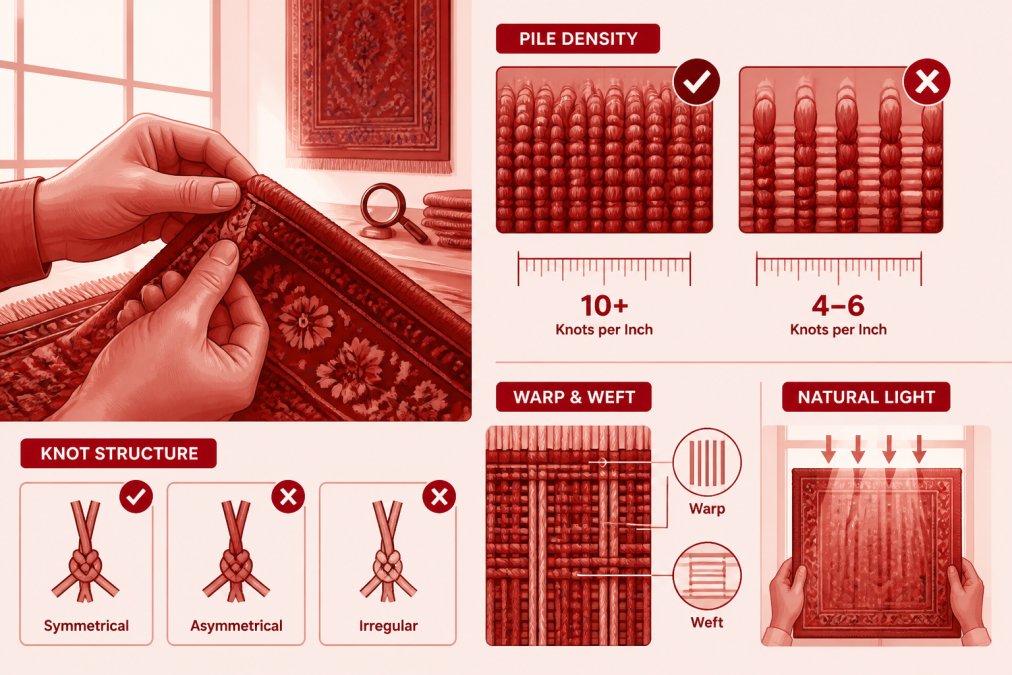
Hand-knotted construction is the foundation of authenticity. Each knot is tied individually by an artisan around vertical warp threads, creating a dense, durable pile that withstands decades of foot traffic. Machine-made rugs produce uniform, perfectly consistent patterns, a telltale sign of modern manufacture. Running your fingers across the back of an antique rug reveals irregularities in knot placement and density that machines cannot replicate.
Natural dyes distinguish antique pieces from modern reproductions. Traditional Persian, Turkish, and Central Asian rugs relied on plant-based dyes: indigo for blues, madder root for reds, walnut husks for browns. These dyes fade and shift color over decades in predictable ways. Synthetic aniline dyes produce uniform color that doesn't age naturally. Examining the underside helps identify dye type.
Pile density and knot count indicate quality and age. Antique rugs typically feature 100 to 400+ knots per square inch, depending on regional tradition. High-quality Persian pieces often exceed 200 knots per square inch. Counting knots requires a magnifying glass, but dealers use this metric to assess value.
Regional weaving patterns provide geographic clues. Persian rugs display distinct design traditions by province: Tabriz rugs feature intricate floral medallions, Joshghan pieces show geometric patterns, Kurdish designs emphasize tribal motifs. Recognizing these patterns helps verify claimed origin.
Signs of age and wear authenticate antique pieces. Genuine antique rugs show uneven fading, visible repairs, and pile wear in high-traffic areas. These imperfections prove the rug survived actual use. Modern reproductions deliberately distress surfaces, but the wear pattern appears uniform and unconvincing to experienced eyes.
Best Online Antique Rug Dealers and Their Specializations
The modern curated rug market includes dealers with distinct sourcing models, geographic specializations, and customer service approaches. Understanding each dealer's focus helps match your needs to the right source.
ABC Carpet & Home: Showroom Experience Meets Online Convenience
ABC Carpet & Home operates from a position of institutional authority. The New York-based dealer maintains physical showrooms in Manhattan and Brooklyn, allowing customers to inspect rugs in person before purchasing. This hybrid model bridges the gap between online convenience and tactile evaluation.
The dealer specializes in one-of-a-kind and custom rugs, emphasizing artistry and design quality. Their curated approach means inventory is intentionally limited. Customers can browse online but often visit showrooms to experience lighting effects and texture firsthand.
The showroom experience carries premium pricing. High-end, unique, and custom rugs reflect the cost of curated selection and in-person service. For interior designers and homeowners prioritizing artistry over budget, this dealer's reputation justifies the investment.
The Rug Company: Sustainability and Designer Collaboration
The Rug Company positions itself at the intersection of luxury craftsmanship and environmental responsibility. The dealer collaborates with renowned designers to create limited-edition collections, elevating handmade rugs to the status of fine art.
Sustainability commitment shapes sourcing decisions. The Rug Company emphasizes responsibly sourced materials and ethical trading practices, appealing to collectors concerned with supply chain transparency. The personal curation journey distinguishes this dealer's customer experience, clients work directly with specialists to identify pieces matching their aesthetic and functional requirements.
Free delivery on all orders removes friction from high-value purchases. Pricing remains in the luxury market, with contact-required quotes reflecting bespoke nature.
Passerine Home and Shop Vintage Rugs: One-of-a-Kind Vintage Finds
Passerine Home specializes in authentic vintage and antique rugs sourced for modern aesthetics. The dealer's curation philosophy emphasizes sustainability, giving new life to craftsman-made pieces. This appeals to environmentally conscious collectors and designers seeking character-rich pieces.
The curated catalog features handmade, one-of-a-kind rugs in various sizes and styles. Detailed descriptions note signs of wear and suitability for different traffic areas, setting realistic expectations. Muted color palettes and vintage aesthetics align with contemporary interior design trends, expanding the vintage rug market beyond historical collectors to interior designers seeking distinctive, sustainable textiles.
Limited quantities of each rug reflect genuine vintage sourcing. Unlike dealers with consistent inventory, Passerine Home's stock changes as new acquisitions arrive, creating urgency for buyers who find pieces matching their vision.
Antique Rug Appraisal Tips: What Determines Investment Value
Understanding what drives rug value separates serious collectors from casual buyers. Investment-grade pieces appreciate when quality factors align with market demand.
Age and provenance form the foundation of investment value. Rugs produced before 1900 command premium pricing, particularly if documentation traces ownership history. Provenance dramatically increases value.
Condition directly impacts value. Antique rugs naturally show wear, but structural integrity matters enormously. Rugs with broken warps, extensive pile loss, or chemical damage lose investment appeal. Well-maintained pieces with minimal restoration preserve value.
Rarity and geographic origin influence demand. Turkish kilims from the 19th century, Persian Tabriz rugs with exceptional knot density, and Central Asian tribal pieces each have devoted markets. Understanding which regional traditions currently attract collector demand helps identify appreciating pieces.
Size and design appeal affect marketability. Large rugs suitable for major interior spaces command higher prices than small runners. Designs with broad appeal, classic florals, and geometric patterns sell more readily than highly specialized pieces.
Material quality and natural dyes preserve value through time. Rugs constructed with high-quality wool and vegetable dyes age gracefully, developing patina that enhances appeal. Synthetic materials and chemical dyes degrade unpredictably, limiting long-term investment potential.
Professional appraisal by certified specialists provides documentation for insurance, estate planning, and resale. Appraisers examine construction, materials, age, condition, and comparable sales to establish value.
Building Your Collection: Wholesale Options and Bulk Sourcing
Interior designers, boutique retailers, and serious collectors benefit from wholesale sourcing relationships. Bulk purchasing unlocks pricing advantages and consistent access to curated inventory.
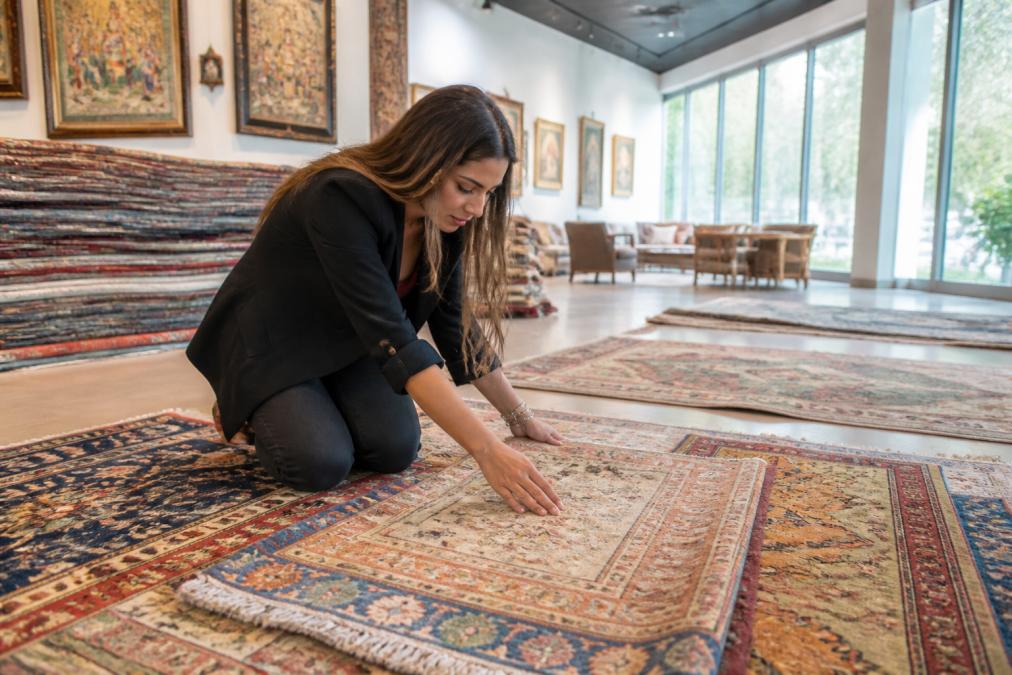
ABC Rugs Kilims & Jewelry offers wholesale options specifically designed for design professionals and boutique retailers. Bulk orders receive pricing advantages over retail, making projects more profitable for designers or retailers. Consistent availability ensures designers can source pieces for multiple concurrent projects without inventory gaps.
Wholesale relationships require minimum order commitments. Most dealers establish thresholds, perhaps 3-5 pieces per quarter or annual volume targets. For design professionals managing multiple projects, meeting minimums is typically straightforward.
Direct communication with wholesale specialists simplifies the sourcing process. Rather than browsing public inventory, wholesale customers work with dedicated account managers who understand project requirements and aesthetic preferences.
Customization and special orders become available at wholesale levels. Designers seeking specific color palettes, size ranges, or design styles can request sourcing. Dealers with direct artisan relationships can commission custom pieces, though lead times and minimum orders apply.
Wholesale pricing typically ranges 20-40% below retail, depending on order volume and product type. This margin allows retailers to maintain healthy profit while offering competitive pricing to end customers.
Payment terms and logistics differ from retail. Wholesale customers often receive net-30 or net-60 payment terms rather than immediate payment. Shipping arrangements may include bulk discounts or freight consolidation, reducing per-unit delivery costs.
Building a wholesale relationship requires identifying dealers whose aesthetic and sourcing philosophy align with your brand. Requesting wholesale account information, discussing volume commitments, and clarifying return policies establishes clear expectations before committing to partnership.
Verification and Authentication: Ensuring Your Purchase Is Genuine
High-value textile purchases demand authentication protocols that verify authenticity before funds transfer.
Request detailed provenance documentation. Legitimate dealers provide written descriptions including rug age, origin, materials, construction method, and any known ownership history. Documentation should specify whether the piece is antique (pre-1900), semi-antique (1900-1950), or vintage (post-1950).
Examine high-resolution photography from multiple angles. Quality dealers provide detailed images showing pile texture, back construction, color variation, and any repairs or wear. Request close-up images of corners, edges, and damaged areas. This visual documentation allows remote inspection and serves as reference if disputes arise.
Verify natural dye characteristics. Request information about dye sources and aging patterns. Legitimate dealers can explain why specific colors fade in particular ways. Synthetic dyes should be disclosed explicitly.
Confirm return policies and guarantees. Reputable dealers offer 30-60 day return windows for buyer remorse or discovered condition issues. Some provide authentication guarantees, written statements that pieces are as described or money refunded.
Request references from previous customers. For high-value purchases, asking for contact information of recent buyers is reasonable. Speaking with collectors who've purchased similar pieces provides unfiltered feedback about authenticity, condition, and customer service.
Consider third-party authentication. For pieces exceeding significant investment thresholds, hiring independent appraisers or authentication specialists is prudent. Cost typically ranges from $150-500 depending on complexity, but provides insurance-grade documentation.
Check dealer credentials and affiliations. Membership in professional organizations like the Oriental Rug Importers Association or participation in major textile auctions signals legitimacy.
| Verification Method | Cost | Time Required | Confidence Level |
|---|---|---|---|
| Dealer documentation and photography | Included | Immediate | Medium |
| Customer references | Free | 2-3 days | Medium-High |
| Professional appraisal | $150-500 | 1-2 weeks | High |
| Third-party authentication | $200-600 | 2-4 weeks | Very High |
| Auction house evaluation | Variable | 2-4 weeks | Very High |
Navigating the curated rug market requires understanding what distinguishes authentic dealers from casual retailers. ABC Rugs Kilims & Jewelry exemplifies the transparent, expert-driven approach that serious collectors demand. With hand-knotted Persian antique pieces, verified provenance documentation, and wholesale options for design professionals, the platform delivers the combination of quality, accessibility, and trust that discerning buyers seek. Explore the collection today and discover how direct sourcing relationships translate to better value and authentic pieces that elevate your space.
Frequently Asked Questions
How do I verify the authenticity of an antique rug when buying online?
Authentic hand-knotted rugs show specific markers: irregular knot patterns, natural vegetable dyes with color variation, and visible wear consistent with age. Request detailed provenance documentation, high-resolution photos of the pile, knots, and back, and ask dealers about their sourcing process. ABC Rugs Kilims & Jewelry provides full authentication details for each piece, including weaving technique, materials, and geographic origin. Legitimate dealers welcome third-party appraisals and offer return periods for verification.
What makes one curated rug dealer better than another?
Top dealers distinguish themselves through transparent sourcing, documented provenance, competitive pricing, and expert curation. Look for dealers offering detailed product descriptions, authentication certificates, and clear return policies. The best online antique rug dealers provide multiple high-quality images, material specifications, pile density information, and honest assessments of condition. Wholesale availability, bulk order consistency, and responsive customer service matter for interior designers. ABC Rugs Kilims & Jewelry combines transparent pricing with hand-selected inventory and reviewed customer feedback.
Are antique rugs a good investment?
Investment-grade rugs typically feature exceptional craftsmanship, rare geographic origins, historical significance, and strong condition. Hand-knotted Persian and Turkish pieces with natural dyes appreciate over time, especially if properly maintained. Antique rug appraisal tips include assessing pile density, knot count, material quality, and provenance documentation. Rugs from specific regions and eras command higher values. However, investment potential depends on authentication, condition, and market demand. Collectors should focus on pieces they genuinely love, as financial returns vary based on rarity and historical importance.
What's the difference between antique, vintage, and modern rugs?
Antique rugs are typically over 100 years old and feature hand-knotted construction with natural dyes. Vintage rugs range from 20 to 100 years old, showing character and patina while maintaining structural integrity. Modern rugs are newly made but may use traditional weaving techniques and natural materials. Antique pieces command premium prices due to rarity and historical significance. Vintage rugs offer authentic textile artistry at moderate prices. Modern hand-knotted pieces provide contemporary aesthetics with artisanal craftsmanship. Your choice depends on budget, design preference, and whether you seek investment value or living-space functionality.
Can I buy curated rugs wholesale for my design business?
Yes, many dealers including ABC Rugs Kilims & Jewelry offer wholesale pricing and bulk ordering for interior designers and boutique retailers. Wholesale programs typically require business verification and provide volume discounts on hand-knotted and antique inventory. Request dedicated account management, consistent availability for repeat orders, and flexible return policies. Ask about custom sourcing for specific regional styles or design requirements. Wholesale dealers should provide detailed product specifications, authentication documentation, and support for client consultations. Establish relationships with multiple dealers to ensure reliable inventory and competitive pricing across your project portfolio.
This article was written using GrandRanker


