

Table of Contents
- What Makes Authentic Vintage Jewelry Worth Buying Online
- How to Spot Fake Vintage Jewelry Before You Buy
-
Top Authentic Vintage Jewelry Online Stores Reviewed
- ABC Rugs Kilims & Jewelry: Curated Collections with Wholesale Access
- 1stDibs: Vetted Dealers and Global Selection
- The RealReal: Authenticated Luxury Consignment
- Ruby Lane: Pre-Screened Sellers with Strict Quality Standards
- EraGem: Ethical Sourcing with Strong Guarantees
- Lang Antiques: Specialized Expertise Across Jewelry Eras
- Doyle & Doyle: Historically Significant Estate Pieces
- Estate Diamond Jewelry: Ethically Sourced Rings from NYC
- Antique Jewelry Mall: GIA-Certified Gemologists and BBB Membership
- Etsy: Affordable One-of-a-Kind Finds with Direct Seller Contact
- Buying Estate Jewelry Online Safely: Verification Steps
- Understanding Vintage Jewelry Eras and Provenance
- Resale Value and Investment Potential of Authentic Pieces
- Conclusion
Last Updated: August 6, 2026
What Makes Authentic Vintage Jewelry Worth Buying Online
Buying authentic vintage jewelry online carries real risk. Counterfeits flood the market, and without proper authentication, you're often paying premium prices for reproduction pieces. Yet authentic vintage jewelry offers historical significance, superior craftsmanship, and investment potential that new pieces rarely match.
The key difference between a smart purchase and a costly mistake comes down to verification. At ABC Rugs Kilims & Jewelry, we've curated collections of authentic vintage pieces by applying rigorous authentication standards that separate legitimate dealers from casual resellers. This guide walks you through verification, introduces trustworthy online marketplaces, and shows what separates genuine antique pieces from convincing fakes.
How to Spot Fake Vintage Jewelry Before You Buy
The most common mistake buyers make is trusting appearance alone. Real authentication requires examining three specific markers that counterfeiters struggle to replicate consistently.
Hallmarks and Karat Stamps
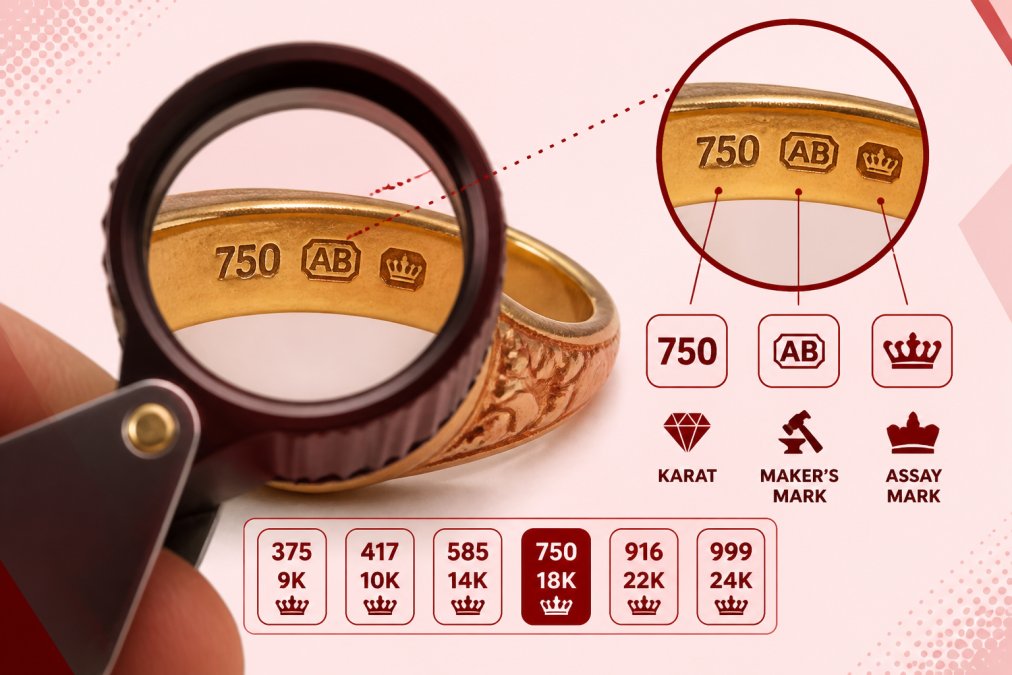
Hallmarks are your first line of defense. These tiny stamps indicate metal content, maker identity, and sometimes the year of manufacture. Authentic pieces from reputable makers almost always carry hallmarks; their absence is a red flag.
Legitimate hallmarks appear consistent with the era. Victorian hallmarks differ from Art Deco stamps, which differ from Mid-Century marks. Research the specific hallmark system for the period and region, British hallmarks follow different rules than French or American stamps. A maker's mark should be crisp and properly struck into the metal, not shallow or poorly defined.
Counterfeiters often use generic hallmarks or copy legitimate stamps inconsistently. A "gold" ring that feels too light for its size suggests gold-filled or plated construction masquerading as solid gold.
Gemstone Certification and Wear Patterns
Gemstones tell stories through their wear. A diamond worn for decades shows specific scratching and surface dulling patterns that new stones don't display. Reputable sellers provide gemstone certification from independent labs like the Gemological Institute of America (GIA).
Certification documents should come from recognized labs, not the seller's own assessment. For colored gemstones, certification should note whether the stone is natural, treated, or synthetic. Genuine antique diamonds often show a milky or frosted surface from decades of wear, while lab-grown or recently cut diamonds display pristine clarity.
Patina, Clasp Integrity, and Construction Quality
Patina, the oxidation and wear that develops over decades, is nearly impossible to fake convincingly. Real patina appears inconsistent, with some areas showing heavier oxidation than others. Clasp mechanisms should show functional wear: slight looseness, minor damage, and age-appropriate deterioration.
Vintage jewelry from established makers shows meticulous soldering, properly fitted components, and thoughtful engineering. The reverse side matters as much as the front. Authentic vintage pieces show wear on the back of settings, inside bands, and on clasps. If the front looks aged but the back looks pristine, the piece has likely been recently restored or is a reproduction.
Top Authentic Vintage Jewelry Online Stores Reviewed
The marketplace for vintage jewelry spans from specialized dealers to general consignment platforms. Each operates with different authentication standards, return policies, and price positioning.
ABC Rugs Kilims & Jewelry: Curated Collections with Wholesale Access
ABC Rugs Kilims & Jewelry distinguishes itself through direct curation and dual retail-wholesale operations. Every piece passes through expert review before listing. The wholesale option is valuable for interior designers, boutique retailers, and serious collectors purchasing multiple pieces.
1stDibs: Vetted Dealers and Global Selection
1stDibs operates as a curated network of vetted dealers rather than a general marketplace. Every seller undergoes background verification and quality screening. The platform connects you with established dealers, galleries, and specialist shops worldwide. Live chat support connects you directly with dealers who can answer detailed authentication questions.

The RealReal: Authenticated Luxury Consignment
The RealReal focuses on luxury goods, including high-end vintage jewelry. Every piece undergoes rigorous authentication by in-house experts before listing. This is particularly valuable for contemporary luxury pieces and designer vintage jewelry.
Ruby Lane: Pre-Screened Sellers with Strict Quality Standards
Ruby Lane operates as a marketplace with significant quality gatekeeping. Every shop is pre-screened by art and antique professionals. Sellers maintain rating systems based on completed sales, making reputation visible and consequential.
EraGem: Ethical Sourcing with Strong Guarantees
EraGem specializes in vintage and antique engagement rings with a commitment to ethical sourcing. Every ring includes a detailed description of its era, style, materials, and condition. The 60-day money-back guarantee and lifetime warranty are among the strongest protections available.
Lang Antiques: Specialized Expertise Across Jewelry Eras
Lang Antiques brings institutional credibility to online vintage jewelry sales. Based in San Francisco with decades of reputation, the business maintains extensive collections spanning Georgian through Mid-Century styles. Affiliation with the Accredited Gemologist Association signals professional standards.
Doyle & Doyle: Historically Significant Estate Pieces
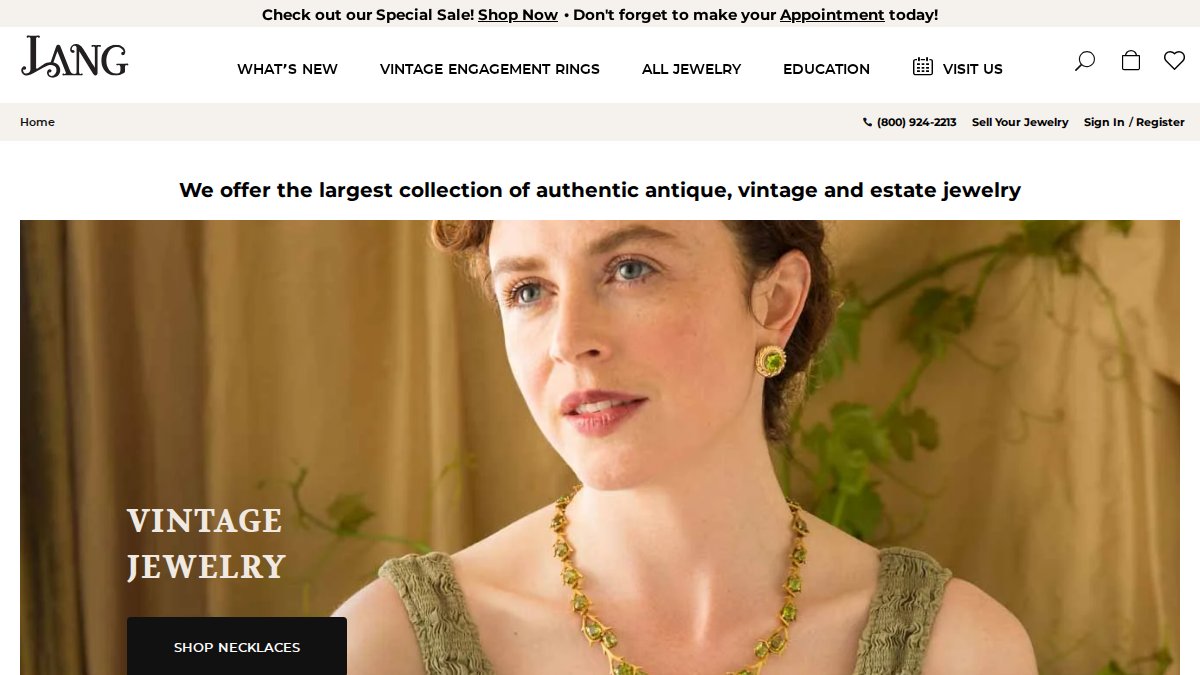
Doyle & Doyle operates as a boutique with a physical location in New York City and an online presence. The curated collection emphasizes historical significance and wearability. Pieces are researched and inspected for authenticity and quality before listing.
Estate Diamond Jewelry: Ethically Sourced Rings from NYC
Estate Diamond Jewelry operates from NYC's Diamond District with a focus on ethically sourced antique and vintage rings from 1880 through 1970. The family-owned business brings direct expertise to diamond and gemstone evaluation. Free overnight insured shipping and a 14-day return policy reduce purchase friction.
Antique Jewelry Mall: GIA-Certified Gemologists and BBB Membership
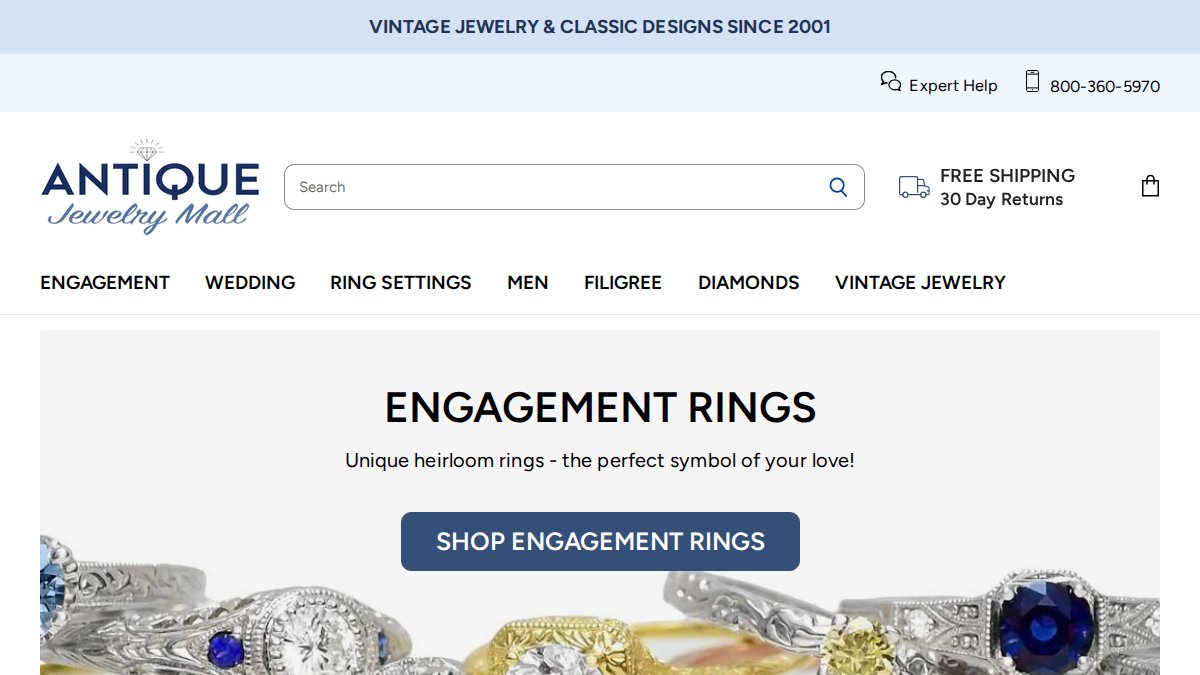
Antique Jewelry Mall combines online convenience with professional gemological expertise. Staff includes GIA Graduate Gemologists, ensuring expert evaluation of stones and settings. Membership in the American Gem Trade Association and Better Business Bureau provides third-party credibility. The 30-day return window and 60-day price guarantee offer protection.
Etsy: Affordable One-of-a-Kind Finds with Direct Seller Contact
Etsy operates as an open marketplace with minimal curation. Thousands of vintage jewelry sellers operate independently with varying authentication standards. The strength lies in direct seller contact and one-of-a-kind finds. You can message sellers with detailed questions about provenance, materials, and condition before purchasing.
| Platform | Authentication Level | Best For | Return Policy | Price Range |
|---|---|---|---|---|
| ABC Rugs Kilims & Jewelry | Expert curation | Collectors & designers | Reviewed & trusted | Varies by piece |
| 1stDibs | Dealer vetting | Specific era searches | Dealer-specific | Mid to high |
| The RealReal | In-house experts | Luxury consignment | 30 days | Mid to high |
| Ruby Lane | Pre-screened sellers | Community dealers | Dealer-specific | Mid |
| EraGem | Specialized | Engagement rings | 60 days | Mid to high |
| Lang Antiques | Expert specialists | Era-specific searches | Contact dealer | High |
| Doyle & Doyle | Historical research | Boutique pieces | Contact dealer | High |
| Estate Diamond Jewelry | Ethical sourcing | Diamond rings | 14 days | Mid to high |
| Antique Jewelry Mall | GIA gemologists | Professional buying | 30 days | Mid |
| Etsy | Minimal curation | Budget finds | Seller-specific | Low to mid |
Buying Estate Jewelry Online Safely: Verification Steps
Online purchases eliminate the ability to examine pieces in person before committing money. This requires a deliberate verification process that compensates for distance and unfamiliar sellers.
Seller Reputation and Third-Party Authentication
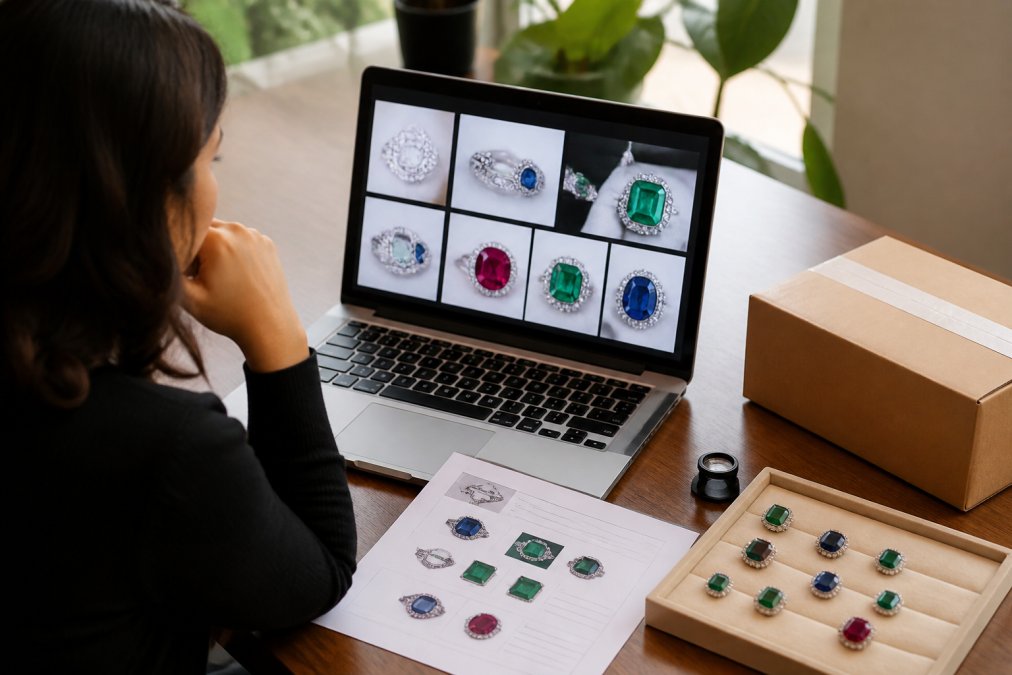
Start with seller reputation. On platforms like 1stDibs, Ruby Lane, and Etsy, seller ratings directly reflect transaction history. Look for sellers with high ratings across many transactions. Read specific feedback about authenticity and condition accuracy.
Third-party authentication adds credibility. According to the Gemological Institute of America, gemstone certification from independent labs provides verifiable documentation of stone characteristics. When sellers provide GIA certificates or equivalent documentation from recognized labs, that's a strong authenticity signal. Verify the certificate details match the piece description.
Return Policies, Warranties, and Shipping Insurance
Return policies directly reflect seller confidence in authenticity. Shipping insurance is non-negotiable for pieces over a few hundred dollars. Reputable dealers typically include insurance in their pricing or offer it as an optional add-on.
Warranties vary by seller. Understand what's covered.
Macro-Photography Analysis and Condition Reports
Request high-resolution macro-photography before purchasing. Ask sellers to photograph hallmarks and karat stamps in clear, magnified detail, the back of settings and clasps, wear patterns on the stone and metal, and any damage, repairs, or restoration work.
Detailed condition reports should describe not just what's present but what's absent or worn. A good report notes: "Slight wear on prongs, consistent with 40+ years of wear. No damage to stone. Clasp functions smoothly with minor looseness typical of age. Back of setting shows patina appropriate to 1950s production."
Understanding Vintage Jewelry Eras and Provenance
Recognizing jewelry eras helps you evaluate authenticity and understand what you're buying.
Art Deco, Victorian, Edwardian, and Mid-Century Styles
Victorian jewelry (1837-1901) emphasized ornate detail and symbolic meaning. Pieces are often heavy, with intricate filigree work and high stone settings.
Edwardian jewelry (1901-1910) refined Victorian excess into more delicate, elegant designs. Platinum became the dominant metal because its strength allowed thinner, more intricate work.
Art Deco jewelry (1920-1935) embraced geometric forms, bold colors, and machine-age aesthetics. Pieces feature clean lines, symmetrical designs, and contrasting materials. Platinum and white gold dominate.
Mid-Century jewelry (1945-1960) reflects post-war optimism and new manufacturing techniques. Designs are often simpler than Art Deco but more sculptural. Gold returns as the dominant metal.
These stylistic markers help you verify whether a piece's design aligns with its claimed era.
Antique vs. Vintage vs. Estate: Key Distinctions
Antique jewelry is at least 100 years old. This legal definition in U.S. Customs regulations means pieces made before 1926 qualify as antique. Antique pieces command premium prices because of rarity and historical significance.
Vintage jewelry is typically 20-99 years old. Vintage pieces offer historical appeal and often superior craftsmanship compared to new jewelry, but at lower prices than true antiques.
Estate jewelry refers to pre-owned pieces from deceased individuals' collections or family estates. Estate doesn't specify age; the term emphasizes provenance: the piece comes from an identifiable source, often documented through estate sale records or family history.
Resale Value and Investment Potential of Authentic Pieces
Authentic vintage jewelry can appreciate or hold value better than new pieces, but not all vintage jewelry represents a sound investment. Pieces with strong resale potential share specific characteristics: established maker reputation, documented provenance, exceptional craftsmanship, and desirable materials.
A ring by a known maker like Cartier or Van Cleef & Arpels holds value better than an unmarked piece. Documented provenance increases appeal to collectors. Materials matter significantly. Platinum and solid gold pieces hold value better than gold-filled or plated items. Diamonds and precious gemstones retain value; costume jewelry typically depreciates.
According to the Gemological Institute of America's guidance on jewelry investment, authenticated pieces with clear documentation appreciate more predictably than unverified items.
Buying authentic vintage jewelry online requires deliberate verification but opens access to pieces with history, craftsmanship, and value that new jewelry rarely matches. The stores reviewed above represent the most trustworthy options, each balancing authentication rigor with buyer convenience. Start with platforms offering strong return policies and detailed condition reporting. Ask detailed questions about provenance and authentication. Request macro-photography before committing. Verify seller reputation and third-party credentials.
At ABC Rugs Kilims & Jewelry, we understand that buying authentic pieces demands confidence in both the product and the source. Our curated collection combines expert authentication with transparent sourcing, wholesale accessibility, and a commitment to helping collectors find genuinely valuable pieces. Whether you're furnishing a home, building a collection, or sourcing inventory, our platform ensures you're buying authenticated, reviewed, and trusted pieces that will hold their value for years to come.
Frequently Asked Questions
How can I verify if an authentic vintage jewelry online store is legitimate?
Check for industry affiliations such as membership in the American Gem Trade Association (AGTA) or Better Business Bureau (BBB). Look for staff credentials like GIA Graduate Gemologist certifications. Review customer testimonials and return policies, reputable sellers offer 30- to 60-day returns and warranties. Verify secure payment options and shipping insurance. Third-party authentication services add credibility. Contact the seller directly with questions; legitimate dealers respond promptly and provide detailed condition reports and macro-photography images of pieces.
What should I look for when buying antique jewelry online to spot fake vintage jewelry?
Examine hallmarks and karat stamps under magnification, authentic pieces display clear, properly struck marks. Check gemstone certification from recognized labs. Assess wear and tear patterns; genuine vintage jewelry shows authentic patina and age-appropriate wear, not artificial distressing. Inspect clasp integrity and construction quality; shoddy soldering or loose settings indicate reproductions. Request macro-photography images showing detail. Ask for provenance documentation. Reputable sellers like Lang Antiques and Doyle & Doyle provide extensive research on each piece's era and authenticity.
What return policies should I expect when buying estate jewelry online safely?
Top platforms offer 30- to 60-day return windows with no questions asked. EraGem provides a 60-day money-back guarantee and lifetime warranty. Antique Jewelry Mall offers 30 days with potential restocking fees on worn items. Estate Diamond Jewelry includes a 14-day return policy. Look for free insured shipping both ways. Confirm whether custom orders are returnable (many sellers exclude these). Verify that authenticity guarantees are in writing. Secure payment options like credit cards provide additional buyer protection through chargeback rights if an item arrives misrepresented.
How do vintage jewelry eras like Art Deco and Victorian affect authenticity and value?
Each era has distinct design hallmarks, materials, and construction techniques. Victorian pieces (1837-1901) feature ornate settings and mixed metals; Art Deco (1920s-1930s) emphasizes geometric designs and platinum; Edwardian (1901-1910) showcases delicate filigree. Authentic pieces display era-appropriate wear, patina, and manufacturing methods. Reproductions often mix design elements from different periods or use modern construction techniques. Specialists like Lang Antiques and Doyle & Doyle authenticate pieces by era, adding provenance documentation that increases resale value. Understanding these distinctions helps you identify genuine pieces and avoid costly reproductions.
This article was written using GrandRanker


