

Table of Contents
- Why Explore Kilim Alternatives for Authentic Handwoven Rugs
- What Makes a Kilim Authentic: Understanding Flatweave Construction
- How to Identify a Handmade Kilim Rug: Authentication Checklist
-
Top Kilim Alternatives: Curated Sources for Authentic Pieces
- 1. Matt Camron Rugs & Tapestries: Rare Vintage Kilim Specialist
- 2. Kilim Couture NYC: High-End Turkish Antique Focus
- 3. Nomads Loom: Multi-Regional Antique Selection in Dallas
- 4. Rug Master: Try-Before-You-Buy with Bay Area Showrooms
- 5. Kantara: Fair Trade Moroccan Flatweave Kilims
- 6. Jaipur Rugs US: Persian and Iranian Kilims Online and In-Store
- 7. ABC Carpet & Home: Curated NYC Flatweave Collection
- 8. Rouzati Rugs: Antique Romanian and Turkish Kilims in Chicago
- Kilim vs. Dhurrie Rugs: Distinguishing Flatweave Types
- How to Care for Antique Kilim Rugs: Maintenance and Restoration
- Ethical Sourcing and Fair Trade in Kilim Purchasing
- Price-Per-Square-Foot Comparison: Understanding Kilim Pricing
Kilim Alternatives: 8 Authentic Sources Beyond Nazmiyal
Last Updated: August 4, 2026
If you're searching for nazmiyal alternatives for authentic kilims, you're discovering what serious collectors already know: authentic, museum-quality pieces exist across the United States, each offering distinct advantages in sourcing, pricing, and specialization. Whether you're after rare Turkish antiques, fair-trade Moroccan pieces, or Persian classics with documented provenance, this guide covers eight verified sources, how to authenticate what you're buying, and the practical differences between flatweave types that matter when making a purchase decision.
Why Explore Kilim Alternatives for Authentic Handwoven Rugs
The market for authentic kilims has expanded dramatically since 2020, driven by interior designers and collectors demanding transparency about sourcing and construction. The real advantage of exploring alternatives isn't just finding lower prices, it's accessing dealers who specialize in the exact regional style, era, or aesthetic you're hunting for. A dealer focused exclusively on Turkish Anatolia pieces understands the difference between a 1950s Kilim from Konya and one from Cappadocia. A fair-trade specialist can trace inventory back to specific women's cooperatives. A regional showroom lets you evaluate texture in person before committing.
What Makes a Kilim Authentic: Understanding Flatweave Construction
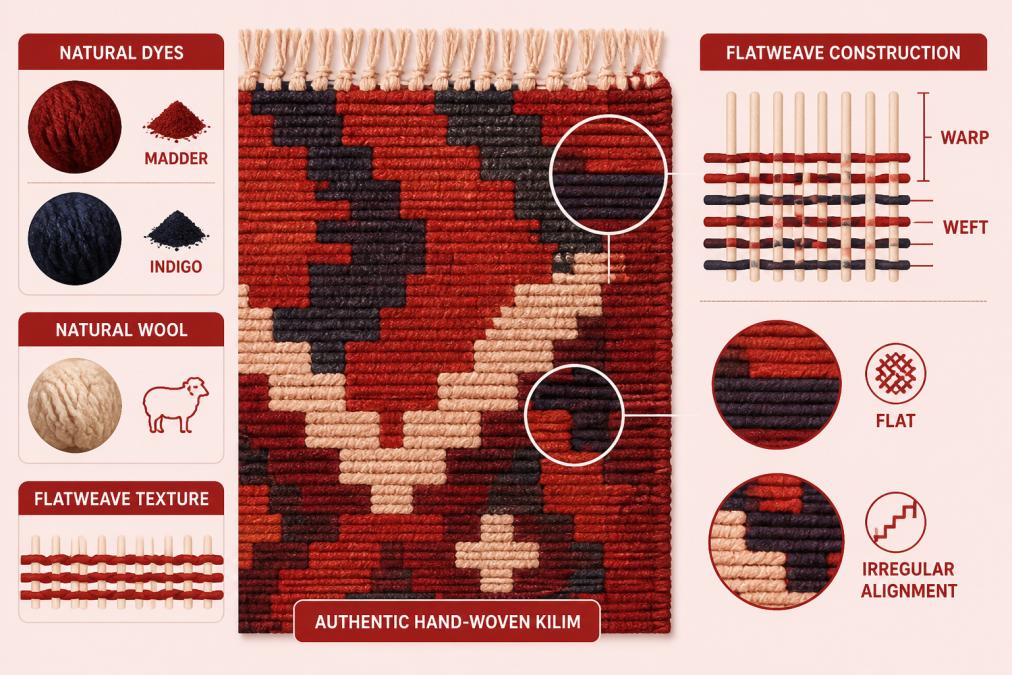
A kilim is fundamentally defined by its flatweave construction: colored threads interlock across horizontal and vertical threads (warp and weft) to create patterns without pile. This pileless structure makes kilims lighter, thinner, and more durable for high-traffic areas than pile rugs. The term originates from Turkish, but flatweave textiles exist across Persian, Afghan, Moroccan, and Central Asian traditions, each with distinct weaving techniques and design vocabularies.
Authentic hand-woven kilims share specific characteristics that machine-made flatweaves cannot replicate. The weaver controls tension, color transitions, and pattern placement by hand, meaning no two kilims are identical. Slight irregularities in pattern alignment, variations in row spacing, and natural color shifts from different dye batches are hallmarks of authenticity. Machine-made kilims display perfect symmetry, consistent tension, and uniform color saturation, qualities that signal industrial production.
Hand-Woven vs. Machine-Made: The Craftsmanship Difference
Hand-woven kilims require a weaver to pass the weft thread through the warp by hand, typically working for weeks or months to complete a single piece. Machine-made flatweaves are produced by industrial looms programmed to replicate patterns at high speed, resulting in consistent but characterless output. Hand-woven kilims develop character with age; fibers relax, colors deepen, and the rug settles into a beautiful patina. A genuine hand-woven kilim from the 1970s is likely worth more today, while a machine-made reproduction has depreciated.
Natural Dyes and Fiber Content: Quality Indicators
Authentic kilims woven before 1970 almost exclusively used natural dyes: indigo for deep blues, madder root for reds and oranges, walnut husks for browns, cochineal insects for crimsons. These dyes create colors that shift subtly with light and develop patina over time. Synthetic dyes produce brighter, uniform colors that don't shift with light. Wool is the standard for kilims because it's resilient, takes dye beautifully, and develops patina gracefully. High-quality antique kilims are typically 100% wool or wool-dominant blends.
How to Identify a Handmade Kilim Rug: Authentication Checklist
Flip the rug over and inspect the back. Hand-woven kilims show visible warp threads and uneven spacing where the weaver adjusted tension. Machine-made flatweaves show perfectly uniform rows and consistent tension. Examine the edges for selvages, reinforced side edges created by wrapping warp threads with additional yarn. Hand-woven edges feel sturdy but show natural wear and variation; machine-made edges look uniformly pristine.
Run your hand across the surface. Authentic wool kilims have a slightly textured, warm feel with natural variation in fiber thickness and sheen. Machine-made pieces feel smoother and more uniform, almost plasticky. Examine pattern consistency by looking at repeated motifs. In hand-woven kilims, repetitions vary slightly; in machine-made pieces, motifs are identical. Check for knots on the back surface, kilims are flatweave and should have none.
Visual and Tactile Signs of Authentic Hand-Woven Construction
Natural dyes show variation within a single color, a red might range from crimson to rust within the same dyed batch, while synthetic dyes produce uniform saturation. Reputable dealers maintain detailed provenance documentation for antique kilims: acquisition history, previous owners, estimated age based on construction and dye analysis, and regional attribution. Fair trade certification has become increasingly important for contemporary kilim purchases. Verify certification through official databases rather than taking dealer word.
| Authentication Signal | Hand-Woven Kilim | Machine-Made Flatweave |
|---|---|---|
| Back surface | Visible warp, uneven spacing | Perfectly uniform rows |
| Edge selvages | Varied, worn naturally | Uniform, pristine finish |
| Pattern repetition | Slight variations | Identical throughout |
| Color transitions | Gradual, organic | Sharp, uniform boundaries |
| Tactile feel | Textured, warm wool | Smooth, plastic-like |
| Knots visible | None (flatweave) | None (flatweave) |
| Price range | $800-$8,000+ | $200-$1,200 |
Top Kilim Alternatives: Curated Sources for Authentic Pieces
Finding authentic kilims beyond well-known dealers requires understanding each source's specialization. The eight sources below represent different strategies: vintage specialists hunting globally for rare pieces, regional dealers with deep local expertise, fair-trade producers emphasizing ethical sourcing, and established retailers with curated selections.
1. Matt Camron Rugs & Tapestries: Rare Vintage Kilim Specialist
Matt Camron Rugs & Tapestries operates one of the largest vintage kilim collections in the United States, specializing in rare, mint-condition pieces sourced globally. Their team travels internationally to acquire inventory, meaning their selection changes frequently and includes pieces unavailable elsewhere. The showroom allows in-person evaluation, invaluable for assessing color, texture, and condition. Their expertise in Turkish, Moroccan, and Afghan kilims provides detailed regional and historical context for each piece. The trade-off is premium pricing for investment-grade pieces.
2. Kilim Couture NYC: High-End Turkish Antique Focus
Kilim Couture specializes in high-end hand-knotted antique and vintage rugs with strong emphasis on traditional Turkish designs, including Mid-Century and Boho-Chic Pastel Kilims. Their showroom in New York City provides in-person viewing and personalized consultation. Rather than stocking hundreds of pieces, they maintain a carefully edited selection meeting strict quality standards. Each rug includes historical context and design analysis, appealing to collectors viewing kilims as art objects. Pricing starts around $2,290 for vintage pieces.
3. Nomads Loom: Multi-Regional Antique Selection in Dallas
Nomads Loom in Dallas, Texas, operates as a family-owned business since 1975, offering one of the largest antique rug and kilim selections in the DFW region. They stock 19th and 20th-century pieces from Turkish, Caucasian, and Persian traditions. Beyond sales, they provide appraisal, restoration, and cleaning services, demonstrating deep rug care understanding.
4. Rug Master: Try-Before-You-Buy with Bay Area Showrooms
Rug Master operates showrooms in San Francisco, Berkeley, and San Rafael, offering a distinctive "try before you buy" service letting customers take rugs home to evaluate in their actual spaces before purchasing. Their inventory spans Persian, Turkish, Afghan, and Indian kilims in both traditional and modern styles, including washable options for low-maintenance durability.
5. Kantara: Fair Trade Moroccan Flatweave Kilims
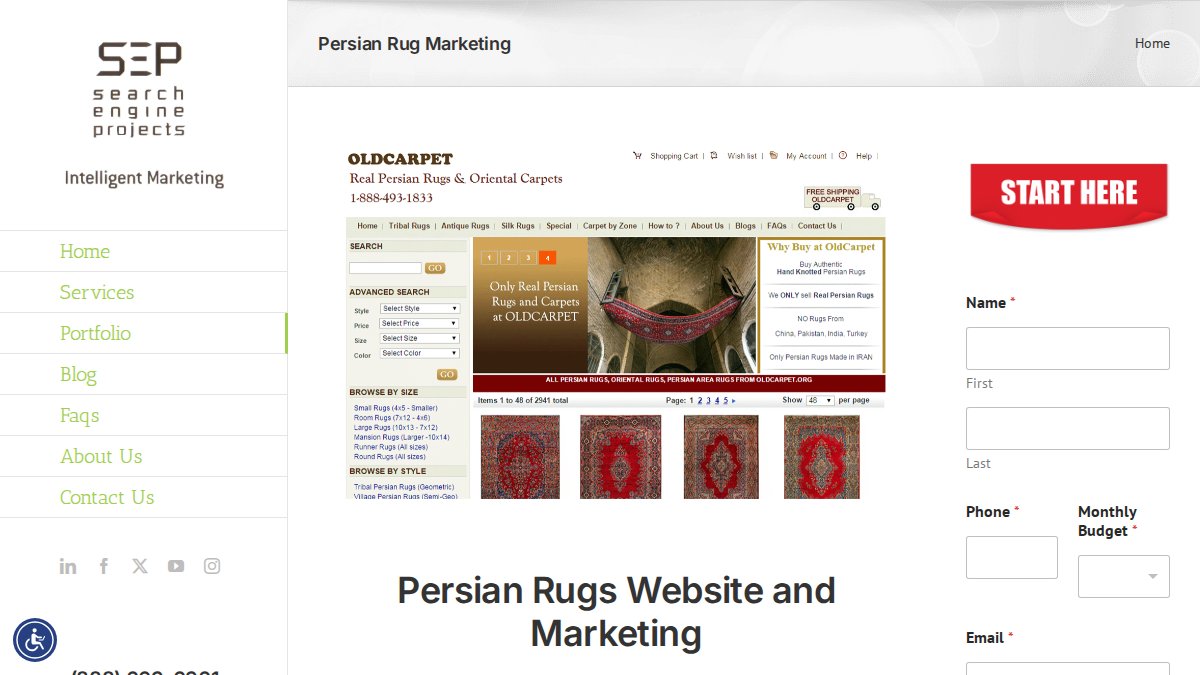
Kantara is a fair trade design business specializing in Moroccan flatweave kilims woven in women's weaving cooperatives. Their focus on ethical sourcing and community support appeals to buyers prioritizing impact alongside aesthetics. Each kilim is handwoven with traditional tribal designs, and Kantara provides transparency about producing cooperatives.
6. Jaipur Rugs US: Persian and Iranian Kilims Online and In-Store
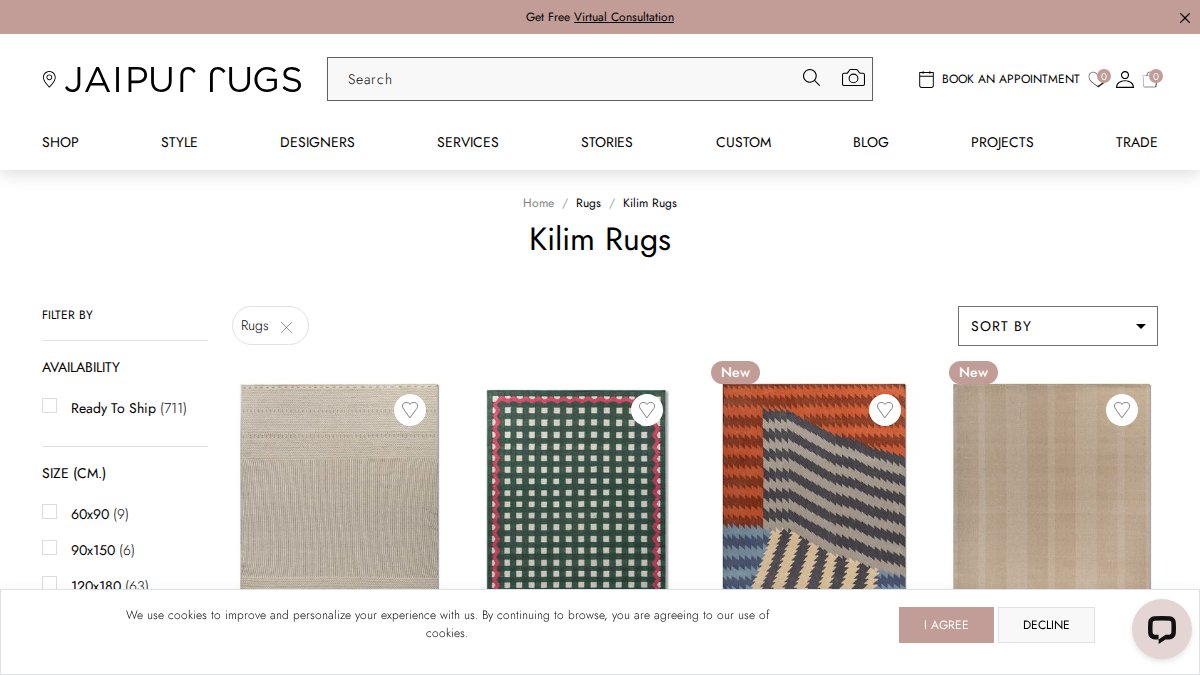
Jaipur Rugs offers a substantial collection of Persian and Iranian kilims in various sizes and styles, available through their website and physical retail locations. Their selection includes abstract, floral, Moroccan, tribal, and oriental designs in wool and other materials. The combination of online shopping and brick-and-mortar presence makes them accessible for both remote and local customers.
7. ABC Carpet & Home: Curated NYC Flatweave Collection
ABC Carpet & Home is a long-established New York institution with decades of expertise in antique rugs and custom carpets. Their flatweave and kilim collection is carefully curated, emphasizing artistry, texture, and quality. Showrooms in New York City and Brooklyn provide in-person access. Rather than stocking hundreds of pieces, they maintain a thoughtfully selected collection reflecting their design philosophy.
8. Rouzati Rugs: Antique Romanian and Turkish Kilims in Chicago
Rouzati Rugs in Chicago specializes in antique Romanian and Turkish kilims with transparent pricing and detailed descriptions for each piece. Many listings include estimated age, origin, and historical context, appealing to collectors seeking documented authenticity. Pricing starts around $399.99 for smaller pieces, making budgeting straightforward.
Kilim vs. Dhurrie Rugs: Distinguishing Flatweave Types
Both kilims and dhurries are flatweave textiles, creating confusion for unfamiliar buyers. Understanding the differences matters because they affect durability, aesthetic, and appropriate use cases.
Construction Differences and Visual Characteristics
Kilims use a tapestry weave technique where colored weft threads interlace with the warp to create patterns. The weaver controls color placement directly, allowing intricate geometric or representational designs. Kilims are structurally durable because weft threads are tightly interlocked with the warp, making them suitable for high-traffic floor use.
Dhurries use a simpler plain weave or twill structure where weft threads pass over and under warp threads in a basic pattern. Dhurries are lighter and thinner than kilims with less structural density, making them better suited for wall display or low-traffic areas. Kilims display complex, often geometric patterns with sharp color boundaries. Dhurries typically feature simpler designs, stripes, or basic geometric shapes.
Regional Origins and Design Motifs
Kilims originate from Turkey, Persia, Afghanistan, and Central Asia, each region developing distinct design traditions. Turkish kilims feature geometric patterns with angular lines and symbolic motifs. Persian kilims display more curvilinear designs and floral elements. Afghan kilims emphasize bold geometric shapes and saturated colors.
Dhurries originate primarily from India, where the weaving tradition dates back centuries. Indian dhurries emphasize simplicity and functionality, with designs reflecting contemporary minimalism rather than historical tradition.
How to Care for Antique Kilim Rugs: Maintenance and Restoration
Antique kilims are durable textiles but require specific care to preserve condition and aesthetic qualities.
Cleaning Protocols for Hand-Woven Flatweave Textiles
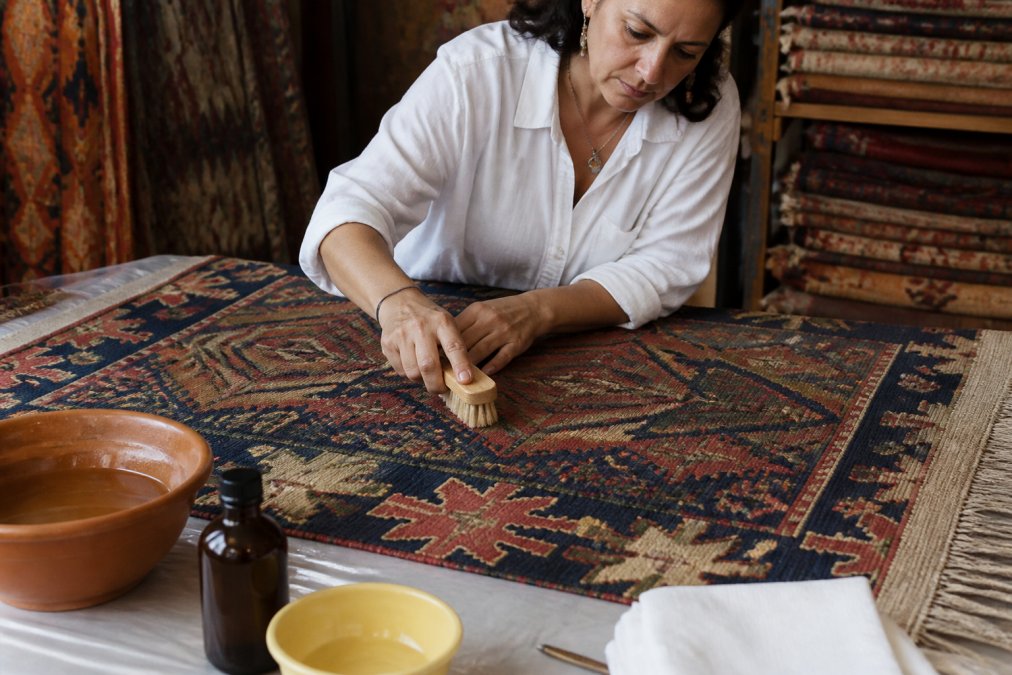
Regular vacuuming is foundational. Use a low-suction vacuum without a beater bar, or vacuum in the direction of the weave. Vacuuming every two weeks removes dust and debris that accumulate in the textile structure. For spot cleaning, use cool water and mild pH-neutral soap. Test any cleaning solution on an inconspicuous area first. Blot stains rather than rubbing, which pushes liquids deeper into the textile. Never use heat sources like hair dryers.
Rotate your kilim annually to distribute wear evenly. Store kilims in cool, dry conditions if not in use, never in damp basements or hot attics. Roll rather than fold kilims for storage, and wrap them in acid-free paper or cloth to protect from dust and pests.
When to Seek Professional Restoration
Professional restoration becomes necessary when kilims develop structural damage: broken warp threads, missing sections, or extensive wear. Restoration should only be performed by conservators with expertise in textile conservation. Common restoration needs include edge reinforcement, where worn selvages are rewoven or reinforced with new yarn. Before committing to restoration, get multiple estimates from qualified conservators. Minor edge work might cost $200-$500, while significant structural restoration can exceed $2,000.
Ethical Sourcing and Fair Trade in Kilim Purchasing
The kilim industry has historically operated with limited transparency regarding weaver compensation and working conditions. Contemporary sourcing has shifted toward ethical practices, with fair trade certification and direct producer relationships becoming increasingly important for discerning buyers.
Fair trade kilims are produced under conditions ensuring fair wages, safe working environments, and community investment. Certified fair trade producers undergo regular audits and maintain documented standards. Organizations like Fair Trade USA maintain databases of certified producers and retailers, allowing you to verify claims before purchasing. Fair trade kilims typically cost 15-30% more than conventional alternatives, but the premium directly supports weaver communities.
Price-Per-Square-Foot Comparison: Understanding Kilim Pricing
Kilim pricing varies dramatically based on age, origin, materials, condition, and rarity. Understanding price-per-square-foot helps evaluate whether a specific piece represents fair value.
Contemporary handwoven kilims typically cost $15-$40 per square foot. Fair trade contemporary pieces run $25-$50 per square foot due to ethical sourcing premiums. Vintage 20th-century kilims range from $20-$100+ per square foot depending on condition and rarity. Antique 19th-century pieces often exceed $100 per square foot and can reach $300+ for museum-quality examples.
| Kilim Type | Price Per Square Foot | Typical Size | Total Price Range |
|---|---|---|---|
| Contemporary handwoven | $15-$40 | 5x8 ft | $600-$1,600 |
| Fair trade contemporary | $25-$50 | 5x8 ft | $1,000-$2,000 |
| Vintage 20th century | $20-$100 | 5x8 ft | $800-$4,000 |
| Antique 19th century | $100-$300+ | 5x8 ft | $4,000-$12,000+ |
Choosing among nazmiyal alternatives for authentic kilims ultimately comes down to matching your priorities with dealers whose expertise and sourcing approach align. Whether you're seeking investment-grade antiques, ethically sourced contemporary pieces, or specific regional traditions, the eight sources covered here represent different specializations and geographic strengths. ABC Rugs Kilims & Jewelry provides access to high-quality, authenticated pieces with transparent sourcing and comprehensive documentation. Their curated selection, wholesale and retail options, and commitment to authentic artisanal goods make them a trusted resource whether you're a serious collector, interior designer, or homeowner seeking distinctive pieces that elevate your space.
Frequently Asked Questions
How can you tell if a kilim rug is real and authentically handmade?
Authentic kilim rugs show irregular knot patterns on the back, naturally dyed color variations, and visible warp and weft construction. Check for hand-tied knots rather than uniform machine patterns. Examine the fringe attachment, hand-woven kilims have fringes that are integral to the warp threads. Request provenance documentation or fair trade certification from reputable sources. Real kilims typically weigh more than reproductions and have a natural, slightly textured surface without artificial stiffness.
What is the difference between kilim and dhurrie rugs?
Both are flatweave rugs without pile, but kilims use a soumak or tapestry weave technique common to Turkish, Persian, and Afghan regions, while dhurries are primarily Indian flatweaves using a simpler plain weave. Kilims typically feature more intricate geometric patterns and bolder natural dyes, whereas dhurries often have simpler striped or geometric designs. Kilims are generally more textured and resilient, while dhurries tend to be lighter and less durable for high-traffic areas. Regional origin, fiber content, and weaving technique distinguish these flatweave types.
How often should I clean my antique kilim rug, and what's the safest method?
Vacuum antique kilim rugs monthly on low suction, avoiding the fringe. For deeper cleaning, use cool water with mild soap and a soft brush, working gently in the direction of the weave. Never use harsh chemicals or high-heat drying. For valuable antique pieces, professional restoration specialists recommend dry-cleaning or professional washing every 3-5 years. Always test cleaning solutions on a hidden corner first. Store rolled kilims flat in breathable fabric, away from direct sunlight to preserve natural dye colorfastness and prevent fiber degradation.
Are kilim alternatives from other sources as authentic as Nazmiyal offerings?
Yes, many kilim alternatives provide equally authentic hand-woven pieces. Sources like Matt Camron Rugs, Kilim Couture NYC, and Nomads Loom specialize in rare, verified antique kilims with documented provenance. The key is verifying authenticity through construction inspection, fair trade certification, and detailed provenance documentation rather than relying on a single dealer. Many alternatives offer advantages like try-before-you-buy options, regional specialization, fair trade partnerships, or superior customer service. Compare authentication methods, return policies, and sourcing transparency across dealers to find your ideal match.
What should I look for in fair trade or ethically sourced kilim rugs?
Seek kilim sources with transparent supply chains, artisan cooperatives partnerships, and fair trade certifications. Ethical dealers document weaver compensation, working conditions, and community impact. Look for sources like Kantara that work directly with women's weaving cooperatives. Verify certifications through recognized fair trade organizations. Ask sellers about fiber sourcing, sustainable, naturally dyed wool indicates higher ethical standards. Request information about the kilim's origin region and weaver background when available. Ethical sourcing often costs more but supports artisan communities and ensures superior craftsmanship using traditional techniques.
This article was written using GrandRanker


