

Table of Contents
- What You'll Need Before Cleaning Your Vintage Wool Kilim
- How to Clean Vintage Wool Kilims: Essential Preparation Steps
- Best Vacuum for Vintage Rugs: Technique and Tool Selection
- How to Remove Stains from Wool Rugs: Spot Cleaning Methods
- Wet Washing Your Kilim: Hand Cleaning and Rinsing
- Drying Your Kilim Properly: Air Drying in the Shade
- Professional Kilim Rug Cleaning Cost and When to Hire an Expert
- Storage and Pest Prevention for Vintage Kilims
Last Updated: August 7, 2026
What You'll Need Before Cleaning Your Vintage Wool Kilim
Gather pH-neutral cleaning solutions like diluted mild dish soap (Dawn or Seventh Generation), white vinegar for setting dyes, baking soda for odor neutralization, and wool-specific detergent like Woolite Delicates. For tools, invest in a vacuum with adjustable suction and disengageable beater bar, the Dyson Ball Animal 3 Extra offers this flexibility. You'll also need soft-bristled brushes, clean white cloths, spray bottles, towels, a non-slip rug pad, and a spot removal kit like the WoolClean Spot Removal Kit from Wools of New Zealand for emergencies.
How to Clean Vintage Wool Kilims: Essential Preparation Steps
Assess your kilim's condition first. Look for loose threads, holes, or compromised weave; significant damage requires professional restoration. Check documentation for dye type, as natural vegetable dyes behave differently from synthetic ones.
Vacuum thoroughly before any wet cleaning using gentle suction with the beater bar disengaged. Work in one direction, then perpendicular, covering the entire surface. Allow at least 24 hours between vacuuming and wet cleaning.
Test for Colorfastness and Dye Bleeding Prevention
Mix mild detergent with cool water and apply to a hidden corner using a white cloth. If no color bleeds onto the cloth after 30 seconds, your kilim is likely colorfast. If color appears, stop immediately, professional cleaning is required.
Test your cleaning solution separately on a hidden area before applying it to visible stains. Always use cool or lukewarm water; hot water accelerates dye bleeding and can cause shrinkage.
Dry Cleaning: Vacuuming and Dust Removal
Vacuum with gentle suction, never using the beater bar, which damages wool fibers and loosens weave structure. Move slowly across the surface to pull embedded dust from deep within the pile.
For additional dust removal, hang your kilim on a clothesline and gently strike it from the back with a rug beater or tennis racket. This dislodges dust trapped deeper in the weave.
Best Vacuum for Vintage Rugs: Technique and Tool Selection
The Dyson Ball Animal 3 Extra is excellent for vintage rugs because it offers powerful suction with precise control and the ability to disengage the beater bar. Use the upholstery attachment for maximum control, moving slowly and spending at least 10-15 seconds on each square foot.
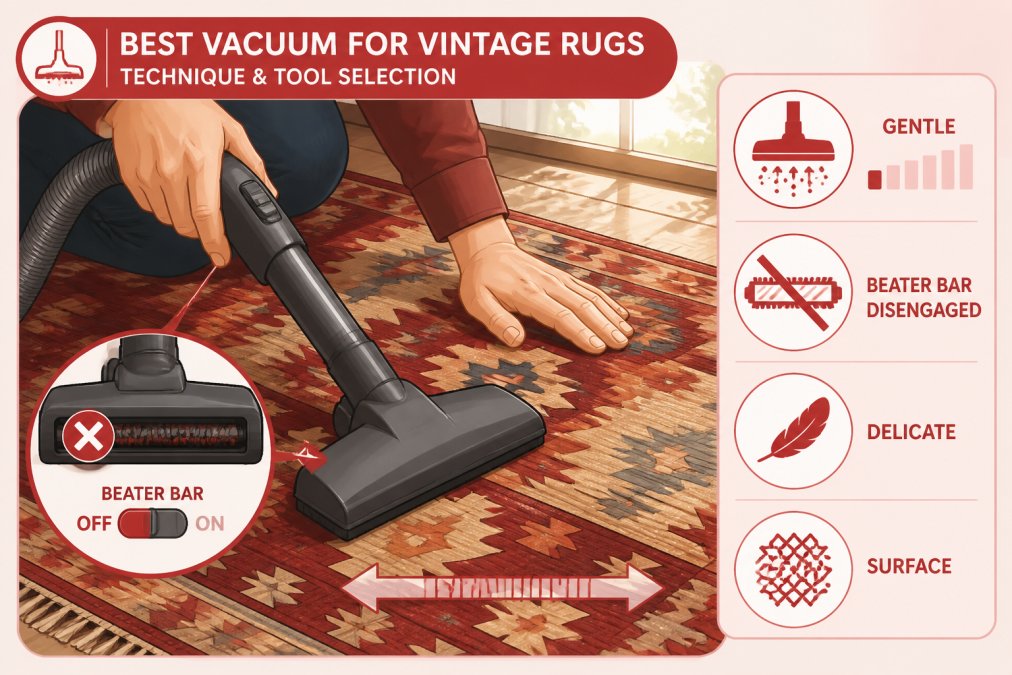
Vacuum both sides of your kilim if possible. For antique textiles with delicate fibers, consider a handheld upholstery vacuum for finer control.
How to Remove Stains from Wool Rugs: Spot Cleaning Methods
Act immediately when a spill occurs. Blot (don't rub) the area with a clean white cloth to absorb excess liquid. Rubbing pushes the stain deeper into fibers and damages the wool's surface.
Fresh Spills and Water-Based Stains
For juice, wine, or coffee, blot immediately, then apply cool water with a spray bottle to dilute the stain. For wine or juice, mix one part white vinegar with three parts cool water, apply sparingly, and blot. Repeat 2-3 times until the stain lightens.
For milk-based stains, mix one teaspoon of Woolite Delicates with one cup of cool water. Apply sparingly, blot thoroughly, then rinse with plain water and blot again.
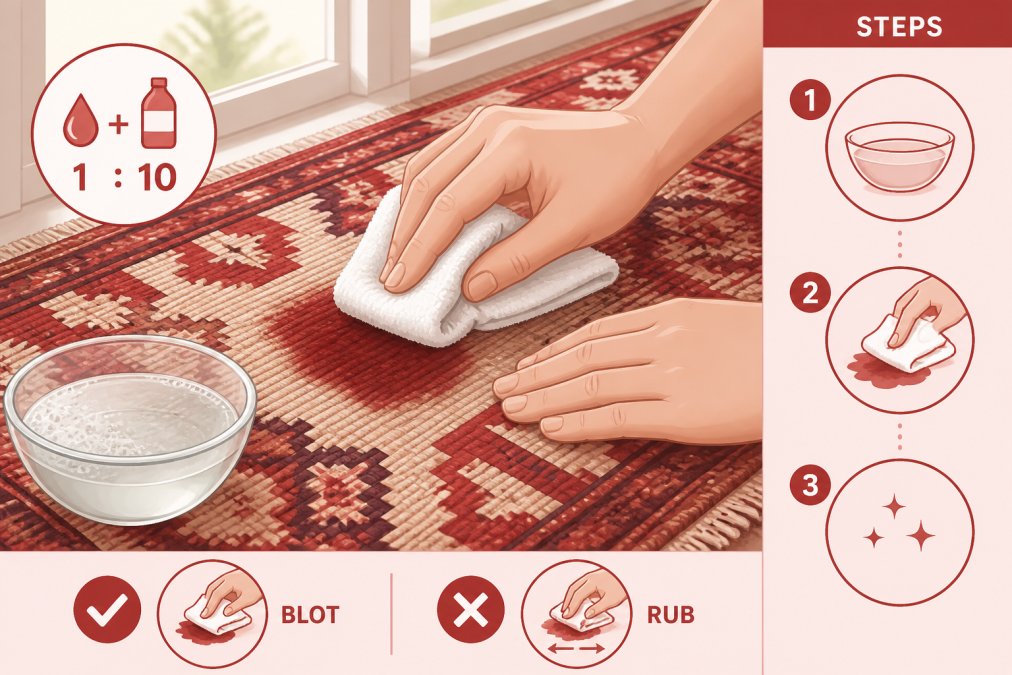
Always rinse after using any cleaning solution to prevent residual soap or vinegar from attracting dirt and causing discoloration.
Organic Stains and Odor Removal with Baking Soda
Sprinkle baking soda generously over the affected area and let it sit for 30 minutes to several hours. Vacuum thoroughly to remove all residue. For set-in pet stains, mix baking soda with water to create a paste, apply to the stain, let dry completely (12-24 hours), then vacuum thoroughly.
For stubborn organic stains, use the WoolClean Spot Removal Kit, which includes specialized solutions formulated for wool.
Wet Washing Your Kilim: Hand Cleaning and Rinsing
Fill a basin with cool water (60-70 degrees Fahrenheit) and add one teaspoon of Woolite Delicates per gallon. Submerge your kilim carefully, gently squeezing soapy water through the fibers without agitating or wringing. Let soak for 10-15 minutes.
Drain and refill with clean water. Gently squeeze fresh water through the kilim to rinse. Repeat 3-4 times until water runs clear and no soap suds appear. Incomplete rinsing leaves detergent residue that attracts dirt and causes yellowing.
For stubborn soiling, a second wash cycle may be necessary. Never wring or twist the fabric, as this damages the weave structure.
Drying Your Kilim Properly: Air Drying in the Shade
Never machine dry or use heat sources like hair dryers or radiators, which cause wool to felt and shrink permanently. Direct sunlight fades natural dyes and can cause color bleeding if the kilim is still damp.
Lay your kilim flat on a clean, dry surface in a shaded, well-ventilated area. A clean tarp or white sheet underneath prevents dirt transfer. If hanging vertically, support the weight evenly to prevent stress on the weave.
Open windows to create cross-ventilation or position a fan nearby (not pointed directly at the kilim). Drying typically takes 48-72 hours. Check periodically; the kilim should feel completely dry before moving it.
Avoid drying in direct sunlight even after the kilim is mostly dry. Shade drying preserves original colors better than any other method.
Professional Kilim Rug Cleaning Cost and When to Hire an Expert
Professional cleaning is necessary for antique kilims, heavily soiled rugs, or those with delicate dyes. Costs typically range from $6.50 per square foot; a small kilim (36-50 square feet) costs $200-400, while larger pieces (100+ square feet) can exceed $1,000.
Professionals use commercial equipment and specialized solutions formulated for handmade textiles, performing detailed inspection, dry dusting, careful soaking, and complete drying in climate-controlled environments.
Hire a professional when your kilim shows moth damage, has deep-set stains resisting home treatment, exhibits color bleeding during testing, or is an antique piece with significant value. The investment preserves value and extends life by decades. Many professionals offer free local pick-up and delivery or accept shipping from all 50 states.
Storage and Pest Prevention for Vintage Kilims
Store your kilim in a cool, dry location with stable humidity (ideally 40-50% relative humidity). Interior closets or under-bed storage in climate-controlled rooms work better than basements or attics.
Roll your kilim rather than folding it. Fold creases weaken fibers permanently. Roll tightly around an acid-free cardboard tube with the pile facing outward. Wrap in acid-free tissue paper or cotton muslin, never plastic, which traps moisture.
Store with cedar blocks or lavender sachets to repel moths and carpet beetles. Check your stored kilim every 3-6 months for pest activity: small holes, webbing, or musty smells. Keep the storage area clean and sealed against rodents and insects.
| Maintenance Task | Frequency | Best Practice |
|---|---|---|
| Vacuuming | Every 2-4 weeks | Gentle suction only, no beater bar |
| Spot cleaning spills | Immediately | Blot, don't rub; test solution first |
| Baking soda refresh | Monthly or as needed | Sprinkle, wait 30 min, vacuum thoroughly |
| Deep cleaning | 1-2 times yearly | Professional cleaning recommended |
| Storage inspection | Every 3-6 months | Check for pests, moisture, odors |
At ABC Rugs Kilims & Jewelry, we understand that vintage wool kilims represent significant investments in both aesthetics and cultural heritage. Our curated collection of handmade kilims and Persian antique pieces helps you find authentic textiles worth preserving. Whether you own one of our pieces or a kilim from elsewhere, these cleaning and maintenance practices protect your investment and keep your rug beautiful for generations.
Frequently Asked Questions
Can you wash a vintage wool kilim in the washing machine?
No, never use a washing machine for vintage wool kilims. Machine agitation can damage natural fibers, cause shrinkage, and cause dye bleeding, especially in kilims with vegetable dyes or hand-woven construction. Hand washing with pH-neutral solutions or professional cleaning is the only safe approach for preserving fiber integrity and color.
How do you get odors out of a vintage wool rug?
Baking soda is highly effective for odor neutralization. Sprinkle it evenly across the kilim, let it sit for 24 hours, then vacuum thoroughly with gentle suction. For stubborn odors, use a diluted white vinegar solution (1 part vinegar to 4 parts water) applied as a light mist, then air dry in the shade. Ensure complete drying to prevent mold.
Is it safe to use vinegar on wool kilims?
Yes, when properly diluted. White vinegar helps set natural dyes and prevents dye bleeding, but it must be diluted at a 1:4 ratio with water. Test the solution on a hidden corner first to ensure colorfastness. Avoid using vinegar on kilims with synthetic dyes or delicate antique textiles, consult a professional if uncertain about dye type.
How often should you professionally clean a vintage kilim?
Professional cleaning depends on traffic and soil levels. High-traffic kilims benefit from professional cleaning every 3-5 years, while low-traffic decorative pieces may only need it every 7-10 years. Professional services cost approximately $6.50 per square foot for standard wool kilims, though antique or delicate pieces require inspection for exact pricing. Regular vacuuming extends the time between professional cleanings.
Proper care extends your kilim's life and preserves its value. When DIY methods aren't enough, professional restoration ensures your piece receives expert attention. ABC Rugs Kilims & Jewelry offers guidance on caring for your vintage textiles, and our team can connect you with trusted professionals when deep cleaning or repair becomes necessary. Browse our collection of authenticated, hand-knotted kilims today to find the perfect piece for your home.
This article was written using GrandRanker


