

Table of Contents
- Why Source Wholesale Artisanal Rugs Directly
- Understanding Wholesale vs. Retail Pricing Models
- How to Verify Rug Authenticity When Buying Wholesale
- Finding Reliable Wholesale Rug Suppliers for Interior Designers
- Navigating Importing Handmade Rugs Regulations and Customs
- Sourcing Handmade vs. Machine-Made Rugs: What to Know
- Building Your Wholesale Rug Sourcing Strategy
- Conclusion
Last Updated: August 15, 2026
Why Source Wholesale Artisanal Rugs Directly
Sourcing wholesale artisanal rugs directly from manufacturers bypasses middlemen, reduces per-unit costs significantly, and provides access to inventory unavailable at retail. Interior designers, boutique retailers, and collectors discover that direct sourcing transforms margins and enables truly unique pieces.
Direct relationships with rug makers give you control over selection, customization, and authenticity verification. You're choosing from full catalogs and negotiating terms for your specific needs, not buying leftover distributor stock. For design professionals, this means consistent access to quality inventory across multiple projects without retail markups.
ABC Rugs Kilims & Jewelry specializes in connecting buyers with authentic handmade rugs through wholesale and retail channels. Their vetted supplier approach eliminates much of the risk in independent sourcing.
The logistics are more complex than retail buying, customs documentation, months-long lead times, and freight coordination, but you gain control over your supply chain instead of depending on retailer inventory decisions.
Understanding Wholesale vs. Retail Pricing Models
Retail pricing typically includes a 50-100% markup over wholesale cost. A handmade Persian rug costing $1,200 wholesale might retail for $2,500-$3,000, covering retailer overhead, marketing, and showroom costs.
Wholesale pricing reflects volume and relationship. Single rug purchases cost 30-40% less than retail, though minimum order quantities often apply. Interior designers benefit immediately, buying enough volume for wholesale pricing while spreading inventory across multiple client projects.
Trade pricing offers 20-40% off retail to licensed professionals without minimum quantities, sitting between retail and true wholesale. ABC Rugs Kilims & Jewelry offers both wholesale options for bulk buyers and trade pricing for design professionals, providing flexibility based on purchase volume.
Direct manufacturer sourcing from rug-producing regions offers deepest discounts but requires handling import logistics. Customs duties, freight, and documentation add 15-25% to landed costs, narrowing savings versus wholesale distributors but often justifying the access to exclusive designs.
Your actual purchase volume determines viability. Fewer than five rugs annually may exclude wholesale pricing; trade pricing through ABC Rugs Kilims & Jewelry makes more sense. Multiple annual projects justify direct sourcing or wholesale relationships.
How to Verify Rug Authenticity When Buying Wholesale
Authenticity verification is critical in wholesale sourcing. The market contains reproductions, machine-made rugs marketed as handmade, and pieces with false provenance. Remote wholesale buying amplifies this risk.
Hand-knotted rugs show individual knots on the reverse side in irregular patterns reflecting human work. Machine-made rugs display uniform grid patterns. Run your hand across the back; hand-knotted rugs feel slightly uneven. Fringe should be integral to the weave, not sewn afterward.
Density and weight indicate authenticity. Genuine hand-knotted rugs feel substantial and heavy. Hand-tufted rugs use mechanical tools to tuft yarn through backing, then seal with glue, faster than hand-knotting but still artisanal. Know which you're buying.
Natural dyes produce color variations across the rug, a sign of authenticity. Synthetic dyes create uniform color. Examine rugs in natural and artificial light; natural dye colors shift slightly with lighting conditions.
Documentation and provenance matter especially for vintage and antique pieces. Legitimate suppliers provide detailed information: origin, age, weaving technique, materials, and knot count per square inch. Request high-resolution photos from multiple angles, including close-ups of weave, fringe, and back. Video walkthroughs showing different lighting conditions help assess color and condition. Reliable suppliers like ABC Rugs Kilims & Jewelry provide this documentation without hesitation.
Finding Reliable Wholesale Rug Suppliers for Interior Designers
Locating wholesale suppliers requires knowing where to look and what to ask. The supply chain is fragmented across direct weavers' cooperatives, importers, distributors, and aggregating platforms.
Direct manufacturer relationships offer best pricing but require significant effort. Many rug-producing regions have cooperatives and family workshops selling directly to bulk buyers. These relationships start through trade shows, industry referrals, or direct outreach. Barriers include communication challenges and substantial minimum order quantities.
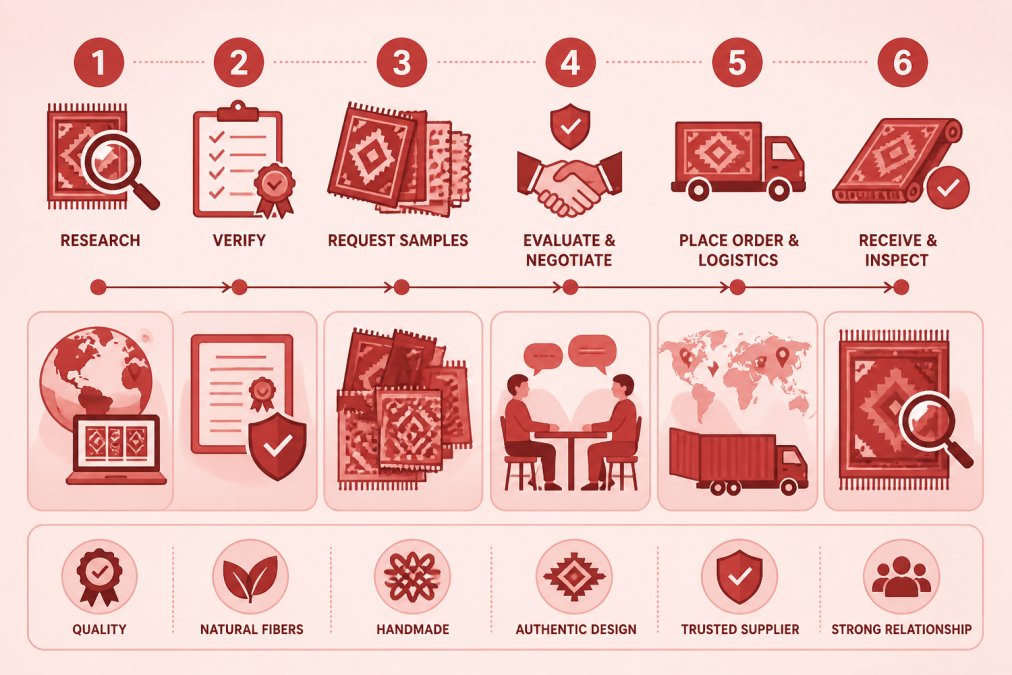
Wholesale distributors and importers handle logistics you'd manage independently. Their markups are lower than retail but higher than direct manufacturer sourcing. The trade-off is convenience and reduced risk. They maintain relationships with multiple suppliers, giving you diverse inventory access without vetting each supplier independently.
Industry trade shows connect you with suppliers, importers, and manufacturers. The International Home Furnishings Market, regional design shows, and rug-specific expos let you see inventory in person, negotiate terms, and establish relationships. These events are investments but essential for wholesale sourcing strategy.
Online wholesale platforms like ABC Rugs Kilims & Jewelry offer middle-ground access. Interior designers can access wholesale and trade pricing without minimum order quantities for every purchase, providing flexibility for single-piece projects or inventory building.
Vet supplier ethics and labor practices. Ask directly about production practices, worker compensation, and child labor policies. Legitimate suppliers document their supply chain transparently. The Fair Trade movement in handmade textiles establishes standards for ethical sourcing. Fair trade-certified suppliers provide documented evidence of ethical practices.
Navigating Importing Handmade Rugs Regulations and Customs
Importing handmade rugs requires compliance with tariff classifications, customs documentation, and import duties. Understanding these prevents delays and unexpected costs.
Tariff classification determines duty rates. Handmade rugs fall under Harmonized Tariff Schedule (HTS) codes varying by material, construction method, and origin. Most handmade rugs fall under HTS 5703, carrying duty rates typically between 7-11% depending on origin. U.S. Customs and Border Protection tariff database provides specific rates by country and product classification.
Documentation includes commercial invoices, bills of lading, certificates of origin, and packing lists. Your freight forwarder or customs broker handles much of this, but accurate commercial invoices describing goods, listing true value, and identifying origin are essential. Undervaluing shipments to reduce duties is illegal and creates serious compliance risks.
Country of origin significantly affects duty rates. Rugs from countries with free trade agreements may face lower rates. Some countries face additional tariffs or restrictions. Your customs broker navigates these complexities, but understanding basics prevents costly mistakes.
Lead times typically run 8-16 weeks from order to delivery. Ocean freight is cheaper but slower (4-6 weeks shipping). Air freight reduces shipping to 3-5 days but costs significantly more. Most wholesale sourcing uses ocean freight because cost justifies longer lead times.
Customs clearance requires accurate documentation and sometimes physical inspection. This is standard and doesn't indicate problems. Experienced customs brokers prevent delays and ensure compliance.
Sourcing Handmade vs. Machine-Made Rugs: What to Know
Choosing between handmade and machine-made rugs affects cost, lead time, and product story. Handmade rugs command premium pricing for genuine artisanal craftsmanship. Machine-made rugs offer consistency, faster production, and lower cost.
Hand-knotted rugs are created by weavers tying knots around warp threads. A single weaver produces perhaps 1-3 square feet monthly, depending on knot density and design complexity. This labor-intensive process creates rugs lasting decades and improving with age. The artistry, color variations, weaver technique, and regional design traditions appeal to collectors and design professionals seeking authenticity.
Hand-tufted rugs use mechanical tools to tuft yarn through backing, then seal with glue. This process is faster than hand-knotting but still skilled labor. Hand-tufted rugs cost less than hand-knotted but more than machine-made. They're durable and beautiful but lack the longevity and investment value of hand-knotted pieces.
Machine-made rugs use industrial looms reproducing designs at scale. Production is fast (days to weeks versus months), consistent, and inexpensive. They work well for budget-constrained projects, but don't appreciate in value and show wear faster than handmade alternatives.
For wholesale sourcing, handmade rugs offer better margins and stronger resale appeal. Wholesale buyers seek authentic pieces with genuine provenance. Interior designers specify handmade rugs to communicate quality and craftsmanship. ABC Rugs Kilims & Jewelry specializes in handmade pieces, recognizing that serious wholesale buyers concentrate purchasing on authentic artisanal rugs.
Production lead times differ dramatically. Machine-made rugs can be produced on-demand in weeks. Hand-knotted rugs require months of planning and production. Tight project deadlines favor machine-made options; building inventory works with handmade sourcing planned further ahead.
Building Your Wholesale Rug Sourcing Strategy
A coherent wholesale sourcing strategy connects your business model, budget, and inventory needs into a sustainable system. Strategy prevents reactive, expensive sourcing and builds relationships that improve over time.
Define purchase volume realistically. Are you buying 5 or 50 rugs annually? Volume determines viable sourcing channels. Small volumes work with trade pricing and curated platforms. Larger volumes justify direct manufacturer relationships or wholesale partnerships. Overcommitting ties up capital and creates carrying costs.
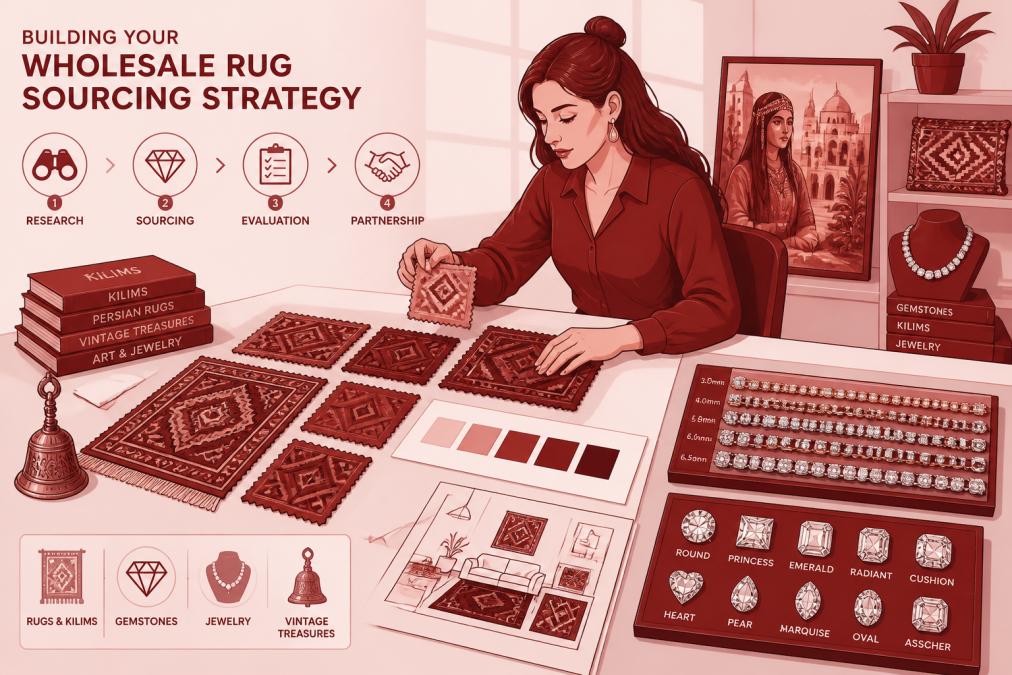
Establish minimum quality standards before sourcing. What constitutes acceptable quality for your market? Are you selling to budget-conscious buyers or collectors seeking investment-grade pieces? Document standards in writing to communicate clearly to suppliers and evaluate inventory consistently.
Build relationships with 2-3 reliable suppliers rather than constantly switching. Supplier relationships improve over time, they learn your preferences, offer better pricing as volume grows, and prioritize your orders. Constant switching disrupts relationships and often costs more through quality issues and service problems.
Negotiate payment terms matching your cash flow. Most suppliers want upfront payment or letters of credit. As relationships develop and purchase history demonstrates reliability, negotiate net-30 or net-60 terms. Communicate cash flow needs early to prevent problems.
Manage inventory strategically. Long lead times require forecasting demand months ahead. Slightly overestimate to avoid stockouts on popular items. Track which pieces sell fastest and adjust your sourcing mix accordingly.
Establish quality control processes for remote sourcing. Create a checklist for inspecting arriving shipments. Document damage or quality issues immediately and communicate with suppliers. Most reputable suppliers replace defective pieces or issue credits. Quality issue tracking reveals whether relationships are sustainable.
Ready to source wholesale artisanal rugs with confidence? ABC Rugs Kilims & Jewelry provides a vetted platform where interior designers and retailers can access authentic handmade rugs, Persian antique pieces, and artisanal jewelry through wholesale and trade pricing. Our curated collection includes pieces like the hand-knotted Persian wool rug featuring luxurious vintage design in rich blue and red tones, available at abcrugskilims.com. Start building your wholesale sourcing strategy with suppliers you can trust, inventory that's reviewed and authenticated, and pricing that reflects genuine wholesale value.

Frequently Asked Questions
How do I verify the authenticity of artisanal rugs when buying wholesale?
Request detailed documentation including weaving technique (hand-knotted, hand-tufted, or flatwoven), fiber composition, and origin region. Authentic handmade rugs show irregular knots when examined closely, whereas machine-made versions display perfect uniformity. Ask suppliers for photos of their production facilities and request samples before committing to bulk orders. Reputable wholesale rug suppliers maintain transparent quality assurance processes and can provide certifications or third-party verification of craftsmanship and materials.
What are the typical shipping and customs considerations for importing artisanal rugs?
Handmade rugs imported into the United States are subject to tariffs under the Harmonized Tariff Schedule (HTS codes 5703-5705). Most rugs face tariffs between 7-15% depending on fiber content and construction method. You'll need proper customs documentation including commercial invoices, bills of lading, and certificates of origin. Freight forwarding costs vary based on weight and volume, typically ranging from $200-$800 per shipment. Factor in potential delays during customs clearance (3-7 business days) and consider insurance for high-value pieces during transit.
What minimum order quantities should I expect when sourcing from manufacturers?
Most direct-from-manufacturer wholesale rug suppliers require minimum order quantities (MOQs) between 5-25 pieces per order, though artisanal producers may negotiate lower quantities for established relationships. Some suppliers offer tiered pricing where ordering 10+ pieces reduces per-unit cost by 10-20%. Interior designers and boutique retailers often qualify for trade pricing without meeting strict MOQs if they provide business documentation. Lead times typically range from 8-16 weeks for custom orders, so plan inventory accordingly.
How can I calculate realistic profit margins when selling wholesale artisanal rugs?
Start with landed cost (wholesale price plus shipping, tariffs, and freight forwarding). For example, a rug costing $1,200 wholesale might incur $300 in total import expenses, bringing landed cost to $1,500. Retail markup typically ranges from 2-3x landed cost for artisanal rugs. A $1,500 landed cost rug could retail for $3,000-$4,500. Account for storage, insurance, customer service, and platform fees (typically 5-10% on e-commerce). Most retailers target 40-60% gross margin after all expenses, though premium handmade pieces can command higher margins.
This article was written using GrandRanker


